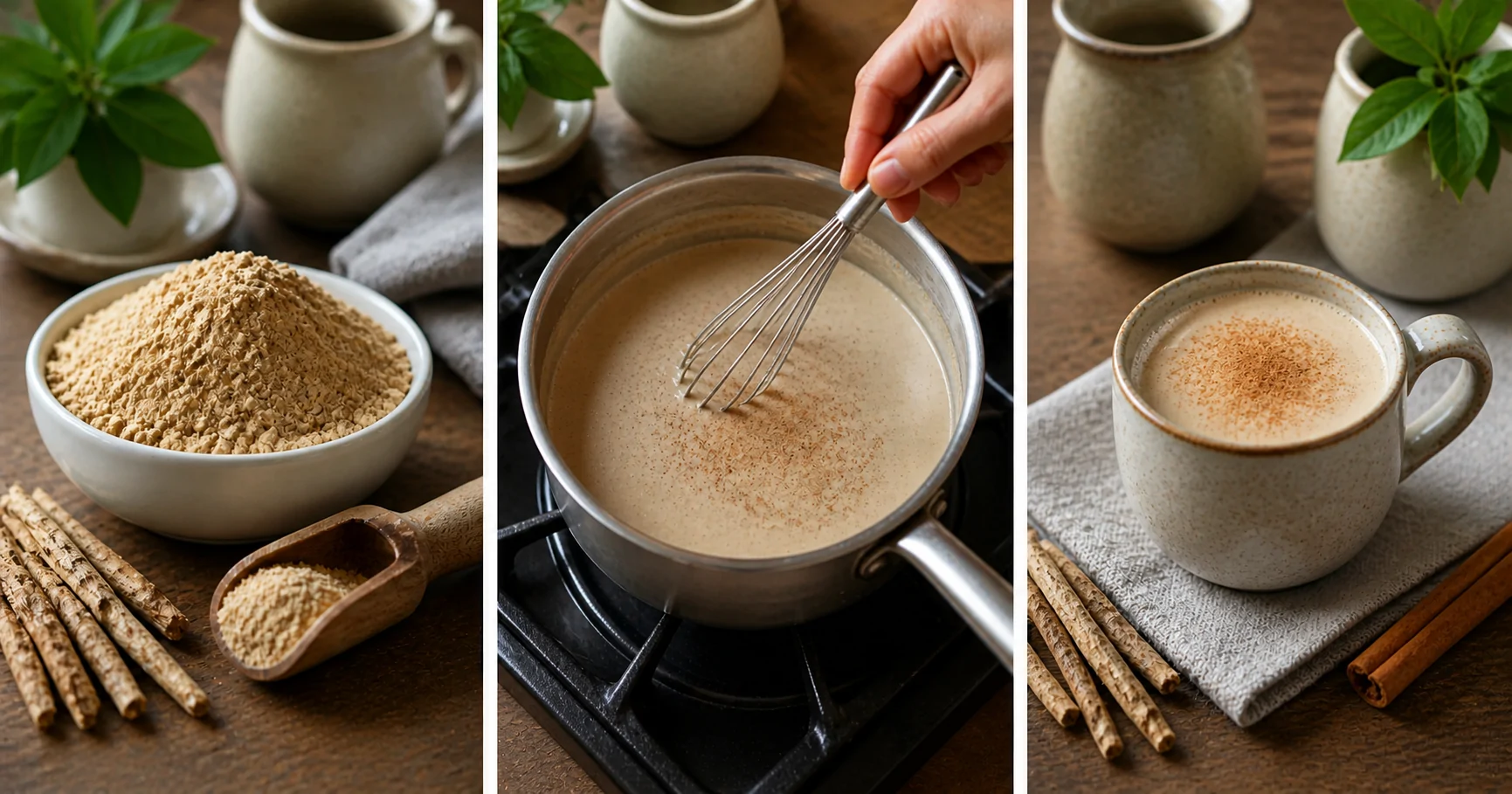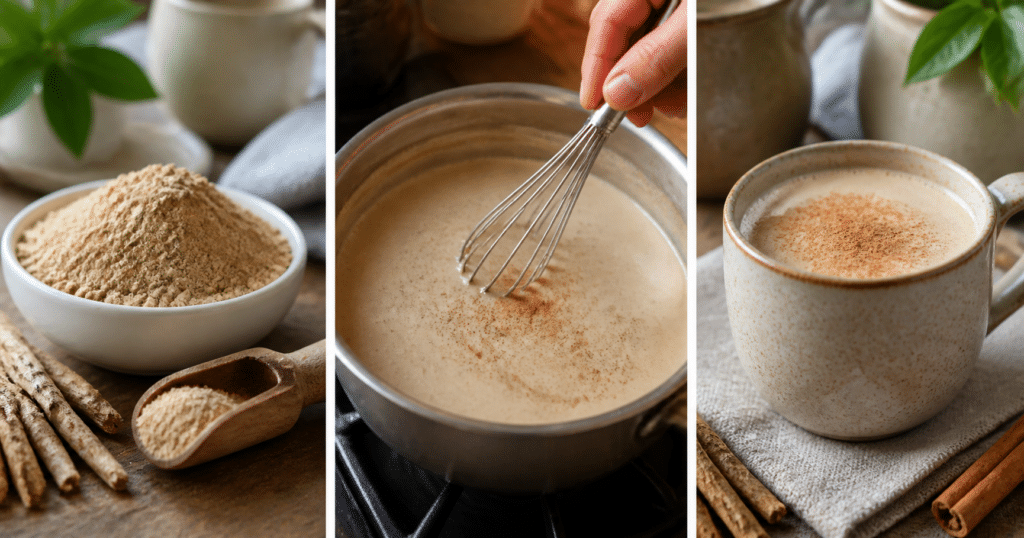
A pinch of ashwagandha can turn an ordinary mug of milk or tea into an earthy, slightly bitter drink. The root powder is increasingly easy to find in grocery stores and smoothie blends, often promoted for stress or sleep—but adding it to a recipe is not the same as taking a studied supplement.
That difference matters. Research has generally examined specific extracts in measured amounts, while drink mixes can vary widely in ingredients and strength. A homemade beverage may be a pleasant way to try the flavor, but it shouldn’t be treated as a proven remedy.
Before you stir it into a latte or smoothie, it helps to know what ashwagandha is, what evidence can—and can’t—say about it, and who should check with a health professional first. Here’s a practical guide, plus a simple warm drink recipe.
What Ashwagandha Adds to a Drink—and What It Doesn’t
Ashwagandha is a plant whose root is used in traditional Ayurvedic practices. Products may contain powdered root, root extract, or a blend of plant parts. They are not interchangeable: processing and concentration affect what’s in a serving, and the word “ashwagandha” on a label doesn’t tell you exactly how much of its active compounds it contains.
The plant contains compounds called withanolides. Researchers are studying how ashwagandha may influence the body’s stress-response systems, but the exact mechanisms—and their importance in everyday use—are not fully settled. Some clinical trials of particular extracts suggest possible benefits for stress or sleep, but results are not a guarantee, and evidence for one extract does not establish the effects of a spoonful of culinary root powder.
In a drink, the most dependable result is a distinctive flavor: earthy, woody, and often bitter. Milk or a plant-based alternative, spices, and a little sweetness can make it more enjoyable. They don’t turn the drink into a treatment or prove that the body absorbs ashwagandha better.
Three Things to Know Before You Mix It In
1. Powder and extract are different ingredients
Root powder is the dried root ground into a fine powder. Extracts are processed and may be concentrated or standardized to a stated amount of withanolides. A recipe calling for a small amount of powder should not be converted into an extract dose—or the other way around.
Check the package for the plant part, serving information, and any added ingredients. If you use a blend, look for how much ashwagandha is in each serving rather than relying on a prominent name or “proprietary blend” claim.
2. A drink isn’t a substitute for evidence-based care
Studies of ashwagandha have used particular preparations and measured amounts, often over a limited period. They don’t establish that adding it to coffee, tea, or a smoothie will ease anxiety, improve insomnia, or treat another health condition. If sleep or stress is affecting daily life, discuss it with a clinician rather than relying on a recipe alone.
3. Some people should avoid it or get medical advice first
Ashwagandha is generally not recommended during pregnancy. It may affect thyroid function and could interact with thyroid medicines, sedatives, medicines that suppress the immune system, and drugs for blood pressure or blood sugar. If you have a thyroid or autoimmune condition, take regular medication, or are preparing for surgery, ask your clinician or pharmacist before using it.
Rare cases of liver injury have also been reported. Stop using it and seek medical advice promptly if you develop yellowing skin or eyes, dark urine, severe nausea, or unusual itching after starting a product. Supplements are not reviewed like prescription medicines before sale, so choose products with clear labels and independent quality testing when available.
How to Make a Gentle Ashwagandha-Spiced Milk
This warm, lightly sweet drink lets you try the powder’s flavor without making it the star of the mug. The amount below is for taste, not a therapeutic dose; follow the product label and get medical guidance if you’re unsure whether ashwagandha is appropriate for you.
Ingredients
-
- 1 cup milk or unsweetened plant-based milk
-
- 1/4 teaspoon ashwagandha root powder, if appropriate for you
-
- 1/4 teaspoon ground cinnamon
-
- A small pinch of ground ginger or cardamom (optional)
-
- 1 teaspoon honey or maple syrup, or to taste (optional)
Step-by-Step Instructions
-
- Warm the milk in a small saucepan over low heat until steaming, but not boiling, about 3 to 5 minutes.
-
- Whisk in the ashwagandha powder and spices. Keep whisking until the powder is evenly dispersed; it may settle, so a little texture is normal.
-
- Remove from the heat and sweeten to taste. Pour into a mug and drink while warm.
Make one serving at a time, since the powder can settle as the drink stands. You can also blend the same ingredients into a smoothie, but mixing it with other supplements or adding it to several drinks a day makes it harder to keep track of your total intake.
Make the Flavor Work for You
Ashwagandha’s bitterness can be more noticeable in plain water or unsweetened tea. Cinnamon, ginger, and milk soften the flavor; a small amount of honey or maple syrup can help if you prefer a sweeter drink. Start with less powder if the taste is unfamiliar, and don’t add more simply because you can’t taste it clearly.
Think of ashwagandha as an optional ingredient, not a wellness upgrade every drink needs.
For a more informed purchase, compare the ingredient panel and serving details across products. Be wary of labels that promise dramatic results, and remember that a product’s quality testing can help verify what’s in it but does not prove that it will deliver a health benefit.
The Bottom Line on Ashwagandha in Drinks
Ashwagandha can be mixed into warm milk or a smoothie, but its taste, preparation, and evidence depend on the specific form you buy. Research on selected extracts doesn’t automatically apply to a homemade drink, and the ingredient may not be suitable alongside certain conditions or medicines.
If it’s safe for you, keep the recipe simple and treat the mug as a flavorful experiment—not a replacement for care or a shortcut to better health.