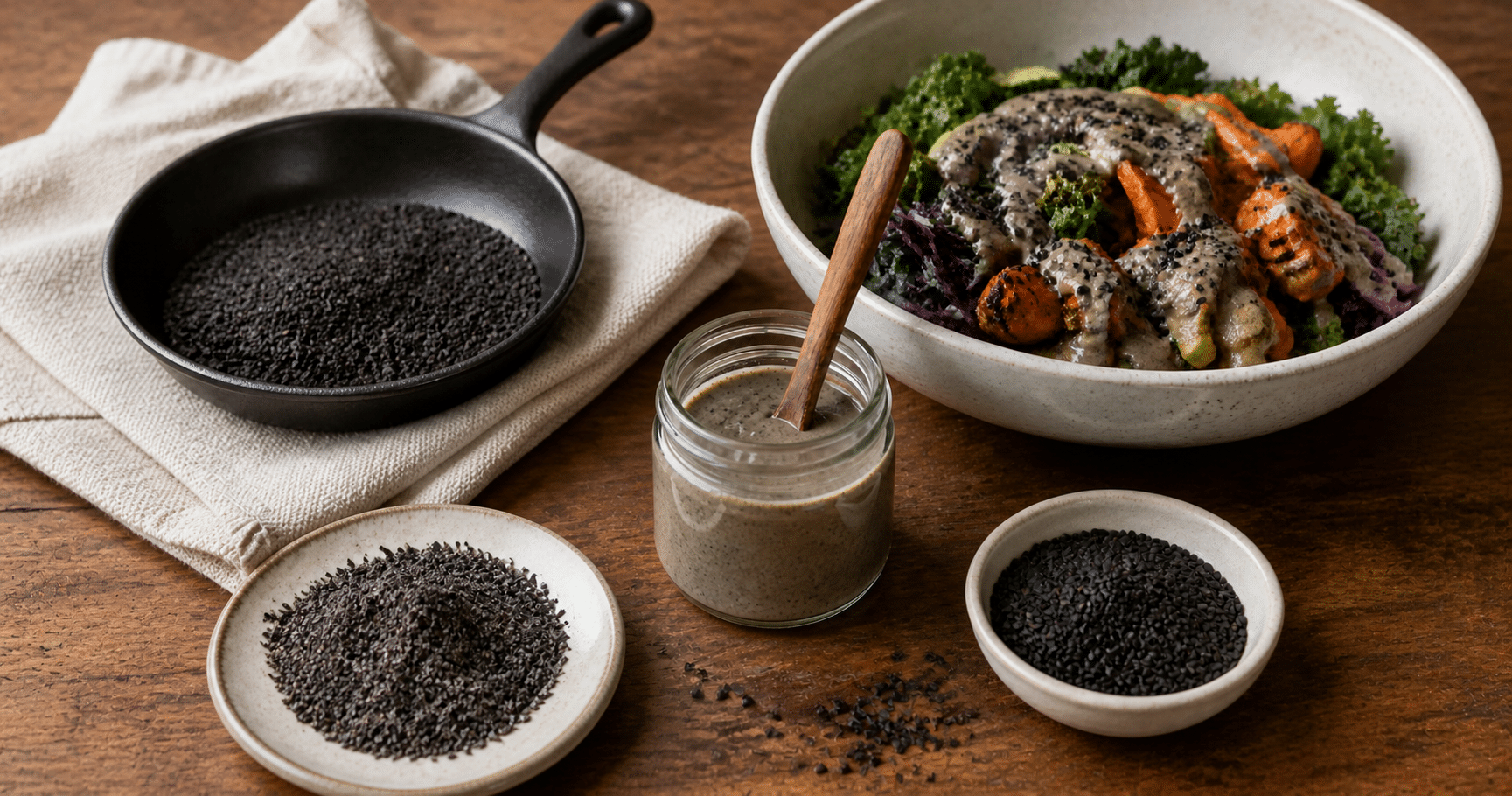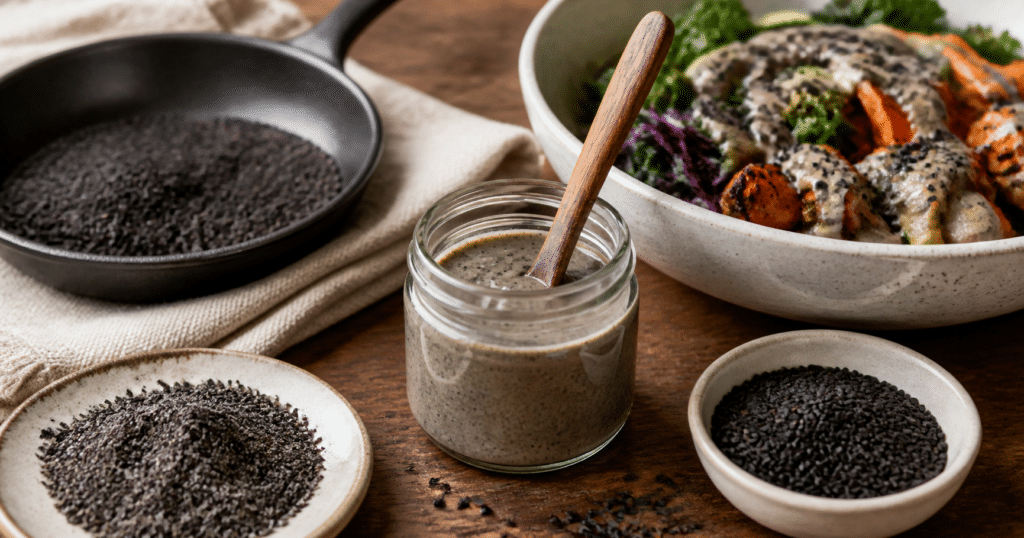
Black sesame seeds can turn an ordinary bowl of oatmeal, a simple salad, or a plate of roasted vegetables into something more distinctive. Their deep color catches the eye, but the appeal is more than looks: toasted black sesame has a nutty, savory flavor that works in both sweet and savory dishes.
One small detail makes a big difference: whole seeds can pass through a meal without releasing as much of their flavor as freshly ground ones. A quick toast and a few pulses in a spice grinder can bring out a richer taste—without requiring a special recipe or elaborate equipment.
Black sesame is sometimes promoted as a nutritional upgrade over white sesame, but the color alone doesn’t make it a cure-all. Here’s what the seeds offer, how to get the best flavor from them, and easy ways to use them in everyday cooking.
What Makes Black Sesame Seeds Worth Keeping in the Pantry?
Black sesame seeds are the seeds of the sesame plant, with dark outer coats that give them their striking appearance. Like other sesame seeds, they provide unsaturated fats, some protein and fiber, and minerals including copper and manganese. Their exact nutrient profile can vary by product and by whether the seeds are hulled.
Black and white sesame seeds are close culinary relatives, not entirely different foods. Black sesame tends to have a robust, earthy, slightly bitter edge, especially when toasted. White sesame is often milder. The best choice depends on the dish, and the color isn’t a reliable shortcut for judging nutritional value.
Whole seeds are convenient as a topping, but grinding them breaks them into smaller pieces and releases more of their flavor. It also makes them easier to incorporate into dressings, sauces, and batters. If you want to preserve their crunch, use them whole; if you want a fuller sesame taste, grind them just before using.
Three Easy Ways to Get More Flavor From Sesame
1. Toast gently, and stay nearby
Toasting intensifies the seeds’ aroma and nutty taste. Put them in a dry skillet over medium-low heat and stir often for a few minutes, until fragrant. Black seeds make color changes harder to spot, so rely on the aroma and remove the pan from the heat as soon as they smell toasty. They can go from fragrant to scorched quickly.
2. Match the form to the recipe
Whole seeds add texture to rice, vegetables, noodles, and baked goods. Ground seeds blend into sauces and fillings. A small spice grinder works well; a mortar and pestle is another option. Grind only what you need when possible, because the oils in ground sesame are more exposed to air and can lose freshness faster.
3. Look beyond the garnish
A sprinkle is an easy start, but black sesame can do more. Stir ground seeds into yogurt or oatmeal, whisk them into a salad dressing, or mix them with a little salt to make a savory finishing seasoning. In sweet recipes, they pair naturally with honey, fruit, and mild dairy.
Make a Quick Black Sesame Ginger Dressing
This creamy, tangy dressing uses both ground black sesame and tahini for a smooth texture. It’s useful on greens, grain bowls, roasted vegetables, or noodles. The soy sauce adds salt, so taste before adding any extra.
Ingredients
-
- 2 tablespoons black sesame seeds
-
- 2 tablespoons tahini
-
- 1 tablespoon rice vinegar
-
- 1 tablespoon low-sodium soy sauce
-
- 1 teaspoon honey or maple syrup
-
- 1 teaspoon finely grated fresh ginger
-
- 2 to 4 tablespoons warm water, as needed
Step-by-Step Instructions
-
- Toast the sesame seeds in a dry skillet over medium-low heat, stirring often, until fragrant, about 2 to 3 minutes. Transfer them to a plate to cool.
-
- Grind the cooled seeds in a spice grinder or crush them with a mortar and pestle.
-
- In a small bowl, whisk the ground seeds with the tahini, rice vinegar, soy sauce, honey, and ginger.
-
- Whisk in warm water a tablespoon at a time until the dressing reaches your preferred consistency. Taste and adjust with a little more vinegar or water if needed.
Refrigerate the dressing in a covered container and use it within several days; stir or shake before serving, since it may thicken as it chills. For a quick meal, toss it with cooked noodles and shredded vegetables, or spoon it over roasted broccoli and brown rice.
Everyday Ideas That Don’t Need a Recipe
Keep a small jar of toasted seeds near the stove and use a teaspoon or two where you’d usually reach for nuts or another crunchy topping. Try them on:
-
- Oatmeal with sliced pear, yogurt, or a drizzle of honey
-
- Avocado toast, scrambled eggs, or steamed edamame
-
- Roasted carrots, squash, green beans, or broccoli
-
- Rice, noodle bowls, soups, and simple salads
For a more noticeable sesame flavor, crush the seeds before sprinkling them on. For a subtler finish and a pleasant crunch, leave them whole. If a dish is already rich or strongly flavored, start with a small amount so the seeds complement rather than compete with it.
Keep the Seeds Fresh—and Check the Label
Sesame seeds contain oils that can become stale or rancid over time. Store them in a tightly sealed container away from heat and sunlight. If you buy a large bag or grind extra, refrigeration can help preserve freshness; discard seeds that smell unpleasant or taste bitter in a stale, oily way.
Also check whether the package says hulled or unhulled. That affects texture and can change the mineral content, so don’t assume every black sesame product is nutritionally identical. Sesame is also a major food allergen in the United States; anyone with a sesame allergy should avoid these seeds and foods containing them.
A Small Seed With Plenty of Uses
Black sesame seeds are an easy way to add crunch, color, and a deep toasted flavor to familiar meals. Toast them gently, grind them when you want their flavor to stand out, and use them as a finishing touch or blend them into a simple dressing.
The most useful pantry trick is also the simplest: keep the seeds whole for texture, and grind a little fresh when you want the dish to taste unmistakably of sesame.