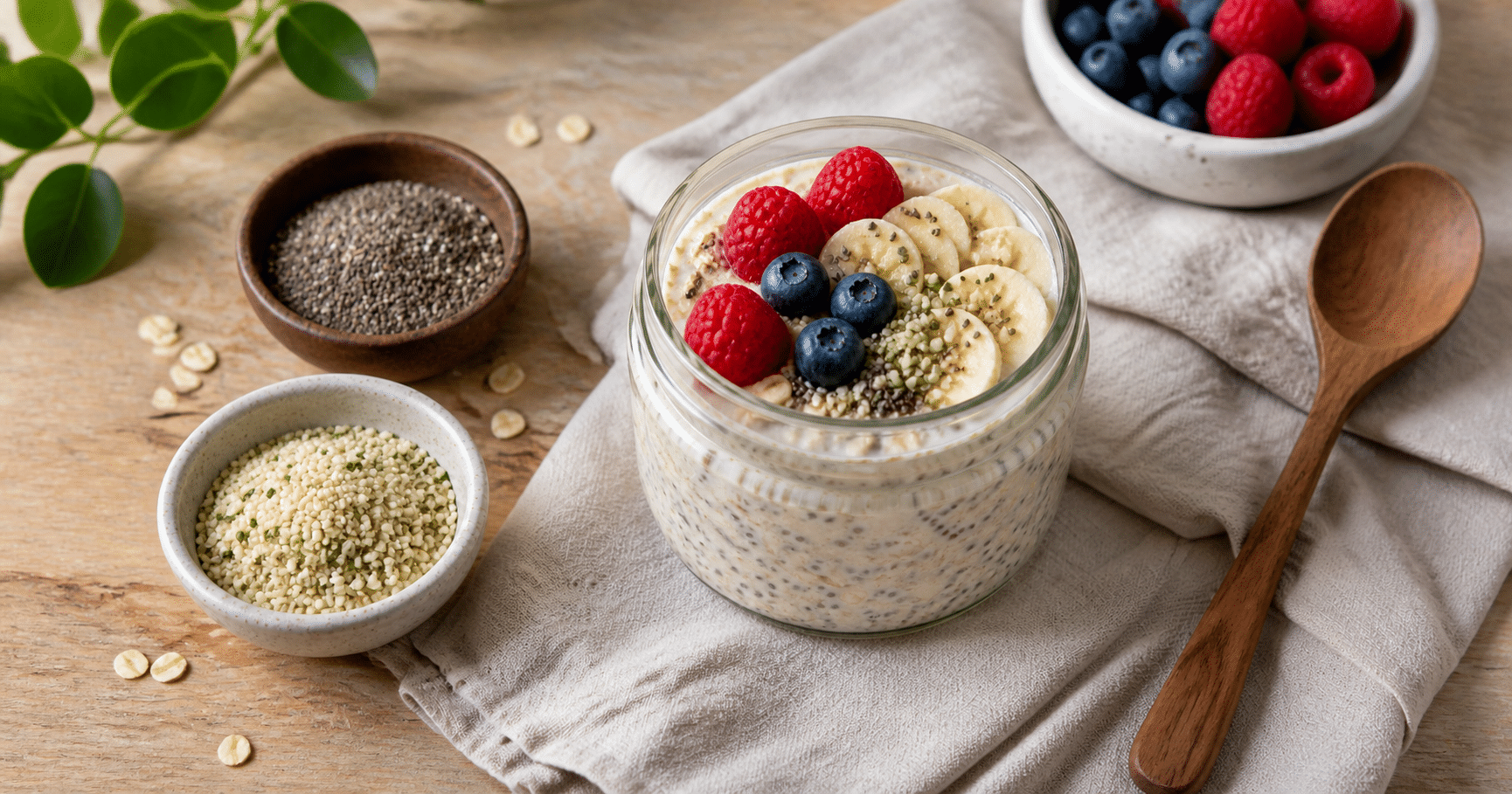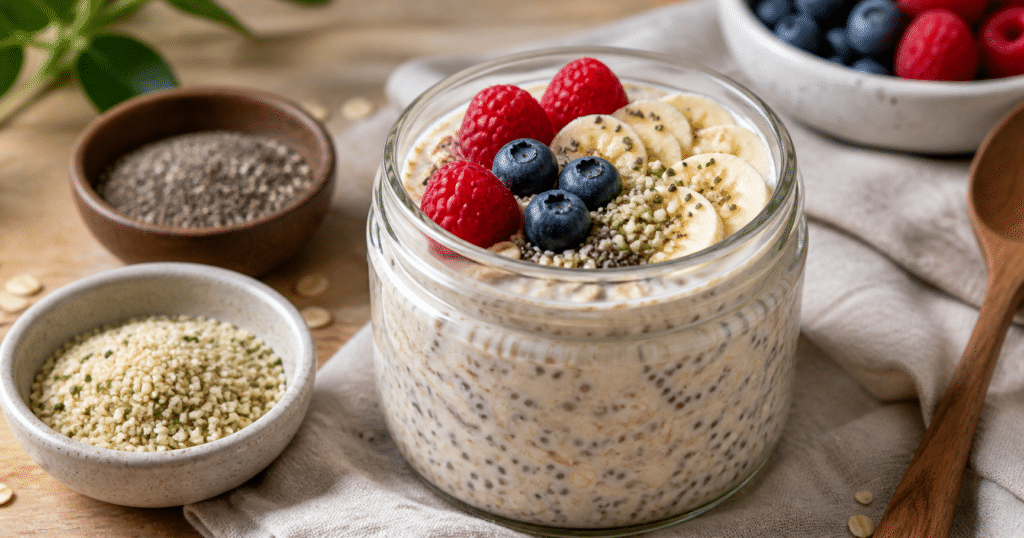
Chia seeds and hemp hearts are both easy ways to upgrade oatmeal, yogurt, or a smoothie—but they do different jobs at breakfast. Chia thickens liquid and brings a substantial dose of fiber. Hemp hearts add more protein per spoonful and a mild, pleasantly nutty flavor.
That difference matters if you’re trying to stay full through a busy morning, add fiber gradually, or simply make breakfast taste better. “Which is healthier?” is less useful than asking what you want your breakfast to do.
One detail is easy to miss: chia’s impressive fiber comes with a texture change. Left in liquid, the seeds swell into a gel; hemp hearts stay soft and loose. Here’s how to choose, how much to use, and a simple way to combine both.
Chia and Hemp Hearts: Two Seeds, Different Breakfast Strengths
Chia seeds are tiny, mild-tasting seeds with plenty of fiber and plant-based omega-3 fat in the form of alpha-linolenic acid, or ALA. A 2-tablespoon serving—about 28 grams—provides roughly 10 grams of fiber and 5 grams of protein, though nutrition varies somewhat by brand. The fiber absorbs liquid, which is why chia can turn milk into pudding or give overnight oats a thicker texture.
Hemp hearts are the soft inner part of hulled hemp seeds. They’re richer in protein per serving and contain mostly unsaturated fats, including both ALA omega-3 and omega-6 fats. Three tablespoons, or about 30 grams, typically provide around 9 to 10 grams of protein, with little fiber. Their texture remains tender and their flavor is subtle, so they’re easy to scatter over a finished bowl.
Both seeds supply useful nutrients, but neither is a shortcut to a particular health outcome. ALA is not the same as the EPA and DHA omega-3s found in some fish; the body converts only a limited amount of ALA into those forms. Think of either seed as a nutritious ingredient that can complement an overall eating pattern—not as a replacement for a varied diet.
Which Seed Belongs in Your Bowl?
1. Choose chia when fiber and thickness are the priority
Chia is the stronger pick for adding fiber to a breakfast. That can be useful if your usual bowl is low in fiber, but start with a small amount if you aren’t used to high-fiber foods. A tablespoon adds a noticeable boost; adding several spoonfuls at once may leave some people feeling gassy or bloated.
Chia works especially well in overnight oats, yogurt, smoothies, and pudding. Stir it into liquid and give it time to absorb, or add it to a meal that already has enough moisture. Its gel-forming quality is a feature for texture, not proof that it “detoxes” the body or guarantees longer-lasting fullness.
2. Choose hemp hearts for more protein and a softer bite
If you want a simple protein boost without changing breakfast into a gel, hemp hearts are a good fit. Sprinkle them on oatmeal, eggs, avocado toast, cottage cheese, or yogurt. Their mild, nutty taste pairs well with berries, bananas, cinnamon, and savory toppings alike.
Hemp hearts are more calorie-dense than many people expect because they contain substantial fat, even though much of it is unsaturated. That isn’t a reason to avoid them; it’s just useful to remember that a generous handful adds up faster than a light topping.
3. You can use both without choosing a winner
For a bowl that has both extra fiber and extra protein, use a modest amount of each. Chia contributes thickness, while hemp hearts add a tender, nutty finish. Combining them also avoids relying on a large serving of either seed to do everything.
Easy Chia-and-Hemp Overnight Oats
This single-serving breakfast gets a little thickening and fiber from chia, with hemp hearts for extra protein and a gentle crunch. It takes about five minutes to assemble, then chills overnight.
Ingredients
-
- 1/2 cup old-fashioned rolled oats
-
- 1 tablespoon chia seeds
-
- 1 tablespoon hemp hearts
-
- 2/3 cup milk or unsweetened plant-based milk
-
- 1/4 cup plain yogurt, optional
-
- 1/2 cup berries or sliced fruit
-
- Cinnamon, honey, or maple syrup, optional
Step-by-Step Instructions
-
- In a jar or covered container, stir together the oats, chia seeds, hemp hearts, milk, and yogurt, if using.
-
- Wait about five minutes, then stir again to break up any chia clumps.
-
- Cover and refrigerate for at least six hours, or overnight.
-
- In the morning, stir and top with fruit. Add a splash of milk if the oats are thicker than you like, and sweeten to taste.
Keep the oats refrigerated and aim to eat them within three days. For a warm breakfast, heat a portion gently and add the fruit afterward. You can also leave out the chia if you prefer a looser texture, or use hemp hearts as a topping rather than mixing them in.
A Few Details That Make a Difference
Chia does not have to be ground to be used in an ordinary breakfast, and hemp hearts are already hulled and ready to eat. For either seed, check the package for storage guidance and keep it sealed in a cool, dry place; refrigerating after opening can help preserve freshness, especially in a warm kitchen.
If you have difficulty swallowing, avoid swallowing a spoonful of dry chia seeds. They absorb liquid and expand, so mix them thoroughly into moist food or let them soak first. Anyone with a seed allergy should avoid the relevant seed, and people with a medically prescribed diet can check with their clinician or dietitian about portions.
Quick rule: Reach for chia when you want fiber and a thicker bowl; reach for hemp hearts when you want more protein and a soft, savory-friendly topping.
The Best Breakfast Is the One You’ll Enjoy
Chia and hemp hearts can both make breakfast more nourishing, but they aren’t interchangeable. Chia is the fiber-and-texture choice; hemp hearts offer more protein per typical spoonful and a mild flavor that suits both sweet and savory meals.
Try a small amount of the seed that fits your goal, notice how the texture works for you, and adjust from there. A good breakfast upgrade should improve the bowl—not make it feel like a chore.