A bowl of kimchi can bring crunch, heat, tang—and live microbes—to the table. But the moment you stir it into steaming soup or fry it with rice, one question naturally comes up: does cooking wipe out the cultures that made it fermented in the first place?
The short answer is that heating kimchi can kill many of its living bacteria, especially when it is cooked thoroughly. That does not make cooked kimchi useless or unhealthy; it simply changes what you get from it.
The details depend on how hot the kimchi gets, how long it stays hot, and whether it was sold raw or pasteurized to begin with. Here’s what heat changes, what it leaves behind, and an easy way to enjoy both warm kimchi and its live cultures.
What Happens to Kimchi’s Live Cultures When It Heats Up?
Kimchi ferments as naturally occurring bacteria use sugars in vegetables such as napa cabbage and radish. During fermentation, these microbes produce lactic acid and other compounds that give kimchi its sour flavor and help shape its texture. Some bacteria may still be alive in properly stored, unpasteurized kimchi.
Those bacteria are sensitive to heat. Cooking kimchi—whether in soup, a stew, or a hot skillet—can reduce the number of living microbes, and thorough cooking is likely to destroy many of them. There is no single temperature or cooking time that applies to every kimchi dish, since the food’s temperature, moisture, and exposure to heat all matter.
But the cultures are only one part of kimchi. Heating does not erase its vegetables, fiber, or distinctive flavor. Some nutrients can change with cooking, as they can in other vegetables, but cooked kimchi can still be a flavorful ingredient. And fermented food is not automatically a source of a proven probiotic benefit: that depends on the particular microbes and evidence for their effects.
Three Things to Know Before You Cook with Kimchi
1. “Fermented” does not always mean “live”
Some kimchi is pasteurized, a heat treatment that kills live microorganisms and helps make the product shelf-stable. Other varieties are sold refrigerated and unpasteurized. If live cultures matter to you, check the package for terms such as “unpasteurized” or “live cultures,” and follow the storage instructions. A refrigerated product is not, by itself, a guarantee of a particular number or type of live bacteria.
2. Hot dishes and live cultures are different goals
Kimchi jjigae, fried rice, and cooked pancakes are meant to be heated, so they are unlikely to preserve all of kimchi’s living cultures. That is not a reason to avoid them. Cooking mellows kimchi’s sharpness and blends its savory, sour flavor into the dish—qualities that cold kimchi cannot provide in quite the same way.
3. A cool topping is a simple compromise
If you want the contrast of a hot meal and a serving of uncooked kimchi, add the kimchi at the table rather than simmering it in the pot. Let the food stop steaming heavily first, then spoon the cold kimchi on top. This avoids cooking that portion, though it cannot guarantee how many live cultures reach your plate.
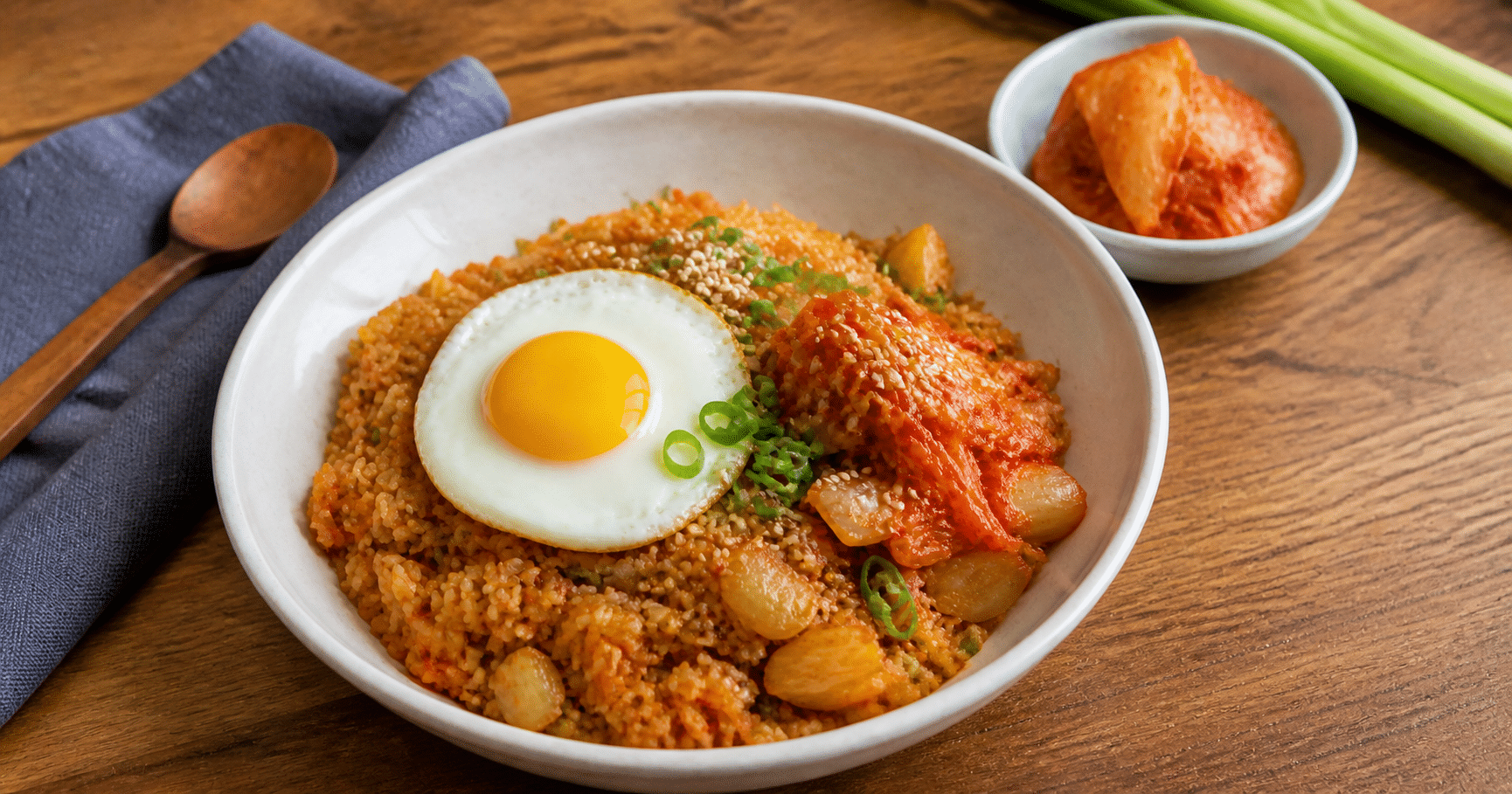
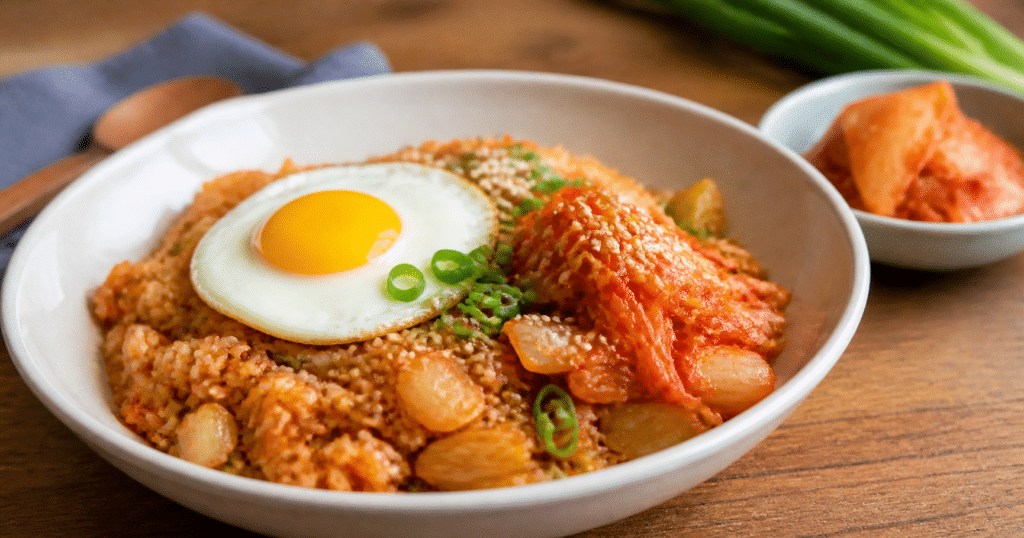
Make Quick Kimchi Fried Rice with a Fresh Kimchi Finish
This practical version cooks some kimchi for deep, savory flavor and saves a little for a crisp, uncooked topping. It serves two as a main dish and takes about 20 minutes.
Ingredients
-
- 2 cups cooked, chilled rice
-
- 1 cup chopped kimchi, divided
-
- 1 tablespoon neutral cooking oil
-
- 2 scallions, thinly sliced
-
- 1 tablespoon kimchi brine, optional
-
- 2 eggs, optional
-
- 1 teaspoon toasted sesame oil
-
- Sesame seeds, for serving, optional
Step-by-Step Instructions
-
- Set aside about 1/4 cup of the kimchi for topping. Chop the remaining kimchi into bite-size pieces.
-
- Heat the neutral oil in a large skillet over medium heat. Add the chopped kimchi and cook for 2 to 3 minutes, stirring occasionally.
-
- Add the rice and kimchi brine, if using. Break up clumps and stir-fry until the rice is hot throughout, about 4 to 5 minutes. Stir in most of the scallions.
-
- If you want eggs, cook them separately in the skillet and serve one over each portion. Divide the rice between bowls and drizzle with sesame oil.
-
- Let the rice cool briefly, then top each bowl with some of the reserved uncooked kimchi, the remaining scallions, and sesame seeds.
Refrigerate leftovers promptly in a covered container and use within a few days. Reheat leftovers thoroughly; add fresh kimchi after reheating if you want a cool, tangy contrast.
Keep the Flavor—and Choose What Matters Most
For a fully cooked dish, add kimchi early enough to soften and season the food. For a brighter taste and a serving that has not been heated, add some at the end. You can also serve chilled kimchi on the side of soup or roasted vegetables without changing how the main dish is prepared.
Kimchi can be high in sodium, and salt levels vary by brand and recipe, so check the label if you are watching your intake. Its live cultures are a possible feature of some unpasteurized products—not a guarantee of a specific health effect.
The Bottom Line on Heating Kimchi
Cooking kimchi can reduce or kill its live cultures, but it does not make the food pointless: its tangy flavor and vegetable ingredients still have a place in a meal. If you want both a warm cooked dish and uncooked kimchi, save a small portion for the table.
Cook kimchi for flavor; keep some cold when you want the uncooked version.