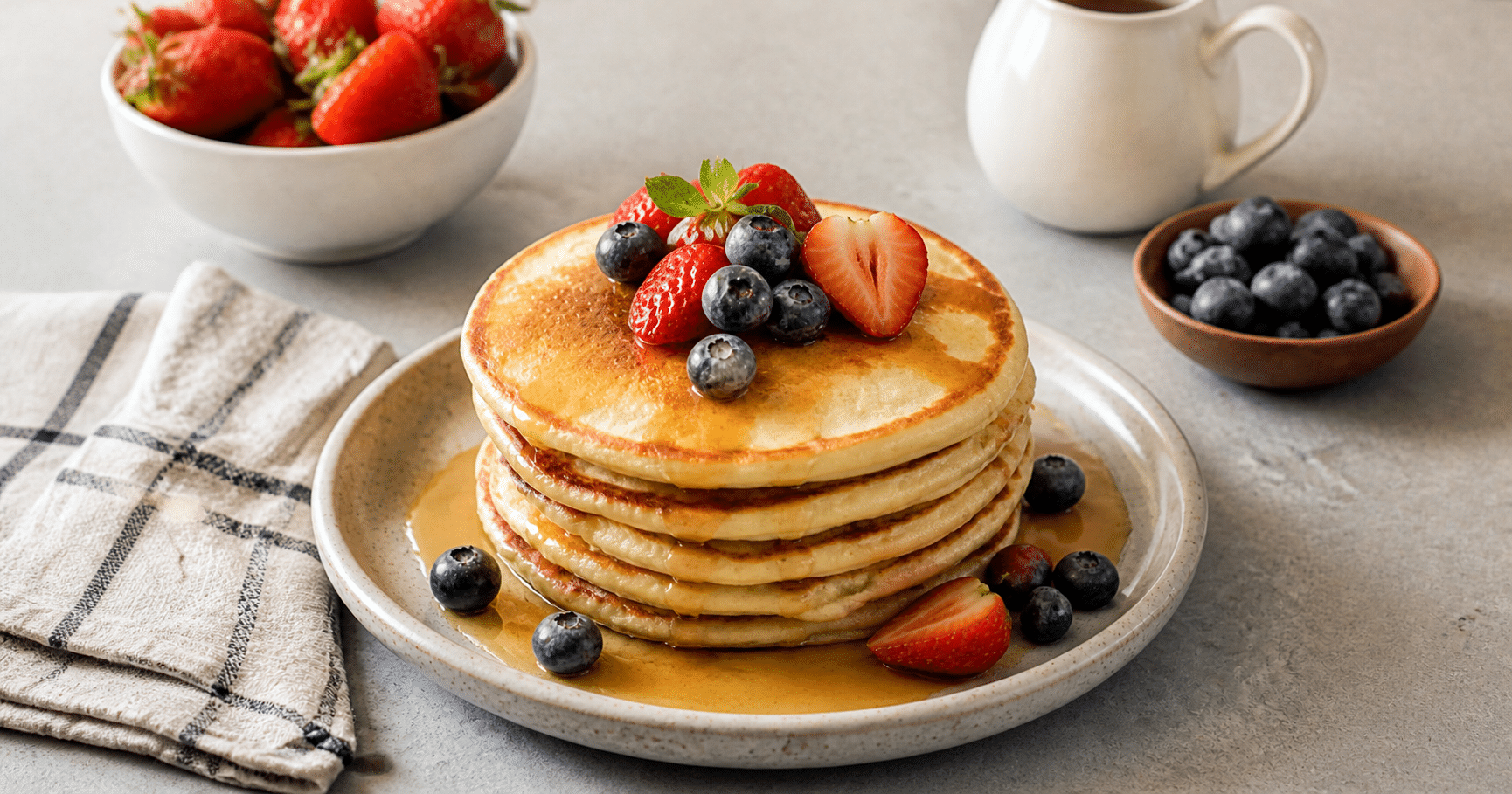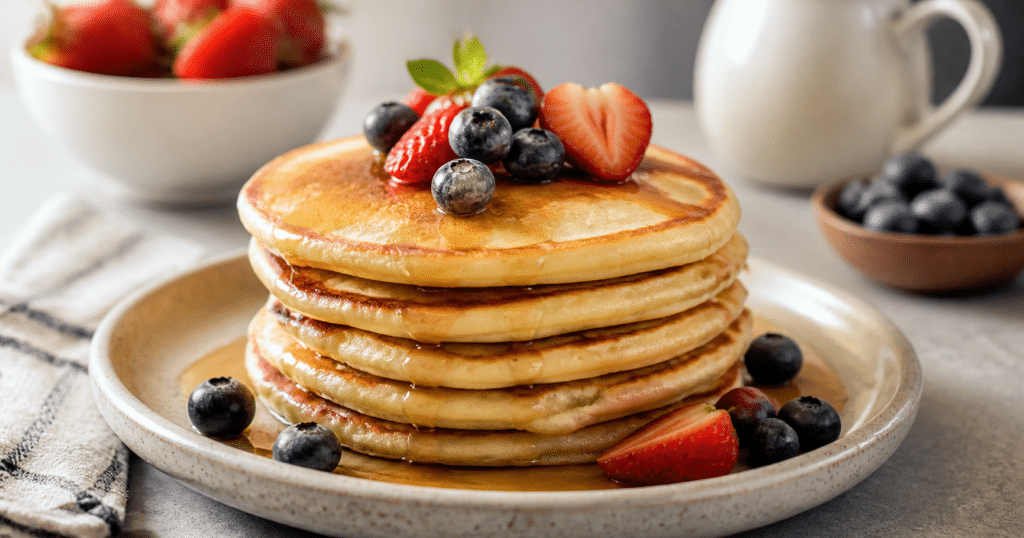
Greek yogurt pancakes have the soft, tender middle of a diner-style stack, with a gentle tang that keeps each bite from tasting too sweet. They feel like a weekend treat, but the batter comes together with familiar ingredients and doesn’t require a mixer or special technique.
The yogurt does more than add a pleasant flavor. It brings moisture and protein, while its thickness helps create a substantial pancake. But there’s a catch: Greek yogurt varies widely in thickness, so adding all the milk at once can leave you with batter that’s either too stiff or too thin.
Below, you’ll find an easy recipe, plus practical cues for getting pancakes that cook through without turning dense. You’ll also see how to make the stack more filling—or keep it firmly in the “something special” category, depending on what sounds good.
What Greek Yogurt Brings to Pancake Batter
Greek yogurt is strained to remove some of the liquid whey, which makes it thicker than many regular yogurts. In pancake batter, that thickness adds body, while the yogurt’s moisture helps keep the cooked centers tender. Its mild acidity also pairs well with baking soda, which helps the batter rise.
These pancakes aren’t automatically a low-calorie or low-sugar breakfast. Their nutritional value depends on the ingredients, portion size, and what goes on top. Still, plain Greek yogurt contributes protein, and choosing a simple topping such as berries or sliced banana can add fruit without relying entirely on syrup.
For the best balance, use plain, unsweetened yogurt. Flavored varieties can make the batter sweeter and may have a thinner consistency, which can change how much milk you need. Full-fat, low-fat, and nonfat Greek yogurt can all work; the finished pancakes may differ slightly in richness.
Three Small Choices That Make a Better Stack
1. Aim for thick, scoopable batter
Greek yogurt brands differ, and so does the way people measure flour. The batter should be thicker than standard pourable pancake batter but still fall slowly from a spoon. If it holds its shape like dough, stir in milk a tablespoon at a time.
2. Mix only until the flour disappears
A few small lumps are fine. Stirring until the batter is completely smooth can develop more gluten in the flour, which may make pancakes chewy rather than tender. After mixing, let the batter rest for about five minutes so the flour can hydrate.
3. Give the pan time to heat
A pan that’s too hot can brown the outside before the middle is done; a pan that’s too cool can leave pancakes pale and slow to set. Use medium to medium-low heat, and cook one small test pancake first. Adjust the temperature if it darkens before bubbles appear on top.
How to Make Greek Yogurt Pancakes
This recipe makes about eight pancakes, enough for three or four people depending on appetite. Allow roughly 10 minutes to mix the batter and 15 minutes to cook in batches.
Ingredients
-
- 1 cup all-purpose flour
-
- 2 tablespoons sugar
-
- 2 teaspoons baking powder
-
- 1/4 teaspoon baking soda
-
- 1/4 teaspoon fine salt
-
- 2 large eggs
-
- 3/4 cup plain Greek yogurt
-
- 1/2 cup milk, plus more as needed
-
- 1 teaspoon vanilla extract
-
- 2 tablespoons unsalted butter, melted and slightly cooled
-
- Butter or neutral oil for the pan
Step-by-Step Instructions
-
- In a medium bowl, whisk together the flour, sugar, baking powder, baking soda, and salt.
-
- In a separate bowl, whisk the eggs, Greek yogurt, milk, vanilla, and melted butter until mostly combined. The yogurt may leave a few small lumps.
-
- Pour the wet mixture into the dry ingredients. Stir gently just until no large streaks of dry flour remain. If the batter seems too stiff to scoop, add milk 1 tablespoon at a time. Rest the batter for five minutes.
-
- Heat a lightly buttered or oiled skillet over medium to medium-low heat. Scoop about 1/4 cup batter per pancake onto the pan, leaving room to spread.
-
- Cook until the edges look set and bubbles form on top, about 2 to 3 minutes. Flip and cook the other side until golden and cooked through, about 1 to 2 minutes more. Lower the heat if the outside browns too quickly.
-
- Serve warm with berries, sliced fruit, toasted nuts, or a modest drizzle of maple syrup.
Easy Ways to Make the Recipe Your Own
For a little more whole-grain flavor, replace up to half of the all-purpose flour with whole-wheat flour. Whole-wheat flour absorbs more liquid, so the batter may need an extra splash of milk after resting. For blueberry pancakes, scatter berries onto each pancake after pouring the batter into the pan; this helps distribute them without overworking the mixture.
Keep the first batch warm on a plate in a low oven while you cook the rest, or serve pancakes as they come off the skillet. Leftovers can be refrigerated in a covered container and reheated within three to four days. To freeze, cool them completely, place parchment between pancakes, and store in a freezer-safe container; reheat from frozen in a toaster or microwave.
For an especially tender result, treat the batter gently: a few lumps are a better sign than a perfectly smooth bowl.
A Weekend Pancake Worth Keeping Simple
Greek yogurt gives these pancakes a tender, satisfying texture and a subtle tang, but the real secret is balancing the thick yogurt with just enough milk and resisting the urge to overmix. Start with plain yogurt, cook over moderate heat, and adjust the batter only if it needs it.
Put out a few toppings and let everyone build a stack their own way. Sometimes a good weekend breakfast is less about making pancakes elaborate and more about getting the first one golden.