A handful of spinach tossed into dinner may seem like a small choice. Yet leafy greens are a regular feature of eating patterns that researchers have studied for their possible links to healthier aging and cognitive function.
That does not mean kale or lettuce can prevent memory loss on its own. The more useful question is how greens fit alongside foods such as beans, whole grains, berries, nuts, and fish—and how to make that combination easy to eat week after week.
Dark leafy greens bring several nutrients to the table, but the evidence has an important limit: studies of brain health usually examine overall eating patterns, not a single vegetable in isolation. Here’s what greens may contribute, what research can and cannot tell us, and a simple way to put them on the plate.
Why leafy greens belong in a brain-friendly eating pattern
Eating patterns such as the Mediterranean, DASH, and MIND diets emphasize vegetables, whole grains, beans, nuts, and other minimally processed foods. The MIND diet, developed specifically as a research framework for brain health, gives particular attention to green leafy vegetables. Its recommendations are not a treatment plan, and researchers are still studying how diet relates to cognitive changes over time.
Leafy greens offer a mix of nutrients, including folate, vitamin K, and carotenoids such as lutein. These substances have roles in normal body functions; lutein, for example, is found in the brain as well as the eyes. Researchers have explored whether such nutrients are associated with cognitive health, but that does not establish that eating greens prevents dementia or improves memory.
Greens also contribute fiber and can make meals more filling without adding much saturated fat. Their value may be greatest as part of a wider pattern that supports cardiovascular health, since blood vessels help deliver oxygen and nutrients throughout the body—including to the brain.
Four practical ways greens support the bigger picture
1. They make a healthy pattern easier to build
A salad or cooked greens can serve as a base for other nourishing foods: beans, whole grains, nuts, olive oil, or fish. That combination matters more than treating any one ingredient as a brain “superfood.” For example, spinach alongside lentils and brown rice makes a more complete meal than a few leaves added as a garnish.
2. Different greens bring different nutrients
Kale, collards, spinach, romaine, arugula, and Swiss chard all count as leafy greens, though their nutrient profiles vary. Rotating among them is a practical way to add variety. Fresh, frozen, and plain bagged greens can all work; convenience may make it easier to eat them regularly.
3. Raw and cooked greens both have a place
Raw greens are quick in salads and sandwiches, while cooked greens shrink down and are easy to stir into soups, eggs, pasta, or beans. Cooking changes the volume and availability of some nutrients, so there is no need to insist on one preparation method. Choose the form you enjoy and will use.
4. Consistency matters more than a perfect serving
Some MIND-diet guidance calls for leafy greens several times a week. That can be as simple as a side salad at lunch, spinach in an omelet, or frozen greens stirred into soup. A missed day does not undo a healthy pattern; the aim is a repeatable routine, not perfection.
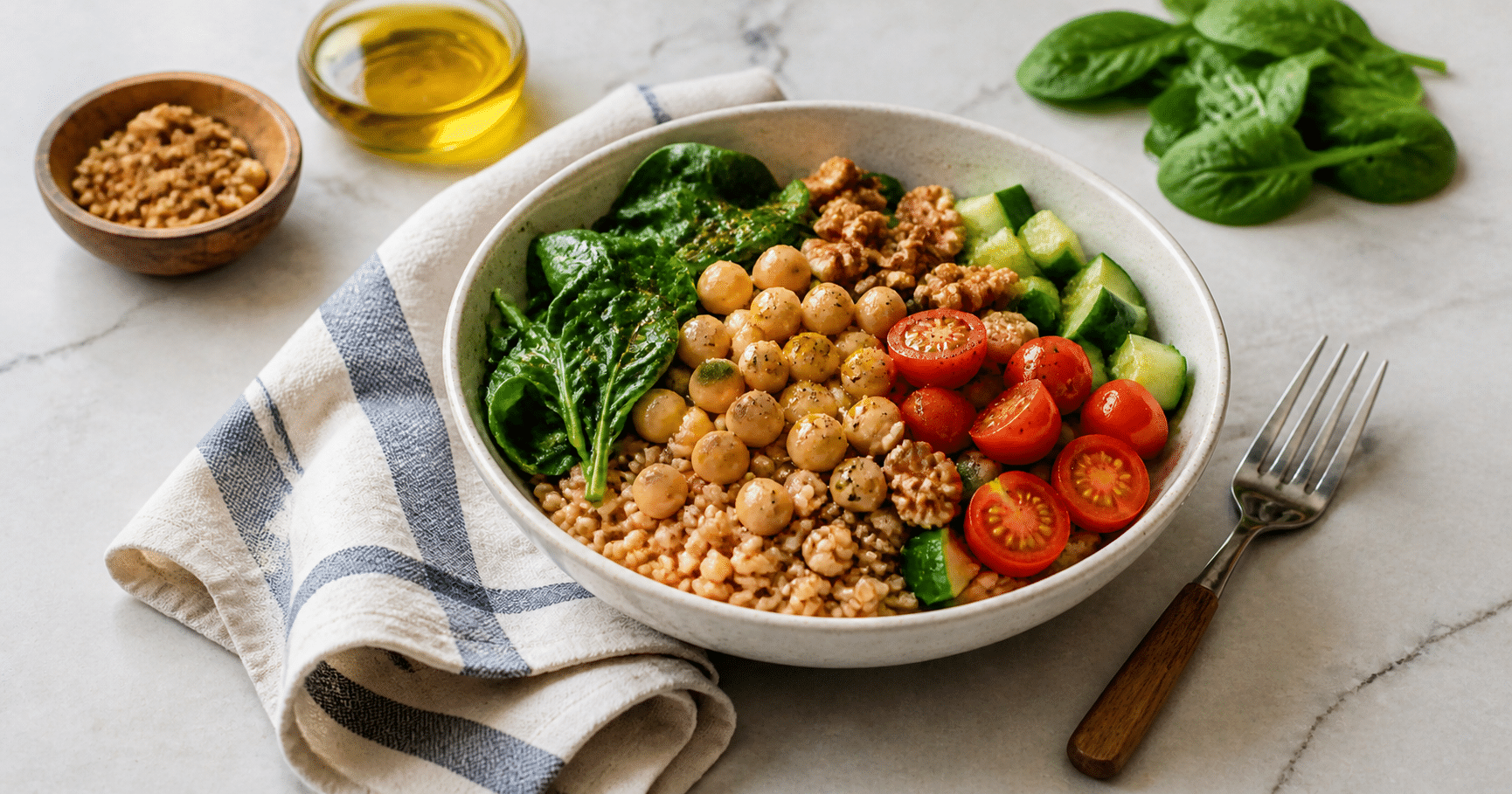
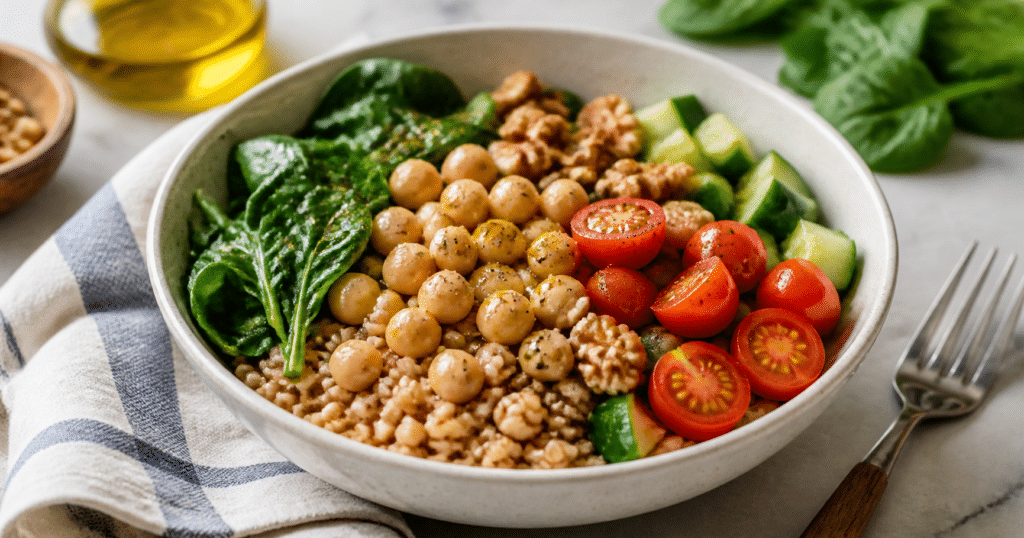
A simple greens-and-chickpea grain bowl
This flexible lunch combines leafy greens with chickpeas, whole grains, and a lemon-olive oil dressing. It makes two servings and takes about 15 minutes if the grains are already cooked.
Ingredients
-
- 2 cups cooked farro, brown rice, or quinoa
-
- 2 cups baby spinach or chopped kale
-
- 1 cup rinsed and drained canned chickpeas
-
- 1 cup chopped cucumber or cherry tomatoes
-
- 2 tablespoons chopped walnuts or pumpkin seeds
-
- 1 tablespoon extra-virgin olive oil
-
- 1 tablespoon lemon juice, plus more to taste
-
- Black pepper and a small pinch of salt
Step-by-Step Instructions
-
- Divide the cooked grain between two bowls. If it is cold, warm it briefly or serve it chilled.
-
- Add the greens, chickpeas, and cucumber or tomatoes.
-
- Stir the olive oil and lemon juice together, then spoon the dressing over the bowls.
-
- Finish with walnuts or pumpkin seeds and black pepper. Taste before adding salt, especially if the chickpeas were salted.
For a more substantial meal, add a cooked egg, leftover salmon, or another protein you enjoy. Refrigerate leftovers promptly in a covered container and use within three to four days; keep the dressing separate if you want the greens to stay crisper.
Make greens easier to eat regularly
Bitterness and texture can put people off, but small changes help. Massage chopped kale with a little dressing, add spinach near the end of cooking, or pair robust greens with beans, garlic, lemon, or a sprinkle of cheese. Frozen spinach is useful in soups and casseroles, while prewashed greens can save time on busy days.
One medication detail is worth knowing: greens such as spinach, kale, and collards contain vitamin K. People taking warfarin are generally advised to keep vitamin K intake consistent rather than suddenly avoiding these foods or sharply increasing them. Ask the clinician managing the medication before making a major dietary change.
Keep the whole plate in view
Leafy greens are a nutritious, practical part of a brain-friendly eating pattern, but no single food guarantees better memory or prevents cognitive disease. Pair them regularly with other varied, minimally processed foods, and choose preparations that fit your preferences and routine.
The best greens are not the ones with the biggest health claim attached—they’re the ones that keep finding their way onto your plate.