Adding fiber sounds simple: eat more beans, vegetables, fruit and whole grains. But if your usual meals are low in fiber, a sudden switch to high-fiber breakfasts, salads and snacks can bring bloating, gas or constipation—the opposite of the comfortable routine you were hoping for.
The fix usually isn’t to avoid fiber. It’s to increase it gradually and give your body time to adjust. Fiber is a broad category, too: oats, fruit, beans and bran affect digestion in different ways, and a food that feels fine for one person may bother another.
For adults over 50, general daily benchmarks are about 21 grams for women and 30 grams for men. You don’t need to hit your goal overnight. Here’s how to build toward it with smaller changes, enough fluids and foods that fit your own tolerance.
Why a gradual increase can feel better
Fiber is the part of plant foods that your body doesn’t fully digest. Some types, including the soluble fiber in oats and beans, absorb water and can help make stool softer. Other types, found in foods such as whole-wheat products and vegetable skins, add bulk. Most plant foods contain a mix.
When you suddenly eat much more fiber, gut bacteria have more material to ferment. That process can produce gas, while a larger, bulkier stool may feel uncomfortable if your body isn’t used to it. Taking a slower approach gives your digestive system time to adapt—and makes it easier to notice which foods agree with you.
Four ways to add fiber without overdoing it
1. Make one small change at a time
Start with a single addition, such as a small piece of fruit, a few spoonfuls of beans or a serving of oats. Keep that change in place for several days before adding another. If you develop uncomfortable gas or bloating, hold steady or scale back rather than pushing through a big jump.
There’s no one schedule that suits everyone. Your starting diet, activity, medications and digestive conditions can all affect how quickly you adjust.
2. Try gentler-feeling options first
Oatmeal, ripe bananas, peeled or cooked fruit, and well-cooked vegetables are practical starting points for many people. They still add fiber, but may feel easier than a large serving of bran, raw vegetables or beans. Individual tolerance varies, especially for people with irritable bowel syndrome.
Beans and lentils are nutritious, but they can cause gas. Begin with a small portion, rinse canned beans well, and increase only if you feel comfortable. You don’t have to eliminate a food just because a full serving feels like too much at first.
3. Drink fluids regularly
Fiber works best as part of an overall pattern that includes enough fluid. If you increase fiber but drink very little, stools may become harder or more difficult to pass. Sip water through the day and have a drink with meals; needs vary with health, activity and climate.
There’s no need to force excessive amounts of water. If a clinician has advised you to limit fluids because of a heart, kidney or other condition, follow that guidance.
4. Spread fiber across meals
A large bowl of bran cereal plus beans at dinner can be a lot to add all at once. Smaller amounts at breakfast, lunch and dinner are often easier to manage. Check food labels, too: products called “high fiber” can contain a sizeable amount in one serving, so look at the grams and your portion size.
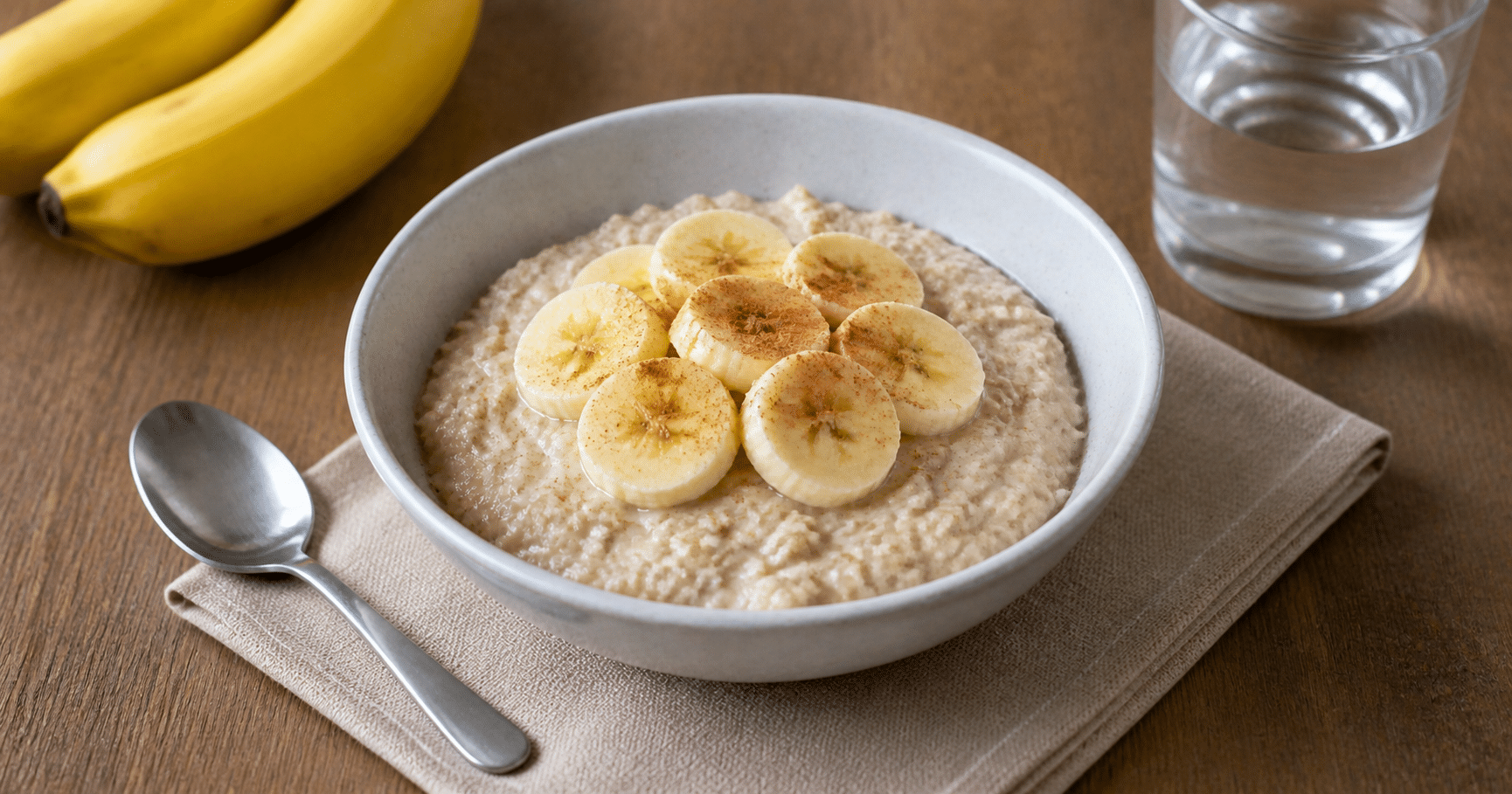
A gentle bowl of oatmeal to start with
This simple breakfast adds fiber without piling several concentrated sources into one meal. Its fiber content is approximate and can vary by brand and banana size. If you’re not used to oats, start with a smaller portion.
Ingredients
-
- 1/3 cup old-fashioned rolled oats
-
- 2/3 cup water or milk of your choice
-
- 1/2 ripe banana, sliced
-
- A pinch of cinnamon, optional
Step-by-Step Instructions
-
- Combine the oats and water or milk in a small saucepan.
-
- Bring to a gentle simmer, then cook for about 5 minutes, stirring occasionally, until the oats are soft. Follow the package directions if they differ.
-
- Serve with the sliced banana and cinnamon, if using. Add extra liquid if you prefer a looser texture.
For a bit more fiber once this portion feels comfortable, add a small amount of ground flaxseed or serve a whole piece of fruit alongside it. Increase one ingredient at a time so you can tell how your body responds. Refrigerate leftovers promptly and use within a few days, reheating with a splash of liquid.
When fiber needs a more careful approach
If you have a condition such as irritable bowel syndrome, some high-fiber foods—particularly certain beans, wheat products, onions or some fruits—may trigger symptoms. That doesn’t mean all fiber will cause trouble. A clinician or registered dietitian can help you identify tolerated foods and, when appropriate, guide a structured eating plan.
Fiber supplements aren’t automatically gentler than food. Psyllium, for example, needs to be taken with enough liquid, and it may affect how some medicines are absorbed; ask a pharmacist or clinician about timing. If you have trouble swallowing or have been told you have a narrowing in your digestive tract, get medical advice before using a fiber supplement.
Talk with a health professional about persistent constipation or a sudden, lasting change in bowel habits—especially if it comes with blood in the stool, unexplained weight loss or significant pain. More fiber is not always the answer to a new or ongoing symptom.
Build the habit, not the biggest serving
The most comfortable route to more fiber is usually a modest one: add a small serving, drink fluids regularly and give your body time to adapt. Choose foods you enjoy and spread them through the day instead of trying to make up the difference in one meal.
Start with one small change and let comfort set the pace. A steady habit is more useful than a sudden fiber overhaul.