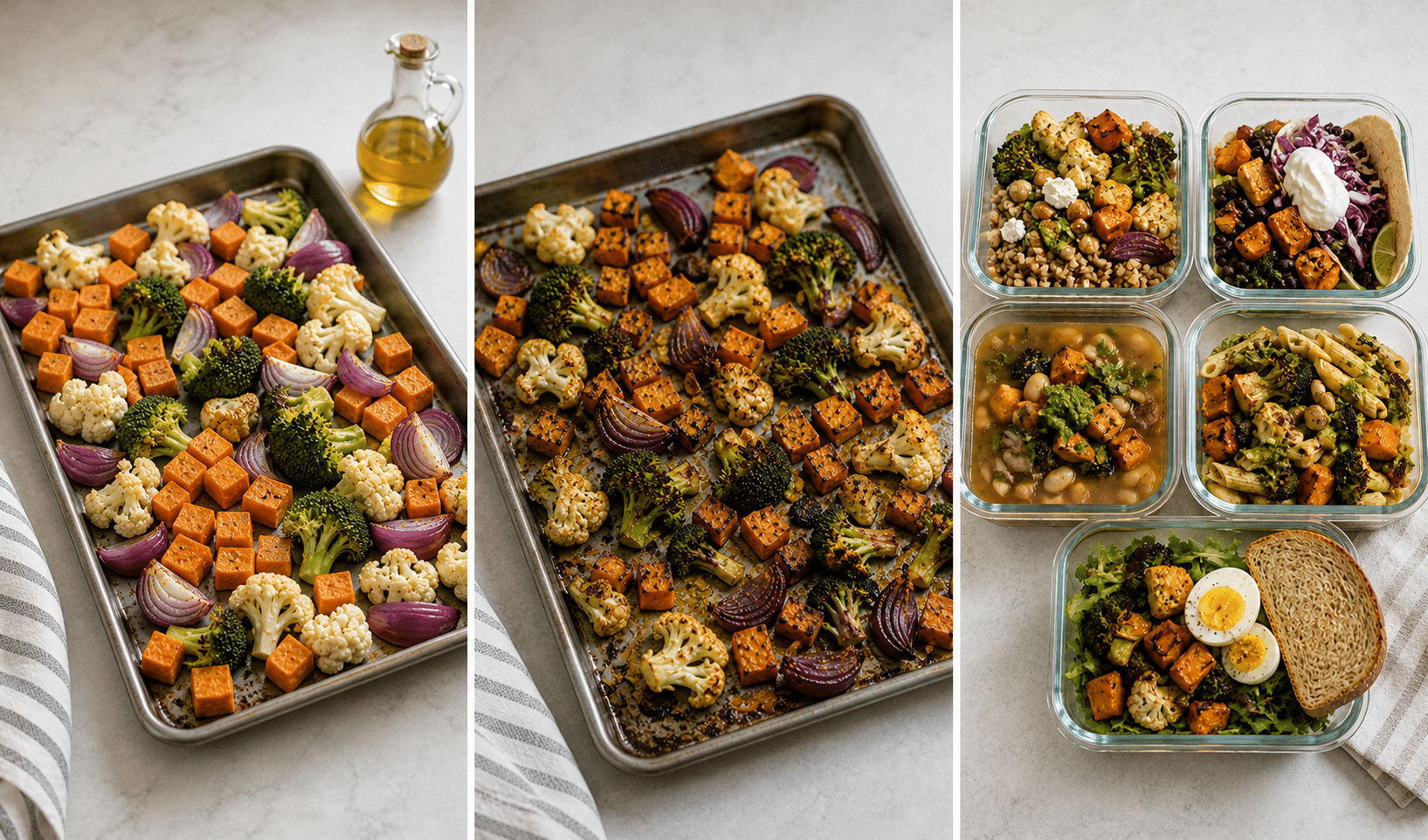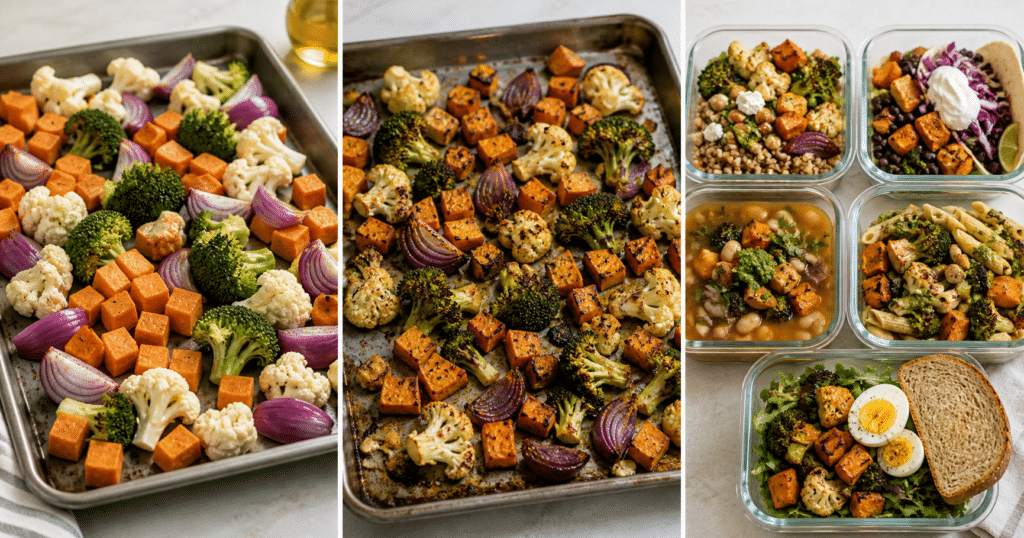
A tray of roasted vegetables can make weekday lunches easier—but eating the same bowl five days in a row is a quick way to lose interest. The trick is to roast a mild, flexible mix, then give each portion a different partner: one day it gets grains and a tangy dressing; another, tortillas and salsa.
Roasting also changes the vegetables’ texture and flavor. Broccoli and cauliflower turn tender at the edges, while sweet potato becomes soft and lightly browned. That makes them easy to fold into meals that feel different without cooking a full recipe from scratch each day.
One detail matters more than it may seem: a crowded pan steams vegetables instead of browning them. A standard rimmed baking sheet can handle a moderate batch, but the vegetables need room. Here’s a one-tray method, five ways to use it, and a simple plan for keeping the last lunch safe to eat.
One Flexible Roast, Five Different Lunches
This batch uses sweet potato, broccoli, cauliflower, and red onion—vegetables sturdy enough to roast together and versatile enough to pair with grains, beans, eggs, pasta, or greens. A light seasoning keeps the flavor neutral, so you can take each serving in a different direction.
Roasting requires dry heat, which helps drive moisture from the vegetables and encourages browning. The result is concentrated, savory flavor and a mix of soft centers and caramelized edges. It doesn’t make vegetables nutritionally superior in every way, but it does offer an appealing, practical way to include them in meals.
Think of the roasted vegetables as the starting point, not the whole lunch. Add a filling base and a source of protein, then finish with a sauce or seasoning that changes the character of the meal.
Five Ways to Turn the Tray Into Lunch
1. Mediterranean grain bowl
Put the vegetables over cooked farro, brown rice, or quinoa. Add chickpeas, a handful of spinach, and a spoonful of hummus thinned with lemon juice and water. Feta or chopped olives can add a salty finish.
2. Quick taco wrap
Warm the vegetables with black beans and a little cumin or chili powder. Tuck them into a whole-wheat tortilla with shredded cabbage, salsa, and plain yogurt or avocado. A squeeze of lime brightens the filling.
3. Roasted vegetable soup
Simmer a portion of vegetables with broth and white beans until hot. Mash some of the vegetables against the side of the pot to thicken the soup, or blend part of it for a smoother texture. Add black pepper and a spoonful of pesto just before serving.
4. Pesto pasta lunch
Toss the vegetables with cooked whole-wheat pasta, a small spoonful of pesto, and a splash of pasta water. White beans or chopped leftover chicken make it more substantial. This works warm or as a chilled pasta salad.
5. Greens, egg, and vegetable plate
Serve the vegetables over arugula or baby spinach with a hard-cooked egg and a slice of whole-grain toast. Finish with a simple vinaigrette. The warm vegetables soften the greens slightly without turning this into another grain bowl.
How to Roast One Tray for the Week
Ingredients
-
- 10 ounces sweet potato, peeled if desired and cut into ½-inch cubes
-
- 10 ounces broccoli florets, cut into similar-sized pieces
-
- 10 ounces cauliflower florets
-
- 6 ounces red onion, cut into wedges
-
- 2 tablespoons olive oil
-
- ¾ teaspoon kosher salt, or to taste
-
- ¼ teaspoon black pepper
-
- ½ teaspoon garlic powder
Step-by-Step Instructions
-
- Heat the oven to 425°F. Line a large rimmed baking sheet with parchment if you like; leave enough space for the vegetables to sit mostly in a single layer.
-
- Pat the vegetables dry if they’re damp. Toss them with the olive oil, salt, pepper, and garlic powder in a large bowl.
-
- Spread the vegetables across the pan. Roast for 25 to 30 minutes, turning them once about halfway through, until the sweet potato is tender and the florets have browned edges. If the pan looks crowded, use a larger sheet or roast in two batches—crowding encourages steaming.
-
- Let the vegetables cool briefly, then divide them into five portions. Add a grain, beans, eggs, or another protein when assembling each lunch, rather than mixing every component into one container.
Allow about 10 minutes for prep and 25 to 30 minutes for roasting. The vegetables will make roughly five modest portions; add a filling base and protein to make each one a complete lunch. Store sauces, greens, tortillas, and crunchy toppings separately so they keep their texture.
Keep the Last Lunch Fresh and Safe
Cooked leftovers should go into the refrigerator within two hours, in shallow containers, and be kept at 40°F or colder. Use refrigerated cooked vegetables within three to four days. If you’re prepping on Sunday for five weekday lunches, freeze the fifth portion once it has cooled, then thaw it in the refrigerator the night before you plan to eat it. Frozen vegetables may be softer after thawing, but they work well in soup, pasta, or a warm grain bowl.
For the best browning, don’t wash the vegetables and leave them wet just before roasting, and don’t pour on extra oil in an attempt to improve the texture. Dry surfaces, space on the pan, and a hot oven do more to help the edges brown.
A Tray That Works Harder
One neutral batch of roasted vegetables can become five lunches when you vary the base, protein, sauce, and serving style. Keep the accompaniments separate, and the same tray can go from a bright grain bowl to a cozy soup without feeling like leftovers on repeat.
For a Sunday prep session, roast the vegetables once, refrigerate the first four portions, and freeze the fifth. Then let the week’s sauces and toppings—not another round of cooking—do the work of making lunch feel new.