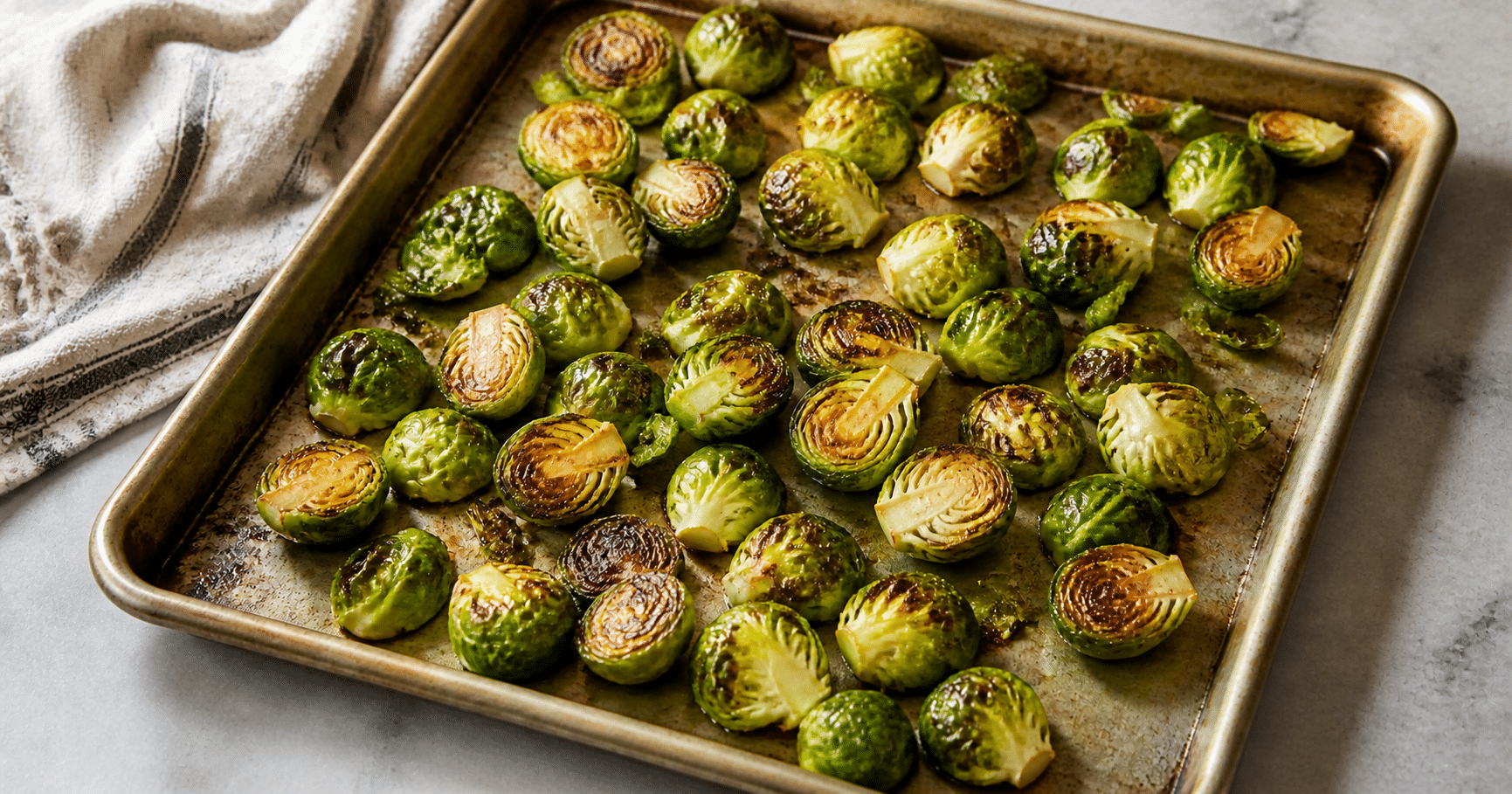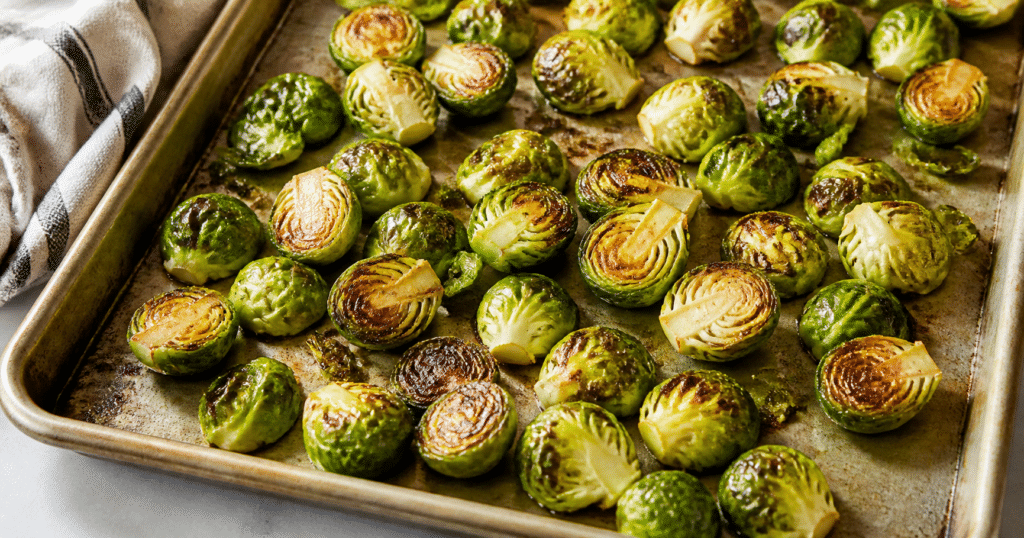
Brussels sprouts can go from promising to limp in a hurry. The usual culprit isn’t the vegetable itself—it’s trapped moisture. When sprouts are wet, crowded, or turned too often, they steam before they have a chance to develop the browned, crisp edges that make them so appealing.
The good news is that crisp sprouts don’t require special equipment or complicated seasoning. A hot oven, a dry vegetable, and enough room on the pan do most of the work.
Brussels sprouts are also a useful cool-weather side dish, bringing fiber and nutrients such as vitamin C and vitamin K to the table. Here’s how to roast them for browned outsides and tender centers—and what to change if they keep coming out soggy.
The Secret to Crisp Brussels Sprouts Is Managing Moisture
Roasting browns the natural sugars on the surface of food while heat softens the inside. But water on the sprouts or pooled on the pan uses energy to evaporate. Until that moisture is gone, the sprouts are more likely to soften and steam than brown.
That’s why thorough drying matters as much as oven temperature. So does spacing: sprouts packed tightly together release moisture into the space between them, where it can linger. Arrange them in a single layer with a little breathing room, and the hot air can circulate around their surfaces.
Cutting the sprouts in half creates a flat side that can make direct contact with the pan and turn deeply golden. Put that side down and leave the sprouts undisturbed for much of the cooking time. Frequent stirring may seem helpful, but it interrupts browning and can make the final texture less crisp.
Four Details That Make a Noticeable Difference
1. Dry them thoroughly after washing
Rinse fresh sprouts, trim away any dry stem ends, and remove damaged outer leaves. Then dry them well with a clean kitchen towel or paper towels. If you wash them ahead, give them time to air-dry before oiling.
2. Choose sprouts that are similar in size
Uniform sprouts cook more evenly. Cut small ones in half and quarter especially large ones so the pieces are closer in size. Keep some of the loose leaves: they roast into crisp little bites, though they may finish sooner than the larger pieces.
3. Give the pan—and the vegetables—room
Use a large, rimmed metal baking sheet. If the sprouts look crowded or overlap, divide them between two pans. A single, uncrowded layer is more important than squeezing the entire batch onto one sheet.
4. Roast hot and wait before turning
A 425°F oven is hot enough to encourage browning while cooking the centers through. Start with the cut sides down and let them roast without moving for about 15 minutes. Then check for color and tenderness; the full cooking time will depend on the sprouts’ size and your oven.
How to Roast Brussels Sprouts for Crisp Edges
This method makes about four side-dish servings. For the best texture, serve the sprouts soon after roasting, while their browned surfaces are still at their crispest.
Ingredients
-
- 1½ pounds fresh Brussels sprouts
-
- 1½ to 2 tablespoons olive oil or a neutral cooking oil
-
- ½ teaspoon kosher salt, or to taste
-
- Black pepper, to taste
-
- Optional: lemon juice, grated Parmesan, or a small drizzle of balsamic vinegar for finishing
Step-by-Step Instructions
-
- Heat the oven to 425°F. Set a rack in the center of the oven. Use a large, rimmed metal baking sheet; there’s no need to preheat it.
-
- Prepare the sprouts. Rinse them, trim the stem ends, remove any damaged leaves, and dry thoroughly. Halve small and medium sprouts lengthwise; quarter unusually large ones.
-
- Season evenly. Toss the sprouts with the oil, salt, and pepper until lightly coated. They should look glossy, not drenched. Add a little more oil only if some pieces remain dry.
-
- Arrange cut-side down. Spread the sprouts across the baking sheet in one layer, leaving space between pieces. If they won’t fit without crowding, use a second pan.
-
- Roast without disturbing. Cook for 15 minutes, then check the undersides. If they are nicely browned, turn the sprouts and roast for another 5 to 10 minutes, until tender inside and browned on more than one side.
-
- Finish and serve. Taste and adjust the seasoning. Add lemon juice, Parmesan, or balsamic vinegar after roasting so the sprouts can brown before a wet or sugary topping is added.
Why Good Sprouts Can Still Turn Soft
Fresh Brussels sprouts are the easier choice when crispness is the goal. Frozen sprouts contain more surface moisture after thawing and tend to soften more readily. If using them, roast straight from frozen rather than thawing first, spread them widely across the pan, and expect a less reliably crisp result.
Even fresh sprouts lose some crispness as they sit, especially once piled into a serving bowl or covered. If you’re cooking ahead, leave them uncovered until they stop steaming, refrigerate leftovers in a covered container, and reheat them in a hot oven or skillet. A microwave will warm them, but it won’t restore crisp edges.
A useful cue: If the sprouts are pale and releasing moisture, give them more space—not another splash of oil.
Let the Pan Do the Browning
For crisp roasted Brussels sprouts, start with dry, evenly sized pieces, coat them lightly with oil, and spread them out cut-side down on a hot sheet pan. Roast at 425°F, resist the urge to stir too soon, and add finishing touches once they’re browned.
The simplest fix for soggy sprouts is often not a new ingredient. It’s giving each one enough room to roast.