Kimchi can make a plain bowl of rice taste like dinner—but it doesn’t have to mean a complicated recipe, a special shopping trip, or a plate that sets your mouth on fire. A spoonful of the Korean fermented vegetable dish can bring crunch, tang, and savory depth to foods you already make.
One useful detail often gets lost in the excitement about fermented foods: kimchi’s flavor can survive cooking, but its live microbes may not. That doesn’t make cooked kimchi a poor choice; it simply means there’s a difference between using it for taste and eating it uncooked.
The easiest approach is to treat kimchi like a strong condiment. Start with a small amount, pair it with familiar staples, and add it at the right point in cooking. Here are simple ways to use kimchi in everyday meals, plus a quick fried-rice recipe that can flex around what’s in your fridge.
What Kimchi Brings to an Everyday Meal
Kimchi is a broad family of Korean fermented dishes, often made with napa cabbage or radish, salt, and seasonings such as garlic, ginger, and chili. During fermentation, naturally occurring lactic acid bacteria help create its tangy flavor. Ingredients and methods vary, so kimchi can be mild or fiery, crunchy or soft, and more or less sour.
That bright, salty, savory taste is what makes kimchi so practical in the kitchen. A little can perk up bland rice, eggs, beans, or vegetables without requiring a separate sauce. It also adds vegetables and some fiber, though the amount depends on the serving and ingredients—and a small condiment portion shouldn’t be mistaken for a full serving of vegetables.
Kimchi is often discussed as a probiotic food, but not every product contains live cultures. Some kimchi is pasteurized, and heating kimchi can reduce or destroy many living bacteria. If live cultures matter to you, check the label and enjoy an unheated portion; there’s no need to avoid cooking it when flavor is the goal.
Three Easy Ways to Make Kimchi Work Harder
1. Use it where you’d use a pickle or relish
Chopped kimchi brings a lively, acidic bite to a cheese sandwich, grain bowl, baked potato, or simple plate of eggs. Begin with a tablespoon or two. You can always add more, and a modest amount is often enough to make the whole meal taste less flat.
2. Pair its bold flavor with a filling base
Rice, noodles, potatoes, tofu, eggs, beans, and leftover chicken all make useful partners. The base softens kimchi’s intensity, while a protein helps turn a quick side or topping into a more satisfying meal. Add a cooked vegetable, such as spinach or broccoli, if you want more color and variety.
3. Choose whether you want it cooked or crisp
Cook kimchi with onions, rice, or noodles when you want its flavor spread through the dish. Add it near the end—or serve it at the table—when you want more crunch and a sharper, fresher taste. If you’re hoping to retain live cultures, keep some kimchi uncooked and add it after the hot food has cooled slightly.
Quick Kimchi Fried Rice for Two
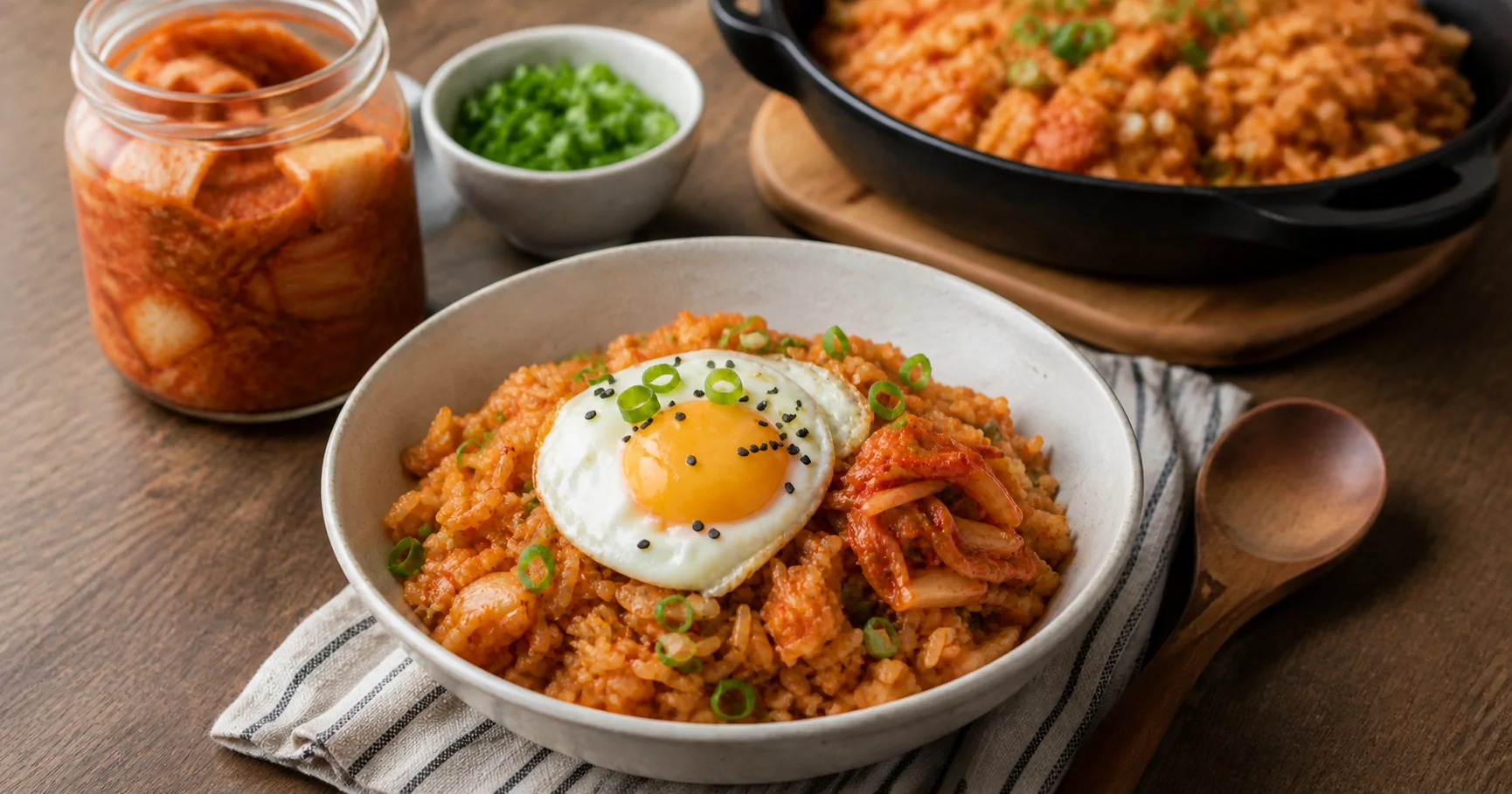
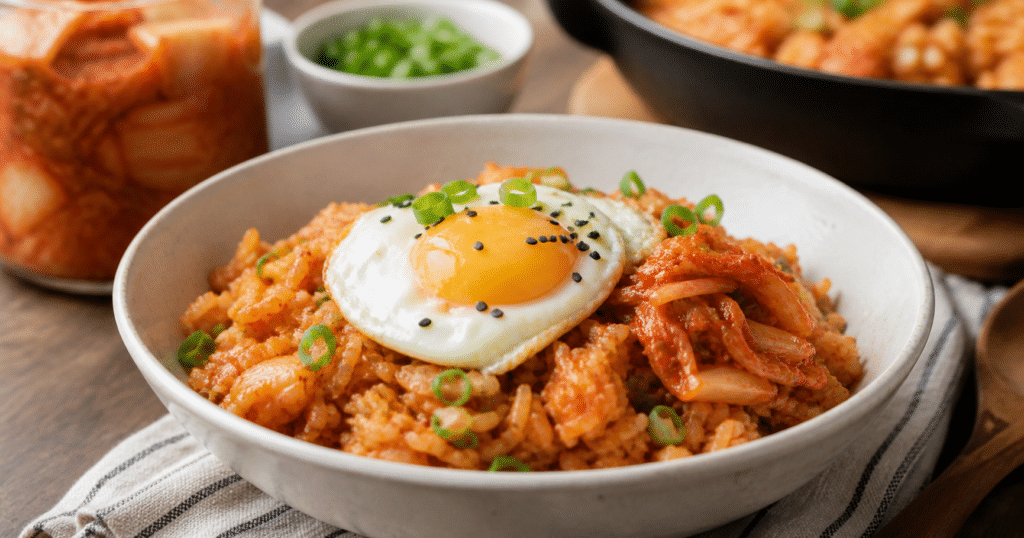
This flexible dinner uses cooked rice and a handful of everyday ingredients. Cold rice separates easily in the pan, and the kimchi seasons it as it cooks. The result is savory and tangy, with a crisp kimchi topping if you reserve a little for serving.
Ingredients
-
- 2 cups cooked, chilled rice
-
- 3/4 cup chopped kimchi, plus a little extra for serving if desired
-
- 1 tablespoon neutral cooking oil
-
- 2 scallions, thinly sliced
-
- 1 tablespoon kimchi liquid, if available
-
- 1 teaspoon soy sauce, optional
-
- 2 eggs
-
- Sesame seeds, optional
Step-by-Step Instructions
-
- Prepare the rice. Break up large clumps with a fork or clean hands. If using freshly cooked rice, spread it on a plate for a few minutes so excess steam can escape.
-
- Cook the kimchi. Warm the oil in a large skillet over medium heat. Add the chopped kimchi and most of the scallions; cook for 2 to 3 minutes, stirring, until fragrant.
-
- Add the rice. Stir in the rice and kimchi liquid. Cook for 4 to 5 minutes, breaking up clumps and turning the rice so it heats evenly. Taste before adding soy sauce, since kimchi can already be salty.
-
- Cook the eggs. In a separate pan, fry the eggs to your preference. Divide the rice between two bowls and top each with an egg, the remaining scallions, sesame seeds, and uncooked kimchi if you like.
Plan on about 10 to 15 minutes if the rice is already cooked. Refrigerate leftovers promptly in a covered container and reheat them until steaming hot. For food safety, don’t leave cooked rice sitting at room temperature for an extended time.
Small Adjustments That Make a Difference
Check the salt before seasoning. Kimchi’s sodium content varies by brand and recipe, and its brine adds flavor as well as salt. If you’re watching sodium, compare labels, use less kimchi, skip the soy sauce, or balance the dish with unsalted rice and vegetables. Anyone following a sodium-restricted diet can factor kimchi into the guidance they’ve received from their health professional.
Kimchi also changes as it ferments. A jar may become more sour over time, which can be appealing in cooked rice or soup. If the flavor is stronger than you like, use a smaller amount or rinse a portion briefly—though rinsing will also wash away some of its seasoning.
Beyond fried rice, try a few uncomplicated combinations:
-
- Put a spoonful beside scrambled eggs and toast.
-
- Top a rice bowl with kimchi, tofu, and leftover vegetables.
-
- Stir chopped kimchi into canned beans while they warm.
-
- Add it to a grilled cheese sandwich just before closing it.
Keep opened kimchi refrigerated and use a clean utensil to serve it. Its flavor may grow more sour as it continues to ferment, so taste it before adding extra vinegar, salt, or seasoning to a dish.
A Simple Jar, Many Easy Meals
Kimchi doesn’t need to become the centerpiece of dinner. Use it in small amounts to add punch to foods you already enjoy, and choose cooked or uncooked additions according to the flavor and texture you want. If you’re curious about live cultures, check the label and save some for the table rather than cooking the entire portion.
The simplest dinner upgrade may be the one that takes only a spoonful: a little kimchi, a familiar staple, and no extra fuss.