Turmeric can turn a pot of rice golden, give soup a warm, earthy note, and add color to a weeknight skillet. Its vivid hue has also made it a familiar ingredient in conversations about wellness, sometimes with promises that go well beyond what a pinch in dinner can deliver.
The useful distinction is simple: turmeric is a flavorful spice, not a guaranteed health treatment. How much you use, what you cook it with, and whether you enjoy the taste matter more in the kitchen than chasing a supposed “perfect” combination.
Here’s how to use ground or fresh turmeric in everyday cooking, avoid its most common flavor and staining pitfalls, and understand what adding black pepper or fat can—and cannot—tell you.
What Turmeric Adds to a Meal—and What It Doesn’t Prove
Turmeric comes from the root of a plant in the ginger family. The dried, ground spice contains curcuminoids, including curcumin, which contribute to its deep yellow color. In cooking, turmeric’s main dependable contribution is culinary: color and a distinctive flavor that is earthy, mildly bitter, and sometimes described as peppery.
Curcumin has been studied for its effects in the body, but research on a compound or concentrated supplement does not establish that an ordinary serving of turmeric will prevent or treat a health condition. A recipe is best judged as food—by its flavor, ingredients, and place in a varied diet—not as a treatment.
You may hear that black pepper or fat “activates” turmeric. Piperine, a substance in black pepper, can affect curcumin absorption, and curcumin is fat-soluble. Those facts do not show that adding pepper or oil to a meal produces a particular health outcome. Use them when they improve the dish, not because they turn it into medicine.
Three Ways to Make Turmeric Work in the Kitchen
1. Start with less than you think you need
Turmeric is assertive, and too much can make a dish bitter or dusty-tasting. For a family-size pot of soup, rice, or beans, begin with about 1/4 to 1/2 teaspoon of ground turmeric. Taste the food after it has simmered, then adjust in small increments.
It pairs naturally with garlic, ginger, cumin, coriander, lentils, chickpeas, eggs, and vegetables such as cauliflower. A little salt, acidity from lemon, or richness from yogurt or coconut milk can help round out its earthy edge.
2. Give ground turmeric a brief, gentle cook
Stirring turmeric into warm oil or butter for about 20 to 30 seconds can disperse its color and aroma through a dish. Keep the heat moderate and add liquid or other ingredients promptly; scorching spices can leave a harsh taste. You can also stir turmeric directly into broth, a sauce, or a pot of grains without blooming it first.
3. Choose fresh or ground based on the job
Fresh turmeric root has a brighter, sharper character and can be grated into soups, marinades, and stir-fries. Ground turmeric is convenient and blends easily into longer-cooked dishes. The two are not identical in flavor, so swap according to taste rather than assuming an exact one-for-one conversion.
Fresh root can stain fingers and cutting boards, while the powder can leave yellow marks on pale counters, fabrics, and plastic. A washable board and prompt cleanup are practical kitchen tools here.
Make a Simple Pot of Turmeric Rice
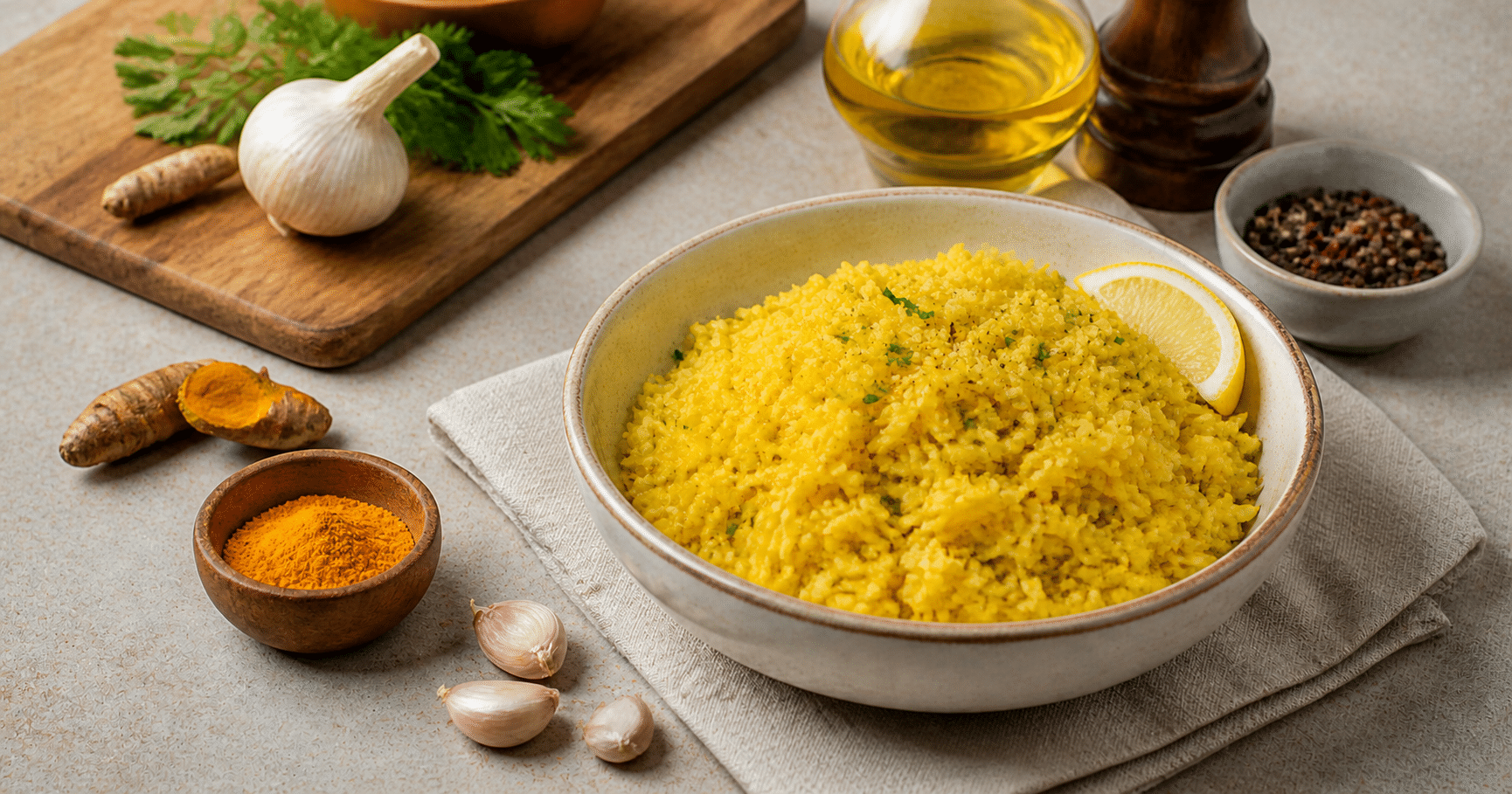
This gently seasoned rice is a flexible side dish rather than a “wellness” drink or remedy. The turmeric gives the grains a golden color, while garlic and a little butter or oil keep the flavor balanced.
Ingredients
-
- 1 cup long-grain white rice, rinsed
-
- 1 tablespoon olive oil or butter
-
- 1/2 teaspoon ground turmeric
-
- 1 small garlic clove, finely chopped
-
- 1 3/4 cups water or low-sodium broth
-
- 1/2 teaspoon salt, or to taste
-
- Black pepper and lemon wedges, optional
Step-by-Step Instructions
-
- Warm the oil or butter in a medium saucepan over medium-low heat. Add the garlic and cook for about 30 seconds, stirring so it does not brown.
-
- Stir in the turmeric, then add the rinsed rice. Mix for about 20 seconds to coat the grains.
-
- Pour in the water or broth and add the salt. Bring the liquid to a boil, then cover the pan and reduce the heat to low.
-
- Cook according to the rice package directions, usually about 15 to 18 minutes for long-grain white rice. Turn off the heat and let the covered pot stand for 5 minutes.
-
- Fluff with a fork. Taste and adjust the seasoning; serve with lemon wedges and black pepper if you like.
Prep takes about 5 minutes, with roughly 20 to 25 minutes of cooking and resting. Refrigerate leftovers promptly in a covered container and use within 3 to 4 days. Reheat until steaming hot, adding a splash of water if the rice has dried out.
Serve it with roasted vegetables, beans, fish, chicken, or eggs. For a more filling one-pot meal, fold in cooked chickpeas or peas near the end of cooking.
Black Pepper Is Optional, Not a Requirement
Black pepper is a familiar partner for turmeric, but you do not need to add it to every recipe. Piperine can change how the body absorbs curcumin, yet increased absorption is not the same thing as a demonstrated health benefit from a home-cooked dish. Pepper also changes flavor, so let the meal—not a health claim—guide the choice.
That absorption effect is one reason concentrated turmeric or curcumin supplements deserve more care than normal seasoning. Supplements can interact with medications, and their doses and formulations differ from food. If you take prescription medicines and are considering a turmeric supplement, ask a pharmacist or clinician; a culinary pinch is not a substitute for medical advice.
Let Flavor Be the Measure
Use turmeric to add color and warmth, start with a modest amount, and balance its earthiness with ingredients that suit the dish. Fresh root and ground spice each have a place, and neither needs an elaborate “activation” ritual to belong in dinner.
The best turmeric recipe is one you want to make again—not one that promises more than food can deliver.