


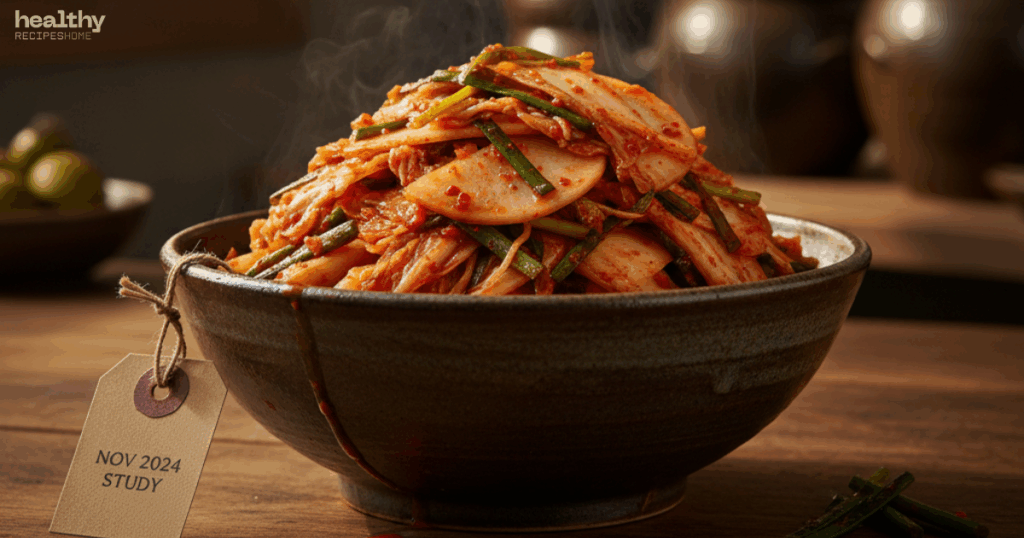
A November 2024 meta-analysis published in the journal Nutrition Reviews has found that regular consumption of fermented kimchi is linked to significant reductions in blood pressure.
Researchers from the University of Connecticut’s College of Agriculture, who led the review, found that study participants who ate kimchi regularly saw their blood pressure drop by an average of 3.48 mmHg (systolic) and 2.68 mmHg (diastolic).
This is a “very promising result” for a simple dietary change, according to lead researcher Ock Chun, a professor at UConn. The review also found that kimchi consumption was linked to lower fasting glucose and triglycerides, positioning it as a metabolic powerhouse.
But Wait, Isn’t Kimchi a “Salt Bomb”? Solving the Paradox
This finding immediately raises a question: How can a food packed with sodium lower blood pressure?
The study’s authors were also intrigued. Their hypothesis, as explained by lead author Seoeun Ahn, is that the powerful probiotics in kimchi—the beneficial bacteria—appear to “offset the hypertensive effect of sodium.”
Here’s how it works:
-
Probiotic Power: The specific lactic acid bacteria (like Lactobacillus) created during fermentation are thought to help the body process and excrete sodium more efficiently, preventing it from raising blood pressure.
-
Potassium Power: We can’t forget the main ingredients. Napa cabbage, radishes, and garlic are all naturally rich in potassium, a vital mineral known to help relax blood vessel walls and counteract sodium’s effects.
How to Get the Benefits: 5 Easy Ways to Eat Kimchi Daily
This is the most important part. The benefits are tied to the probiotics, which means the type of kimchi you buy matters.
Important Note: To get these probiotic benefits, you must use unpasteurized, fermented kimchi. This is the kind found in the refrigerated section of your grocery store. Shelf-stable kimchi in a can or jar has been heat-treated, which kills the beneficial live bacteria.
Here are 5 easy ways to get a daily dose.
1. The 5-Minute Kimchi Scramble
A simple upgrade to your breakfast. Add 1/4 cup of chopped kimchi to your scrambled eggs during the last 30 seconds of cooking. The gentle heat won’t kill all the probiotics, and it adds incredible flavor.
2. The “No-Cook” Kimchi Avocado Toast
A visual and trendy option. Top a slice of whole-grain toast with mashed avocado, a layer of kimchi, and a sprinkle of sesame seeds. It’s a perfect balance of healthy fats, fiber, and probiotics.
3. The 10-Minute Kimchi Fried Rice (or Quinoa)
The classic way to use leftover rice. Sauté your cold, leftover rice or quinoa with a bit of soy sauce and sesame oil. Turn off the heat, then stir in a generous half-cup of kimchi and top with a fried egg.
4. The “Gut-Brain” Miso Soup Upgrade
Kimchi and miso are a probiotic power couple. Prepare your favorite miso soup as usual, but just before serving, turn off the heat and swirl in a spoonful of chopped kimchi. This protects the live cultures in both ingredients.
5. The Ultimate Kimchi Grilled Cheese
A comfort-food hook. Layer kimchi inside a grilled cheese sandwich (on whole-grain bread) before grilling. The cheese melts into the tangy kimchi for an unforgettable, spicy, and probiotic-rich meal.
The Takeaway: A Flavorful Tool for Heart Health
While no single food is a magic bullet, this new research positions kimchi as a powerful, evidence-backed tool for supporting metabolic and heart health.
It seems the benefits of its probiotics and potassium are powerful enough to outweigh the concerns over its salt content.
Medical Disclaimer
The information in this article is for informational purposes only. Always consult with your physician or other qualified health provider with any questions you may have regarding a medical condition. Never disregard professional medical advice or delay seeking it because of something you have read on this website, especially if you have high blood pressure or other medical conditions.