Magnesium is easy to overlook because it rarely gets the attention given to protein or calcium. Yet this mineral helps the body carry out hundreds of processes, including making energy, supporting normal muscle and nerve function, and maintaining healthy bones.
Many magnesium-rich foods are familiar staples: beans, leafy greens, nuts, seeds and whole grains. The practical challenge is not finding an exotic ingredient—it is making room for these foods regularly, especially when meals lean heavily on refined grains and packaged convenience foods.
One useful detail: a food can be nutritious even if your body does not absorb every milligram of its magnesium. Here’s what to know about daily needs, satisfying food sources and an easy meal that brings several of them together.
Why magnesium belongs in everyday meals
Your body uses magnesium in hundreds of enzyme reactions. It plays a role in energy production, protein building, muscle contraction and nerve signaling. It also contributes to bone structure, alongside nutrients such as calcium and vitamin D.
For adults ages 51 and older, the recommended daily intake is 420 milligrams for men and 320 milligrams for women. These are daily targets from food and, when appropriate, supplements—not amounts that need to come from one meal. Needs can differ in some circumstances, so a clinician can offer individual guidance.
Magnesium occurs naturally in many plant foods, especially seeds, nuts, legumes and whole grains. Some of these foods also contain fiber and other nutrients, making them worthwhile choices for a balanced eating pattern. Eating magnesium-rich foods supports intake, but it should not be presented as a treatment for a specific symptom or condition.
Five easy ways to add magnesium-rich foods
1. Sprinkle seeds on meals
Pumpkin seeds are among the richest everyday sources: an ounce of roasted pumpkin seeds provides about 156 milligrams of magnesium. Chia seeds provide about 111 milligrams per ounce. Add a spoonful to oatmeal, yogurt or a salad, or use pumpkin seeds for crunch on soup.
2. Keep nuts within reach
An ounce of almonds offers about 80 milligrams of magnesium, while cashews provide about 74 milligrams. A small handful makes a practical snack, and chopped nuts can also add texture to cooked vegetables or grain bowls. Choose unsalted varieties more often if you are watching sodium.
3. Make beans and greens regulars
Half a cup of cooked black beans contains about 60 milligrams of magnesium; half a cup of cooked spinach has about 78 milligrams. Stir beans into soup or tacos, and fold spinach into eggs, pasta or a warm grain bowl. Frozen spinach and canned beans can make these ingredients easier to use on busy days.
4. Choose whole grains sometimes
Whole grains retain more of the magnesium-containing parts of the grain than refined grains do. A cup of cooked brown rice provides roughly 80 milligrams, though amounts vary by product and preparation. Try brown rice, oats or whole-wheat bread as alternatives to refined grain choices when they suit the meal.
5. Add a few other dependable options
Edamame, peanut butter and potatoes with their skin can also contribute magnesium. These foods are useful because they fit into familiar meals: edamame in a rice bowl, peanut butter on whole-grain toast, or a baked potato alongside beans and vegetables.
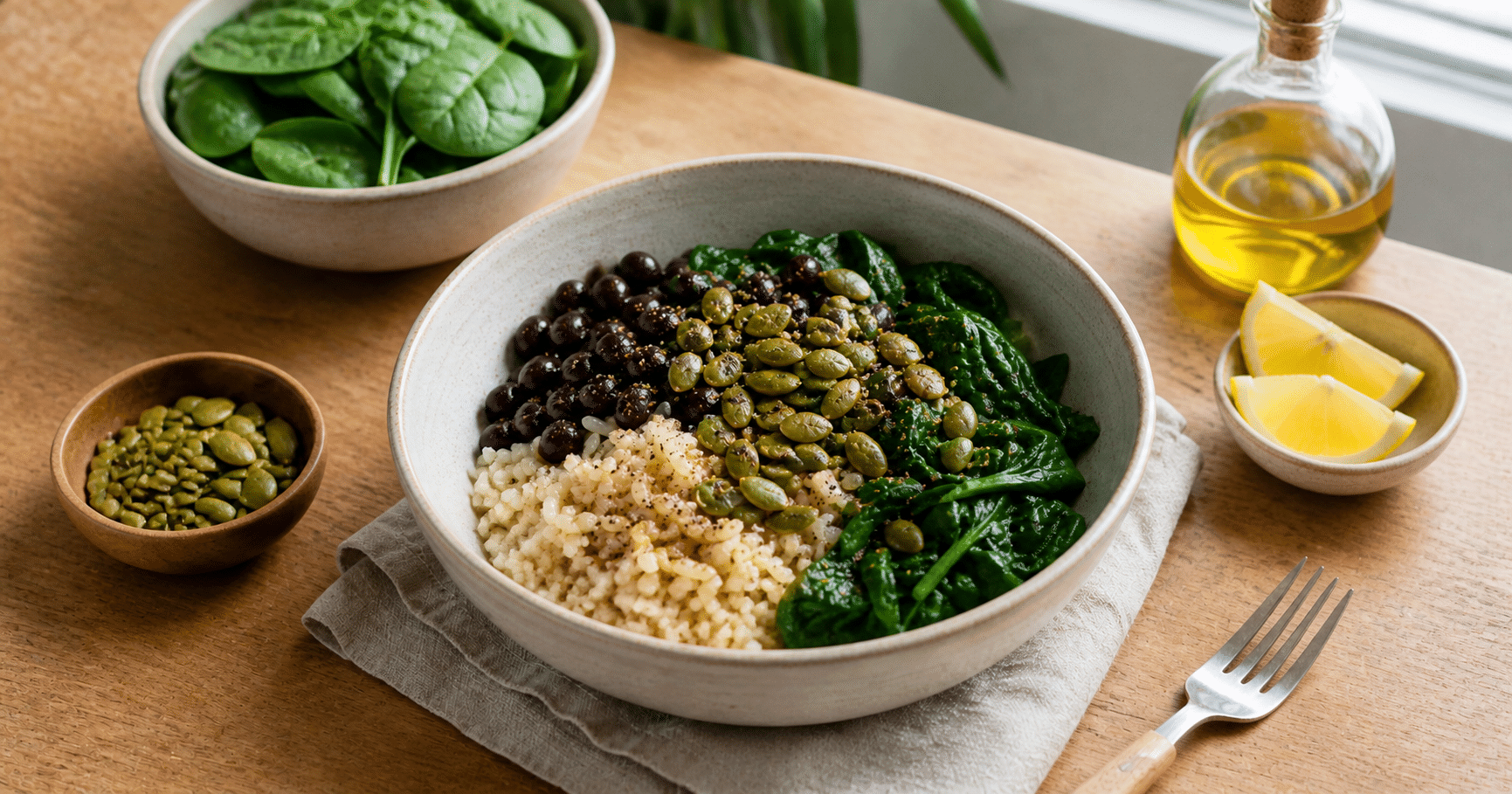
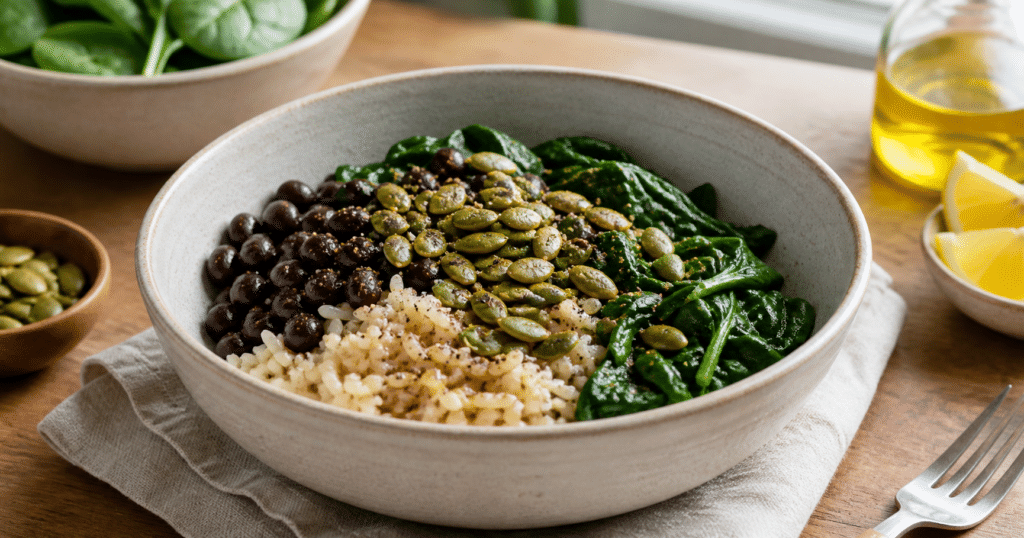
Make a simple spinach, bean and brown rice bowl
This flexible bowl combines several magnesium-containing ingredients in a satisfying lunch or light dinner. The amounts below make two servings; add a protein or extra vegetables to suit your appetite.
Ingredients
-
- 1 cup cooked brown rice
-
- 1 cup canned black beans, rinsed and drained
-
- 2 cups fresh spinach
-
- 1 tablespoon olive oil
-
- 1 tablespoon pumpkin seeds
-
- 1 tablespoon lemon juice
-
- Black pepper, to taste
Step-by-Step Instructions
-
- Warm the cooked brown rice and black beans in a saucepan or microwave-safe bowl until steaming.
-
- Heat the olive oil in a skillet over medium heat. Add the spinach and stir for 1 to 2 minutes, just until wilted.
-
- Divide the rice and beans between two bowls. Add the spinach, then finish with lemon juice, black pepper and pumpkin seeds.
Prep time is about 10 minutes if the rice is already cooked. Refrigerate leftovers promptly in a covered container and use within three to four days. For an easy variation, add chopped tomato, avocado or a spoonful of plain yogurt.
What affects how much magnesium you get?
Food amounts are estimates, not guarantees. Variety, serving size and cooking all matter, and nutrition labels may not list magnesium unless it is added or the product meets certain labeling rules. A meal built around beans, greens and whole grains can contribute meaningfully without requiring exact calculations.
Plant foods such as beans, seeds and whole grains contain compounds including phytates, which can reduce the absorption of some minerals. That is not a reason to avoid these foods: they remain nutritious choices, and soaking, cooking or processing can affect phytate levels. Focus on a varied diet rather than trying to maximize absorption from every individual ingredient.
Food sources are generally a sensible place to start. Magnesium supplements can interact with some medicines, including certain antibiotics and osteoporosis drugs, and high supplemental doses may cause diarrhea. People with kidney disease should check with a health professional before using magnesium supplements, because impaired kidneys may not clear excess magnesium normally.
A small, repeatable way to get more
Magnesium-rich eating does not require a complicated plan. Keep a few reliable staples—beans, leafy greens, oats, nuts or seeds—and work them into meals you already enjoy. A spoonful of pumpkin seeds or a side of beans may be a modest change, but repeated choices are what make everyday nutrition add up.