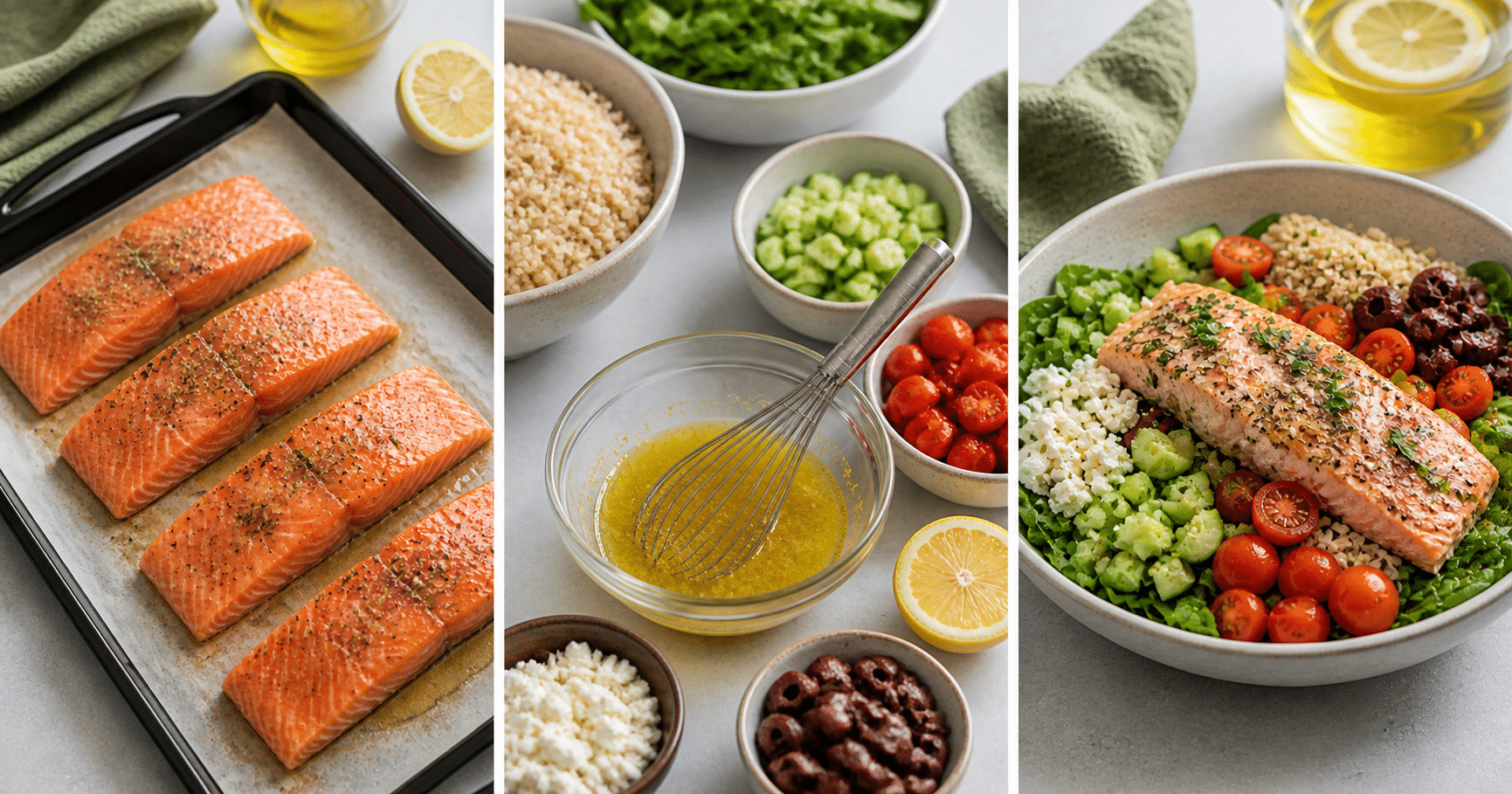
A salmon bowl can be colorful and nourishing without relying on a complicated sauce or a long ingredient list. Here, tender salmon, leafy greens, whole grains, and a lemon-olive oil dressing come together in a meal that works for lunch or dinner.
The combination is practical as well as appealing: salmon supplies protein and omega-3 fats, while greens add freshness and crunch. Olive oil brings the ingredients together, but there’s a useful detail many bowl recipes overlook: adding it to vegetables can help the body absorb some fat-soluble plant compounds—not because the oil makes the bowl a treatment, but because dietary fat is part of how those compounds are absorbed.
This recipe keeps the seasoning simple and lets the salmon and lemon do most of the work. You’ll learn how to assemble a balanced bowl, keep the fish moist, and adjust the ingredients to suit your appetite or what’s already in the refrigerator.
Why Salmon, Olive Oil, and Greens Work Well Together
Salmon provides high-quality protein and long-chain omega-3 fats, including EPA and DHA. These fats are part of a healthful eating pattern, though one bowl—or one ingredient—can’t guarantee a particular health outcome. Salmon also brings a satisfying richness that pairs naturally with bright lemon and crisp vegetables.
Extra-virgin olive oil is rich in monounsaturated fat and contains naturally occurring plant compounds. In this bowl, it serves a straightforward culinary purpose: it carries flavor, softens the sharpness of lemon, and helps the dressing cling to greens and grains. A little fat in a meal can also support absorption of carotenoids found in some vegetables, such as the beta-carotene in spinach.
Leafy greens contribute nutrients such as folate and vitamin K, along with color and texture. Using a mix of ingredients—greens, grains, fish, and vegetables—makes the bowl more satisfying than a pile of greens alone, while still allowing you to keep portions and toppings flexible.
Three Details That Make the Bowl Better
1. Choose greens with the texture you like
Baby spinach is mild and softens slightly beneath warm salmon and grains. Arugula has a peppery bite, while chopped romaine stays crisp. You can use one kind or combine them; if you prefer the greens unwilted, let the salmon and grains cool for a few minutes before assembling.
2. Keep the dressing simple and measured
Lemon juice, olive oil, and a little mustard make a bright dressing that doesn’t bury the salmon. Whisking the oil in gradually helps the dressing come together, but it’s fine if it separates a little—just stir it again before serving. The recipe uses a modest amount, and you can add more at the table if needed.
3. Treat salty toppings as accents
Feta and olives add the savory, briny flavors often associated with Mediterranean-style meals, but both can contribute a noticeable amount of sodium. Use a small amount for flavor, choose lower-sodium options when available, or leave them out and add extra lemon, herbs, or cucumber instead.
How to Make Mediterranean Salmon Bowls
This recipe makes four bowls and takes about 30 minutes, depending on whether your grains are already cooked. Brown rice, farro, quinoa, or another cooked grain all work well.
Ingredients
-
- 1¼ pounds skinless salmon fillet, cut into four portions
-
- 1 tablespoon extra-virgin olive oil, plus 2 tablespoons for the dressing
-
- ½ teaspoon dried oregano
-
- ¼ teaspoon garlic powder
-
- ¼ teaspoon black pepper
-
- 1 lemon, zested and juiced
-
- 1 teaspoon Dijon mustard
-
- 4 cups cooked brown rice, quinoa, or farro
-
- 4 cups baby spinach, arugula, or chopped romaine
-
- 1 cup chopped cucumber
-
- 1 cup halved cherry tomatoes
-
- ¼ cup crumbled feta (optional)
-
- ¼ cup sliced Kalamata olives (optional)
-
- 2 tablespoons chopped fresh parsley or dill (optional)
Step-by-Step Instructions
-
- Heat the oven. Preheat to 400°F. Line a baking sheet with parchment or lightly oil it.
-
- Season the salmon. Pat the fish dry and place it on the baking sheet. Rub with 1 tablespoon olive oil, then sprinkle with oregano, garlic powder, and black pepper. Roast for about 10–14 minutes, depending on thickness, until it flakes easily and reaches 145°F at its thickest point.
-
- Make the dressing. In a small bowl, whisk together the lemon juice and zest, Dijon mustard, and remaining 2 tablespoons olive oil. Taste and adjust with more lemon or pepper if you like.
-
- Build the bowls. Divide the cooked grains and greens among four bowls. Add cucumber and tomatoes, then top each with a salmon portion. Spoon the dressing over the bowls and finish with feta, olives, and herbs, if using.
-
- Serve while the salmon is warm. For less-wilted greens, let the fish rest briefly before adding it. For a more tender, warm salad, place the salmon straight onto the greens.
Easy Ways to Adapt It
For a quicker meal, use leftover cooked grains or a plain microwaveable grain pouch. Chickpeas can replace some of the grains or stretch the recipe, while roasted peppers, shredded carrots, or thinly sliced red onion make easy additions. If using canned chickpeas, drain and rinse them first.
Cooked salmon and grains can be refrigerated in covered containers and used within three to four days. Refrigerate leftovers within two hours of cooking, and store the greens and dressing separately if you want them to stay crisp. Assemble only the portion you plan to eat.
If you take warfarin, avoid making abrupt changes to how much vitamin K-rich food you eat. Leafy greens can be part of your diet, but keeping intake consistent and following your clinician’s guidance matters.
A Fresh, Flexible Bowl for Any Day
These Mediterranean salmon bowls bring together protein-rich fish, leafy greens, grains, vegetables, and a straightforward olive oil dressing. The ingredients are easy to swap, so the bowl can change with the season or whatever needs using up.
Keep the salmon moist, go easy on salty toppings, and let lemon and herbs provide plenty of flavor. That simple balance is what makes the recipe useful beyond a special occasion.