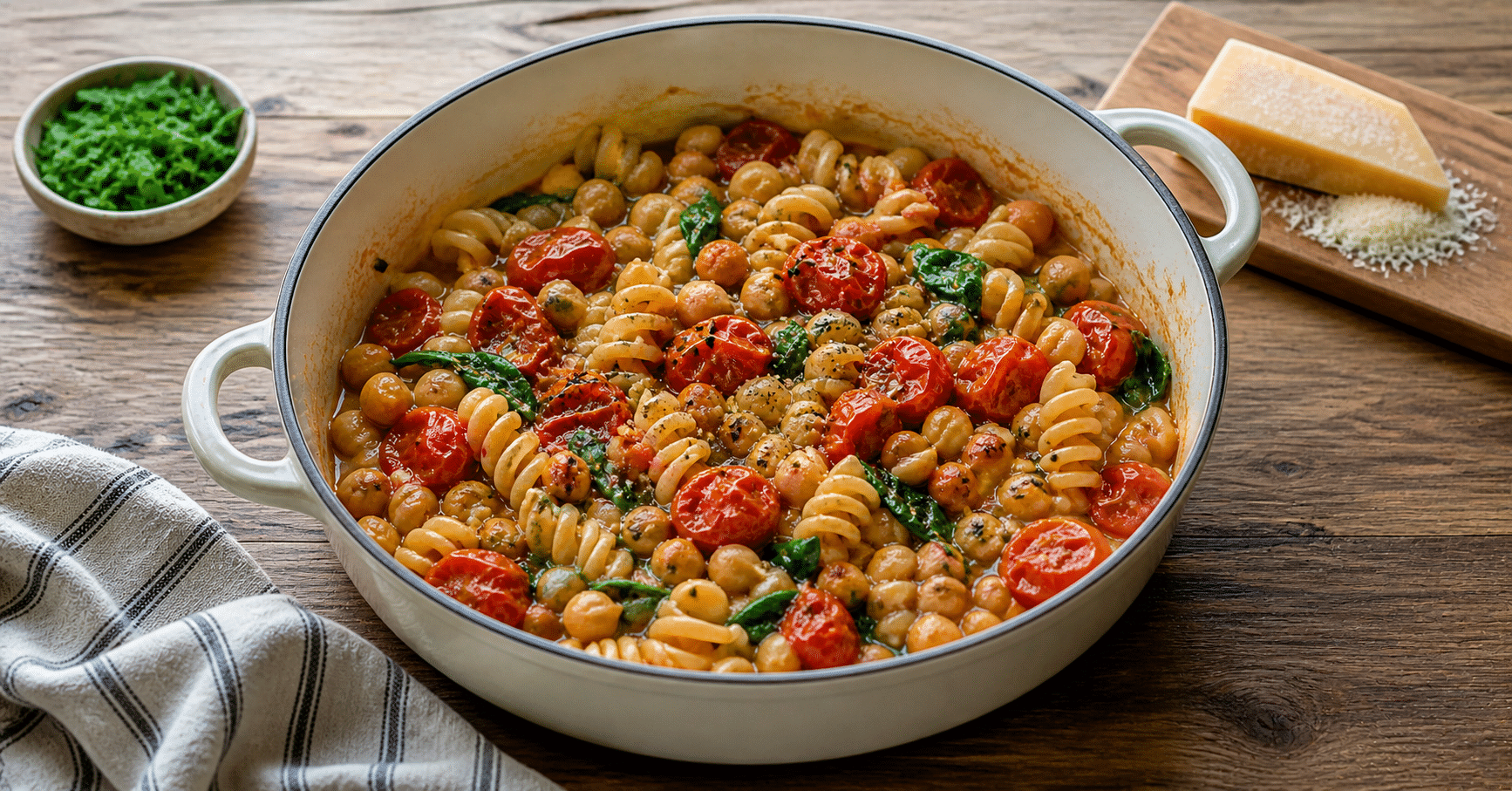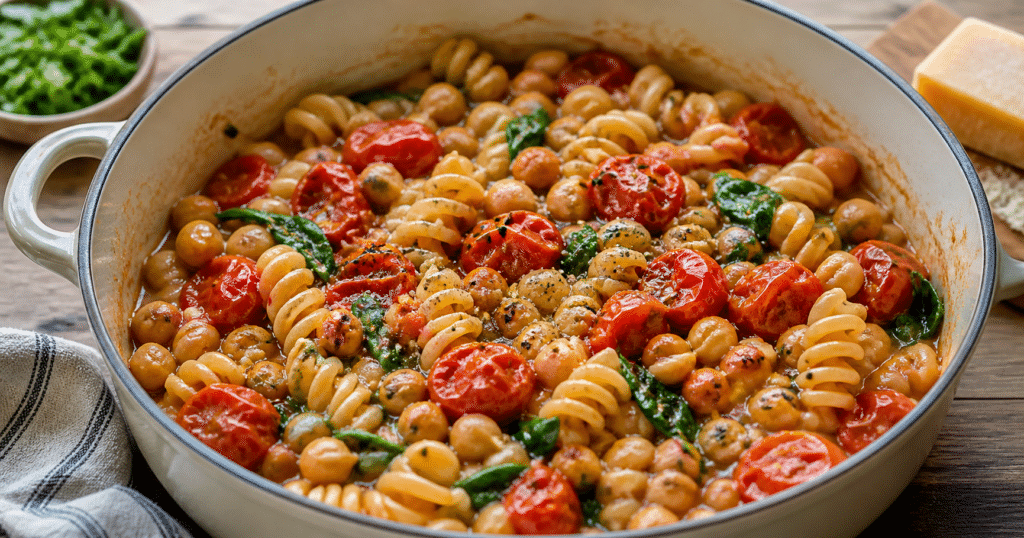
A pot of pasta can become a complete-feeling supper with little more than a can of chickpeas, a handful of tomatoes and a few cloves of garlic. As everything simmers together, the tomatoes soften and pop, seasoning the cooking liquid while the pasta releases starch that helps make the finished dish pleasantly saucy.
The small but important detail: this is not a “dump everything in and walk away” recipe. Pasta needs an occasional stir to cook evenly and keep from sticking, and the amount of liquid it absorbs depends on its shape and brand.
This version uses regular dried pasta and canned chickpeas, so there’s no need to cook beans from scratch. You’ll get a practical one-pot meal with plant protein and fiber, plus straightforward tips for adjusting the sauce and using what you have on hand.
Why Chickpeas, Pasta and Tomatoes Work So Well Together
Chickpeas bring a mild, nutty flavor and a tender, substantial texture. They also contribute plant protein and fiber, while pasta supplies carbohydrates for energy. Together, they make a satisfying base without requiring meat; adding spinach or another vegetable is an easy way to round out the bowl.
Cherry or grape tomatoes are especially useful here because their small size helps them soften quickly. As they cook, some burst and release juice into the pot. Garlic, olive oil and that tomato-rich liquid season the pasta as it cooks, while the starch in the pasta helps give the sauce a light body.
Think of this as a flexible weeknight dish, not a precisely measured sauce. Keep the pot at a gentle simmer, stir regularly, and add a little hot water if the pasta is still firm but the liquid is nearly gone.
Three Details That Make the Pot Taste Better
1. Let the tomatoes soften before adding the pasta
A few minutes in the pot gives the tomatoes time to wrinkle and start releasing their juices. That builds flavor before the pasta goes in. Add the garlic near the end of this step; minced garlic can turn bitter if it sits in hot oil for too long.
2. Rinse canned chickpeas if you want a less salty result
Draining and rinsing canned chickpeas removes some of the salty canning liquid. Since broth can also contain a lot of sodium, choose a low-sodium option if available and season the finished dish to taste rather than adding a heavy pinch of salt at the start.
3. Stir—and use the pasta’s texture as your guide
Different pasta shapes and brands cook at different speeds. Short shapes such as shells, rotini or penne are easy to manage, but begin checking a minute or two before the package’s suggested cooking time. The pasta should be tender with a slight bite, and the pot should still have enough liquid to coat it.
How to Make One-Pot Chickpea Pasta With Garlic and Burst Tomatoes
This recipe makes about four servings and takes roughly 30 minutes, including preparation. The finished dish is saucy rather than soupy; it thickens a little as it stands.
Ingredients
-
- 2 tablespoons olive oil
-
- 1 pint cherry or grape tomatoes
-
- 4 to 5 garlic cloves, thinly sliced or minced
-
- 10 ounces short dried pasta, such as rotini, shells or penne
-
- 1 can (15 ounces) chickpeas, drained and rinsed
-
- 4 cups low-sodium vegetable or chicken broth, plus up to ½ cup hot water as needed
-
- ½ teaspoon dried oregano
-
- ¼ teaspoon black pepper
-
- Salt, to taste
-
- 2 cups baby spinach (optional)
-
- Grated Parmesan and chopped fresh basil or parsley, for serving (optional)
-
- 1 to 2 teaspoons lemon juice, to finish (optional)
Step-by-Step Instructions
-
- Soften the tomatoes. Warm the olive oil in a large, deep pot or Dutch oven over medium heat. Add the tomatoes and cook for 6 to 8 minutes, stirring now and then, until several begin to soften and burst.
-
- Add the garlic. Stir in the garlic and cook for about 30 seconds, just until fragrant. Add the oregano and black pepper.
-
- Bring the pasta to a simmer. Add the dried pasta, chickpeas and broth. Stir well, scraping the bottom of the pot so pasta does not settle and stick. Bring the liquid to a gentle boil, then lower the heat to maintain a steady simmer.
-
- Cook until tender. Simmer uncovered, stirring every couple of minutes, for the time indicated on the pasta package or until the pasta is tender. If the pot looks dry before the pasta is ready, add hot water a little at a time. If it is still very liquid near the end, let it simmer briefly while stirring.
-
- Finish and serve. Stir in the spinach, if using, and cook until wilted. Taste and add salt as needed. Finish with lemon juice, Parmesan or fresh herbs, then serve warm.
Refrigerate leftovers in a covered container within two hours of cooking and use within three to four days. The pasta will absorb more sauce as it sits, so loosen individual portions with a splash of water or broth when reheating.
Easy Ways to Adjust the Recipe
For a heartier texture, use whole-wheat short pasta, but check it as it cooks; it may need a different amount of liquid or time than standard pasta. If you use a gluten-free pasta, follow its package guidance and watch closely, since some varieties soften or break more quickly in a one-pot method.
You can swap the spinach for chopped kale, adding it earlier so it has time to soften, or stir in sliced olives for a briny note. If you like more heat, add a pinch of red pepper flakes with the garlic. For a brighter finish, lemon juice is useful, but add it at the end so its flavor stays fresh.
For the best texture, serve the pasta soon after cooking. If it thickens while you set the table, a small splash of hot water brings the sauce back together.
A Simple Supper Worth Keeping in Rotation
This one-pot meal turns everyday pantry staples into a tomatoey, garlic-scented dinner with minimal cleanup. The key is to stir as the pasta simmers and adjust the liquid to the pasta—not to rely on a fixed amount no matter what shape or brand you use.
Keep a can of chickpeas and a box of short pasta in the cupboard, and this flexible recipe is never far from the table.