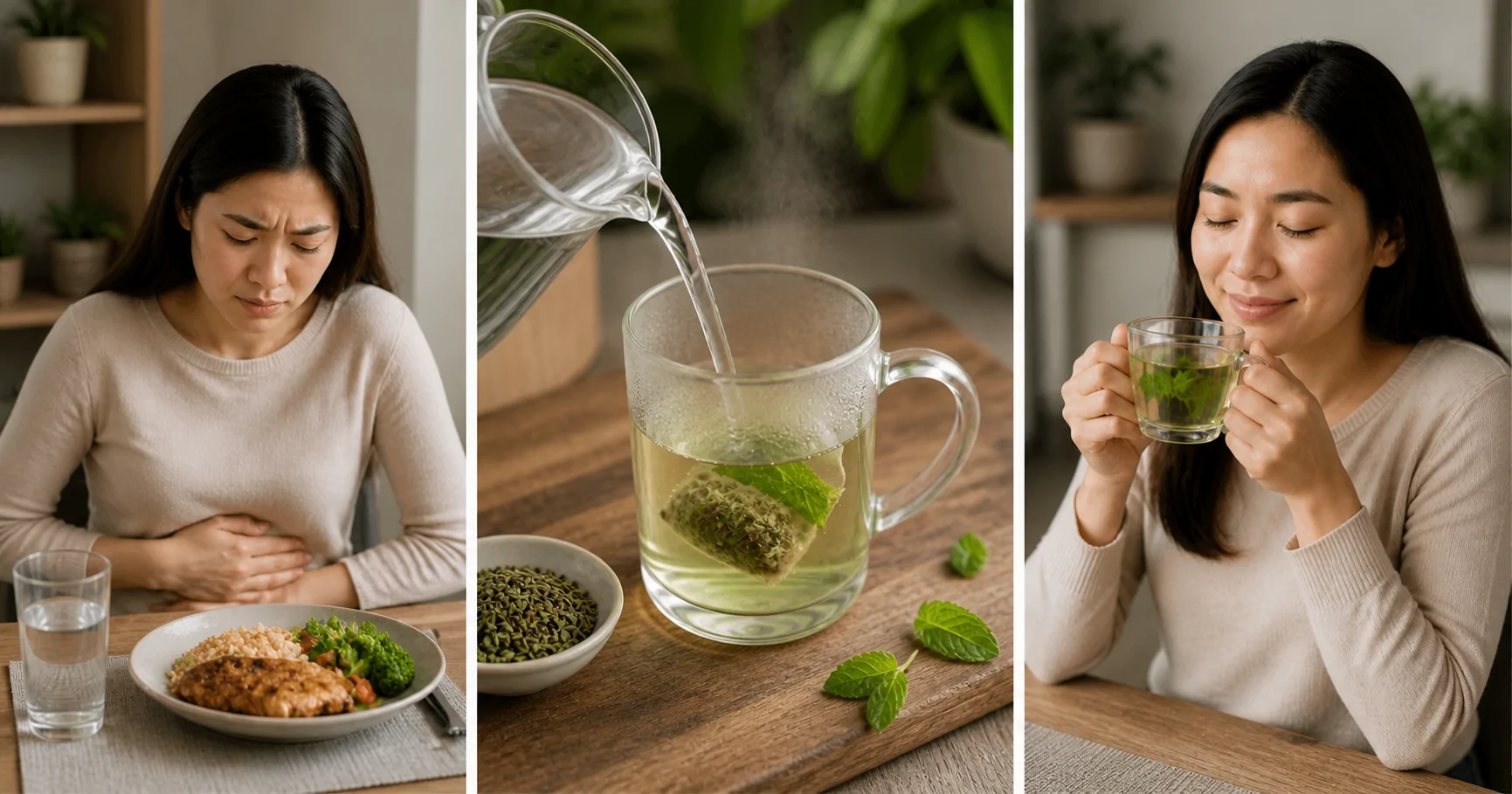
A cup of peppermint tea after dinner can feel like a tidy finish to a meal: warm, minty and naturally caffeine-free. Many people reach for it when they feel full or gassy, hoping it will settle their stomach.
There is a reason peppermint is associated with digestion—but the evidence is easy to overstate. Research on concentrated peppermint oil is not the same as research on a cup of tea, and the drink may be a poor choice for people prone to heartburn.
Here’s what peppermint tea may do after a meal, what it cannot be counted on to do, and how to prepare it so the flavor stays bright rather than bitter.
What peppermint tea may do after a meal
Peppermint leaves contain menthol and other aromatic compounds. Menthol can affect smooth muscle—the kind of muscle found in parts of the digestive tract—and that helps explain why peppermint is studied for digestive symptoms. But much of the clinical research has examined peppermint oil in specially designed capsules, including for irritable bowel syndrome, rather than tea.
A brewed cup is much less concentrated and is prepared differently. It may feel soothing, offer a pleasant way to wind down, and provide fluid after eating. Some people find its aroma or warm temperature comforting when they feel uncomfortably full. Those experiences are reasonable, but they don’t establish that tea treats indigestion, prevents gas, or speeds digestion.
That distinction matters: peppermint tea is a beverage, not a proven digestive treatment. It does not “cancel out” a large meal, burn fat, detox the body or reliably prevent bloating. If symptoms are frequent or persistent, a cup of tea should not take the place of figuring out what is causing them.
Three useful facts before you pour a cup
1. The tea and the oil are not interchangeable
Peppermint oil capsules deliver a more concentrated amount of peppermint compounds, and some are designed to release in the intestine. A tea bag or a few leaves in hot water does not reproduce that preparation. Results from studies of capsules therefore cannot be applied directly to a cup of tea.
If you enjoy peppermint tea, think of it as a comforting drink—not a substitute for a treatment recommended by a health professional.
2. It may feel soothing, but it won’t necessarily settle every stomach
Warm liquid and a pleasant flavor can make a meal’s end feel relaxing. Peppermint tea is also naturally caffeine-free when made from peppermint alone, which makes it an option for people avoiding caffeine in the evening. Check the label on blended teas, though; some include black or green tea.
Feeling better after a cup is meaningful as a personal experience, but it does not prove that the tea changed digestion or treated the cause of discomfort.
3. Heartburn is the important exception
Peppermint may relax muscle between the stomach and esophagus. In some people, that can make it easier for stomach contents to move upward and trigger or worsen reflux symptoms, such as heartburn or a sour taste. If mint tends to bother you, skip peppermint tea after meals—especially before lying down.
People with ongoing reflux may find that a non-mint, caffeine-free drink works better. A clinician can help assess frequent heartburn rather than relying on tea to manage it.
How to make a simple cup of peppermint tea
This basic method makes one mild-to-moderately flavored cup. Steeping time is a matter of taste; a longer steep usually produces a stronger flavor.
Ingredients
-
- 8 ounces water
-
- 1 peppermint tea bag, or about 1 teaspoon dried peppermint leaves
-
- Optional: a few fresh mint leaves or a small amount of honey
Step-by-Step Instructions
-
- Bring the water to a boil, then pour it over the tea bag or dried leaves in a mug.
-
- Cover the mug and steep for 5 to 10 minutes. Start at the shorter end if you prefer a lighter taste.
-
- Remove the tea bag or strain out the leaves. Add fresh mint or a little honey if desired.
-
- Let it cool to a comfortable temperature and sip after your meal. There is no established therapeutic amount or schedule for peppermint tea.
For a fresh-leaf version, lightly press a few clean peppermint leaves between your fingers before adding them to the mug. This releases aroma without the need to crush them into a paste. Tea is best made fresh; refrigerate any leftover promptly and drink it within a day.
When a post-meal tea is not enough
Occasional, mild discomfort after eating is different from symptoms that keep returning. Consider patterns such as particular foods, large portions, eating quickly or lying down soon after a meal. A brief food-and-symptom note can help you spot a pattern to discuss with a health professional.
Get medical advice for persistent indigestion or reflux, and seek prompt care for severe pain, trouble swallowing, repeated vomiting, unexplained weight loss or blood in vomit or stool. These symptoms should not be masked with a home remedy.
The bottom line on peppermint tea after meals
Peppermint tea can be a pleasant, caffeine-free way to end a meal, and its aroma and warmth may feel comforting. But evidence about concentrated peppermint oil does not prove that brewed tea improves digestion, and peppermint can aggravate heartburn for some people.
Enjoy it if you like the taste and it agrees with you. If mint brings on reflux—or digestive symptoms are persistent—choose another drink and look beyond the teacup for an answer.