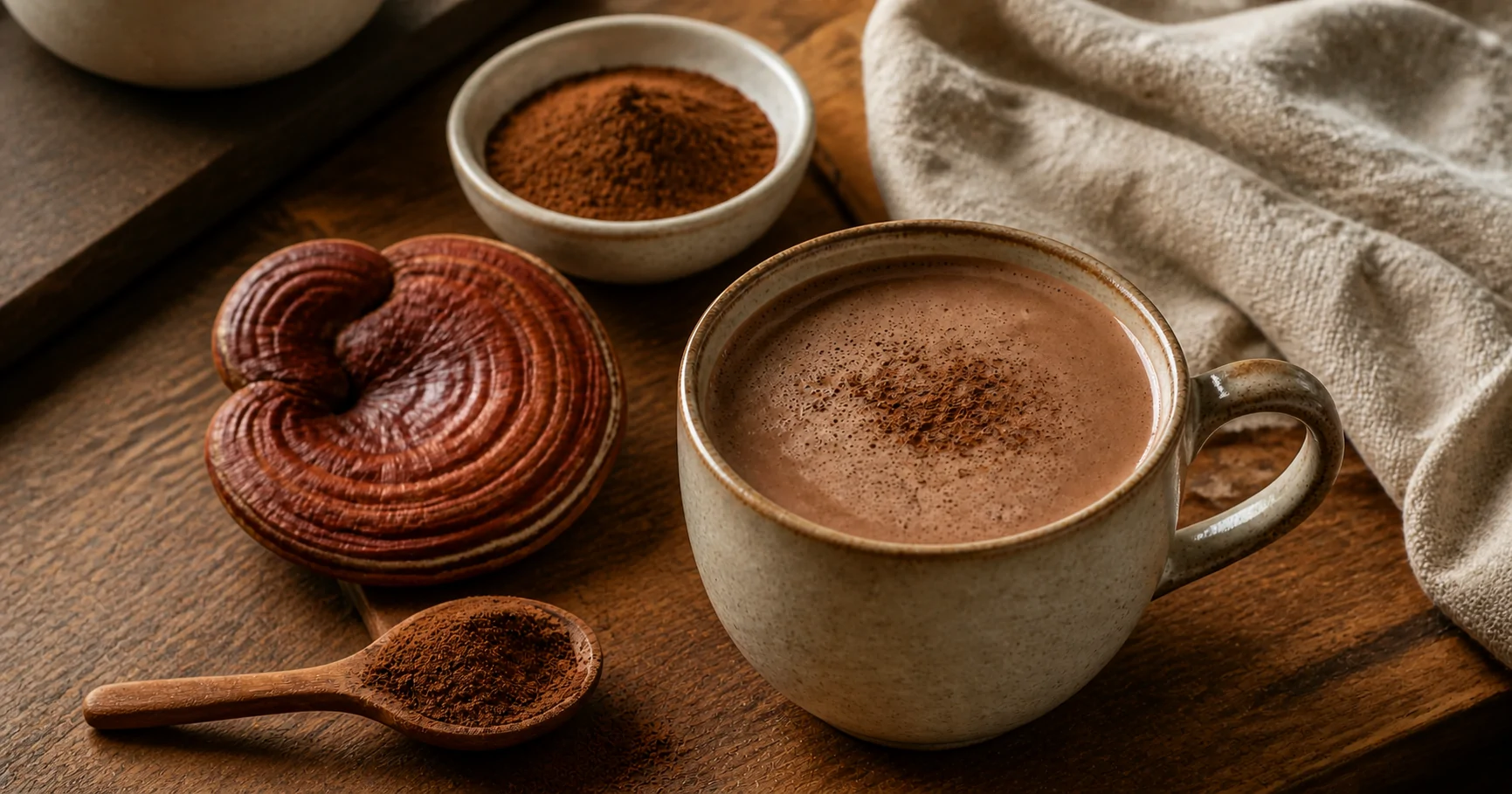
A mug of reishi mushroom cocoa sounds like a simple way to turn an ordinary evening drink into a wellness ritual. Reishi has a long history in traditional practices, and modern interest often centers on compounds found in the mushroom, including polysaccharides and triterpenes.
But a cozy drink is not the same as a proven treatment. Research has not established that reishi cocoa prevents or treats disease, and the powders sold for drinks can differ widely in strength and preparation.
There’s also a practical wrinkle: reishi is famously bitter and woody, not a flavoring that disappears into chocolate. A little cocoa, milk and sweetener can make it more approachable, but the best recipe starts with modest expectations—and a careful look at the product label.
Here’s how to make a balanced cup, what reishi may and may not offer, and who should check with a health professional before trying it.
What Reishi Adds to a Cup of Cocoa—and What It Doesn’t
Reishi is the common name for mushrooms in the Ganoderma group, especially Ganoderma lucidum. Traditional use is not proof of a modern medical benefit. Researchers have studied reishi and its compounds, but findings are not strong enough to say that a mug of reishi cocoa reliably improves immunity, sleep, energy or any other health outcome.
The form matters, too. A product labeled mushroom powder may contain ground mushroom, while an extract has been processed to concentrate particular compounds. Their strength and composition can vary, so a teaspoon of one product may not be comparable to a teaspoon of another. Hot cocoa can help disperse the powder, but stirring it into a drink does not establish a particular dose or make its effects predictable.
Cocoa brings its own appeal: a rich flavor, especially when made with unsweetened cocoa powder and milk. It also contains theobromine and a small amount of caffeine, so people sensitive to stimulants may prefer to enjoy it earlier in the day. The drink is best thought of as a warming food—not a substitute for prescribed care.
Three Things to Know Before You Mix It In
1. Start with flavor, not a wellness promise
Reishi can taste bitter and earthy. A small amount may be enough to give a drink a noticeable mushroom note; adding more can make the cocoa harsh without making any health benefit more certain. The recipe below uses a small culinary amount of powder, not a therapeutic dose.
2. Read the label carefully
Look for a product intended for consumption and follow its directions. Check whether it is a whole-mushroom powder or an extract, and avoid treating those forms as interchangeable. If the package gives a serving size, do not exceed it just because the drink tastes mild.
3. Consider medicines and health conditions
Reishi may affect blood clotting, blood pressure or blood sugar, and it could interact with medicines that influence those systems. People taking blood thinners or antiplatelet drugs, blood-pressure or diabetes medication, or immune-suppressing treatment should ask a clinician or pharmacist before using reishi products. There have also been reports of liver injury associated with reishi products, though the risk and causes are not fully clear.
If you have liver disease, are preparing for surgery, are pregnant or breastfeeding, or have a complex medical condition, get professional advice before trying it. Stop using the product and seek medical guidance if you develop concerning symptoms such as unusual bruising, persistent nausea or yellowing of the skin or eyes.
How to Make a Gentle Reishi Mushroom Cocoa
This makes one creamy, lightly sweet mug. Use a plain beverage powder intended for consumption; concentrated extracts may have different directions and should not be measured as though they were ordinary mushroom powder.
Ingredients
-
- 1 cup milk or unsweetened oat milk
-
- 1 tablespoon unsweetened cocoa powder
-
- 1/4 teaspoon reishi mushroom powder, or less if you prefer a milder flavor
-
- 1–2 teaspoons maple syrup, honey or sugar, to taste
-
- Pinch of salt
-
- 1/4 teaspoon vanilla extract, optional
-
- Small pinch of cinnamon, optional
Step-by-Step Instructions
-
- In a small saucepan, whisk the cocoa powder, reishi powder and salt with 2 tablespoons of the milk to make a smooth paste. This helps prevent dry clumps.
-
- Whisk in the remaining milk. Warm over medium-low heat, stirring often, until steaming. Avoid boiling; gentle heat is enough to make a comforting drink.
-
- Remove the pan from the heat. Stir in the sweetener and vanilla, if using. Taste before adding more sweetener, since the cocoa and reishi can vary in bitterness.
-
- Pour into a mug and serve warm. If a little powder settles, give the drink another stir between sips.
For a thicker, more dessert-like cup, use dairy milk or a richer unsweetened plant milk. For a lighter version, reduce the sweetener or use water for part of the liquid. Make the drink fresh rather than storing it for later; the powder can settle, and reheating may affect the texture.
Make the Drink Enjoyable Without Overdoing It
Chocolate, vanilla and cinnamon can round out reishi’s earthy taste, but they do not change its medical evidence or make an unsuitable supplement safe. If the first cup is too bitter, use less powder next time rather than adding several spoonfuls of sweetener or more reishi.
Pay attention to the rest of the mug, too. Sweetened cocoa mixes can add more sugar than expected, while some non-dairy milks are sweetened already. Unsweetened cocoa and a measured sweetener make it easier to control the taste and sweetness.
Think of reishi as an optional ingredient, not the reason to skip a medication, delay care or expect a specific health effect.
A Cozy Cup, With Clear Expectations
Reishi mushroom cocoa can be a pleasant evening drink if you enjoy its earthy edge and choose a product carefully. Keep the amount modest, follow the label, and remember that research has not established this recipe as a treatment or a reliable way to improve health.
The most useful wellness habit here may be the simplest one: make a cup you genuinely enjoy, and check with a health professional if reishi could overlap with your medicines or medical conditions.