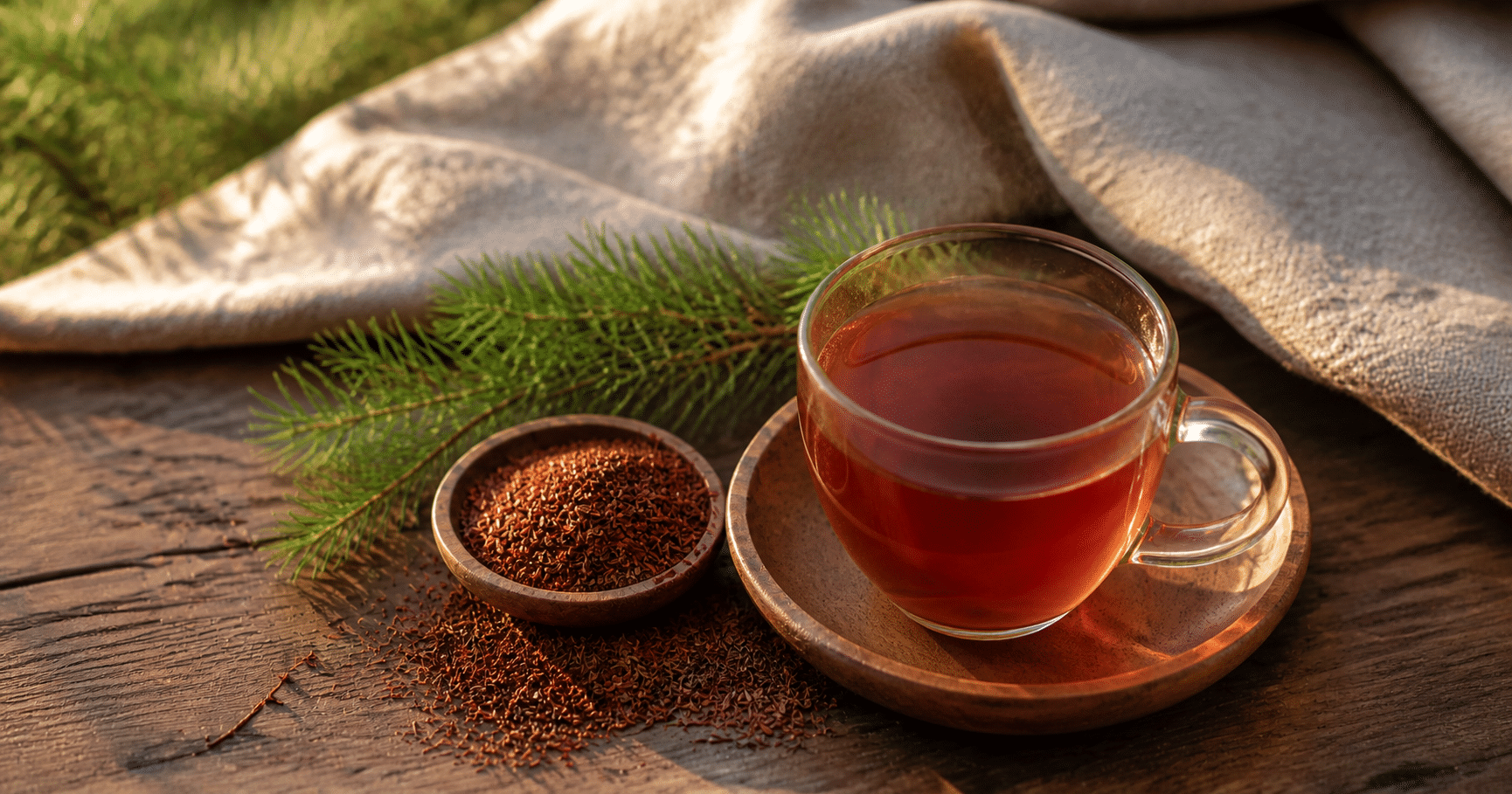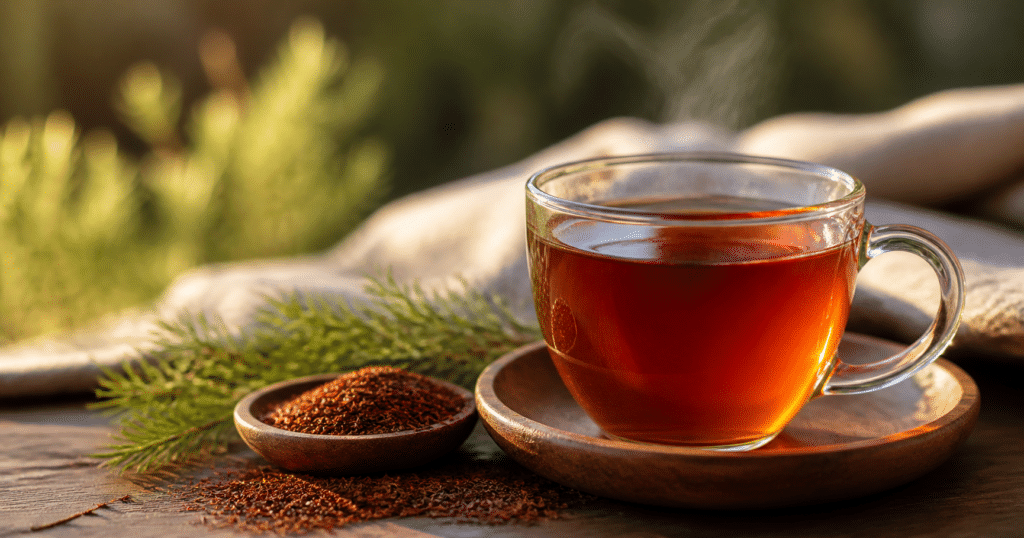
Rooibos has the cozy color of black tea, a naturally sweet, gently earthy taste and one practical difference many people appreciate: it contains no caffeine. That makes the South African brew an easy option for evenings or for anyone looking to cut back on coffee and traditional tea.
But “red tea” can be misleading. Rooibos isn’t a type of tea made from the tea plant, and its vivid color doesn’t mean it delivers the same compounds or effects as green or black tea.
There’s another detail worth knowing: the familiar red version gets its color through processing. Here’s how rooibos is made, what research can—and can’t—tell us about it, and how to brew a flavorful cup at home.
What Rooibos Is—and Why It Turns Red
Rooibos comes from Aspalathus linearis, a shrub native to South Africa’s Cederberg region. Its leaves and fine stems are harvested, chopped and typically allowed to oxidize before drying. That process changes their color from green to reddish brown and helps create the rounded, mellow flavor associated with traditional rooibos.
Because rooibos doesn’t come from Camellia sinensis—the plant used for green, black and white tea—it’s more accurately described as an herbal infusion, or tisane. It is naturally caffeine-free, not simply decaffeinated, and it generally has a softer, less sharply astringent taste than black tea.
Rooibos contains plant compounds called polyphenols, including aspalathin, which is found in rooibos. Researchers have studied these compounds, but much of the evidence comes from laboratory or animal research. Human studies are limited, so rooibos should be enjoyed as a beverage, not treated as a proven way to prevent or manage disease.
Three Useful Things to Know Before You Brew
1. “Red” and “green” rooibos are processed differently
Red rooibos is oxidized; green rooibos is dried with little or no oxidation. Green rooibos often tastes grassier and may retain more of certain plant compounds. That difference is interesting, but it does not establish that one type produces better health outcomes. Choose based on flavor, availability and how you like to drink it.
2. Caffeine-free doesn’t mean it’s a sleep remedy
Without caffeine, rooibos can be a sensible evening substitute for regular tea or coffee. But that alone doesn’t show it improves sleep. If a hot drink is part of your bedtime routine, rooibos may fit comfortably; avoid adding so much sugar that the drink becomes a dessert in a mug.
3. It’s a pleasant alternative, not a nutritional shortcut
Plain rooibos contributes very few calories and can add variety to your drinks without caffeine. Its plant compounds are not a replacement for a balanced diet, and claims that rooibos “detoxes” the body or treats a condition go beyond what the evidence establishes.
How to Make a Smooth Cup of Rooibos
Rooibos is forgiving: it can steep longer than many delicate teas without turning sharply bitter. This simple method makes one generous mug, hot or ready to chill.
Ingredients
-
- 1 rooibos tea bag or 1 to 2 teaspoons loose rooibos
-
- 8 ounces freshly boiled water
-
- Milk, lemon, honey or a cinnamon stick, optional
Step-by-Step Instructions
-
- Place the tea bag or loose rooibos in a mug. If using loose leaves, use an infuser or plan to strain the drink.
-
- Pour over freshly boiled water and steep for 5 to 7 minutes. For a stronger, deeper flavor, leave it a little longer and taste as you go.
-
- Remove the bag or strain the leaves. Add milk, lemon or a small amount of honey if you like, or enjoy it plain.
-
- For iced rooibos, brew it a bit stronger, let it cool, then pour over ice. Refrigerate any leftover brewed tea in a covered container and use within a few days.
Small Tweaks That Change the Flavor
Rooibos pairs well with flavors that complement its natural sweetness. Try a strip of orange peel, a cinnamon stick or a little vanilla while it steeps. For a creamy drink, add warm milk or an unsweetened plant-based alternative after brewing.
If your cup tastes weak, use more rooibos rather than relying only on a much longer steep. For a brighter flavor, add lemon after brewing. And check the label on flavored blends: rooibos itself is caffeine-free, but a blend may include caffeinated tea leaves or other ingredients.
For the clearest taste, start with rooibos on its own. Once you know its mellow, slightly sweet flavor, it’s easier to decide whether it needs milk, citrus or a touch of spice.
A Red Brew Worth Keeping on the Shelf
Rooibos is a naturally caffeine-free infusion with a distinctive South African origin, a mellow taste and a color shaped by oxidation. It can be a satisfying alternative to caffeinated drinks, especially later in the day, while its health effects remain less certain than some enthusiastic claims suggest.
Brew it strong or gentle, serve it hot or over ice—and let flavor, rather than promises, be the reason it earns a place in your cup.