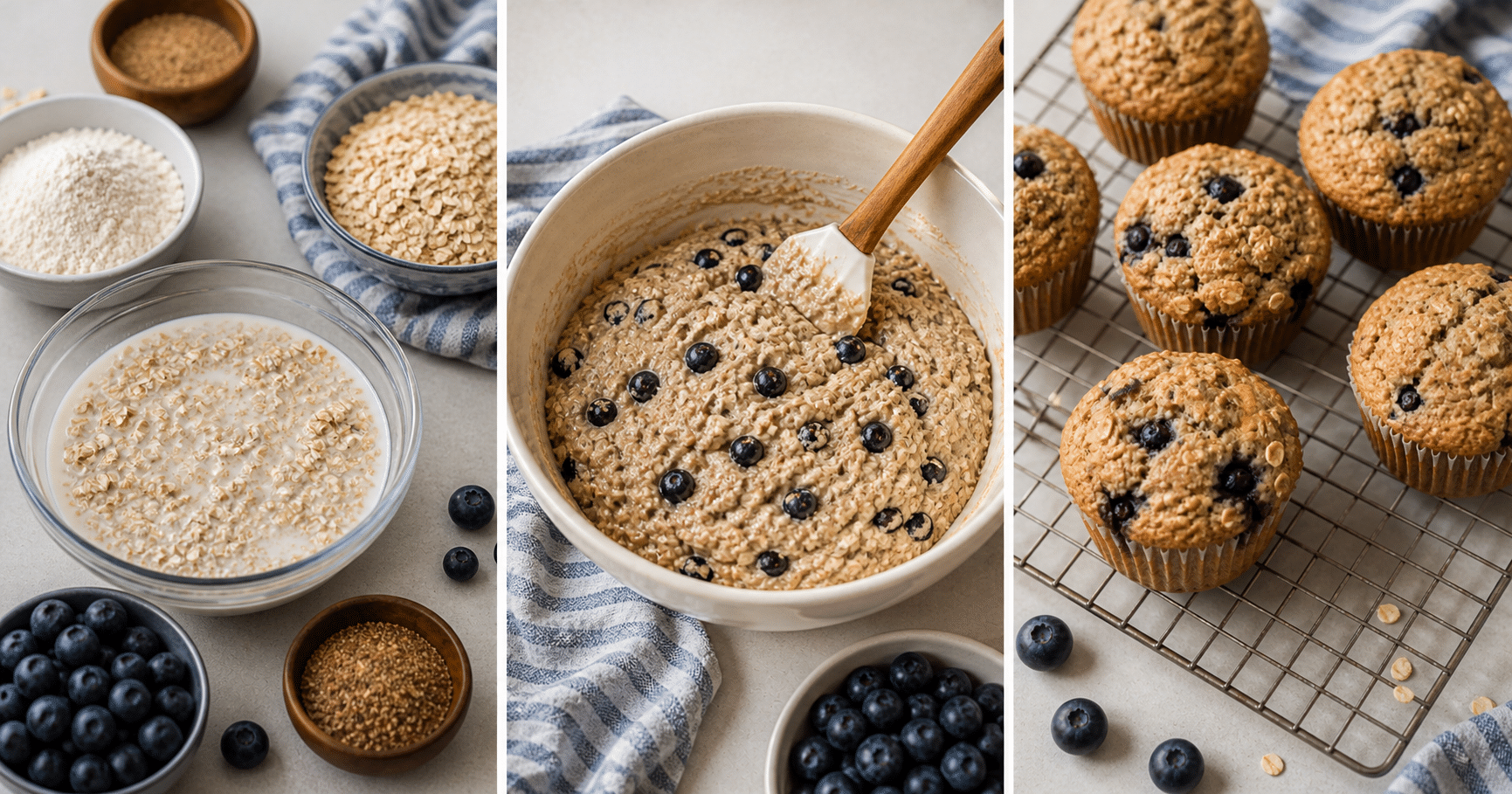
A blueberry muffin can be tender and comforting without relying entirely on white flour and a heavy dose of sugar. Rolled oats, whole-wheat flour, berries, and a little ground flaxseed give this version more sources of dietary fiber while keeping it pleasantly soft.
That extra fiber comes from several ingredients working together—not from oats alone. Blueberries contribute fiber, too, and using whole-grain flour instead of only refined flour makes a meaningful difference to the recipe’s overall mix of ingredients.
There is one small detail that helps the muffins turn out better: give the oats a few minutes to soften in milk before mixing the batter. This simple step makes them less chewy and helps prevent the finished muffins from feeling dry or grainy.
Here’s what the ingredients contribute, how to make a batch, and how to store it so a quick breakfast or snack is ready when you need one.
What Gives These Blueberry Muffins More Fiber?
Fiber is found in plant foods, including whole grains, fruit, seeds, beans, nuts, and vegetables. In this recipe, rolled oats, whole-wheat flour, blueberries, and ground flaxseed all contribute. The exact amount per muffin depends on ingredient brands, berry size, and how evenly the batter is divided, so it’s best not to assume a precise fiber count without calculating it from the products you use.
Oats contain soluble fiber, including a type called beta-glucan, as well as other fibers. Blueberries and whole-wheat flour add fiber in a different food package, along with other nutrients. Eating a variety of fiber-containing foods is a practical way to increase fiber over the day; one muffin, on its own, is not a treatment for a health condition.
If you are increasing fiber, do it gradually and drink enough fluids. A sudden change in fiber intake can be uncomfortable for some people. These muffins are also a baked good, not a sugar-free food: they contain brown sugar, so portion size and the rest of your eating pattern still matter.
Three Ingredients That Make a Difference
1. Rolled oats add texture and whole-grain goodness
Old-fashioned rolled oats soften quickly when soaked in milk. Avoid substituting steel-cut oats, which need more cooking, or instant flavored oatmeal packets, which may contain added sugar and can change the batter’s texture.
2. Whole-wheat flour and flaxseed boost the plant mix
Whole-wheat pastry flour keeps the crumb lighter than some standard whole-wheat flours, while a modest amount of all-purpose flour helps the muffins stay tender. Ground flaxseed adds another plant ingredient and blends more smoothly than whole seeds. If you don’t have flax, you can leave it out; the muffins will still include fiber from the oats, flour, and blueberries.
3. Blueberries bring moisture and bursts of flavor
Fresh or frozen blueberries work. Fold them in gently to avoid crushing them and turning the batter purple. If using frozen berries, add them straight from the freezer rather than thawing them first.
Blueberry Muffins With Oats and Flaxseed
This recipe makes 12 muffins. Allow about 15 minutes to prepare the batter and 18 to 22 minutes to bake.
Ingredients
-
- 1 cup old-fashioned rolled oats
-
- 3/4 cup milk
-
- 1 cup whole-wheat pastry flour
-
- 1/2 cup all-purpose flour
-
- 2 tablespoons ground flaxseed
-
- 1/3 cup packed light brown sugar
-
- 2 teaspoons baking powder
-
- 1/2 teaspoon baking soda
-
- 1/2 teaspoon ground cinnamon
-
- 1/4 teaspoon salt
-
- 2 large eggs
-
- 1/3 cup neutral-flavored oil, such as canola
-
- 1/2 cup plain Greek yogurt
-
- 1 teaspoon vanilla extract
-
- 1 1/2 cups blueberries, fresh or frozen
Step-by-Step Instructions
-
- Heat the oven to 375°F. Line a 12-cup muffin pan with paper liners or lightly grease the cups.
-
- In a small bowl, stir together the oats and milk. Let them stand for 10 minutes while you prepare the other ingredients.
-
- In a large bowl, whisk together the whole-wheat flour, all-purpose flour, flaxseed, brown sugar, baking powder, baking soda, cinnamon, and salt.
-
- In a separate bowl, whisk the eggs, oil, yogurt, and vanilla. Stir in the softened oats and milk.
-
- Pour the wet mixture into the dry ingredients. Stir just until no dry patches remain; a few small lumps are fine. Gently fold in the blueberries. Overmixing can make muffins tough.
-
- Divide the batter among the muffin cups. Bake for 18 to 22 minutes, until the tops spring back lightly and a toothpick inserted into the center comes out without wet batter.
-
- Cool in the pan for about 5 minutes, then move the muffins to a rack. Let them cool before storing so trapped steam does not make the tops damp.
Keep Them Tender, Not Heavy
Whole-grain batters can become dense if they are stirred too much or left standing for a long time after the wet and dry ingredients are combined. Have the oven ready before mixing, and fold only until the flour disappears. If the berries are especially large, a few may break as you stir; that is fine, but gentle mixing keeps more of them whole.
Store completely cooled muffins in an airtight container at room temperature for up to 2 days. For longer storage, refrigerate them or freeze them in a sealed container. Frozen muffins can be thawed at room temperature or warmed briefly in the microwave. A split muffin also toasts well, especially with a little nut butter.
For a simple weekday routine, freeze the muffins individually. You can take out only what you need instead of letting a whole batch sit on the counter.
A More Satisfying Muffin for the Everyday
These muffins use oats, whole-wheat flour, blueberries, and flaxseed to bring more fiber-containing plant foods into a familiar breakfast. They are still muffins, so enjoy them as part of a varied diet rather than expecting one recipe to do the work of an entire day’s meals.
Soak the oats, mix the batter lightly, and keep a few muffins in the freezer. A small change to a familiar recipe can make a convenient snack a little more nourishing—and just as easy to reach for.