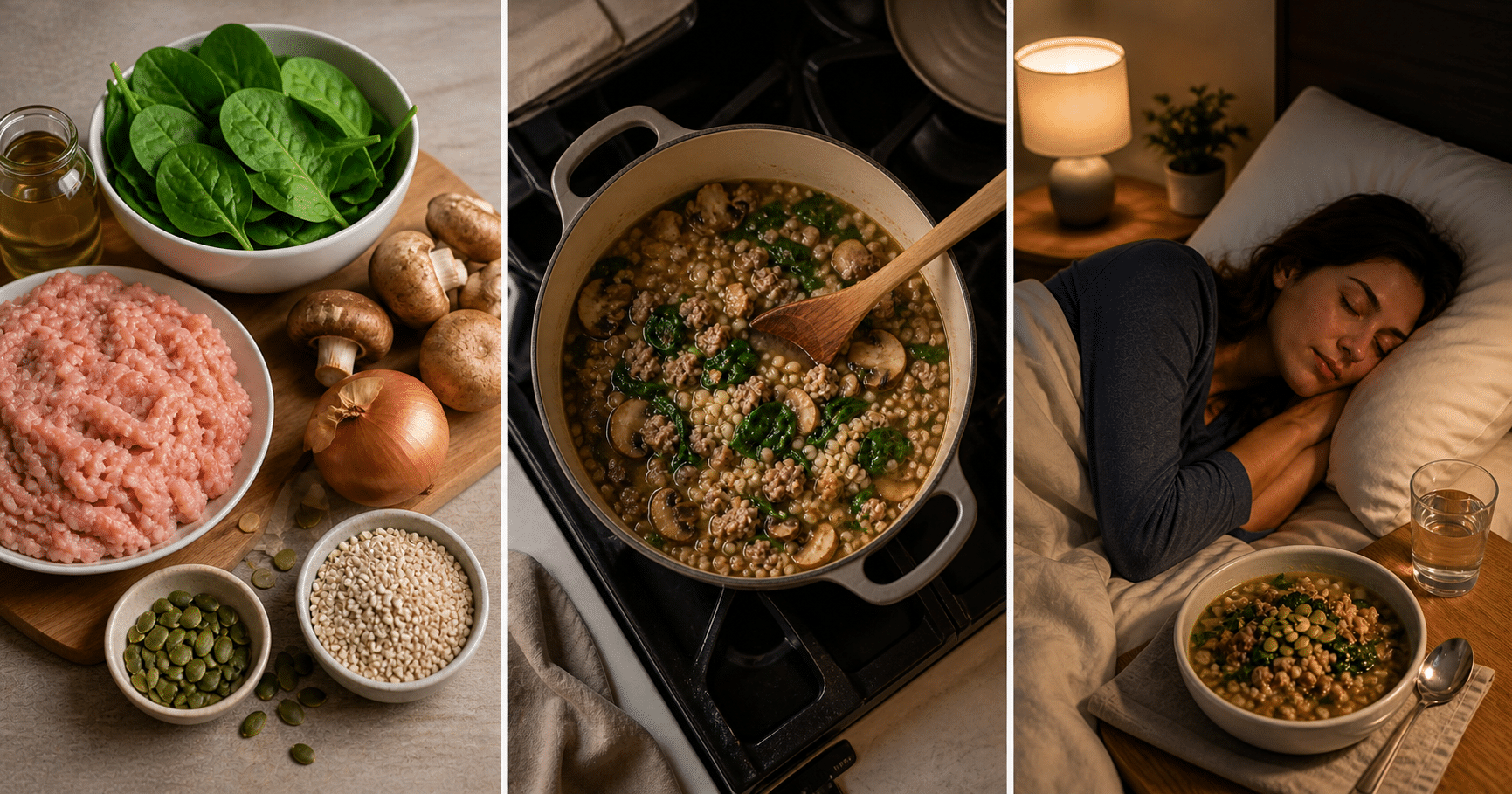
A dinner built around turkey, eggs, dairy, soy, or seeds may provide tryptophan, an amino acid your body needs to make serotonin and melatonin. That connection has helped make tryptophan-rich foods a popular idea for a more restful night.
But eating a food that contains tryptophan is not like flipping a switch. The amount you eat, what else is on your plate, and your overall sleep habits all matter—and a familiar post-Thanksgiving slump is not proof that turkey acts as a sleep aid.
The useful question is less “Which food will make me sleepy?” and more “How can I build an evening meal that supports good sleep without expecting one ingredient to do all the work?” Here’s what tryptophan does, what the evidence can and cannot tell us, and a practical dinner to try.
What Tryptophan Does—and Why Dinner Doesn’t Guarantee Sleep
Tryptophan is an essential amino acid, meaning your body cannot make it and must get it from food. It is used to build proteins and is also a starting material for serotonin, a chemical messenger involved in many functions, and melatonin, a hormone that helps regulate the body’s sleep-wake timing.
That pathway makes tryptophan relevant to sleep, but it doesn’t mean that a tryptophan-rich dinner reliably produces more melatonin or helps you fall asleep. Tryptophan has to be absorbed, transported into the brain, and processed through several steps. Those steps are influenced by more than the contents of one meal.
One important wrinkle: tryptophan shares a transport route into the brain with other amino acids found in protein. So a protein-rich food can provide tryptophan while also supplying competitors for that route. Carbohydrates can change the balance of amino acids in the blood, but that is not a dependable recipe for sleep, and it does not make every carb-and-protein combination a sleep remedy.
Research on tryptophan and sleep is not the same as proof that an ordinary serving of a particular food will improve sleep. Foods can be part of a nourishing evening routine; they should not be treated as a substitute for addressing persistent insomnia, pain, medication effects, or other sleep problems.
Four Practical Facts About Tryptophan-Rich Foods
1. Turkey is one option, not a special sleep food
Turkey contains tryptophan, but so do many everyday protein foods, including chicken, fish, eggs, milk, yogurt, tofu, and beans. Turkey’s reputation is often overstated: the amount in a serving does not explain sleepiness on its own. A large holiday meal, alcohol, and the natural afternoon dip in alertness may all contribute to feeling drowsy.
2. A varied meal beats chasing one nutrient
Rather than focusing on a single “sleep food,” pair a protein source with vegetables and a satisfying grain or other carbohydrate. For example, tofu with rice and vegetables or fish with potatoes and greens can make a balanced dinner. This is sound meal planning—not a proven way to raise melatonin on demand.
3. Meal size and timing can matter more than the ingredient
A very large or rich meal close to bedtime may leave some people uncomfortably full or aggravate reflux. If that happens to you, try having dinner earlier or choosing a smaller evening meal. There is no universal bedtime cutoff that works for everyone; comfort and your own schedule are useful guides.
4. Food and supplements are not interchangeable
Tryptophan supplements deliver a concentrated dose and are different from eating ordinary foods that contain the amino acid. If you are considering a supplement, ask a clinician or pharmacist first—particularly if you take antidepressants or other medicines that affect serotonin. Don’t stop or change prescribed medication to try a sleep supplement.
A Balanced Turkey, Barley, and Spinach Dinner
This simple one-pot meal combines turkey with barley, vegetables, and pumpkin seeds. It supplies tryptophan as part of a filling dinner, but it is not intended to induce sleep. The recipe makes four servings and takes about 45 minutes, including simmering time.
Ingredients
-
- 1 tablespoon olive oil
-
- 1 pound lean ground turkey
-
- 1 small yellow onion, diced
-
- 8 ounces sliced mushrooms
-
- 1 cup pearl barley, rinsed
-
- 4 cups low-sodium chicken broth
-
- 1 teaspoon dried thyme
-
- 5 ounces baby spinach
-
- 1 tablespoon lemon juice
-
- 1/4 cup pumpkin seeds
-
- Black pepper, to taste
Step-by-Step Instructions
-
- Warm the olive oil in a large pot over medium heat. Add the turkey and onion, breaking the meat into small pieces. Cook until the turkey is no longer pink and the onion begins to soften, about 6 to 8 minutes.
-
- Stir in the mushrooms and cook for about 4 minutes, until they begin to release their moisture.
-
- Add the barley, broth, and thyme. Bring the mixture to a boil, then reduce the heat, cover, and simmer until the barley is tender, about 30 to 35 minutes. Check the package directions, since cooking times can vary.
-
- Stir in the spinach until wilted, then add the lemon juice and black pepper. Serve topped with pumpkin seeds.
Refrigerate leftovers promptly in a covered container and use within 3 to 4 days. Reheat until steaming hot. For a meat-free version, use crumbled firm tofu or cooked beans in place of the turkey and vegetable broth instead of chicken broth.
Build a Better Evening Routine Around the Meal
A sensible dinner can support general well-being, but sleep depends on a broader set of cues. Keeping a reasonably consistent bedtime, making the bedroom comfortable, and limiting late-day caffeine may be more useful than trying to engineer a perfect plate. Alcohol can make some people feel drowsy at first, yet it can also disrupt sleep later in the night.
If you regularly struggle to fall asleep or stay asleep, or daytime sleepiness is affecting your life, talk with a health professional. Food choices may be one small part of the picture, but ongoing sleep trouble deserves attention beyond the dinner table.
The Takeaway: Think Balanced Dinner, Not Sleep Switch
Tryptophan is essential and helps the body make substances involved in sleep regulation, but no ordinary dinner ingredient guarantees a restful night. Include tryptophan-containing foods as part of varied meals, pay attention to meal size and timing, and treat supplements as a separate decision to discuss with a professional.
The best bedtime dinner is usually the one that leaves you comfortably satisfied—not the one promised to make you sleep.