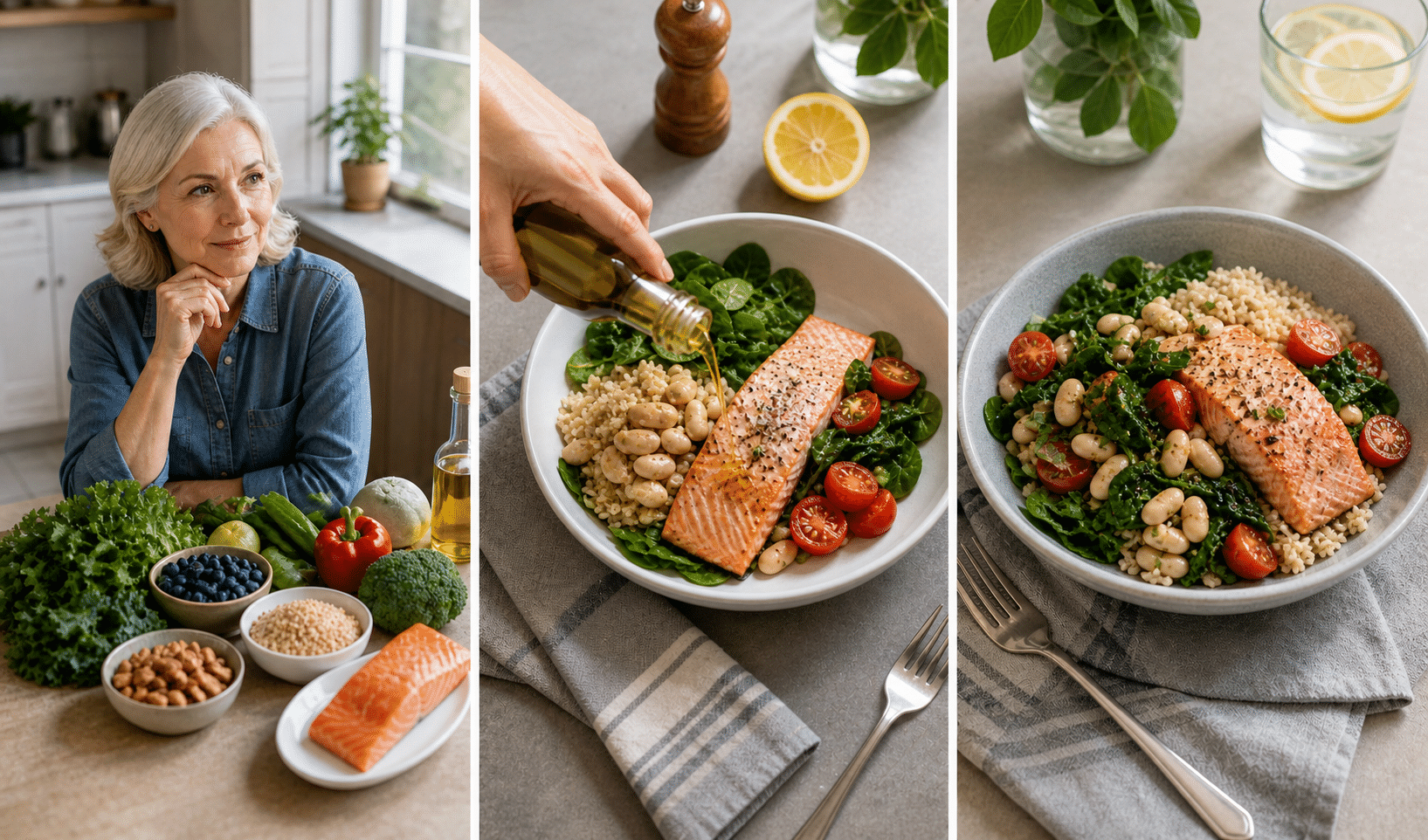
A diet designed to support brain health doesn’t hinge on a rare supplement or a single “superfood.” The MIND diet focuses instead on familiar foods—such as leafy greens, beans, berries and whole grains—and makes room for meals that are both practical and satisfying.
MIND stands for Mediterranean-DASH Intervention for Neurodegenerative Delay. It combines elements of two eating patterns associated with heart health, with an emphasis on foods that researchers have studied in relation to cognitive aging.
One detail is easy to miss: the plan is a pattern, not a prescription to eat a perfect menu every day. And although research has linked closer adherence to MIND-style eating with better brain-health outcomes, it does not prove that the diet prevents dementia. Here’s what it encourages—and a simple way to put the ideas on your plate.
What the MIND Diet Is—and What the Evidence Can Tell Us
The MIND diet was developed by researchers as a blend of the Mediterranean diet and the DASH diet, which is designed to help manage blood pressure. It emphasizes plant foods, whole grains, fish and poultry, while limiting some foods high in saturated fat or added sugar.
Its proposed connection to brain health is plausible: a balanced eating pattern can support overall health, including cardiovascular health, and the brain depends on a steady supply of oxygen-rich blood. But food research is complex. Much of the early evidence on MIND came from observational studies, which can find associations but can’t establish that the diet itself caused an outcome. A later clinical trial did not find a significant cognitive advantage for MIND over its comparison diet during the study period.
So think of MIND as a useful framework for everyday meals, not a guaranteed way to protect memory or treat a condition. Its most practical message is to eat a variety of minimally processed foods regularly.
10 Foods and Food Groups the MIND Diet Encourages
1. Leafy green vegetables
Spinach, kale, collards and lettuce are signature MIND foods. The plan’s commonly cited target is at least six servings a week. Add greens to soups, omelets and sandwiches, or serve them as a side dish.
2. Other vegetables
Beyond leafy greens, aim to include vegetables often—especially non-starchy choices such as broccoli, carrots, peppers, tomatoes and squash. Fresh, frozen and low-sodium canned vegetables can all make this easier.
3. Berries
Strawberries and blueberries are the berries most often highlighted in MIND guidance. A typical target is at least two servings a week. Fresh or frozen berries work well in oatmeal, plain yogurt or a fruit bowl.
4. Nuts
Nuts offer unsaturated fats, fiber and protein. The pattern commonly encourages them five or more times a week. Choose unsalted nuts when possible, and use a small handful as a snack or a crunchy topping.
5. Beans and legumes
Beans, lentils and chickpeas provide plant protein and fiber. The commonly cited goal is at least three servings a week. Stir them into soups, salads, pasta or grain bowls for a filling, budget-friendly meal.
6. Whole grains
Oats, brown rice, barley and whole-wheat bread are examples. MIND guidance often calls for at least three servings a day. Check ingredient lists: “whole grain” or “whole wheat” should appear near the beginning.
7. Fish
Fish, particularly fatty varieties such as salmon, sardines and trout, is encouraged at least once a week in commonly used MIND targets. Canned fish can be a convenient option; look for lower-sodium choices if that matters for your diet.
8. Poultry
Chicken and turkey are included as lean protein options, with a typical target of at least twice a week. Baking, roasting or grilling them keeps preparation simple without relying on deep-frying.
9. Olive oil
Olive oil is the preferred cooking oil in the MIND pattern. Use it in salad dressing, for sautéing vegetables or to finish beans and grains. It is still calorie-dense, so it’s a swap for other fats rather than a reason to pour freely.
10. Wine—only with an important caveat
Wine appeared as a component in the original MIND scoring system, but that is not a recommendation to start drinking. Alcohol can carry health risks, and no one should drink for brain health. If you don’t drink, don’t begin; if you do, ask your health care professional what is appropriate for you.
A Simple MIND-Inspired Salmon and Bean Bowl
This flexible lunch or dinner brings together fish, beans, leafy greens, vegetables and a whole grain. It is an example of the pattern, not a required MIND diet recipe.
Ingredients
-
- 1 cup cooked brown rice or farro
-
- 1 salmon fillet, about 4 ounces, cooked
-
- ½ cup rinsed, drained canned white beans
-
- 1 cup chopped spinach or other leafy greens
-
- ½ cup chopped tomatoes or sliced bell pepper
-
- 1 teaspoon olive oil
-
- Lemon juice, black pepper and herbs, to taste
Step-by-Step Instructions
-
- Cook the grain according to its package directions, or use leftover cooked grains.
-
- Cook the salmon until it flakes easily and is cooked through. If using leftover salmon, reheat it safely.
-
- Add the greens, beans and vegetables to a bowl. Top with the warm grain and salmon.
-
- Drizzle with olive oil and lemon juice, then season with pepper and herbs.
The bowl is best assembled just before eating. For meal prep, store cooked ingredients separately in the refrigerator and combine them when ready to serve, following standard food-safety guidance for leftovers.
How to Make the Pattern Work in Real Life
You don’t need to overhaul your kitchen in a day. Start with one repeatable change: add a serving of vegetables to dinner, swap refined bread for whole-grain bread, or keep beans and frozen berries on hand. Frozen produce is often just as convenient as fresh, and canned beans save cooking time.
It can also help to focus on what you add rather than treating the plan as a strict list of forbidden foods. The MIND pattern does advise limiting foods such as butter, cheese, red meat, fried foods, pastries and sweets, but an occasional serving does not erase the value of an otherwise balanced routine.
The MIND Diet in a Nutshell
The MIND diet encourages leafy greens, other vegetables, berries, nuts, beans, whole grains, fish, poultry and olive oil, with wine appearing in the original scoring but not as advice to drink. Its food choices can support a nutritious eating pattern, but they are not a proven shield against cognitive decline.
A good place to begin is one easy meal you’ll make again: a bowl of whole grains, vegetables and beans, finished with olive oil. Small, steady choices are more useful than chasing a perfect menu.