A balanced meal does not require a special food, a complicated recipe, or a perfectly measured plate. It is a practical mix of foods that supplies energy, protein, fiber, and a range of nutrients—while still leaving room for meals you enjoy.
A useful starting point is to picture your plate in sections: plenty of vegetables and fruit, a serving of protein, and a serving of grains or other satisfying carbohydrates. The proportions are a guide, not a rule, and they can shift with appetite, activity, health needs, and what is in the kitchen.
One detail is easy to miss: balance is not only about what is on the plate, but also about what makes the meal enjoyable and doable. A familiar dinner of beans, rice, and vegetables can be every bit as thoughtfully balanced as a more elaborate meal. Here’s how to use a simple plate guide in everyday cooking, including a flexible dinner you can make your own.
A Simple Plate Guide That Leaves Room for Real Life
For a visual starting point, fill about half your plate with vegetables and fruit, about one-quarter with protein foods, and about one-quarter with grains or other starchy foods. Choose whole grains often, and include a source of unsaturated fat—such as olive oil, nuts, seeds, or avocado—in a reasonable amount. Water or another unsweetened drink can round out the meal.
This is a flexible planning tool, not a nutritional prescription. The proportions do not need to be exact at every meal, and some foods do double duty: beans, for example, provide both protein and fiber, while potatoes contribute carbohydrates and useful nutrients. A meal can also include a serving of milk, yogurt, or a fortified alternative, depending on your preferences and needs.
For adults over 50, it can be especially useful to make protein a deliberate part of meals and to include fiber-rich foods regularly. Protein foods help supply the building blocks the body uses to maintain tissue, while fiber from foods such as vegetables, fruit, beans, and whole grains supports healthy digestion. Individual needs vary, so people with medical conditions or prescribed diets may need a different approach.
Four Practical Ways to Build a More Balanced Meal
1. Start with produce you’ll actually eat
Fresh vegetables are wonderful, but they are not the only good option. Frozen vegetables are convenient, and canned vegetables can work too; compare labels if you are watching sodium, and rinse canned beans or vegetables when appropriate. Try to include different colors over the course of the week rather than expecting every meal to contain a rainbow.
2. Give protein a clear place on the plate
Chicken, fish, eggs, tofu, lentils, beans, and unsalted nuts can all contribute protein. If a meal is mostly toast, pasta, or vegetables, consider what could make it more satisfying: an egg, a scoop of beans, some yogurt, or leftover chicken. Protein needs differ from person to person, so a clinician or registered dietitian can help if you have a specific health concern.
3. Keep carbohydrates in the picture
Grains, fruit, beans, and starchy vegetables supply carbohydrates, an important source of energy. Whole-grain choices such as oats, brown rice, and whole-wheat bread generally provide more fiber than refined versions, but refined grains can still fit. A balanced meal is not a meal with all carbohydrates removed.
4. Use flavorful additions thoughtfully
A little olive oil, tahini, avocado, or chopped nuts can add richness and help a meal feel complete. Herbs, spices, citrus, garlic, and vinegar bring flavor without relying entirely on salty sauces. You do not need to avoid fat; the useful question is which fats you use and how much works for the meal.
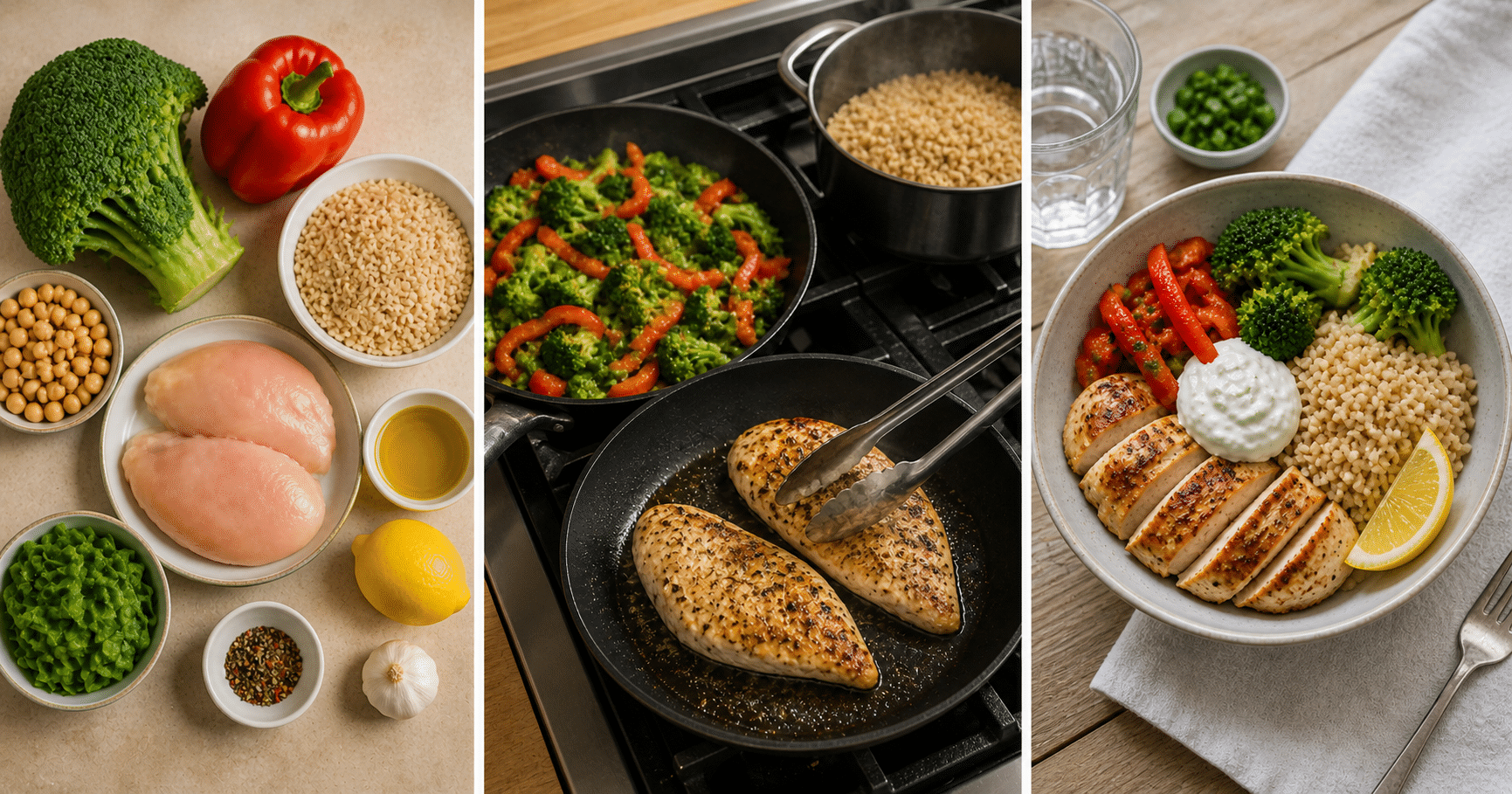
A Flexible Weeknight Chicken, Rice, and Vegetable Bowl
This simple two-serving dinner brings together vegetables, protein, and a whole-grain option. Use leftover rice or swap in another grain, and change the vegetables to match what you have.
Ingredients
-
- 1 cup uncooked brown rice, or about 2 cups cooked
-
- 2 boneless, skinless chicken breasts, about 5 to 6 ounces each
-
- 4 cups broccoli florets, fresh or frozen
-
- 1 red bell pepper, sliced
-
- 1 tablespoon olive oil
-
- 1 lemon, cut into wedges
-
- Black pepper, garlic powder, and dried herbs, to taste
-
- Optional: plain yogurt or a spoonful of hummus for serving
Step-by-Step Instructions
-
- Cook the rice. Prepare it according to the package directions. Brown rice often takes longer than white rice, so start it first; cooked rice can also be reheated for a quick dinner.
-
- Cook the chicken. Season the chicken with pepper, garlic powder, and dried herbs. Heat a skillet over medium heat with half the olive oil. Cook the chicken, turning as needed, until it reaches 165°F at its thickest point. Rest it for a few minutes, then slice.
-
- Cook the vegetables. Add the remaining oil to the skillet. Cook the broccoli and bell pepper until tender-crisp, adding a splash of water and covering the pan briefly if needed. If using frozen broccoli, follow the package directions and cook until hot throughout.
-
- Build the bowls. Divide the rice, chicken, and vegetables between two bowls. Finish with lemon juice and, if you like, a small spoonful of plain yogurt or hummus.
For a meat-free version, replace the chicken with baked tofu or a generous serving of chickpeas. To make the meal quicker, use microwaveable brown rice and pre-cut or frozen vegetables. Refrigerate leftovers promptly in a covered container and reheat until steaming hot.
Adjust the Plate Without Chasing Perfection
Appetite and food needs are not identical from day to day. On a more active day, you may want a larger portion of rice, bread, or potatoes; if you are less hungry, smaller servings with a satisfying protein may feel better. Use the plate picture as a starting point, then notice whether the meal keeps you comfortably satisfied.
Fiber is best increased gradually if your usual diet is low in it, with fluids throughout the day as appropriate for your health. And if you have been advised to limit a nutrient, such as sodium, potassium, or protein, follow that individualized guidance rather than a general plate template.
Make Balance a Habit, Not a Test
A balanced meal is usually a combination of produce, a protein source, and an energy-giving grain or starch, with flavorful additions that make it appealing. The portions can flex, and convenience foods can help you get dinner on the table.
Think of the plate guide as a useful question—not a scorecard: What could I add to make this meal more nourishing and satisfying?