When acid reflux wakes you with a sour taste, cough, or burning in your chest, dinner can feel like a guessing game. A rich meal may seem to be the obvious culprit—but the size and timing of dinner can matter as much as what’s on the plate.
There isn’t one universally “safe” reflux diet. Foods that bother one person may be perfectly comfortable for another, so cutting out entire food groups is rarely the best first move. A modest dinner built around lean protein, a simple starch, and vegetables is a practical place to start.
The often-overlooked detail: even a gentle meal can be troublesome if you lie down soon after eating. Here’s how to put together a reflux-conscious dinner, when to eat it, and what to change if nighttime symptoms continue.
Why Dinner Can Affect Reflux at Bedtime
Reflux happens when stomach contents move back into the esophagus, the tube connecting the mouth and stomach. After a meal, the stomach is fuller; lying flat removes the help gravity gives in keeping its contents down. That combination can make symptoms more noticeable at night.
Large, high-fat meals may be harder for some people to tolerate, while spicy foods, tomato, citrus, chocolate, peppermint, caffeine, and alcohol are common reported triggers. But none is a guaranteed trigger for everyone. Keeping a brief food-and-symptom note can help reveal your own pattern without imposing unnecessary restrictions.
A useful dinner aims for a moderate portion, less added fat, and enough time before bed. Many people with nighttime reflux are advised to finish eating about two to three hours before lying down. This can reduce the chance that a full stomach and a horizontal position coincide, though it won’t solve every cause of reflux.
Three Dinner Choices That Can Make Nights Easier
1. Keep the meal satisfying, not oversized
A very full stomach can increase pressure and discomfort. Serve a reasonable portion, eat at a comfortable pace, and pause before going back for seconds. If you’re hungry later, consider whether dinner was too small or too early rather than automatically adding a large bedtime snack.
2. Choose a simple mix of foods
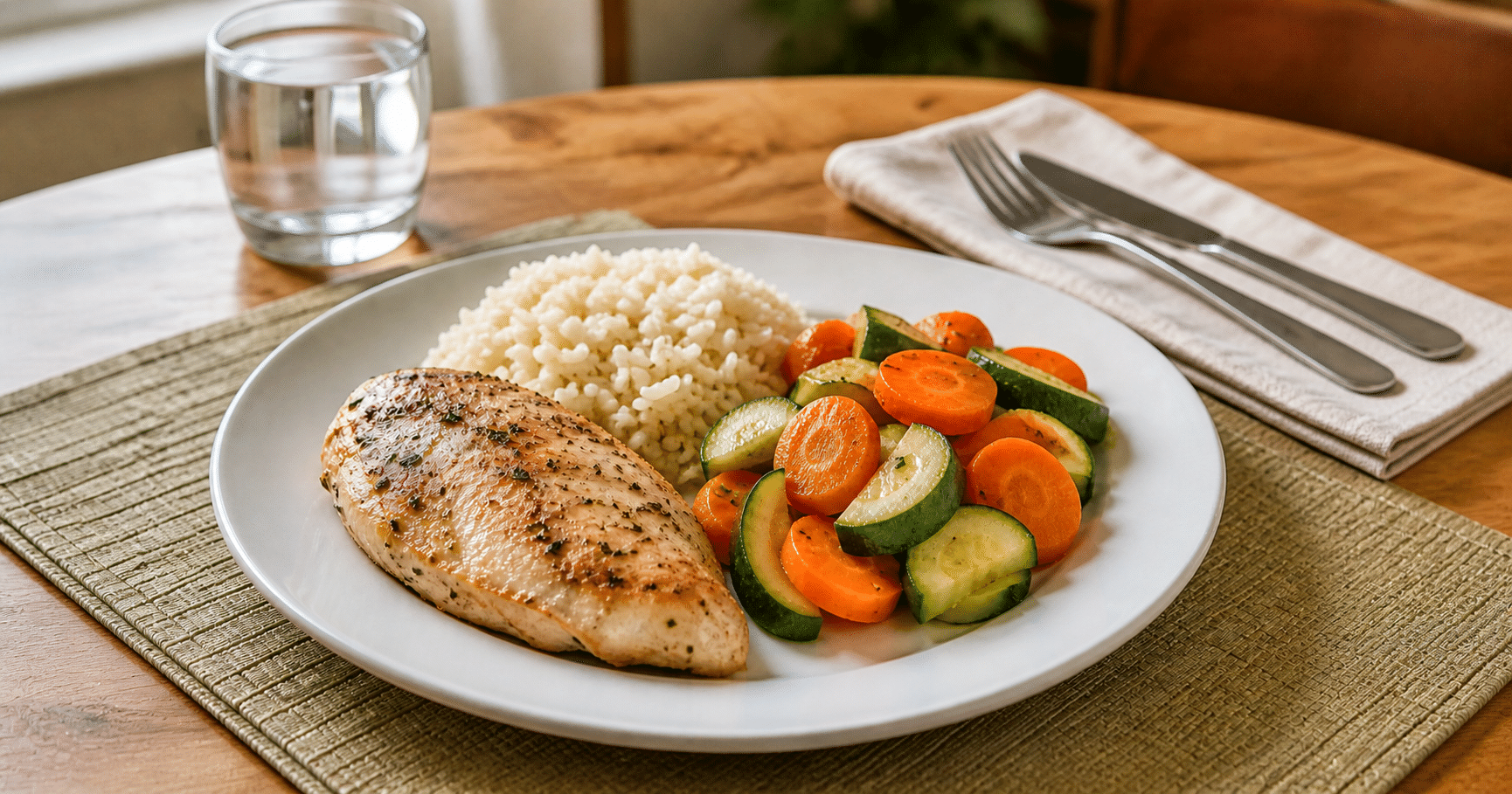
Lean chicken, fish, eggs, or tofu can provide protein without relying on a heavy, creamy sauce. Rice, potatoes, or another familiar starch can round out the meal; cooked vegetables such as carrots, green beans, or zucchini are gentle options for many people. Individual tolerance still matters, and even nutritious foods can cause symptoms for some.
3. Pay attention to the clock as well as the menu
Try to leave two to three hours between dinner and lying down when your schedule allows. If you need to sleep earlier, a smaller, lower-fat meal may be more comfortable than a late, elaborate one. Avoid making a big change based on one difficult night; look for a repeatable pattern.
A Simple Chicken, Rice, and Vegetable Dinner
This mild, everyday meal skips tomato, citrus, and spicy seasoning, while keeping added oil modest. It makes two servings and can be adjusted to suit your own trigger list.
Ingredients
-
- 1/2 cup uncooked white or brown rice
-
- 2 boneless, skinless chicken breasts, about 4 ounces each
-
- 1 medium zucchini, sliced
-
- 2 medium carrots, thinly sliced
-
- 2 teaspoons olive oil
-
- 1/2 teaspoon dried thyme or parsley
-
- Salt, if desired
-
- Water for cooking the rice
Step-by-Step Instructions
-
- Cook the rice according to the package directions. Brown rice generally takes longer than white rice, so start it first.
-
- Heat the oven to 400°F. Place the chicken in a baking dish, brush with 1 teaspoon of olive oil, and season lightly with thyme or parsley and a little salt.
-
- Bake until the thickest part of each chicken breast reaches 165°F, usually about 20 to 25 minutes depending on thickness. Use a food thermometer rather than relying only on color.
-
- While the chicken cooks, steam the carrots until nearly tender, then add the zucchini and cook until both are soft enough for your preference. Alternatively, sauté the vegetables with the remaining teaspoon of oil and a splash of water until tender.
-
- Serve each piece of chicken with rice and vegetables. Let the portions cool briefly, and eat slowly rather than rushing through the meal.
Refrigerate leftovers promptly in a covered container and use within three to four days. Reheat until steaming hot. For a meat-free version, use plain baked tofu; for a different protein, a modest portion of simply prepared fish can work if it suits you.
Small Adjustments Worth Trying
If symptoms persist, change one factor at a time. For a week, you might try eating dinner earlier while keeping the menu familiar; another week, you could reduce the portion or skip a suspected trigger. A short note about meal time, ingredients, and symptoms can make the results easier to interpret.
Also notice what goes with dinner. Alcohol, coffee, or a large evening drink may be relevant for some people, and rich sauces can add more fat than the main ingredient suggests. You don’t need to ban a food simply because it appears on a common trigger list—your own consistent experience is more useful.
Nighttime symptoms that keep returning deserve medical attention, especially if they disrupt sleep or require frequent over-the-counter medication. Trouble swallowing, vomiting blood, black stools, or unexplained weight loss should be assessed promptly. Chest pain can have causes other than reflux; seek emergency care for severe or concerning chest pain.
A Better Night Starts Before Bedtime
A modest dinner of lean protein, a simple starch, and cooked vegetables is a useful starting point, not a treatment guarantee. Keep track of personal triggers, and try to finish eating two to three hours before lying down.
The most helpful dinner is not the one with the longest list of forbidden foods. It’s the one that suits your body—and leaves enough time between the last bite and bedtime.