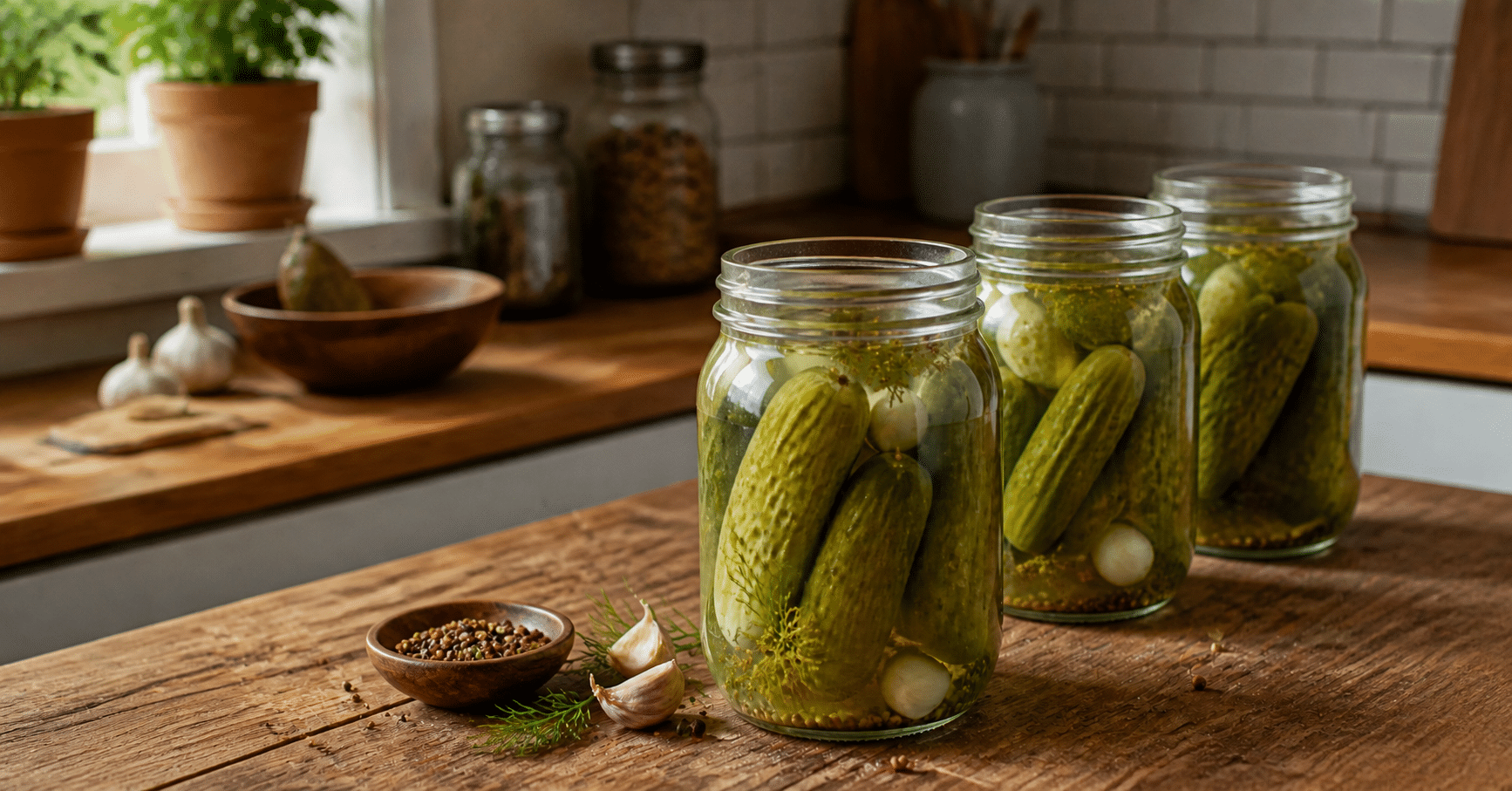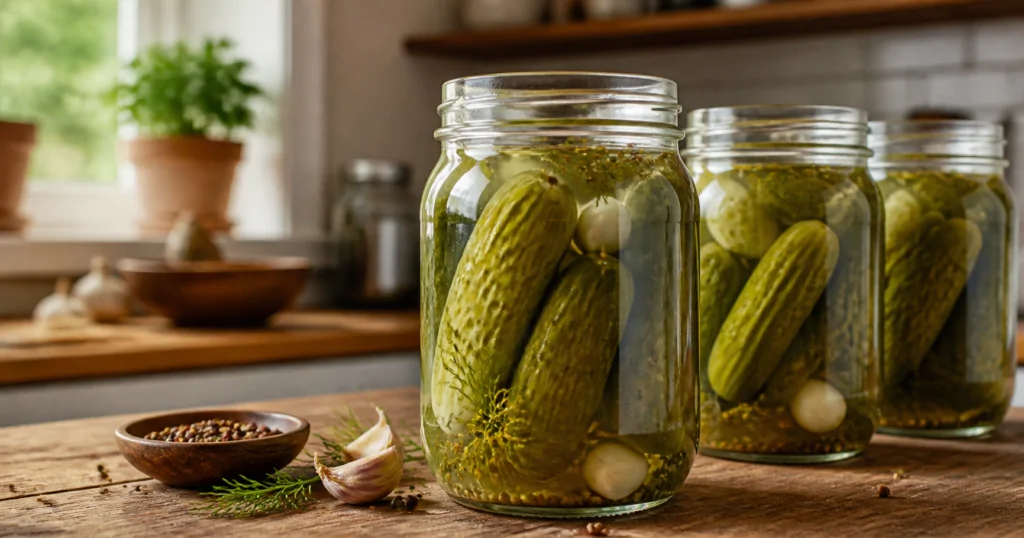
A jar of pickles can look homemade and still be made with vinegar rather than fermentation. Both kinds can be tangy and tasty, but only pickles made through fermentation have undergone the process many shoppers are looking for when they want naturally fermented food.
The quickest clue is often where the jar is sold: genuinely live-culture pickles are usually kept refrigerated. But the cold case alone is not proof, and cloudy brine doesn’t automatically mean something is wrong. A few label details can help you tell what you’re buying.
Here’s how to check for fermentation, understand “live culture” claims, compare sodium, and spot a pickle that suits your taste and kitchen.
What Makes a Pickle Fermented?
In traditional brine fermentation, cucumbers sit in salt water as naturally occurring lactic acid bacteria convert some of their sugars into lactic acid. That acid gives the pickles their characteristic tang and helps preserve them. Garlic, dill, spices, and other flavorings may be added.
Vinegar pickles are made differently: vinegar supplies the acidity, often along with water, salt, and seasonings. They may be delicious, but vinegar’s presence doesn’t mean the cucumbers were fermented. Some products use more than one method, so the ingredient list and package description matter.
Fermentation can leave living microorganisms in the finished product if it has not been pasteurized or otherwise treated to stop their activity. That doesn’t mean every fermented pickle is a proven probiotic. The term “probiotic” refers to specific live microorganisms shown to provide a health benefit, and a general fermented-food claim doesn’t establish that for every jar.
How to Choose a Jar That’s Actually Fermented
1. Look for fermentation language and a short ingredient list
Useful wording may include “fermented,” “naturally fermented,” or “fermented in brine.” Check the ingredients, too. Cucumbers, water, salt, and spices are common in a basic fermented pickle. If vinegar appears, the product may be vinegar-pickled, finished with vinegar, or made using both methods; read the full description rather than assuming.
Ingredients such as calcium chloride or firming agents don’t automatically mean a pickle wasn’t fermented. The key question is whether fermentation is clearly described, not whether the ingredient list matches one idealized recipe.
2. Check the storage instructions
Many unpasteurized pickles with live cultures are sold refrigerated because their fermentation continues slowly and they have not been heat-treated to make them shelf-stable. Look for “keep refrigerated” on the label and follow the package directions after opening.
Refrigeration by itself isn’t proof of live cultures: some vinegar pickles are refrigerated for flavor or texture. Conversely, a shelf-stable product may have been fermented and then pasteurized. If live cultures are your priority, look for an explicit unpasteurized or live-culture statement, and contact the maker if the label is unclear.
3. Don’t mistake cloudy brine for a problem
Cloudiness or a little sediment can be normal in fermented pickles, especially when natural fermentation has left yeast or other particles in the brine. It is not, on its own, evidence of spoilage. Clear brine doesn’t prove that pickles were made with vinegar, either.
Instead, check that the jar is intact and the product has been stored as directed. Avoid jars with broken seals, leaks, or damaged packaging. Once opened, use clean utensils and follow the manufacturer’s refrigeration and use-by guidance.
4. Compare sodium and texture, not just the front label
Salt plays an important role in brine fermentation, and pickle sodium levels vary widely. Compare the Nutrition Facts panel across brands, paying attention to the serving size; one serving may be less than the amount you’d normally eat. If you’re watching sodium, look for a lower-sodium option that is still clearly identified as fermented.
For crunch, consider the cut as well as the ingredient list. Whole pickles and thick spears often stay firmer than thin slices, though the cucumber variety and processing also affect texture. Dill, garlic, and spice levels are matters of taste, so a small jar can be a sensible first try.
A Simple In-Store Buying Check
-
- Start with the label. Look for a clear description of fermentation, then scan the ingredients for clues about whether vinegar is part of the process.
-
- Check the package location and directions. Refrigerated storage can support a live-culture claim, but it doesn’t confirm one. Follow the label rather than relying on the display case.
-
- Read the Nutrition Facts panel. Compare sodium per serving, making sure serving sizes are similar.
-
- Choose a style you’ll use. Whole pickles, spears, and slices work differently in sandwiches, salads, and snacks. Pick the cut and seasoning you’re most likely to enjoy.
-
- Store it correctly at home. Keep refrigerated products cold, use clean utensils, and follow the maker’s instructions after opening.
Helpful rule of thumb: “Refrigerated” tells you how to store the jar; “fermented” tells you how the pickles were made. Look for both details if you want a chilled pickle with live cultures.
Ways to Enjoy Fermented Pickles
Use a spear alongside a sandwich, chop a few pickles into potato or tuna salad, or add slices to a grain bowl for a sharp, salty contrast. Their brine can also season dressings or marinades, but it contributes salt, so taste before adding more.
If you’re limiting sodium for a health reason, check with your clinician or dietitian about what fits your needs. Fermented pickles can be a flavorful food choice, but they shouldn’t be treated as a substitute for medical care or as a guaranteed source of a particular health benefit.
The Best Pickle Is the One You Can Identify
For fermented pickles, look for clear fermentation wording, read the ingredients, and check whether the jar must stay refrigerated. Then compare sodium and choose the cut and flavor you’ll actually enjoy.
Cloudy brine can be normal, but a cold shelf isn’t a label. A quick read of the package is the most reliable way to know what’s in your jar.