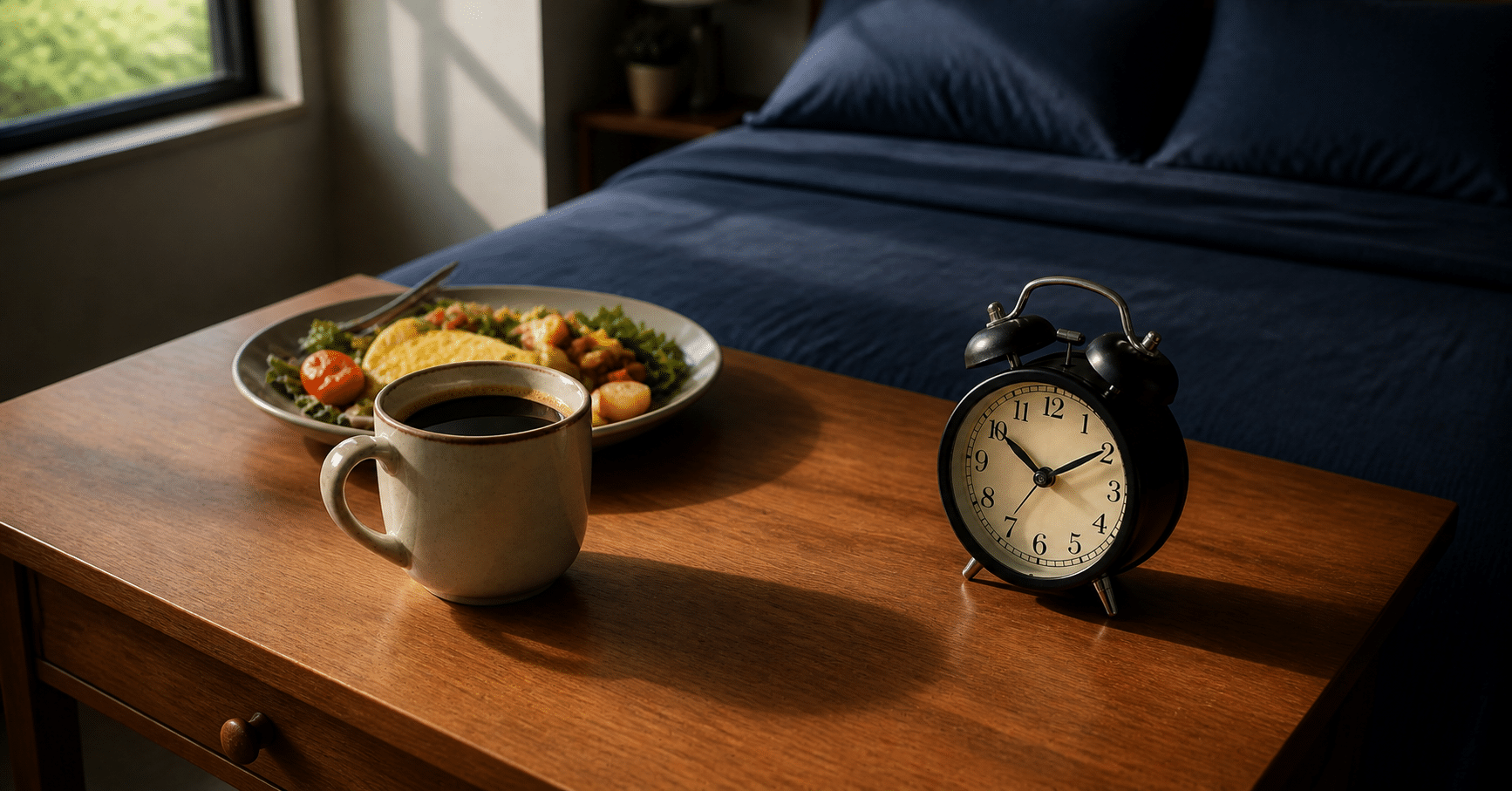
A cup of coffee with lunch can feel far removed from bedtime. But caffeine doesn’t disappear when the afternoon ends: some may still be circulating hours later, even if you no longer feel especially energized.
That lingering effect matters because caffeine can make it harder to fall asleep, shorten sleep, or leave it feeling less restful. The size of the effect varies, so one person’s after-lunch coffee may be no problem while another’s quietly pushes bedtime later.
The reason is partly caffeine’s slow, uneven breakdown in the body. Here’s what happens after that midday cup, how to spot whether it’s affecting your sleep, and a practical way to find a cutoff time that works for you.
Why a Lunch-Time Coffee Can Still Be Around at Bedtime
Caffeine works largely by blocking adenosine, a chemical messenger that builds up while you’re awake and helps create the feeling of sleepiness. It doesn’t replace lost sleep or remove the need for rest; it can temporarily make the body’s signals of tiredness less noticeable.
The body clears caffeine gradually. Its average half-life is often described as about four to six hours, though it can be shorter or considerably longer depending on the person. A half-life is the time it takes for the amount in the bloodstream to fall by roughly half—not the time it takes for caffeine to leave the body completely.
For a rough illustration, if a drink contains 100 milligrams of caffeine and someone has a five-hour half-life, about 50 milligrams may remain in the bloodstream five hours later and about 25 milligrams after another five hours. That’s only a simplified estimate, not a prediction of how a person will feel or sleep.
In a controlled study, a substantial caffeine dose disrupted sleep even when taken six hours before bedtime. The finding doesn’t mean every lunch-time cup will have the same effect: the dose, timing, and individual sensitivity all matter.
Four Reasons the Effects Vary From Person to Person
1. The size and type of drink make a difference
“One cup” isn’t a standard caffeine measurement. A large brewed coffee may contain much more than a small one, and café drinks vary by serving size and preparation. Tea usually contains caffeine too, while chocolate, some sodas, energy drinks, and certain over-the-counter medicines can add to the day’s total.
Check labels when available, and count all sources—not just coffee. A second cup after lunch may matter more than the first.
2. Sensitivity is individual
Some people feel alert or restless after a modest amount; others notice little. Sensitivity can also change over time. A familiar coffee habit may make the effects feel less obvious, but feeling accustomed to caffeine doesn’t guarantee it has no effect on sleep.
3. The body clears caffeine at different rates
Genetics, liver function, smoking status, and some medications can influence how quickly caffeine is processed. For example, certain medicines—including fluvoxamine and the antibiotic ciprofloxacin—can slow caffeine clearance. If you take medication and have a new or significant change in caffeine sensitivity, ask a pharmacist or clinician whether an interaction may be relevant.
4. Bedtime and sleep needs aren’t identical
A caffeine dose at 1 p.m. is farther from a 11 p.m. bedtime than from a 9 p.m. one. And caffeine may affect sleep even when you can still fall asleep: you might wake more often or feel less refreshed. Pay attention to patterns, not just whether you lie awake at the start of the night.
How to Find Your Personal Afternoon Cutoff
There isn’t one cutoff time that works for everyone. A simple, steady experiment can help you see whether lunch-time caffeine is part of the picture without changing everything at once.
Step-by-Step Instructions
-
- Track your usual routine for several days. Note when you have coffee, tea, soda, or other caffeine, along with bedtime, how long it takes to fall asleep, and how rested you feel in the morning.
-
- Choose one change. Move your last caffeinated drink earlier—for example, from after lunch to lunchtime—or replace the afternoon serving with decaf. Decaf usually contains a small amount of caffeine, so it is not always caffeine-free.
-
- Keep other habits as steady as practical. Avoid making several major changes at once, such as shifting bedtime and changing exercise, if you want to identify whether caffeine timing makes a difference.
-
- Compare the pattern over a week or two. Look for changes in falling asleep, nighttime waking, and morning energy. If you notice improvement, you can keep the earlier cutoff or test a slightly later one.
There’s no need to stop caffeine abruptly if you don’t want to. Cutting back gradually may be more comfortable for regular drinkers, since sudden changes can bring on headaches or fatigue. If you are reducing caffeine, try a smaller serving or a half-caffeinated drink before removing it altogether.
When Caffeine May Not Be the Whole Story
Sleep is affected by more than one lunch-time drink. Pain, stress, alcohol, late meals, some medications, and health conditions can all contribute to restless nights. If sleep problems persist, are worsening, or leave you very tired during the day, discuss them with a healthcare professional rather than assuming caffeine is the only cause.
It may also help to check less obvious sources. A chocolate dessert, afternoon iced tea, or caffeine-containing pain reliever can shift your total intake, even if you’ve already given up the second coffee.
The Takeaway: Let Your Sleep Set the Cutoff
Caffeine can remain in the body well beyond lunch, but its impact depends on the dose, the timing, and how quickly you process it. If you’re having trouble sleeping, try moving your last caffeinated drink earlier and watch for a consistent change.
The most useful cutoff isn’t a rule on a clock—it’s the one that lets you enjoy your daytime coffee without borrowing comfort from tonight’s sleep.