The Mediterranean eating pattern is less a menu than a way of building meals: vegetables, fruit, beans, whole grains, nuts and olive oil show up often, while fish, poultry, eggs and dairy play supporting roles. Red and processed meat, sweets and highly refined foods are eaten less often—not necessarily forbidden.
That flexibility is part of its appeal for adults over 50. There’s no special ingredient to track down or elaborate recipe to master. But a common mistake is to focus on olive oil or a glass of wine and miss the bigger picture: the pattern is about the foods that make up the whole plate.
A single day can make the approach easier to picture. Below is a practical sample menu, with familiar ingredients and simple portions. It’s an illustration, not a prescribed meal plan; appetite, health needs, budget and food preferences all matter.
What Makes a Day of Mediterranean Eating?
The Mediterranean diet is based on food traditions found in countries bordering the Mediterranean Sea, though meals vary widely across the region. In modern nutrition guidance, the term usually describes a pattern rich in plant foods and unsaturated fats, with fish and other protein foods included in sensible amounts.
Vegetables, fruits, beans and whole grains provide fiber, while nuts, seeds and olive oil contribute unsaturated fat. Together, these foods can make meals satisfying and supply a range of nutrients. Research has linked Mediterranean-style eating with better heart health, but no single day—or ingredient—guarantees a particular health outcome.
Think in proportions rather than rules: make plant foods the base of most meals, include a source of protein, and use olive oil or another unsaturated fat in place of butter when it suits the dish. The pattern doesn’t require wine, and it can be adapted for people who avoid alcohol, dairy, fish or gluten.
Three Useful Ideas Behind the Menu
1. Plants do much of the everyday work
Beans, vegetables, fruit and whole grains bring fiber and variety to meals. Fiber supports normal digestion, and choosing beans or whole grains in place of some refined grains can make a meal more filling. If you’re not used to eating much fiber, increase it gradually and drink enough fluid.
2. The type of fat matters more than a “superfood” label
Olive oil, nuts and seeds are sources of unsaturated fats. Using them instead of butter or other sources of saturated fat can improve the overall fat profile of a meal. Olive oil is still calorie-dense, so it’s a flavorful cooking ingredient—not something that needs to be poured freely for extra benefit.
3. Protein can come from more than meat
Fish, eggs, yogurt, beans and lentils all fit. Including a protein food at meals may be useful for maintaining a satisfying eating routine as you age, though individual needs vary. A Mediterranean-style pattern doesn’t mean eliminating meat; it means meat doesn’t have to anchor every meal.
A Simple Mediterranean-Inspired Day of Meals
Breakfast: Oats with fruit and walnuts
Cook rolled oats with water or milk, then top with berries or a sliced apple, a spoonful of chopped walnuts and cinnamon. Choose plain yogurt or milk on the side if you’d like more protein. This is an easy way to pair a whole grain with fruit and nuts without adding much sugar.
Lunch: Chickpea, tomato and greens bowl
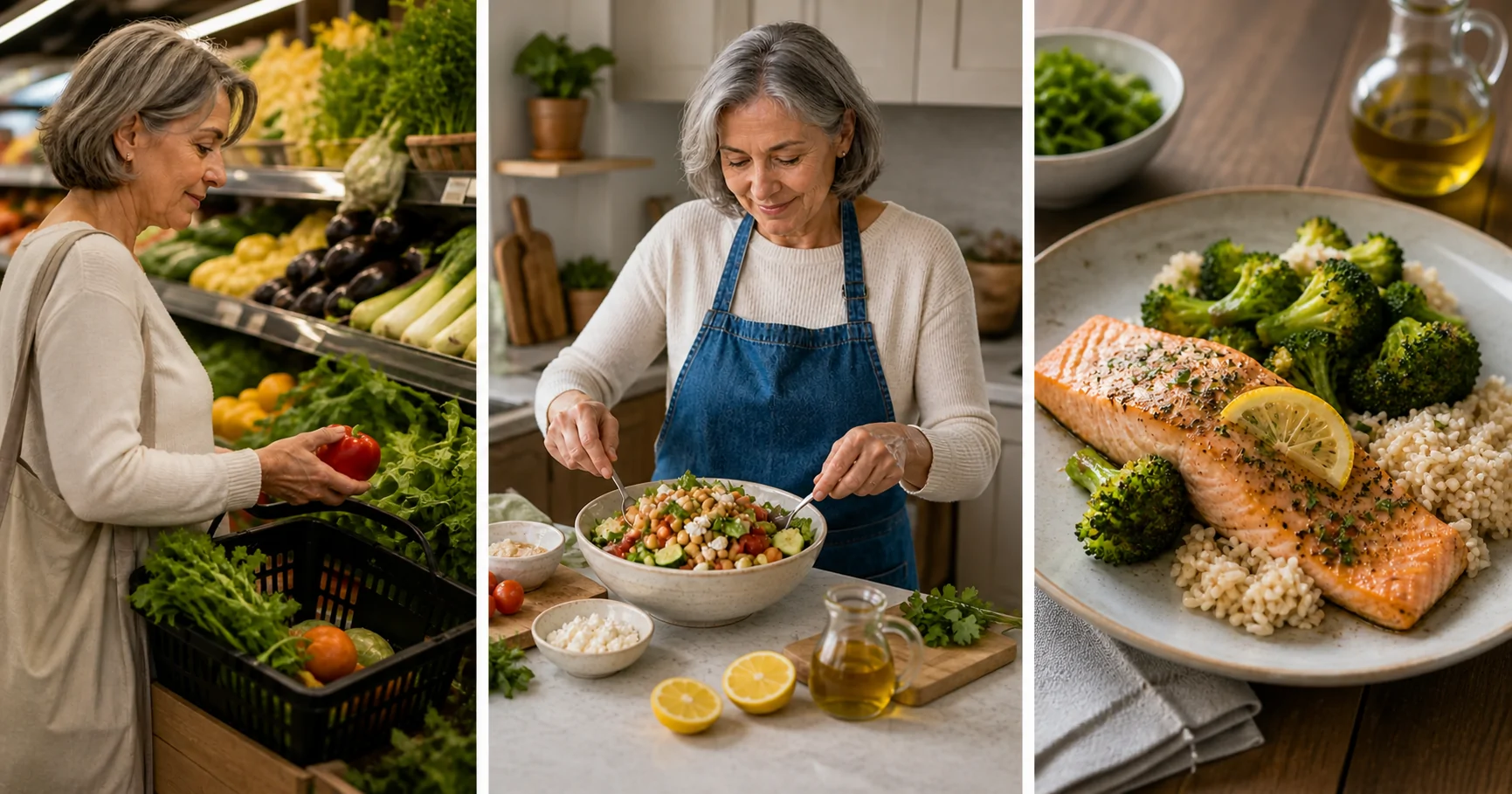
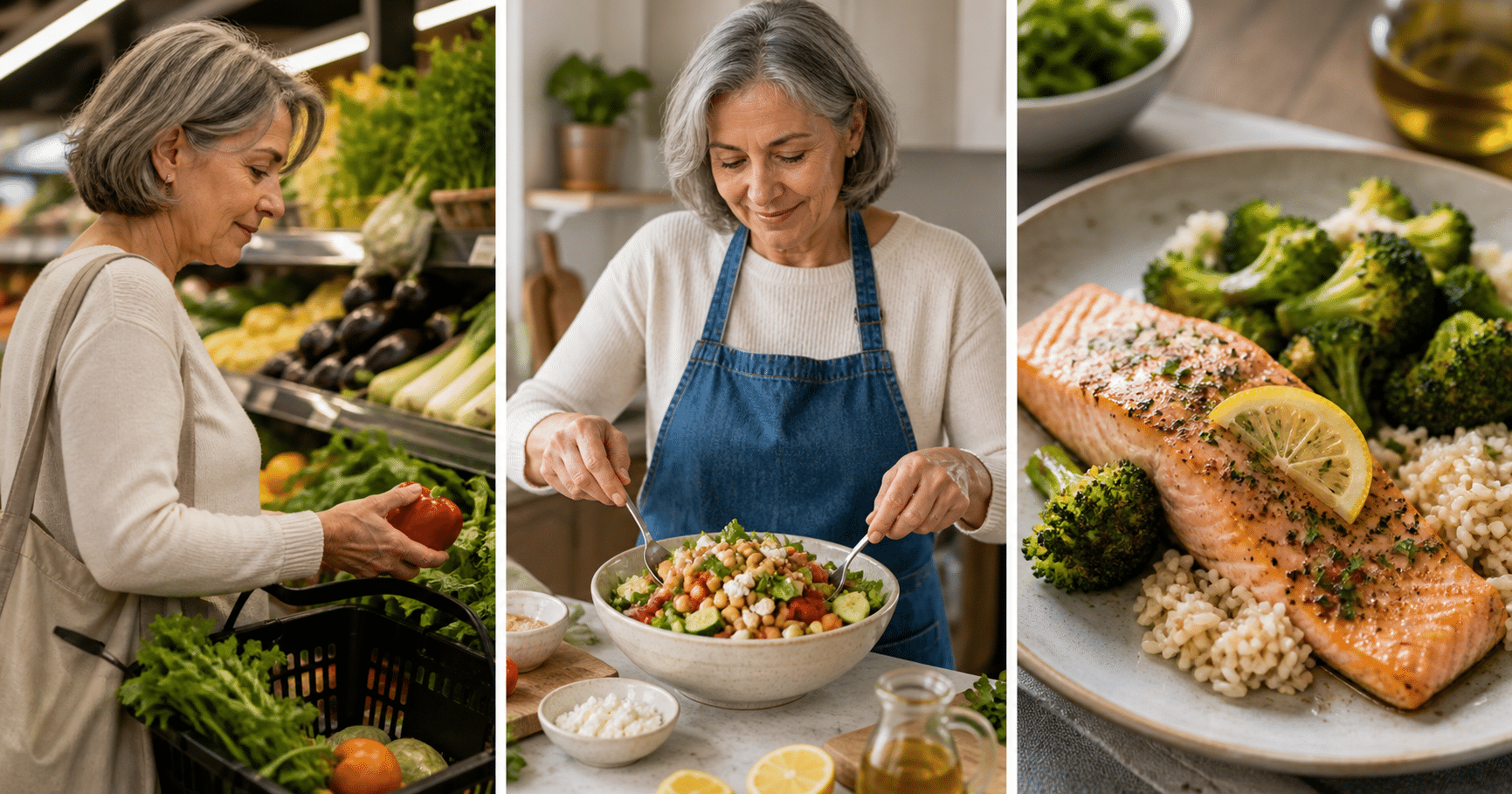
Combine rinsed chickpeas with chopped tomatoes, cucumber, greens, parsley and a little crumbled feta. Dress with olive oil, lemon juice and black pepper. Add a slice of whole-grain bread, or serve the mixture over cooked farro or brown rice for a heartier lunch.
Snack: Plain yogurt and fruit
Have plain yogurt with fresh or thawed frozen fruit. A small handful of unsalted nuts is another option when you want something more substantial. These are options, not required snacks; eat according to your appetite and routine.
Dinner: Salmon, vegetables and a whole grain
Serve baked salmon with roasted broccoli or another seasonal vegetable and cooked barley, brown rice or whole-wheat couscous. Season with lemon, garlic, herbs and a modest amount of salt. If salmon isn’t appealing or available, try another fish, beans, or tofu.
How to Prepare the Chickpea Lunch and Salmon Dinner
This simple plan makes one lunch and one dinner. The chickpea bowl takes about 10 minutes to assemble; the salmon plate takes about 25 minutes, including roasting time.
Ingredients
- One 15-ounce can chickpeas, rinsed and drained
- 1 cup chopped tomatoes and 1 cup chopped cucumber
- 1 cup leafy greens, plus a small handful of parsley
- 2 tablespoons crumbled feta, optional
- 1 lemon, 1 small garlic clove and 2 tablespoons olive oil
- One 4- to 5-ounce salmon fillet
- About 1 1/2 cups broccoli florets
- 1/2 cup cooked barley or brown rice
- Black pepper and dried or fresh herbs
Step-by-Step Instructions
- For the lunch bowl, place the chickpeas, tomatoes, cucumber, greens, parsley and feta in a bowl.
- Whisk 1 tablespoon olive oil with the juice of half a lemon, a little grated or minced garlic and black pepper. Toss with the chickpea mixture.
- Heat the oven to 400°F. Put the broccoli on a baking sheet and toss with about 1 teaspoon olive oil, pepper and herbs.
- Place the salmon on the same sheet if there’s room, or use a second pan. Add lemon slices or a squeeze of lemon. Roast for about 12–15 minutes, until the fish is opaque and flakes easily; thicker fillets may need longer.
- Serve with the cooked barley or rice. Refrigerate leftovers promptly in a covered container and use within 3–4 days.
Make the Pattern Fit Real Life
Frozen vegetables and fruit, canned beans, and plain canned fish can make this style of eating more affordable and convenient. Rinse canned beans to remove some of their sodium, and compare labels on broth, bread, cheese and sauces if you’re watching salt. People with a medical reason to limit potassium, phosphorus, fluids or other nutrients may need individual guidance rather than a generic meal plan.
There’s no need to make every meal look Mediterranean or to overhaul your kitchen in one day. Try one practical swap—beans in a salad, fruit with breakfast, or olive oil in place of butter—and build from there.
The Takeaway: Think Pattern, Not Perfect Plate
A Mediterranean-style day brings together plant foods, whole grains, unsaturated fats and varied protein sources. The sample menu is a starting point, not a strict prescription; familiar foods and personal needs belong in the picture too.
The most useful change is often the one you can repeat: add a vegetable, choose beans more often, or make a whole grain part of dinner.