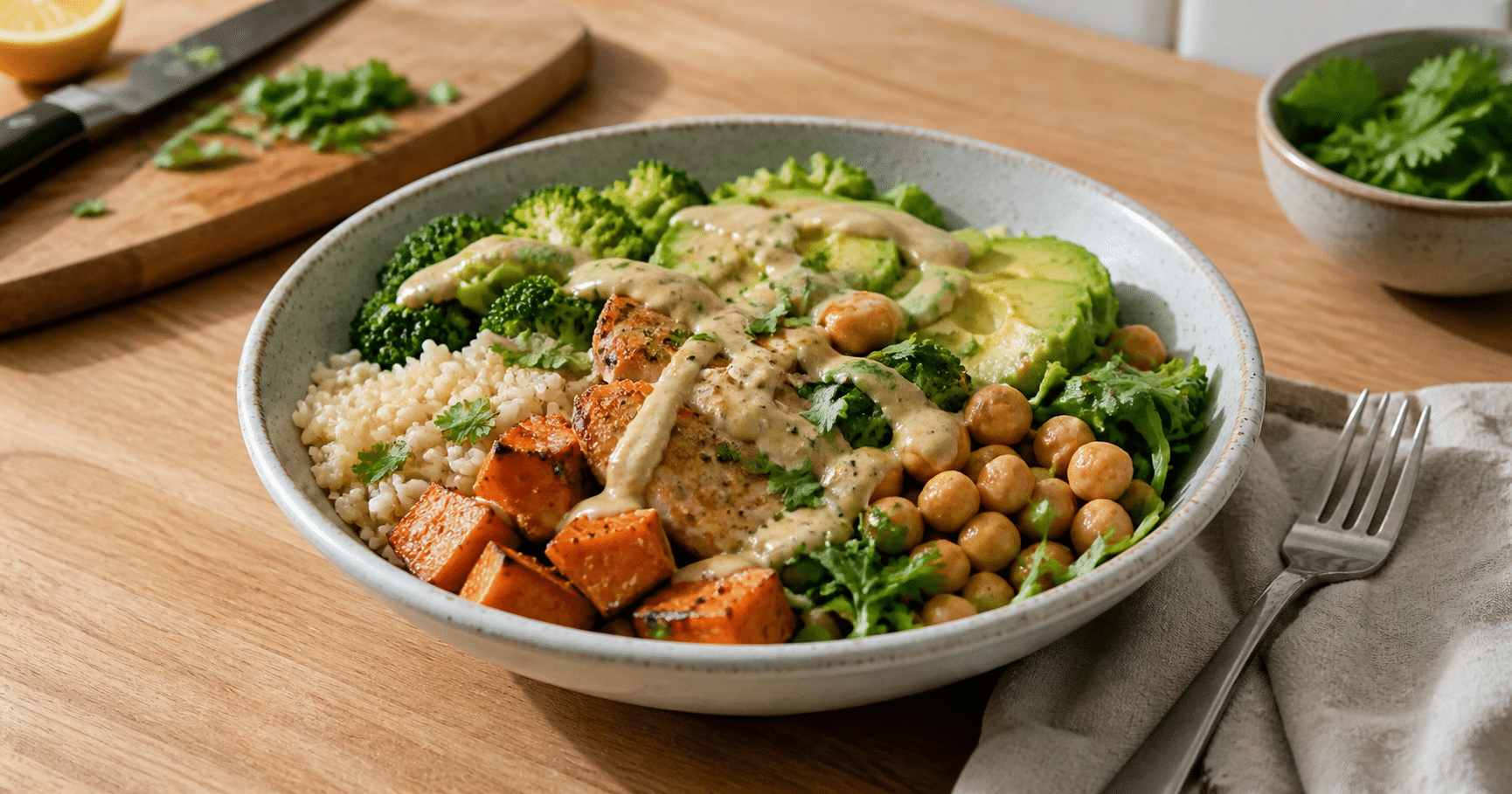
Healthy cooking can feel complicated when every dinner starts with a blank page. But you don’t need a new recipe every night—you need a few reliable patterns that turn familiar ingredients into satisfying meals.
A useful meal formula combines vegetables, protein, a fiber-rich carbohydrate, and something flavorful. The ingredients can change with the season, what’s in your pantry, or what needs using up; the basic structure stays the same.
One common snag is focusing on the main ingredient and forgetting the supporting parts. A piece of chicken, for example, becomes a more balanced meal when it’s served with vegetables and a grain or other filling carbohydrate. These seven simple formulas make that kind of planning easier, without requiring special equipment or hard-to-find foods.
A Simple Framework for Building a Meal
Think of each formula as a flexible starting point, not a strict recipe. For a main meal, aim to include vegetables, a protein source, and a satisfying carbohydrate such as beans, potatoes, brown rice, or whole-grain bread. A little healthy fat or a punchy seasoning—like olive oil, nuts, citrus, herbs, or salsa—can bring the pieces together.
This mix offers variety in taste and texture while making it easier to include fiber and protein in everyday meals. Needs and appetites differ, so there’s no single perfect portion for everyone. If you’re cooking for one or have a smaller appetite, make a smaller plate and save extra components for another meal.
For less work, use ingredients that can serve more than one purpose: roast a tray of vegetables for dinner and add the leftovers to tomorrow’s lunch. Frozen vegetables, canned beans, and pre-cooked grains can also be practical choices; compare labels when you want to limit added salt or sugar.
Seven Formulas to Keep on Repeat
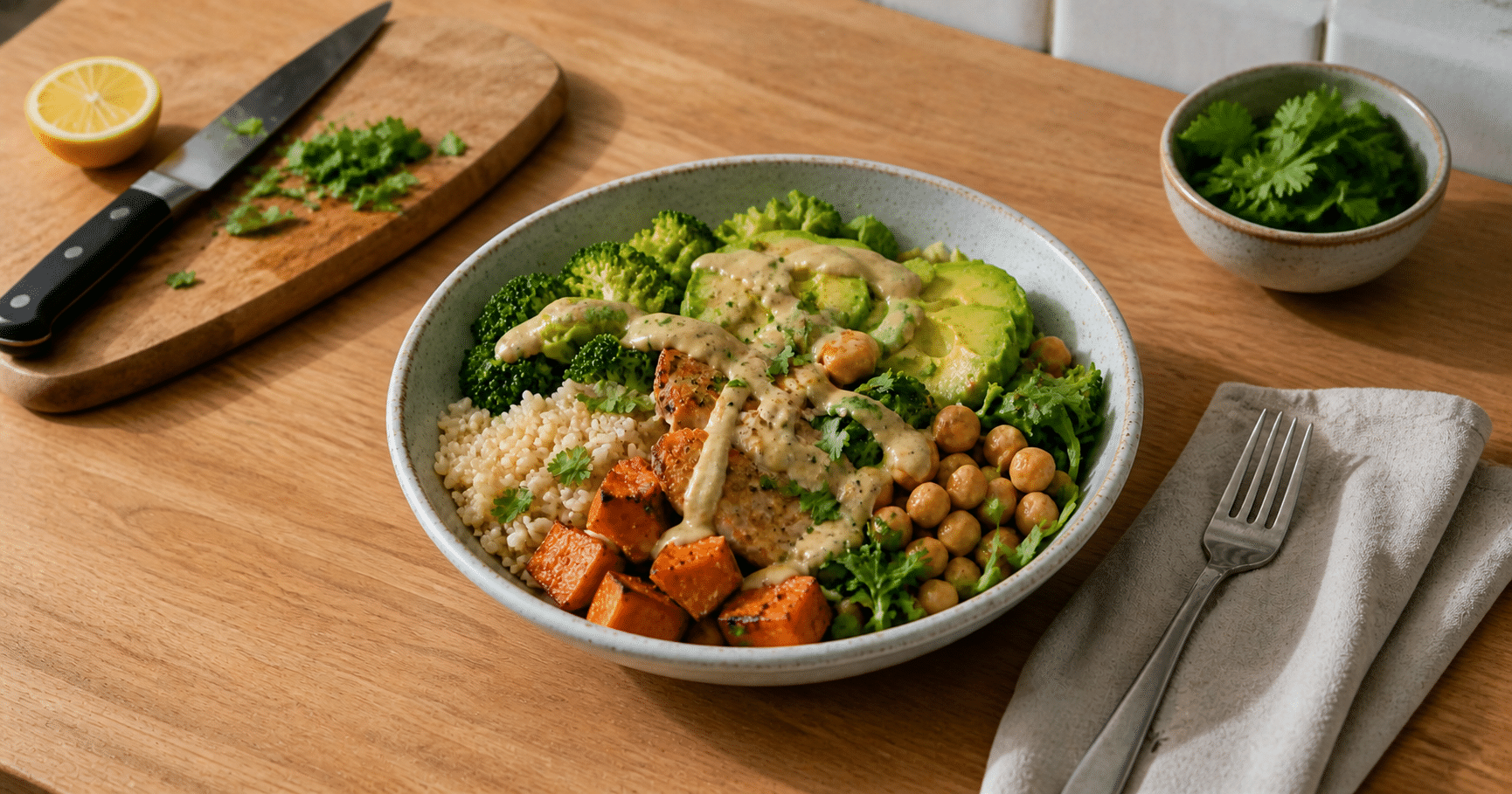
1. Grain bowl: grain + protein + vegetables + sauce
Start with brown rice, quinoa, farro, or another grain. Add beans, tofu, fish, chicken, or a hard-boiled egg, then pile on cooked or raw vegetables. Finish with a simple sauce, such as plain yogurt with lemon or tahini thinned with water and lemon juice. This is an easy way to use small portions of several leftovers.
2. Sheet-pan dinner: protein + sturdy vegetables + seasoning
Arrange chicken, fish, tofu, or chickpeas on a baking sheet with vegetables such as broccoli, carrots, cauliflower, or bell pepper. Toss with a little oil and seasonings, then roast until everything is cooked through and tender. Cut ingredients into similar-sized pieces so they cook more evenly; delicate vegetables may need less time than potatoes or carrots.
3. Skillet meal: protein + vegetables + quick-cooking base
Cook sliced chicken, tofu, eggs, or beans in a skillet, then add vegetables and a modest amount of sauce. Serve over quick-cooking brown rice, whole-wheat noodles, or barley. Garlic, ginger, vinegar, and a small splash of low-sodium soy sauce can add plenty of flavor without making the sauce the main event.
4. Hearty soup: vegetables + protein + broth + grain or potato
Combine chopped vegetables, beans or leftover cooked meat, broth, and potatoes, barley, or pasta. Simmer until the vegetables and starch are tender. Canned tomatoes, dried herbs, and a squeeze of lemon can deepen the flavor. Soup is especially useful for stretching a modest amount of protein across several servings.
5. Main-course salad: greens + protein + substantial toppings
Use leafy greens as a base, then add a protein such as beans, tuna, eggs, or chicken. Make the salad filling with whole grains, roasted vegetables, or a small baked potato on the side. Add nuts or seeds for crunch and dress lightly with olive oil and vinegar or lemon.
6. Tacos or wraps: protein + vegetables + tortilla
Fill corn tortillas or whole-grain wraps with seasoned beans, fish, chicken, eggs, or tofu. Add cabbage, lettuce, tomatoes, or leftover roasted vegetables, then finish with salsa or plain yogurt. Keep the filling generous and use the tortilla as a flexible carrier rather than relying on cheese or heavy sauce for flavor.
7. Breakfast-for-dinner: eggs or yogurt + produce + whole grain
Scrambled eggs with spinach and mushrooms, served with whole-grain toast and fruit, make a quick dinner. For a no-cook option, pair plain yogurt with fruit, oats, and nuts, alongside a slice of whole-grain toast. This formula is handy on nights when a full cooking project is out of the question.
How to Turn Any Formula Into Dinner
The following mix-and-match plan makes one flexible meal. Use what you have, and adjust the amount to your appetite.
What You’ll Need
- 1 cup cooked grain, potato, or another filling base
- 3 to 4 ounces cooked protein, or about ½ to ¾ cup beans
- 1 to 2 cups vegetables, fresh, frozen, or cooked
- 1 to 2 teaspoons olive oil, or a spoonful of yogurt-based sauce
- Lemon, vinegar, herbs, or another seasoning to taste
Step-by-Step Instructions
- Choose a formula above: bowl, skillet, salad, tacos, soup, sheet pan, or breakfast-style meal.
- Prepare the base and protein. If using canned beans, drain and rinse them; if using frozen vegetables, cook according to the package directions.
- Add vegetables in a way that suits the meal: roast them, sauté them, fold them into soup, or serve them raw.
- Bring everything together with a modest amount of oil or sauce, then add herbs, citrus, pepper, or another seasoning.
- Taste before serving. A squeeze of lemon or a spoonful of salsa can brighten a meal that seems flat.
Make the Formulas Work With Your Kitchen
Keep a few dependable basics on hand: canned beans, eggs, frozen vegetables, whole grains, and seasonings you enjoy. Then choose one fresh ingredient each week—perhaps cabbage, greens, or citrus—to give meals a different feel.
Pay attention to texture as well as nutrition. A soft grain bowl may benefit from crunchy cabbage or seeds; a rich soup may taste brighter with vinegar or lemon. Small contrasts can make simple ingredients feel more complete.
Less Guesswork, More Good Meals
These formulas are useful because they give you structure without locking you into a recipe. Start with a vegetable, add protein and a filling base, then finish with flavor. Once that pattern becomes familiar, dinner can be less about following instructions and more about putting what you have to good use.