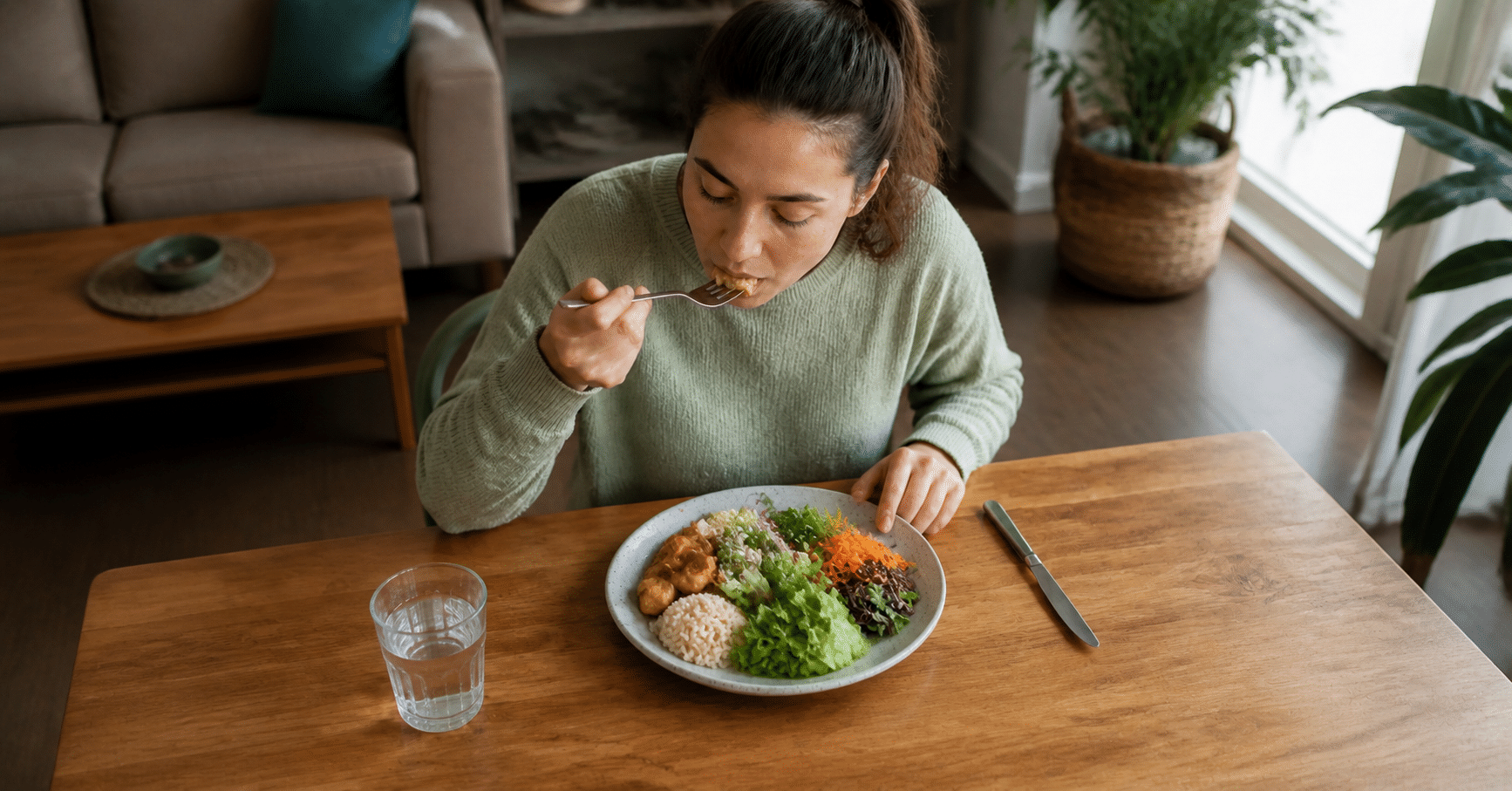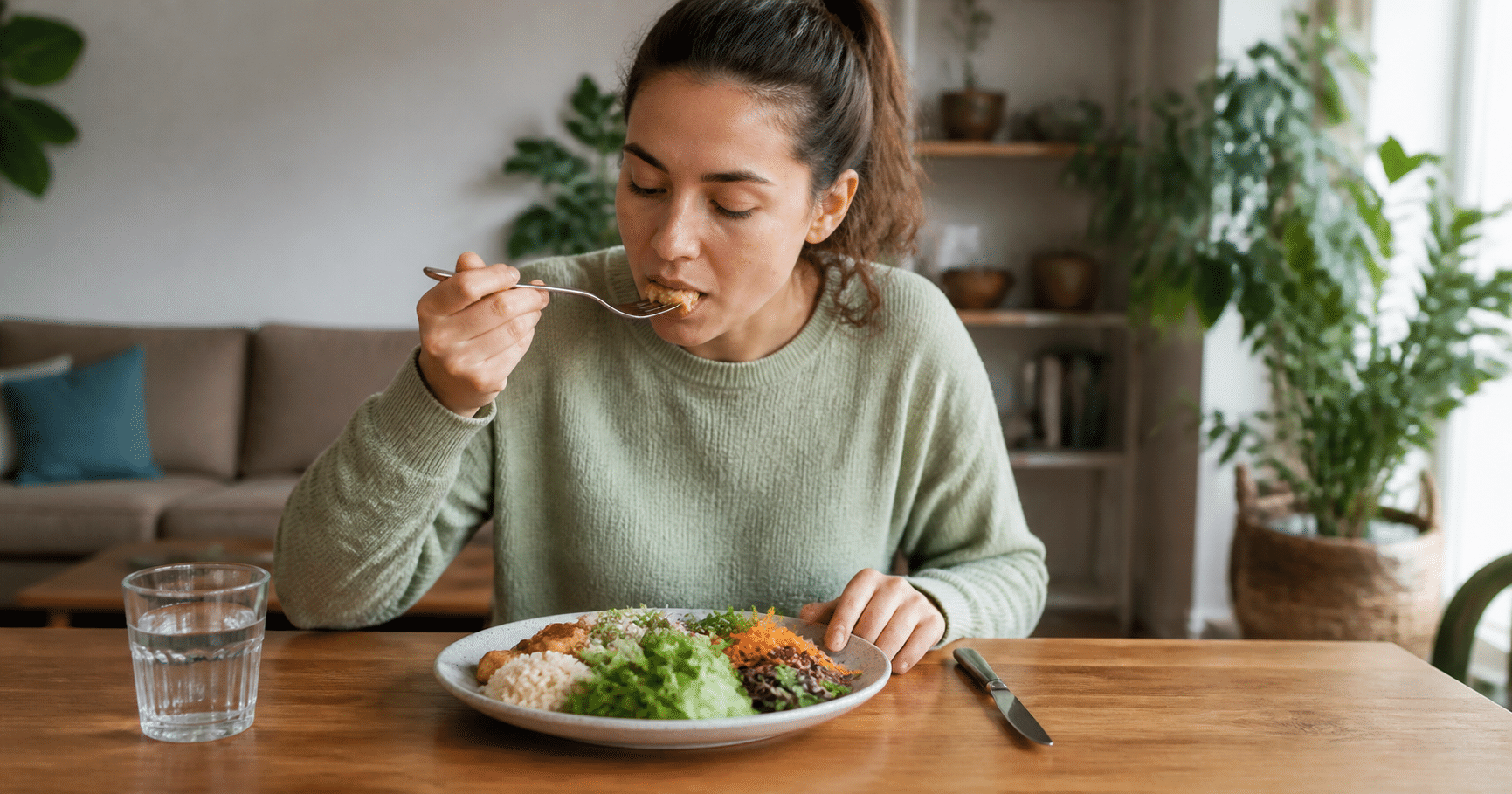
A meal can be perfectly ordinary and still leave you feeling tight, puffy, or uncomfortably full—especially if you ate it in a hurry. Eating quickly can contribute to bloating, but it is usually one piece of the puzzle, not a complete explanation.
When you rush, you may swallow more air, take larger bites, and finish before your body has caught up with the meal. Those habits can make post-meal discomfort more likely. Yet bloating can also reflect what you ate, how much you ate, constipation, or a digestive condition.
The useful question is not simply “Did I eat too fast?” but “What was happening around the meal?” Here’s how eating speed may affect bloating, how to try a calmer pace, and when symptoms deserve more attention.
How Eating Quickly Can Contribute to Bloating
Fast eating often goes hand in hand with swallowing air, a process called aerophagia. Some of that air comes back up as a burp; some may move farther through the digestive tract and add to a sense of pressure or fullness. Eating quickly can also mean bigger bites and less time spent chewing, which may make a meal feel less comfortable.
Your stomach also needs time to stretch and send signals of fullness to your brain. If you eat rapidly, you may consume more before those signals register. A large meal can leave the stomach feeling overly full even when it does not create extra gas.
That doesn’t mean food has to be chewed a specific number of times, or that swallowed air explains every case. Beans, some vegetables, dairy for people who have trouble digesting lactose, fizzy drinks, and constipation can all contribute to bloating. The sensation is real, but its cause varies from person to person.
Four Ways Your Eating Pace May Affect How You Feel
1. You may take in more air
Rushing, talking while chewing, drinking through a straw, and chewing gum can encourage air swallowing for some people. If your main symptom is frequent belching soon after meals, these habits are worth noticing. They may not explain bloating that lasts for hours, though.
2. You may eat past comfortable fullness
It is easy to keep going when the meal is disappearing quickly. A fuller stomach can feel stretched or heavy, and that discomfort may be mistaken for gas. Try pausing partway through and checking whether you are still hungry before serving yourself more.
3. Chewing is part of digestion, but it is not a cure
Chewing breaks food into smaller pieces and mixes it with saliva, helping prepare it for swallowing and later digestion. Taking smaller bites may make meals easier to manage, but slow chewing is not a treatment for persistent bloating or a substitute for finding its cause.
4. Meal pace is only one clue
If symptoms follow a particular food, meal size, or time of day, those patterns may matter more than speed alone. A simple note of what you ate, how quickly you ate, and when symptoms appeared can help reveal a pattern without requiring a restrictive diet.
A Practical Way to Slow Down at Meals
This is a simple eating routine, not a medical treatment. Try it at one meal a day and notice whether it changes your comfort or fullness.
What You’ll Need
-
- A regular portion of your usual meal
-
- A comfortable place to sit
-
- A few uninterrupted minutes, if possible
Step-by-Step Instructions
-
- Start seated. Put your food on a plate rather than eating while walking, driving, or standing at the counter. This makes it easier to notice your pace.
-
- Take a manageable first bite. Chew enough to swallow comfortably. There is no need to count chews or force an unusually slow pace.
-
- Set your utensil down between some bites. This small pause can prevent the next mouthful from arriving before you have swallowed the last.
-
- Take a brief midpoint pause. Check your fullness and comfort. Continue if you are hungry; stop when you feel comfortably satisfied.
-
- Notice what changes. Compare how you feel after a more relaxed meal with how you feel after a rushed one. One meal won’t establish a pattern, so pay attention over several occasions.
For a gentler experiment, also skip fizzy drinks or gum during that meal if you suspect they make you swallow more air. Change one or two habits at a time so you can tell what seems to help.
When Bloating May Not Be About Eating Speed
Occasional bloating after a large or hurried meal is common. But if it happens often, consider other possibilities, such as constipation, food intolerance, reflux, or changes in digestion. A clinician can help assess recurring symptoms, particularly if they are new or worsening.
Seek medical advice promptly for bloating accompanied by severe or persistent abdominal pain, repeated vomiting, blood in the stool, unexplained weight loss, or a lasting change in bowel habits. These symptoms should not be attributed to eating too quickly without evaluation.
The Bottom Line: Slow Down, Then Look for a Pattern
Eating quickly can contribute to bloating by encouraging swallowed air and making it easier to eat past comfortable fullness. A relaxed pace, smaller bites, and a pause midway through a meal are low-effort ways to see whether speed is part of the problem.
If slowing down does not help—or bloating keeps returning—look beyond the clock. Your symptoms’ timing, food triggers, and persistence are often more useful clues than eating speed alone.