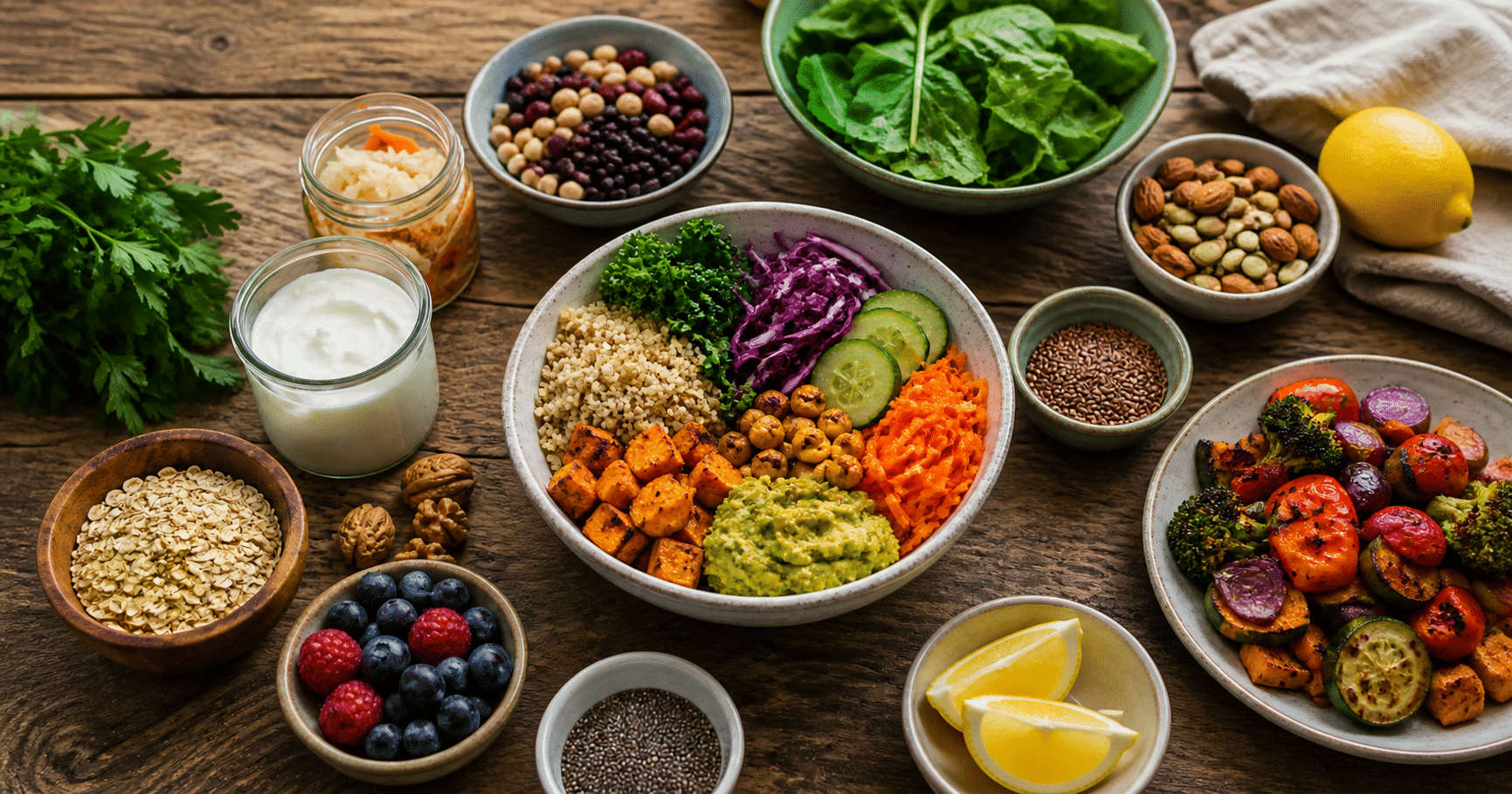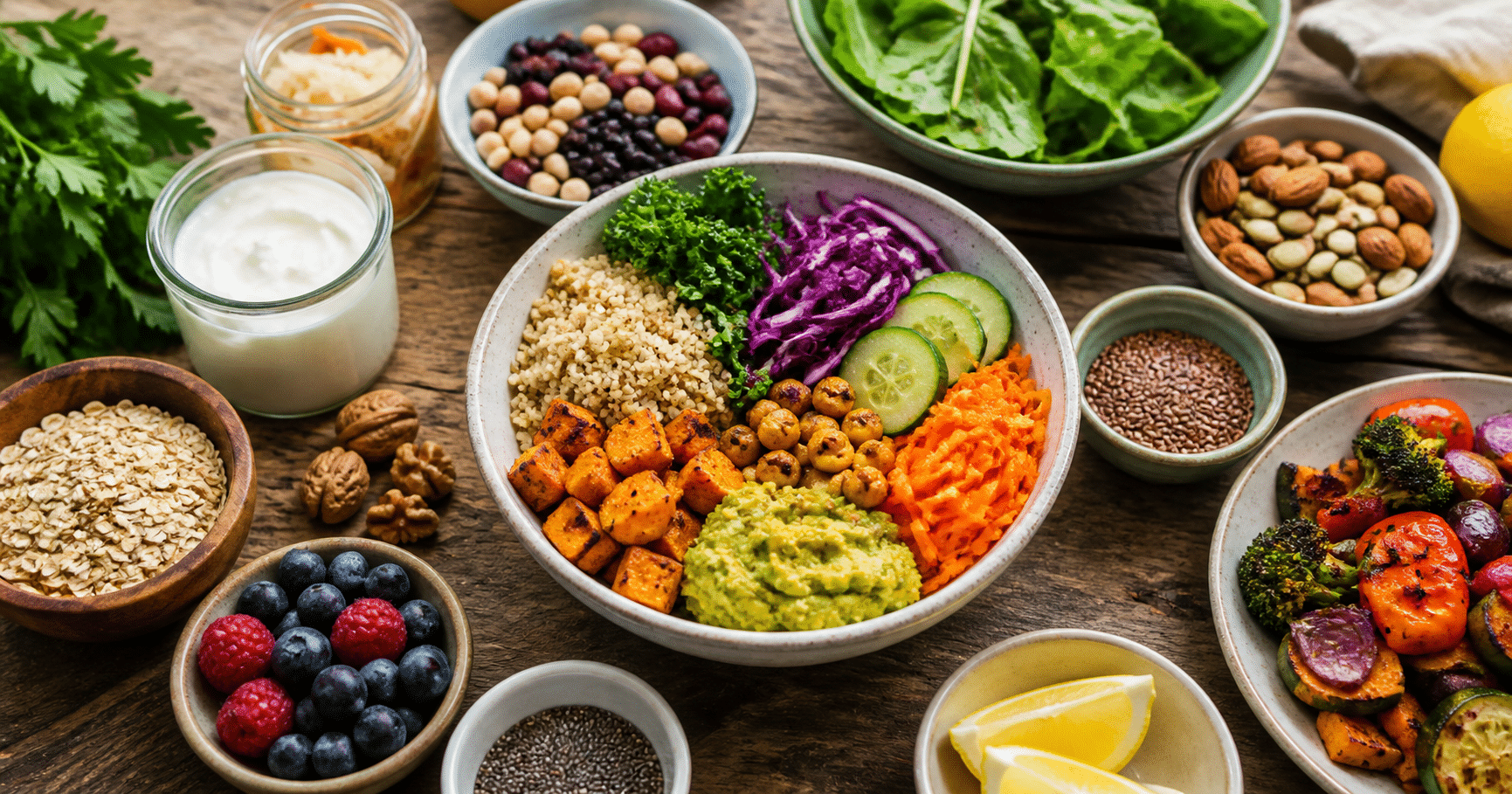
A gut-friendly diet does not have to mean a pantry full of specialty powders or a strict list of foods to avoid. Often, a more useful starting point is adding variety to the everyday foods you already eat: oats at breakfast, beans in soup, greens at dinner, and fruit for a snack.
That variety matters because different plant foods provide different kinds of fiber and other compounds that gut microbes can use. But there is no single food—or magic number of plants—that guarantees a healthy gut, and adding too much fiber too quickly can leave you uncomfortable.
Here are seven simple ways to broaden your meals without turning eating into a project. The goal is steady, appealing variety that works with your appetite, budget, and any health needs you have.
Why Variety Can Support a Gut-Friendly Diet
Your digestive tract is home to a community of microorganisms. Many types of fiber pass through the small intestine largely undigested and reach the colon, where gut microbes can break some of them down. That process produces compounds, including short-chain fatty acids, and may support the gut lining. Fiber also helps add bulk to stool, though people’s responses vary.
Different foods offer different fibers. Oats contain beta-glucan, beans provide a mix of fibers and resistant starch, and many fruits and vegetables supply pectin or other fermentable fibers. A varied diet gives you more chances to include these different sources. It does not guarantee a particular microbiome or treat digestive symptoms, but it can help build a balanced eating pattern.
“Variety” does not mean eating every healthy-sounding food at once. If you are not used to fiber-rich foods, increase them gradually and drink enough fluids, unless your clinician has advised you to limit fluids. If you have a condition that requires a special diet, use these ideas as options to discuss with your health care team.
7 Simple Ways to Add More Variety
1. Rotate your usual fruits and vegetables
It is easy to buy the same apples, carrots, and salad greens every week. Keep familiar favorites, but swap in one different option when you shop: pears instead of apples, cabbage instead of lettuce, or frozen berries in place of your usual fruit. Fresh, frozen, and canned produce can all contribute; choose options with little or no added sugar or salt when practical.
2. Give beans and lentils a regular place at the table
Beans, chickpeas, peas, and lentils supply fiber and plant protein. Add a few spoonfuls of chickpeas to a salad, stir lentils into tomato soup, or use black beans in tacos. If beans are new to your routine, start with a modest serving. Rinsing canned beans can reduce some of their sodium, and gradual increases may be easier on your digestion.
3. Swap in whole grains a little at a time
Try oatmeal, barley, brown rice, whole-wheat bread, or quinoa in place of a refined grain now and then. These foods vary in texture and nutrients, so choose the ones you enjoy rather than forcing a grain you dislike. A half-and-half mix of white and brown rice can make the transition gentler on the palate—and on your shopping routine.
4. Use nuts and seeds as small, flexible additions
Sprinkle ground flaxseed or chia seeds into oatmeal, add chopped walnuts to a salad, or keep a small handful of almonds with a piece of fruit. These foods contribute fiber and unsaturated fats, but they are energy-dense, so a small portion can go a long way. Choose unsalted varieties if you are watching sodium.
5. Explore fermented foods if you enjoy them
Yogurt with live cultures, kefir, sauerkraut, kimchi, and some other fermented foods can add flavor and variety. Products differ: some are pasteurized after fermentation, and many pickled foods are not fermented at all. Check labels for live cultures if that is what you are seeking, and remember that fermented foods are not a guaranteed treatment for bloating or other digestive complaints.
6. Vary the plants in your flavorings
Herbs, spices, garlic, onions, and citrus zest can make familiar meals feel different while adding small amounts of plant compounds. Try parsley and lemon on beans, cinnamon in oatmeal, or ginger in a vegetable soup. They are useful for flavor, but do not count on a seasoning to replace fiber-rich foods or provide a medical benefit.
7. Make leftovers and freezer staples work harder
A varied diet does not require cooking from scratch every day. Keep frozen vegetables, canned beans, and a few whole grains on hand, then combine them in different ways. Leftover roasted vegetables can go into an omelet or soup; cooked barley can become a grain bowl the next day. If you cook rice or potatoes ahead, refrigerate them promptly and reheat leftovers thoroughly.
Make Variety Easy, Not Overwhelming
Think in small swaps rather than a complete menu overhaul. For example, add berries to breakfast, choose a bean-based lunch once or twice a week, and try one unfamiliar vegetable at dinner. A simple shopping list organized around fruits, vegetables, beans, whole grains, nuts or seeds, and optional fermented foods can help you spot what is missing.
Pay attention to comfort as you make changes. Some people with irritable bowel syndrome or other digestive conditions find that particular foods trigger symptoms, even when those foods are nutritious for many others. If a food reliably causes problems, do not force it; a registered dietitian can help identify alternatives that suit your needs.
A Practical Takeaway for Your Next Meal
Building a gut-friendly diet is less about chasing a perfect food and more about making room for different sources of fiber and plant foods over time. Start with one easy addition or swap, then keep the choices you enjoy.
The best kind of variety is the kind you can repeat: a colorful plate, a new grain now and then, or beans added to a familiar favorite.