A pot of rice can turn into several easy meals: a quick lunch bowl, a side dish, or the base for fried rice. But cooked rice needs more careful handling than many people realize. The concern isn’t that rice is unusual once cooked; it’s that a common soil bacterium can leave spores behind even after cooking.
Those spores can grow if rice sits warm for too long. In some cases, the bacteria produce a toxin that reheating may not destroy, so putting neglected rice in the microwave is not a reliable fix.
The safest routine is simple: cool rice quickly in small portions, refrigerate or freeze it promptly, and reheat only what you plan to eat. Here’s how to do that without turning meal prep into a complicated process.
Why Cooked Rice Needs Prompt Cooling
Bacillus cereus is a bacterium found in the environment, including soil. Its spores can survive the cooking process. If cooked rice stays at room temperature, the spores may grow and produce toxins that can cause food poisoning.
Refrigeration slows bacterial growth; it does not sterilize rice or erase any toxin that may already have formed. That’s why timing matters at the beginning, not just when you reheat a meal. Rice that has been left out too long should be discarded rather than “rescued” by chilling or reheating.
For home kitchens, follow the same prompt-cooling rule used for other perishable leftovers: refrigerate within 2 hours of cooking, or within 1 hour if the temperature is above 90°F, such as at an outdoor gathering. Keep the refrigerator at 40°F or colder.
The Safest Way to Cool, Store, and Reheat Rice
1. Divide it into shallow portions
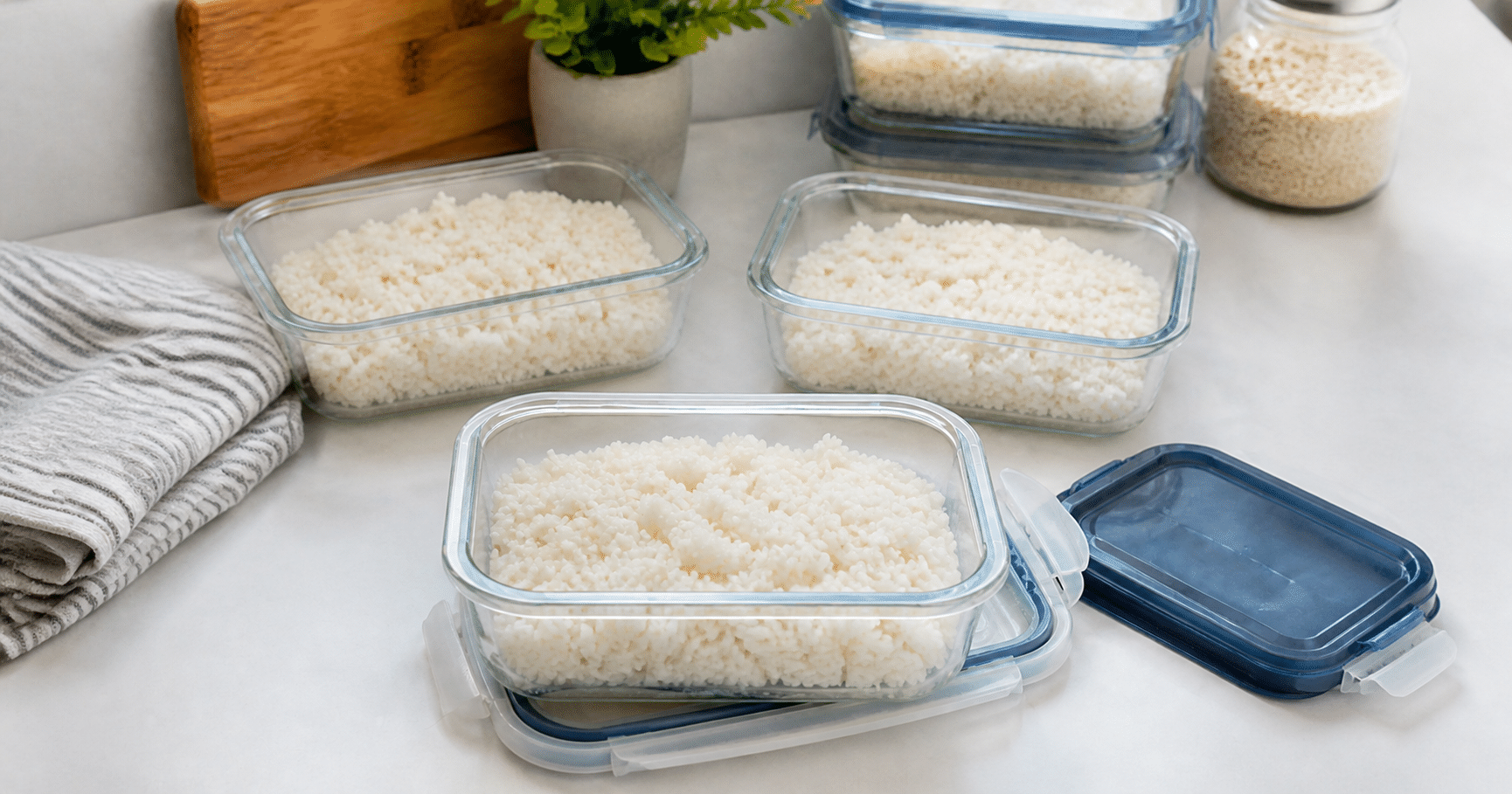
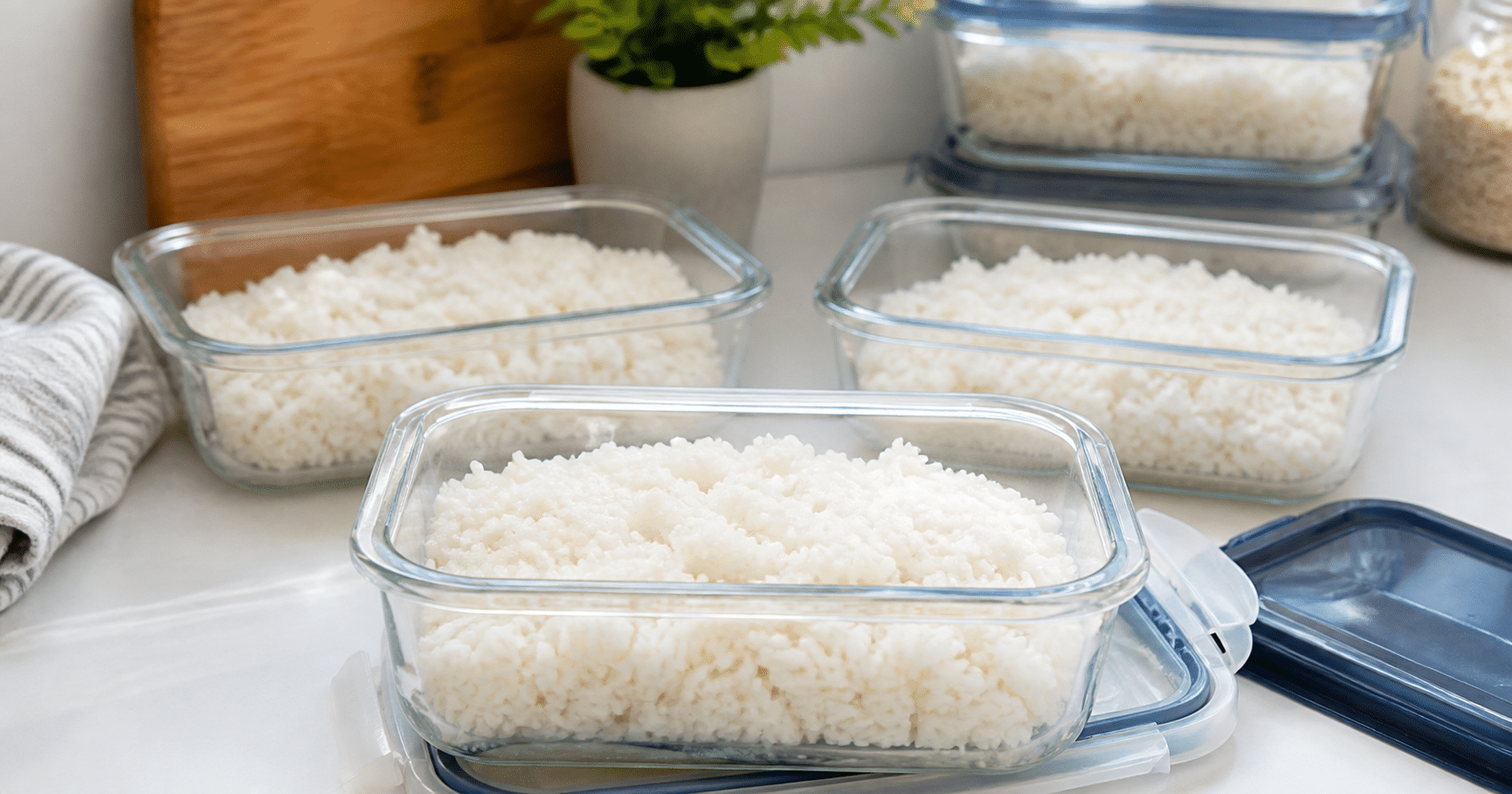
A large pot of rice cools slowly in the center. Instead, spoon rice into clean, shallow containers or divide it into meal-size portions. A thinner layer lets heat escape faster, helping the rice reach refrigerator temperature sooner.
You don’t need to leave rice on the counter until it feels completely cool. Put the portions in the refrigerator promptly; small amounts of warm food can be refrigerated safely. Avoid placing a deep, steaming pot in the fridge, where it will cool slowly and may warm nearby foods.
2. Refrigerate for a short-term meal plan
Once chilled, keep rice covered in the refrigerator at 40°F or below. U.S. food-safety guidance generally recommends using refrigerated leftovers within 3 to 4 days. Write the cooking date on the container if you’re likely to lose track.
If you won’t eat the rice within that window, freeze it instead. Freezing stops bacterial growth while the rice remains frozen, though its texture may gradually decline. Use airtight, freezer-safe containers or bags, and label them with the date and portion size.
3. Reheat only the amount you need
Reheat rice until it reaches 165°F throughout. A food thermometer is the most reliable check. In a microwave, cover the rice, add a small splash of water if it seems dry, and stir partway through so cold spots don’t remain. Let it stand briefly, then check the temperature in more than one spot.
For best quality and simpler handling, warm only the portion you’ll eat rather than repeatedly heating and cooling the entire batch. Thawed rice can be reheated in the microwave or in a pan; frozen rice can also be reheated directly if it heats evenly to 165°F.
A Simple Rice Meal-Prep Routine
This method works for white, brown, jasmine, basmati, and other cooked rice. It requires no special equipment beyond clean containers and a refrigerator thermometer if you need to check your fridge temperature.
What You’ll Need
-
- Freshly cooked rice
-
- Clean, shallow containers with lids, or freezer-safe bags
-
- A marker or labels for dates and portions
-
- A food thermometer for checking reheated rice
Step-by-Step Instructions
-
- Start the clock when cooking ends. Plan to refrigerate or freeze the rice within 2 hours, or within 1 hour when the surrounding temperature is above 90°F.
-
- Divide the rice. Spoon it into shallow containers in meal-size portions instead of leaving it in a deep pot. Keep the layer relatively thin to help it cool quickly.
-
- Chill promptly. Cover the containers and place them in the refrigerator. If you’re freezing portions, seal and label them, then place them in the freezer without a long counter-cooling delay.
-
- Use or freeze on time. Eat refrigerated rice within 3 to 4 days. Freeze portions you won’t use by then, and label them so they don’t disappear into the back of the freezer.
-
- Reheat thoroughly. Heat just the portion you need to 165°F, stirring microwave rice for even heating. Discard rice that sat out beyond the recommended time.
Small Habits That Make Rice Safer
Serve rice with a clean spoon, and return the container to the refrigerator rather than letting it linger on the table through a long meal. Time spent out during serving counts toward the total time at room temperature. If you’re packing rice for lunch, use an insulated bag with a cold source to keep it chilled until mealtime.
Don’t use smell, taste, or appearance to decide whether rice is safe. Harmful bacteria or toxins may not noticeably change how food looks or tastes. When you’re unsure how long a portion sat out, the safer choice is to throw it away.
For meal prep, the best container is often the one that matches a single meal: it cools faster, is easy to label, and means you only reheat what you’ll eat.
Make the Next Batch Easy to Trust
Cooked rice can be a convenient meal-prep staple when it’s cooled promptly, stored cold, and eaten within a few days—or frozen for later. The key is to avoid leaving a large batch at room temperature while it cools.
Portion it while it’s fresh, label the date, and treat reheating as the final step—not a way to make mishandled rice safe.