A spoonful of sauerkraut can wake up a familiar meal with a bright, tangy crunch. You don’t need to build dinner around a giant pile of fermented cabbage: a small amount can add plenty of flavor to eggs, potatoes, sandwiches, and more.
There’s one useful detail to know before you start cooking: sauerkraut’s texture and live cultures depend on how it was made and stored. Refrigerated, unpasteurized kraut may contain live microorganisms; shelf-stable or pasteurized varieties generally do not. Either can bring tang and crunch to a meal, but heat can reduce the live cultures in unpasteurized kraut.
Sauerkraut can also be high in sodium, so a little may be all you want—especially if other ingredients in the meal, such as cheese or smoked meat, are salty too. These five easy meals use about a spoonful per serving, with the kraut added at the end whenever its fresh crunch is part of the appeal.
Why a Little Sauerkraut Can Do a Lot
Sauerkraut is cabbage fermented by lactic-acid-producing bacteria. Fermentation gives it its distinctive sour flavor and changes the cabbage’s texture. The finished product still supplies cabbage’s fiber and nutrients, though the amount you get depends on the serving size and the product.
Some refrigerated, unpasteurized sauerkraut contains live cultures, but not every jar does. Check the label and storage instructions if that matters to you. These foods can be part of a varied diet, but sauerkraut is not a proven treatment for digestive problems or a substitute for medical care.
For the best contrast of warm and crisp, stir or pile the kraut onto a hot meal just before serving. If you prefer a softer, mellower flavor, warm it briefly with the other ingredients instead.
Five Easy Meals for a Spoonful of Kraut
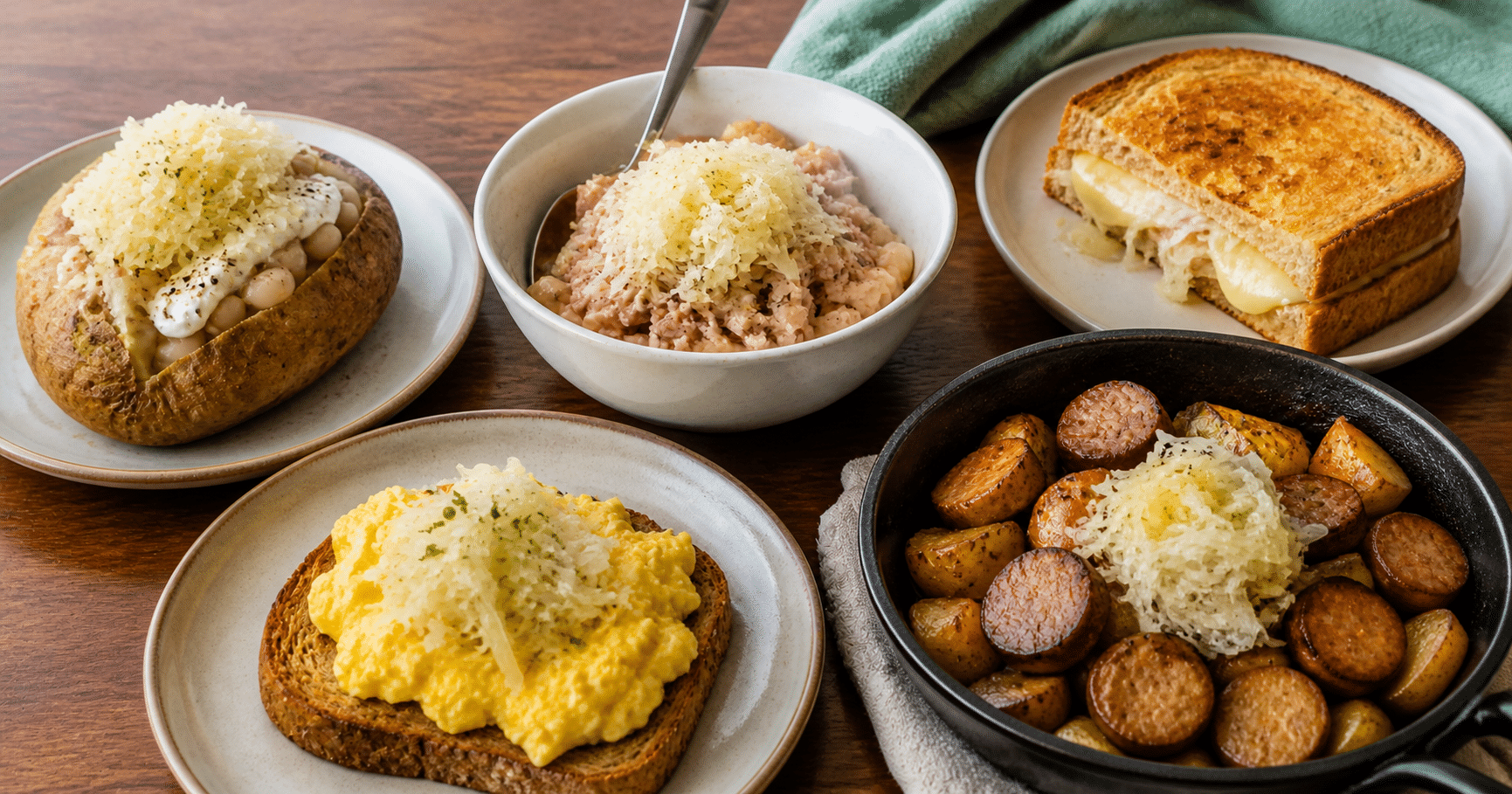
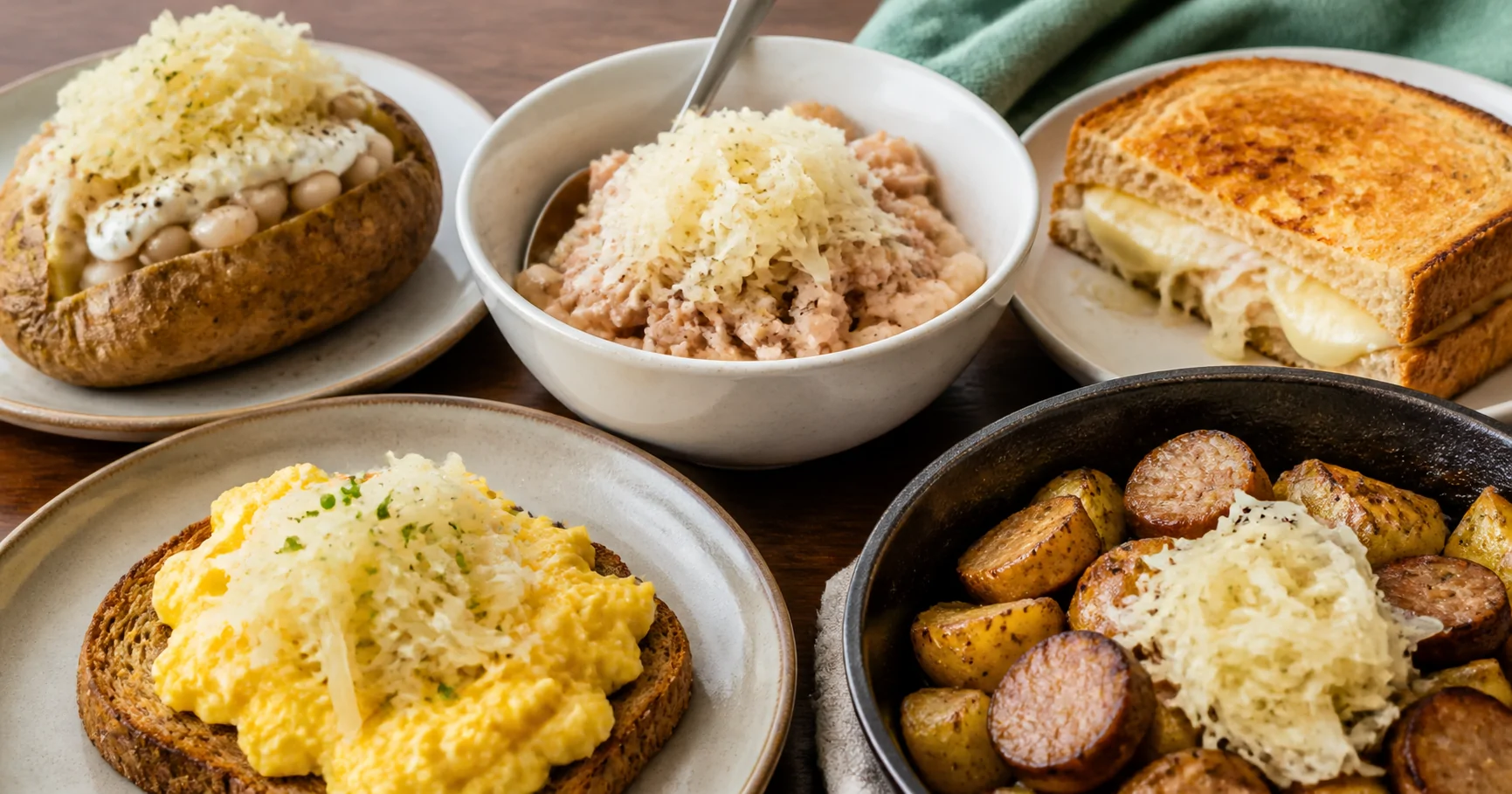
1. A Loaded Baked Potato with a Tangy Finish
The potato’s mild, fluffy interior balances sauerkraut’s sharpness. Beans add staying power without requiring much prep.
- 1 medium baked russet or sweet potato
- 1/3 cup rinsed canned white beans, warmed
- 1 tablespoon plain Greek yogurt or sour cream
- 1 tablespoon sauerkraut, drained
- Black pepper, to taste
- Split the hot potato and fluff the inside with a fork. Add the warmed beans and a spoonful of yogurt.
- Top with sauerkraut and black pepper. Serve right away so the kraut stays crisp.
2. Scrambled Eggs on Toast with Sauerkraut
A small amount of kraut cuts through the richness of eggs and makes plain toast feel more like a meal. Add it after cooking rather than scrambling it into the pan.
- 2 eggs
- 1 teaspoon butter or olive oil
- 1 slice whole-grain bread, toasted
- 1 tablespoon sauerkraut, drained
- Chopped chives or black pepper, optional
- Beat the eggs. Warm the butter or oil in a skillet over medium-low heat, then cook the eggs, stirring gently, until set to your liking.
- Spoon the eggs onto toast and finish with sauerkraut and chives or pepper.
3. A Quick Tuna and White Bean Bowl
This no-fuss lunch combines pantry staples with a bright topping. Choose tuna packed in water if you want to keep the bowl lighter, and taste before adding salt.
- 1/2 cup rinsed canned white beans
- 1/2 can (about 2.5 ounces) drained tuna
- 1 teaspoon olive oil
- 1 teaspoon lemon juice
- 1 tablespoon sauerkraut, drained and roughly chopped
- Black pepper, to taste
- Gently mix the beans and tuna with olive oil, lemon juice, and black pepper.
- Spoon into a bowl and top with sauerkraut. Eat as is or serve with whole-grain crackers or toast.
4. A Crisp Sauerkraut Grilled Cheese
Here, kraut brings a tart counterpoint to melted cheese. Pat it dry first to help keep the bread from becoming soggy.
- 2 slices whole-grain or rye bread
- 2 slices Swiss or cheddar cheese
- 1 tablespoon sauerkraut, drained and patted dry
- 1 teaspoon softened butter
- Layer the cheese and sauerkraut between the bread slices. Butter the outside of the sandwich.
- Cook in a skillet over medium-low heat, turning once, until the bread is golden and the cheese has melted, about 3–5 minutes per side.
5. A Fast Sausage and Potato Skillet
This is a practical way to use leftover cooked potatoes. A small amount of kraut gives the skillet a lively finish without needing a long simmer.
- 1 cooked potato, diced
- 1 fully cooked chicken or turkey sausage, sliced
- 1 teaspoon olive oil
- 1 tablespoon sauerkraut, drained
- 1 teaspoon mustard, optional
- Heat the oil in a skillet over medium heat. Add the potato and sausage and cook, stirring occasionally, until hot and lightly browned, about 5–7 minutes.
- Take the skillet off the heat. Stir in the sauerkraut or spoon it over the top, with mustard if you like.
Make the Flavor Work for You
Kraut’s saltiness varies by brand, so taste it before seasoning the rest of the meal. If you’re watching sodium, use a smaller spoonful, compare labels, or balance it with unsalted beans, potatoes, eggs, or vegetables. Draining helps prevent excess brine from making a sandwich or bowl watery, though it won’t remove all the salt.
For a cold topping, add sauerkraut after cooking. If you heat it, it still contributes its cabbage flavor and texture, but you shouldn’t count on live cultures surviving the cooking process.
A Small Spoonful, Many Possibilities
Sauerkraut doesn’t have to be the main event. A tablespoon can brighten a potato, give eggs extra character, or balance a cheesy sandwich—while making use of ingredients you may already have.
Keep a jar chilled according to its label, and treat that spoonful like a finishing touch: add it where a meal could use a little tang.