Breakfast can be a surprisingly tricky meal when you’re trying to make sense of bloating, gas, or bowel changes. A bowl of cereal with milk, toast with fruit, or a flavored yogurt may combine several fermentable carbohydrates—often called FODMAPs—that can bother some people with irritable bowel syndrome (IBS).
That doesn’t mean these foods are unhealthy, or that everyone with digestive symptoms needs to avoid them. A low-FODMAP approach is a structured way to investigate whether certain carbohydrates contribute to symptoms. It is not meant to become a permanent, highly restrictive diet.
The details matter: portions can change how a food fits, and several individually modest servings may add up in one meal. Here’s what to know before changing your breakfast, plus practical ideas that keep variety and nutrition in view.
What a Low-FODMAP Breakfast Is—and What It Isn’t
FODMAPs are short-chain carbohydrates found in a range of foods, including some fruits, vegetables, grains, beans, and dairy products. In some people, they are poorly absorbed in the small intestine. They can draw water into the gut and be fermented by intestinal bacteria, producing gas. For someone with IBS, that may contribute to pain, bloating, or changes in bowel habits.
A low-FODMAP meal limits particular FODMAPs and serving sizes; it does not simply mean “gluten-free,” “dairy-free,” or “healthy.” Wheat, for example, contains fructans, a type of FODMAP, but gluten is a different protein. Likewise, lactose-free milk is often an option because its lactose has been broken down, while many cheeses naturally contain little lactose.
The approach is generally used in stages: a short elimination period, followed by planned challenges to identify which foods and portions trigger symptoms, then a more personalized way of eating. Staying strictly restrictive long term can make it harder to get enough variety, fiber, and nutrients. A registered dietitian familiar with IBS can help make the process more useful and less restrictive.
Three Things to Know Before You Change Your Morning Meal
1. The portion is part of the food choice
Some foods are tolerated in a small serving but become higher in FODMAPs as the portion grows. Tolerance also differs from person to person. Use a reputable, up-to-date food guide or app for serving information rather than assuming that a food is always “safe” or always off-limits.
2. Several small servings can add up
A little fruit, a splash of milk, and a sweetener may each seem insignificant, but together they can make breakfast harder to interpret. During an elimination trial, keep meals simple enough to identify patterns. That doesn’t mean eating the same food every day; it means changing one variable at a time when possible.
3. Don’t overlook nutrition or other explanations
Breakfast still needs to be satisfying. Include a source of protein—such as eggs, firm tofu, or lactose-free yogurt—and a suitable source of fiber, such as oats or chia seeds, as tolerated. Digestive symptoms can have causes other than FODMAPs, so persistent, new, or severe symptoms deserve medical attention rather than an increasingly long list of food restrictions.
Low-FODMAP Breakfast Ideas to Try
- Eggs with vegetables: Pair scrambled eggs with spinach, tomatoes, or bell pepper, and serve with a portion of suitable gluten-free bread or potatoes.
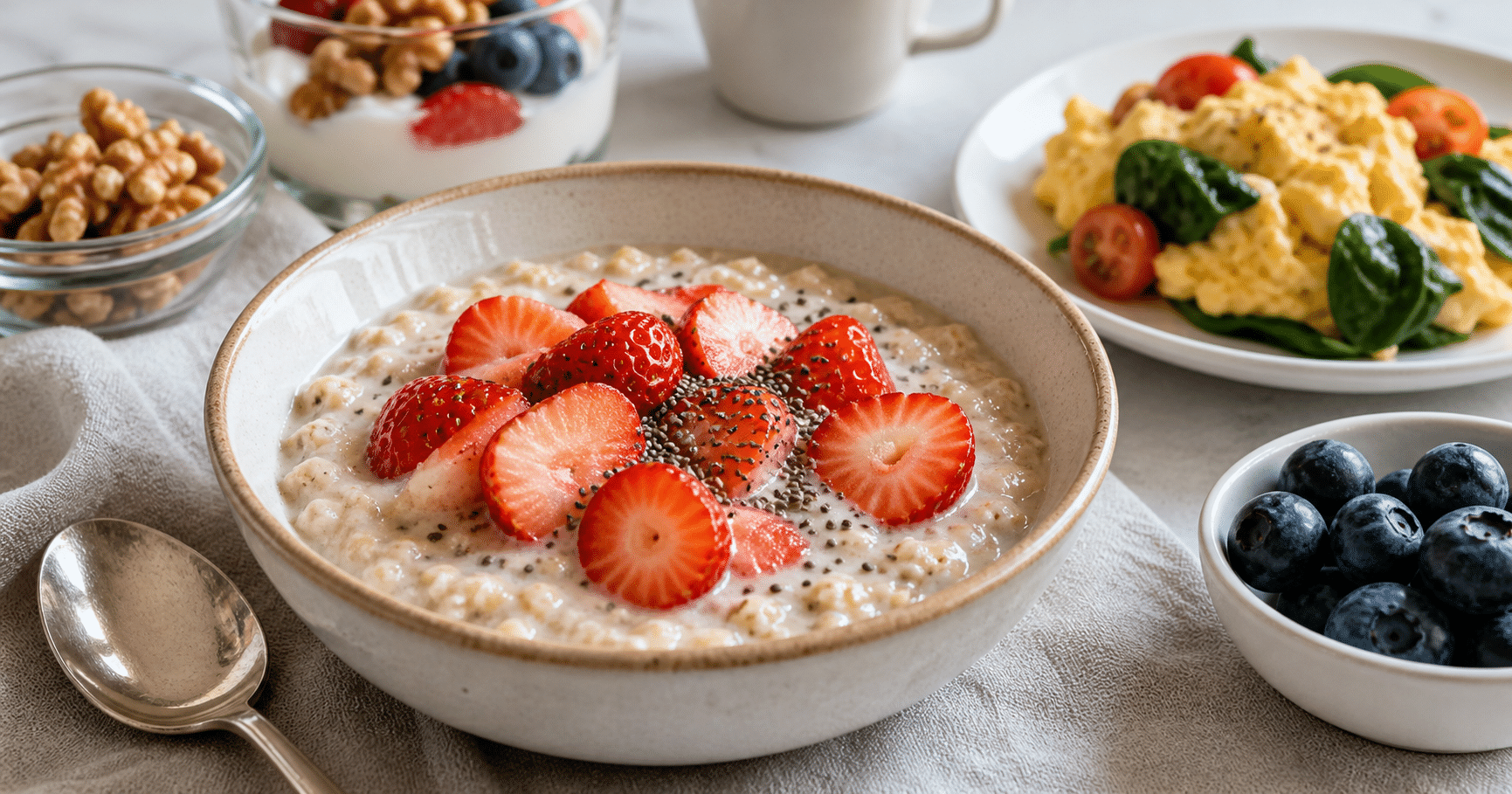
- Oatmeal: Cook rolled oats with lactose-free milk or water. Add a modest portion of strawberries or blueberries and, if tolerated, a spoonful of chia seeds.
- Lactose-free yogurt bowl: Top plain lactose-free yogurt with a suitable serving of fruit and a small handful of walnuts or pecans.
- Tofu scramble: Use plain, firm tofu with spinach and chives. Check seasoning blends and sauces for onion or garlic, common sources of fructans.
- Rice cakes with peanut butter: Add sliced strawberries or another fruit that fits your personal plan. Check labels for inulin, chicory root, honey, or sugar alcohols, which can be problematic for some people.
These are starting points, not a list of universally tolerated meals. Packaged foods and individual serving sizes vary, so check ingredients and reliable portion guidance during a structured trial.
A Simple Strawberry-Chia Oatmeal
This warm, one-serving breakfast combines oats and lactose-free milk for a filling base. Keep the fruit portion modest while you’re learning what works for you.
Ingredients
- 1/2 cup rolled oats
- 1 cup lactose-free milk, or water
- 1 tablespoon chia seeds, optional
- 1/2 cup sliced strawberries
- A pinch of cinnamon, optional
Step-by-Step Instructions
- Combine the oats and milk or water in a small saucepan.
- Bring to a gentle simmer, then cook for about 5 minutes, stirring occasionally, until creamy. Follow the package directions if they differ.
- Stir in the chia seeds, if using, and let the oatmeal stand for 2 minutes to thicken.
- Top with strawberries and cinnamon. If you’re tracking symptoms, note the ingredients and portions rather than changing several parts of the meal at once.
For a quicker morning, cook the oats the night before and refrigerate promptly in a covered container. Reheat with a splash of milk or water. Make a fresh portion of fruit topping rather than assuming that a larger batch will suit everyone’s tolerance.
Make the Trial Useful, Not Needlessly Restrictive
Keep a brief food-and-symptom log that records meal times, portions, and symptoms. Symptoms can be influenced by stress, sleep, meal size, and other factors, so one uncomfortable morning does not prove that a particular food is the cause.
When symptoms improve during a short elimination phase, the next step is not to avoid every suspected food forever. Reintroducing foods in a planned way can reveal which FODMAP groups matter to you and which foods you can enjoy. If you’re managing other health conditions or already have a limited diet, get professional guidance before restricting more foods.
Keep Breakfast Personal
A low-FODMAP breakfast is about finding a comfortable combination—not following a universal menu. Start with simple meals, pay attention to portions, and use a structured elimination-and-reintroduction process with qualified guidance when possible. The best long-term plan is the broadest, most nourishing one your digestion comfortably allows.