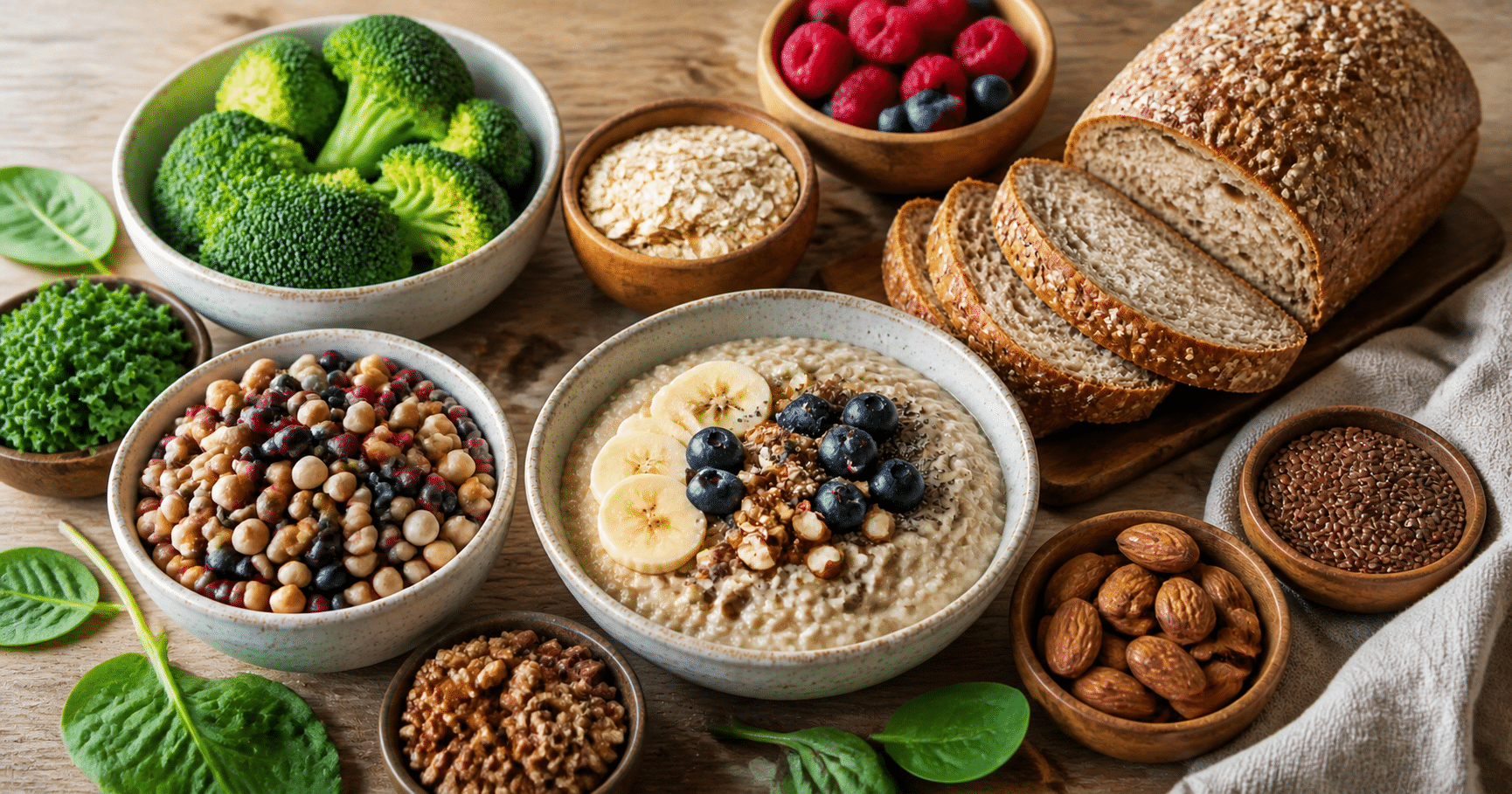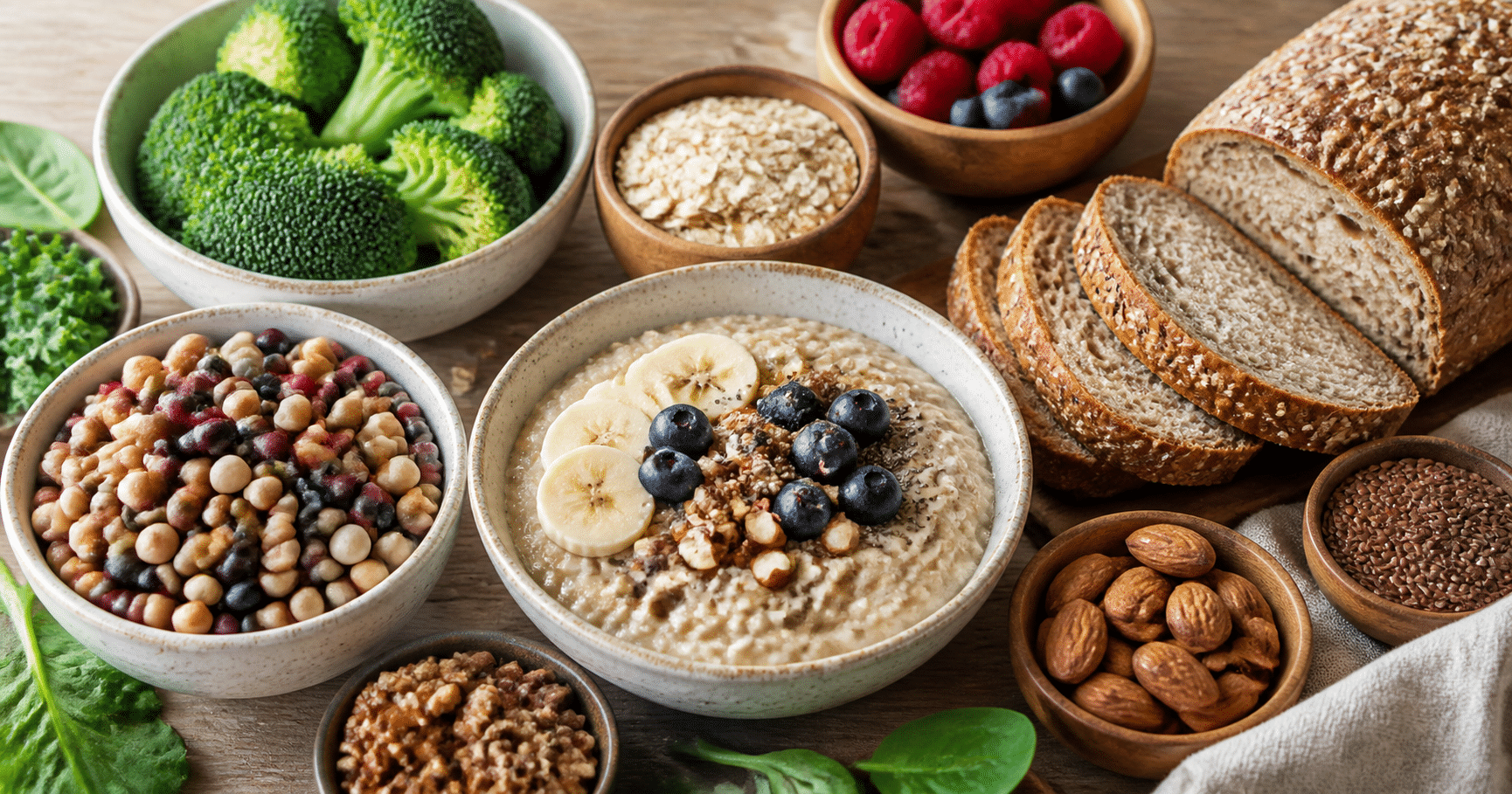
A bowl of oatmeal, a handful of beans, or a slice of whole-grain bread may look like ordinary food. In your gut, though, some of the carbohydrates in those foods become raw material for a busy community of microbes.
Unlike protein and fat, dietary fiber often reaches the large intestine without being fully digested by your own enzymes. There, certain gut bacteria break down some kinds of fiber, producing substances that can affect the intestinal environment.
That does not mean every fiber works the same way, or that one food can “reset” your microbiome. Some fibers are fermented readily; others mainly help move stool along. Here’s what gut microbes actually do with fiber—and how to add more without making your belly miserable.
What Happens to Fiber After It Reaches the Colon?
Fiber is a broad term for carbohydrates that resist digestion in the small intestine. Depending on its structure, it may dissolve in water, form a gel, add bulk, or be fermented by microbes in the colon. Many plant foods contain a mix of fiber types, so it’s rarely as simple as calling a food “the prebiotic one” or “the roughage one.”
When microbes ferment certain fibers, they produce gases and compounds called short-chain fatty acids, including acetate, propionate, and butyrate. Colon cells can use butyrate for energy, while these compounds also influence the chemical conditions in the gut. Scientists are studying how microbial activity and these compounds relate to health, but their production does not prove that a particular food prevents or treats a disease.
Some fiber is not fermented much at all. It can hold water, add bulk to stool, and help support regular bowel movements. Fiber’s effects depend on the type, the amount, your overall diet, and the microbes already living in your gut.
Four Ways Gut Microbes Put Fiber to Work
1. They ferment certain fibers into useful compounds
Beans, lentils, oats, barley, onions, and many other plant foods contain fibers that microbes can ferment to varying degrees. Resistant starch—a type of starch that escapes digestion in the small intestine—can also be fermented. It occurs naturally in foods such as beans and slightly green bananas, and forms in some cooked-and-cooled starchy foods.
Fermentation is a normal part of digestion, not a sign that something has gone wrong. But it can produce gas, especially when you suddenly eat much more fiber than usual.
2. They create gas as part of the process
Gas is one of the clearest signs that microbes are processing fermentable carbohydrates, but it is not a scorecard for how healthy your gut is. People differ in how much gas they make and how sensitive they are to it. A large serving of beans may cause discomfort for one person and barely register for another.
If a food reliably bothers you, try a smaller portion or a different source rather than assuming all fiber will have the same effect. Canned beans, rinsed before use, can be a convenient option; individual tolerance still varies.
3. They live alongside fibers that add bulk
Not all fiber is primarily microbial fuel. Less-fermentable fibers, including some forms of cellulose in vegetables and whole grains, can contribute to stool bulk. Soluble fibers such as psyllium absorb water and form a gel; they are used in some fiber supplements as well as occurring in foods.
This is one reason it helps to eat a range of plant foods rather than focusing on a single “superfiber.” Different foods bring different fiber structures, along with nutrients and other compounds.
4. They respond to the whole pattern of eating
Microbes encounter a changing mix of fibers from meals across the day. Beans at lunch, vegetables at dinner, and oats at breakfast offer a broader range than relying on one high-fiber product. Variety is a practical goal, not a guarantee of a particular microbiome or health outcome.
How to Increase Fiber Without a Sudden Gut Rebellion
The most reliable approach is gradual. If your usual meals are low in fiber, adding several large servings of beans, bran, and raw vegetables all at once may lead to bloating or gas. Increase portions over time and drink fluids regularly, especially as you add foods that absorb water.
Start with one small change
Choose a change that fits a meal you already eat. Add berries or a spoonful of nuts to oatmeal, use whole-grain bread instead of refined bread, or stir a few spoonfuls of beans into soup. Keep the change for several days before adding another, so you can notice how you feel.
Build meals around a mix of plants
A simple template is a grain or starchy food, a protein, and one or two plant sides. For example, serve brown rice with chicken and roasted vegetables, or add lentils to tomato soup and have fruit afterward. Frozen vegetables and canned beans can make this easier on busy days.
Use portions your body tolerates
If beans cause discomfort, begin with a modest serving and build gradually, or try oats, fruit, vegetables, or whole grains instead. There is no prize for eating the highest-fiber food if it leaves you uncomfortable. For people over 50, commonly cited daily targets are about 21 grams for women and 30 grams for men; individual needs can differ, and many people do not need to reach a target overnight.
When More Fiber Is Not Automatically Better
Fiber supplements can be useful for some people, but they are not interchangeable with a varied diet. Psyllium, for example, needs adequate fluid and may affect how some medicines are absorbed. Follow the product directions and ask a pharmacist or clinician how to time it with your medications.
If you have a digestive condition, trouble swallowing, or a prescribed diet that limits fiber, check with your healthcare professional before making a major change. Persistent abdominal pain, unexplained weight loss, blood in the stool, or a lasting change in bowel habits also deserves medical attention rather than a self-directed fiber experiment.
Feed the Microbes, Not the Hype
Gut microbes ferment some fibers into short-chain fatty acids and gas, while other fibers help add bulk or hold water. The effect depends on the fiber and the person—not on a single magic ingredient.
Make one small, sustainable change, then give your gut time to adjust. A steady variety of plant foods is more useful than chasing a dramatic microbiome makeover.