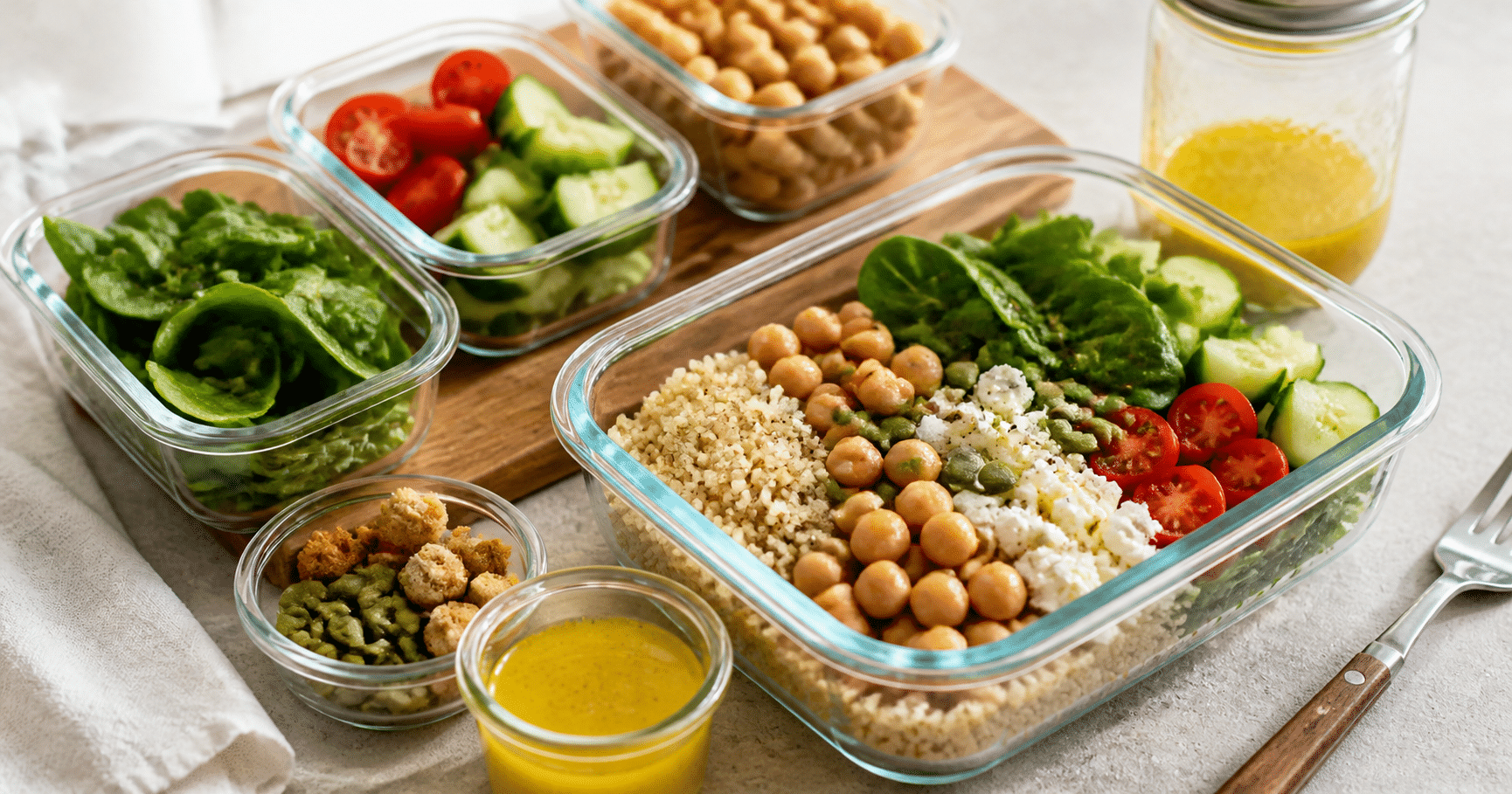
A make-ahead salad can look crisp at 8 a.m. and feel soggy by noon. The culprit is often not the greens themselves but a few ingredients—especially dressing, juicy vegetables, and salt—that start changing the salad as soon as they touch.
Keeping everything separate is not always necessary. A sturdy grain bowl can handle more mixing than a bed of tender lettuce, and some ingredients actually benefit from time together. The trick is knowing what to pack apart and what can share a container.
Here’s how to build a lunch salad that stays appealing, travels well, and can be assembled in minutes. You’ll also find a simple prep-ahead bowl and practical food-safety guidance for bringing it to work or on the road.
Why Some Salad Ingredients Should Wait Until Lunch
Dressing coats leaves and other ingredients with moisture and acid. Over several hours, that can soften tender greens, while salt draws water from vegetables such as cucumbers and tomatoes. The result is often a pool of liquid at the bottom and a less-crisp salad on top.
Texture is only part of the issue. Croutons, toasted nuts, seeds, and crispy toppings absorb moisture and lose their crunch when packed against dressing or juicy produce. Delicate add-ins such as sliced avocado can also brown after cutting, so they’re best prepared close to mealtime when possible.
By contrast, cooked grains, beans, and firm vegetables generally hold up well in a sealed container. Separating ingredients is less about following a rigid rule than protecting the textures you want to keep. A small lidded cup for dressing and a dry pouch for crunchy toppings can make a noticeable difference.
What to Pack Separately—and What Can Go Together
1. Keep the dressing in its own container
This is the simplest way to prevent a salad from becoming limp. Pack vinaigrette or creamy dressing in a leakproof cup, then add it just before eating. If you’re using a mason jar, dressing can go at the bottom with firm ingredients above it—but transfer the salad to a bowl, or shake it only if the jar has enough room to mix without crushing delicate leaves.
2. Separate juicy produce from tender greens
Cut tomatoes and cucumbers can release liquid, particularly when they’re salted. Pack them in a small container apart from lettuce or baby spinach, or place them near the bottom of a layered jar with sturdier ingredients between them and the greens. Add salt at lunch rather than during morning prep.
Wash produce under running water and dry it thoroughly before packing. Excess water left on greens can speed up wilting, even without dressing.
3. Keep crunchy toppings dry
Croutons, toasted seeds, nuts, and crispy onions belong in a separate dry container or small bag. Add them after dressing the salad. This also helps preserve their flavor and keeps them from becoming chewy.
4. Add avocado and tender herbs at the last minute
Cut avocado is prone to browning as its surface meets air. Lemon or lime juice may slow that process, but it won’t keep the cut surface perfectly green indefinitely. For the freshest result, pack a whole avocado and slice some at lunch, or add pre-cut avocado shortly before eating. Delicate herbs such as basil are best added at the end, too.
Cooked chicken, eggs, beans, and grains can be packed with sturdier vegetables, provided they’re chilled and kept cold. They don’t need to be separated for texture in every salad, but they do need safe temperature control.
A Make-Ahead Chickpea and Grain Salad Bowl
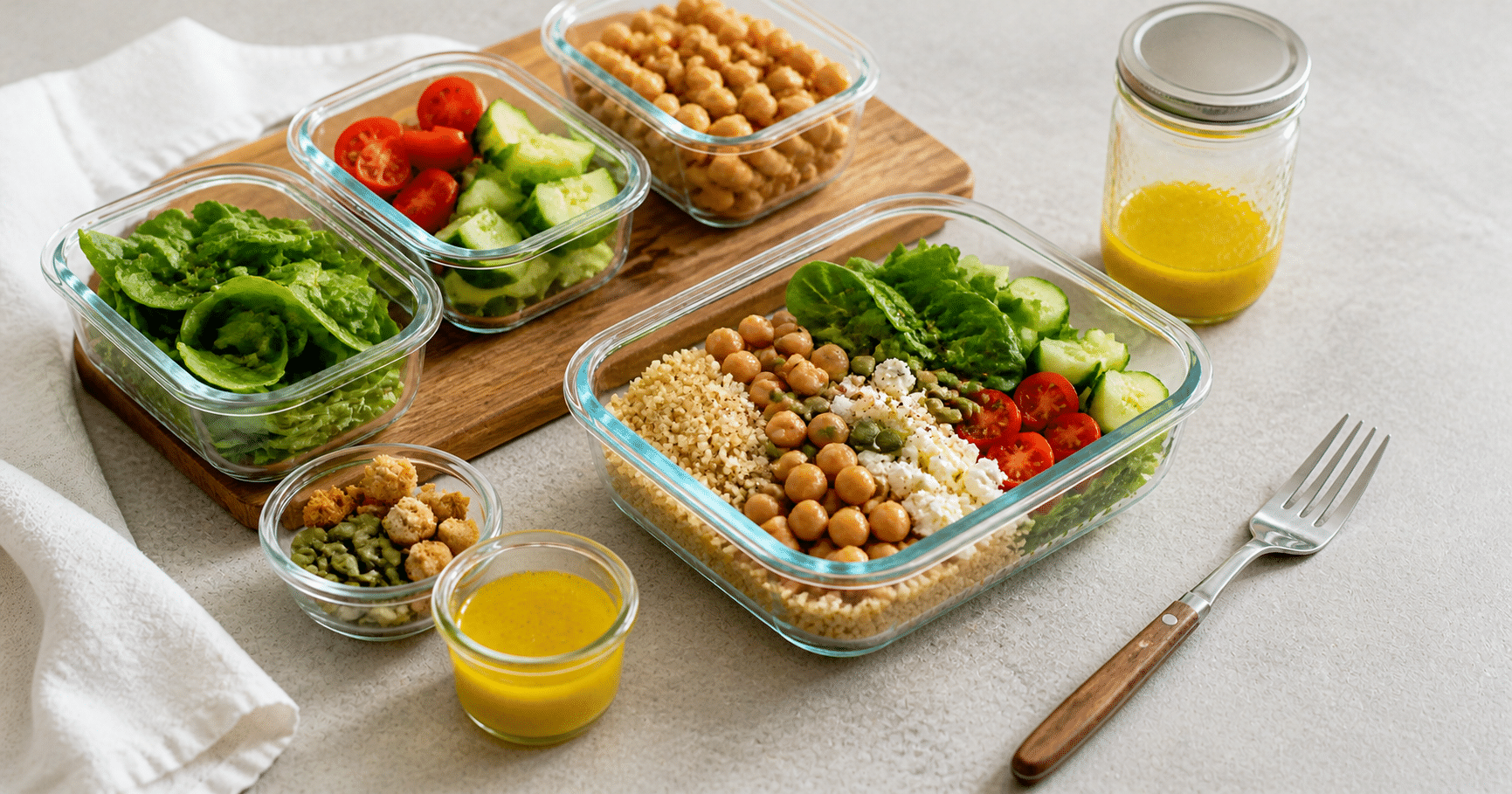
This lunch combines sturdy ingredients that hold up well with greens and toppings packed separately. It makes two generous servings; divide the components between containers if you’re preparing lunches ahead.
Ingredients
- 1 cup cooked quinoa or farro, cooled
- 1 cup canned chickpeas, drained and rinsed
- 1 cup chopped cucumber
- 1 cup halved cherry tomatoes
- 2 cups baby spinach or chopped romaine, washed and thoroughly dried
- 2 tablespoons crumbled feta, optional
- 2 tablespoons pumpkin seeds or croutons
- 2 tablespoons olive oil
- 1 tablespoon lemon juice
- 1 teaspoon Dijon mustard
- Salt and black pepper to taste
Step-by-Step Instructions
- Cool the grain. If freshly cooked, spread quinoa or farro in a shallow dish so it cools promptly. Don’t pack it while steaming hot.
- Make the dressing. Whisk olive oil, lemon juice, Dijon mustard, and pepper in a small leakproof cup. Keep salt separate until serving if you’re using it.
- Pack the sturdy ingredients. Divide the cooled grain and chickpeas between two meal containers. Add cucumber and tomatoes in a separate compartment or small container if you want to keep their moisture away from the greens.
- Pack the greens and toppings. Put dry spinach or romaine in a separate container. Keep feta and seeds or croutons apart from both the dressing and greens.
- Assemble at lunch. Combine the grain, chickpeas, vegetables, and greens. Add dressing and salt to taste, then finish with feta and crunchy toppings.
Refrigerate the components promptly and keep them at 40°F or below. If the salad will be out of the refrigerator during your commute or at lunch, use an insulated bag with a cold source. Perishable foods should not sit at room temperature for more than two hours—or one hour when the temperature is above 90°F. For cooked grains or other leftovers, use refrigerated leftovers within three to four days.
Small Packing Choices That Make a Better Lunch
Choose a container with a tight lid and enough room to toss the salad. If everything is packed tightly, dressing and toppings are harder to distribute without crushing the greens. A wide container is usually easier to eat from than a narrow jar.
For a fast morning routine, portion dry toppings and dressing while you’re preparing the rest of the week’s lunches. Keep ingredients that need refrigeration cold, and don’t rely on a desk drawer or a warm car to store them safely.
The Best Salad Is the One That Still Has Its Texture
Keep dressing, juicy produce, and crunchy toppings apart from delicate greens until lunch. Sturdy grains, beans, and firm vegetables can often be packed together, while good drying and reliable refrigeration help the whole bowl hold up.
Think of the container as a set of small compartments, not a finished salad. A minute of assembly at lunchtime is a fair trade for a bowl that tastes freshly made.