A balanced week of meals does not require a new set of food rules—or a refrigerator full of specialty ingredients. For many people, the hard part is not knowing that vegetables and protein matter; it is figuring out what to make on a busy Tuesday when the groceries are still in the car.
Meal planning can help, but it can also become another form of restriction if every portion, calorie, or ingredient has to be perfect. A more useful approach is to plan a few dependable meals, leave room for leftovers and preferences, and aim for variety over the week.
That flexibility matters, especially after 50, when appetite, activity, budget, and health needs can change. Here’s a practical way to build a week of satisfying meals without following a strict diet, plus a sample menu you can adjust to suit your household.
What a balanced week of meals really looks like
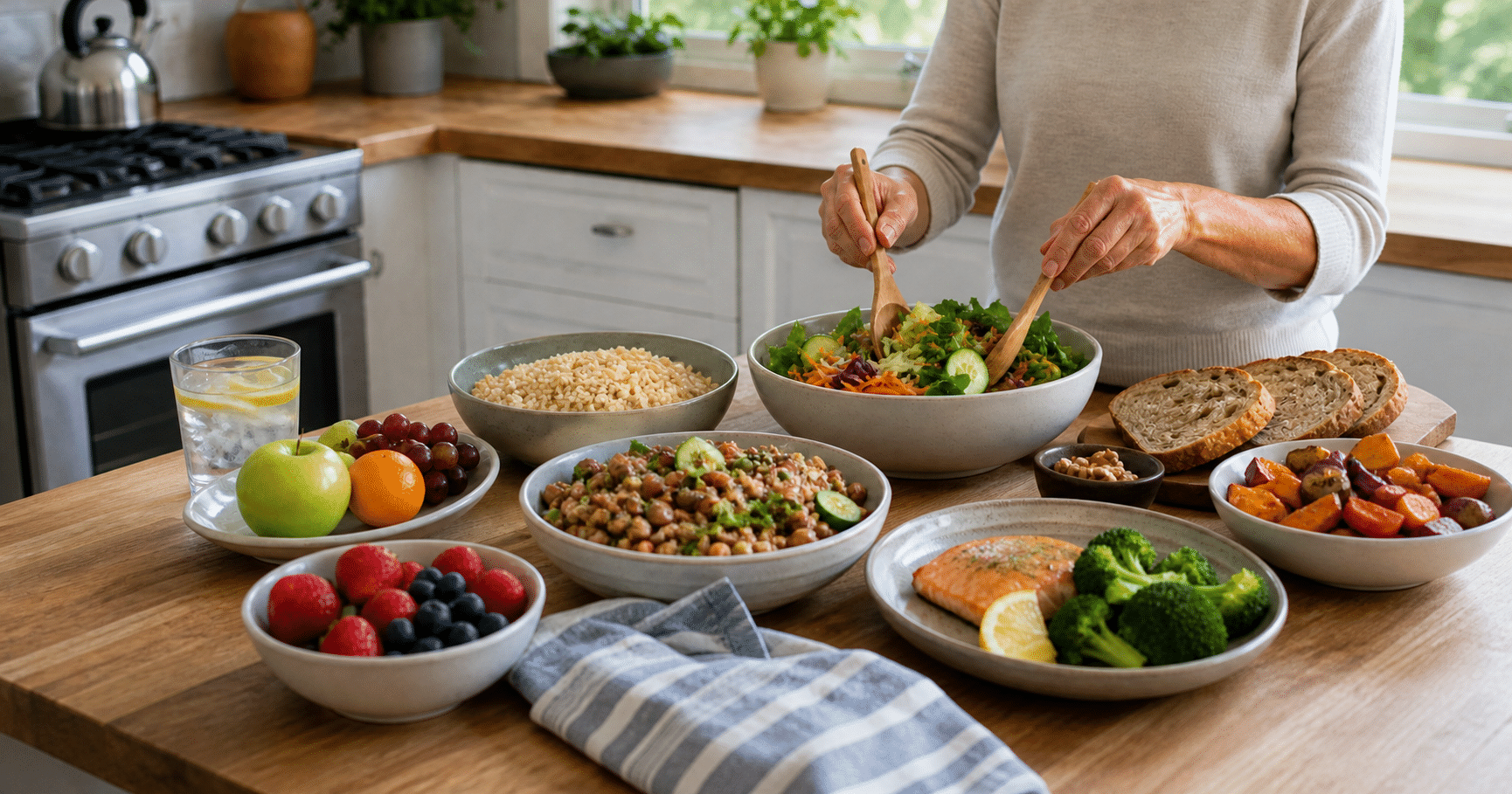
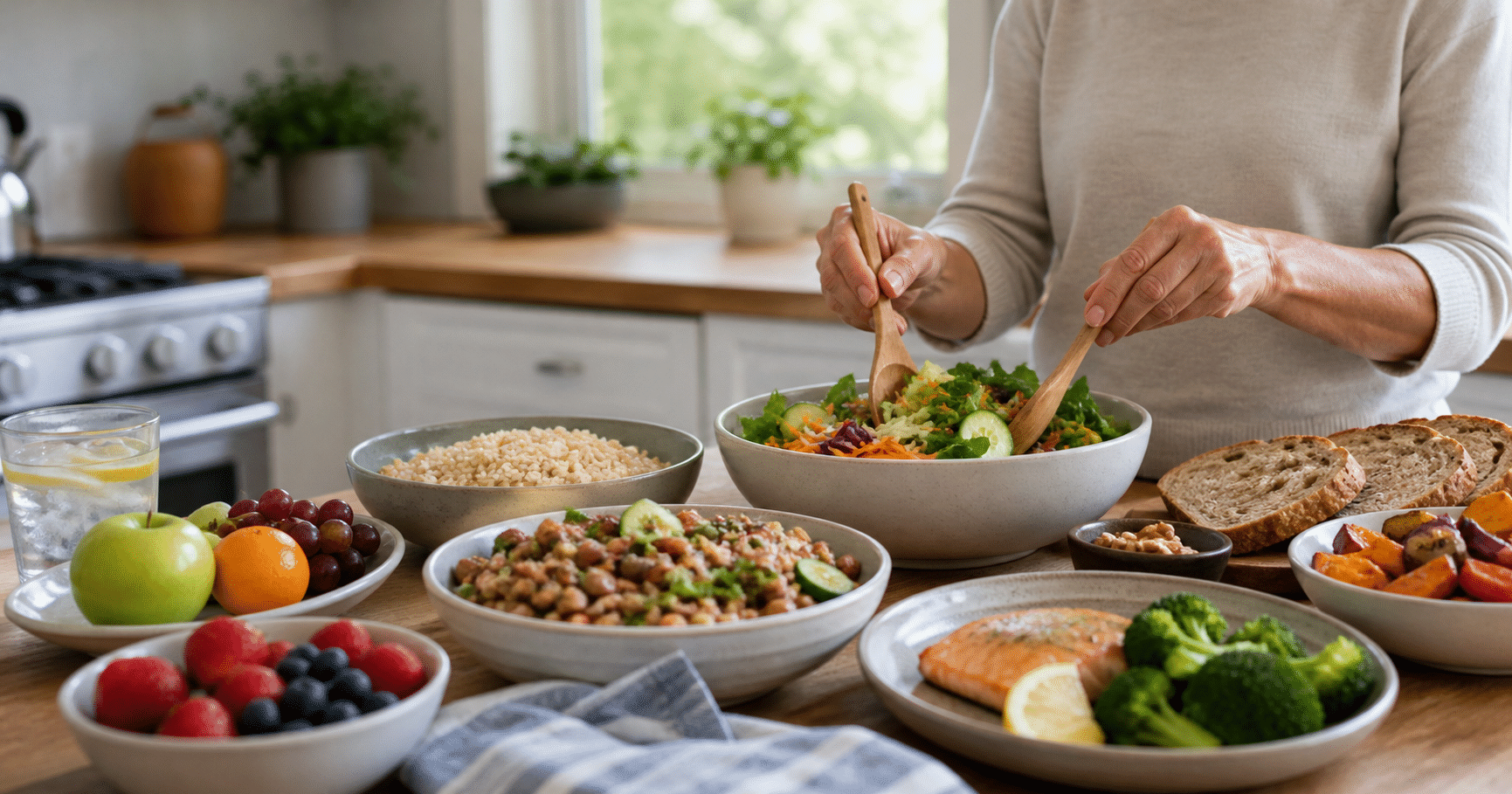
Balance is less about getting every nutrient into every meal and more about creating a helpful pattern. Many meals can include a source of protein, a vegetable or fruit, and a grain or other fiber-rich carbohydrate, with a little unsaturated fat from foods such as olive oil, nuts, seeds, or avocado.
A simple visual guide is to fill about half a plate with fruits and vegetables, and divide the other half between protein and grains or starchy vegetables. It is a guide, not a test: soup, a sandwich, or a bowl of oatmeal may not look like that plate and can still fit into a nourishing week.
Protein foods include beans, lentils, eggs, fish, poultry, tofu, nuts, and dairy foods. Fiber comes from vegetables, fruit, beans, and whole grains; it supports digestive health and can make meals more filling. Choosing a range of foods also brings different nutrients and flavors to the table without requiring a rigid menu.
Three simple principles for planning without rules
1. Plan components, not a different recipe every night
Cook a pot of brown rice, roast a tray of vegetables, or prepare a batch of beans, then use those ingredients in more than one meal. Roasted vegetables can go beside salmon one night and into a grain bowl the next. This saves time and makes leftovers feel intentional rather than like a repeat of the same dinner.
2. Include protein and produce in the meals you can
Breakfast does not have to be elaborate. Try oatmeal with berries and walnuts, or eggs with whole-grain toast and fruit. At lunch, add beans, tuna, chicken, tofu, or an egg to soup, salad, or a sandwich. These are practical ways to make meals more satisfying without counting grams or banning favorite foods.
3. Leave space for real life
Plan five or six dinners, not seven elaborate productions. Keep one evening open for leftovers, a simple meal, or eating out. If a meal changes, the week is not “off track”; the plan is a tool, not a contract.
A flexible seven-day meal plan to get started
Use this as a mix-and-match example, not a prescription. Adjust portions to your appetite and choose familiar foods that suit your budget and any dietary needs.
- Monday: Oatmeal with berries and walnuts; lentil soup with whole-grain bread; chicken or baked tofu with brown rice and broccoli.
- Tuesday: Plain yogurt with fruit and oats; tuna or mashed white-bean salad on whole-grain toast with carrots; leftover rice and vegetables topped with an egg or tofu.
- Wednesday: Eggs with spinach and toast; a bean-and-vegetable grain bowl; baked salmon with potatoes and green beans.
- Thursday: Cottage cheese or yogurt with fruit; vegetable soup with a turkey, hummus, or cheese sandwich; black-bean tacos with cabbage, salsa, and avocado.
- Friday: Whole-grain toast with peanut butter and banana; leftovers or a salad with chickpeas; whole-wheat pasta with tomato sauce, vegetables, and white beans.
- Saturday: Oatmeal or eggs; a baked potato topped with beans and vegetables; a simple stir-fry with chicken, tofu, or edamame and frozen vegetables.
- Sunday: Yogurt with fruit and nuts; a vegetable omelet with toast; soup or a flexible “clean out the fridge” meal using leftover grains, vegetables, and protein.
Snacks are optional. If you want one, choose something that sounds appealing, such as an apple with peanut butter, yogurt, a handful of nuts, or hummus with vegetables.
Turn the plan into a manageable shopping and prep routine
What to put on the grocery list
Start with the meals you chose, then group ingredients so the list is easy to use. A week might call for:
- Produce: a few fresh vegetables, fruit for breakfasts or snacks, and ingredients such as onions, greens, or cabbage.
- Protein: eggs, beans or lentils, yogurt, tofu, poultry, or fish—choose the combination your household enjoys.
- Grains and staples: oats, brown rice, whole-grain bread, pasta, potatoes, canned tomatoes, and broth.
- Flavor builders: olive oil, herbs, spices, salsa, lemon, or a favorite dressing.
Frozen vegetables and fruit are useful alternatives when fresh produce is expensive or likely to spoil. Canned beans can save time; draining and rinsing them is an easy option if you want to reduce some of the sodium in the canning liquid.
Step-by-step instructions
- Choose a few meals you already like. Pick breakfasts and lunches that can repeat, then select five or six dinners. Repetition is efficient, not a failure of creativity.
- Check what you have. Look in the pantry and freezer before shopping. Build at least one meal around food that needs to be used soon.
- Make a short prep list. Wash or chop a few vegetables, cook a grain, or prepare a pot of soup. Do only what will make the next couple of days easier.
- Store food promptly. Refrigerate perishable leftovers within two hours, using shallow containers to help them cool quickly. Use refrigerated leftovers within three to four days, or freeze portions for later.
Make the plan fit your appetite, budget, and health needs
A meal plan should bend around the person eating it. If cooking every day is tiring, use canned beans, frozen vegetables, rotisserie chicken, or prepared salad greens to simplify meals. If appetite is smaller, several modest meals may feel more manageable than large plates. If you have a condition that requires a specific eating plan, or take medication affected by food, ask your clinician or a registered dietitian how to adapt these ideas.
A useful planning question: “What can I cook once and enjoy twice?” One answer—a pot of beans, roasted vegetables, or a cooked grain—can make the rest of the week easier.
A good plan is one you can live with
Balanced meal planning works best when it offers structure without turning food into a pass-or-fail exercise. Choose a few nourishing staples, reuse ingredients, and leave room for convenience foods and favorite meals.
You do not need a perfect week. A couple of thoughtful choices at a time can make the next meal easier—and that is often the most sustainable plan of all.