Tempeh can look like a firm, pale block of beans—and taste disappointingly bland if it goes straight from the package into a pan. The good news is that it doesn’t need complicated seasoning or special equipment. A few small choices, especially how you cut it and when you add the sauce, can make a big difference.
Made from fermented soybeans pressed into a sliceable cake, tempeh has a nutty, earthy flavor and a pleasantly hearty bite. It’s a popular plant-based protein, but you don’t have to be vegetarian to enjoy it: browned tempeh works in grain bowls, sandwiches, salads, and weeknight stir-fries.
One common misconception is that tempeh has to soak in marinade for hours to taste good. In fact, a thin block doesn’t absorb much liquid, so cutting it into smaller pieces and browning it well are often more useful. Here’s how to choose, prepare, and cook tempeh so it’s savory and satisfying—not dry or bitter.
What Tempeh Is—and Why It Cooks Differently From Tofu
Tempeh is traditionally made by fermenting cooked soybeans, then pressing them together into a firm cake. The fermentation binds the beans, giving tempeh a sliceable texture and a more pronounced, nutty flavor than tofu. Depending on the brand, you may also see grains or other beans in the ingredient list.
Because it’s firm and relatively dense, tempeh holds its shape when sliced or crumbled. It can be steamed, baked, grilled, or pan-fried, and it develops a flavorful browned exterior when cooked in a hot pan. Tofu, by contrast, is softer and usually needs to be pressed or handled more gently to get crisp edges.
Tempeh provides plant protein and fiber, though the nutrition varies by product and serving size. Fermentation changes the soybeans, but that doesn’t mean cooked tempeh should be treated as a probiotic food: cooking it heats the fermented beans, and health effects depend on more than the fermentation process alone.
Three Small Choices That Make Tempeh Taste Better
1. Steam it first if you find the flavor too strong
Tempeh’s earthy taste is part of its character, but some people find it slightly bitter. Steaming the block for about 8 to 10 minutes before seasoning can soften that flavor and warm the tempeh so it’s ready to take on a sauce. This step is optional, not a requirement; skip it if you enjoy tempeh as it is or want to save time.
2. Cut it small enough to season
A thick slab has less surface area for seasoning than thin slices or bite-size pieces. Cut tempeh into roughly ½-inch cubes, thin strips, or triangles. Crumbling it works well for tacos, pasta sauce, or a filling that resembles ground meat, while slices are handy for sandwiches.
A long marinade isn’t essential. A flavorful glaze added near the end of cooking coats the outside without burning as the tempeh browns.
3. Give it room to brown
Tempeh tastes richer when its surfaces turn golden. Use a hot skillet and arrange the pieces in a single layer; if the pan is crowded, they’re more likely to steam than brown. Let the pieces sit for a couple of minutes before turning them, and add sugary ingredients such as maple syrup toward the end so they don’t scorch.
Easy Skillet Tempeh With a Savory Maple-Soy Glaze
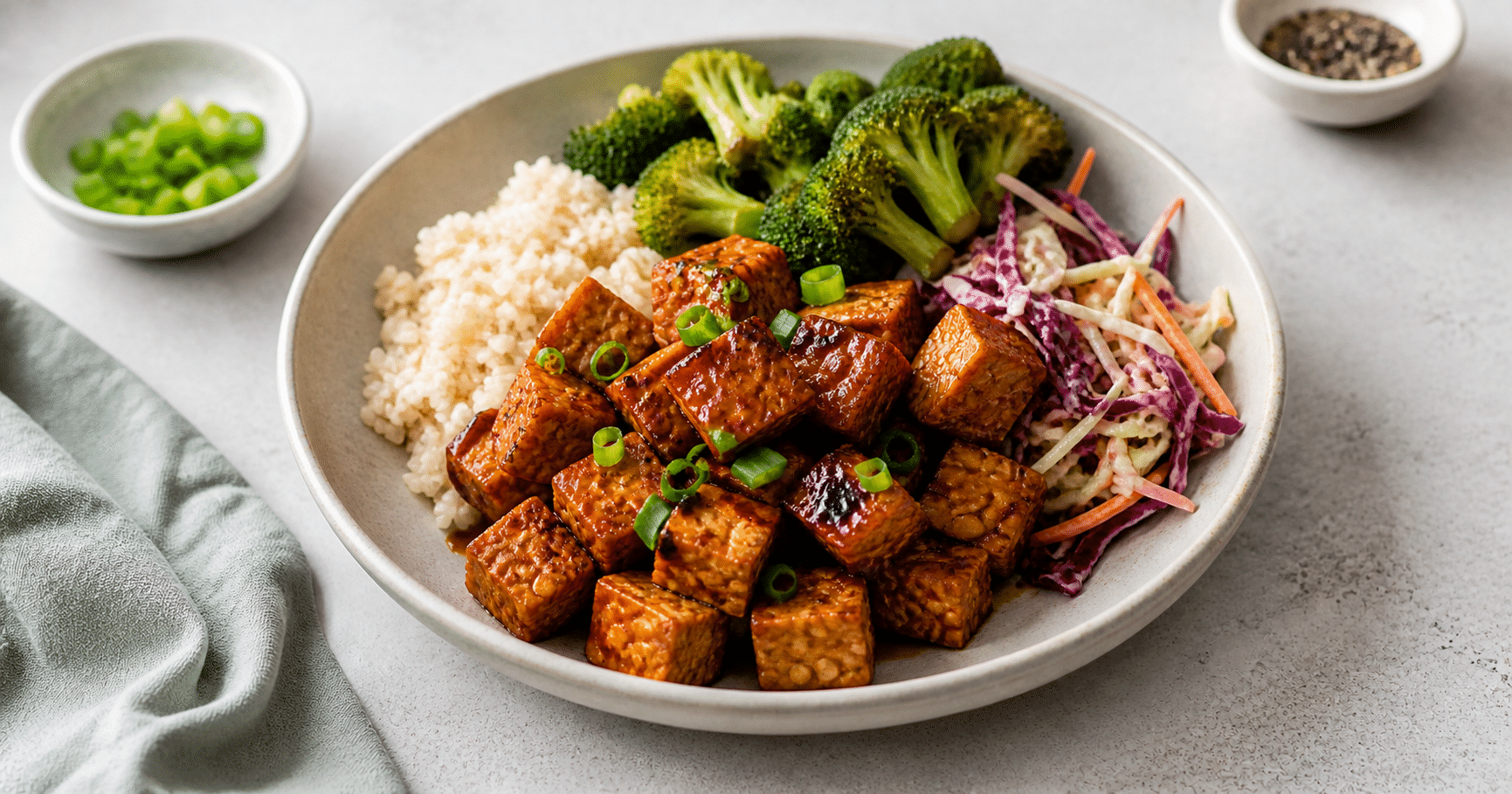
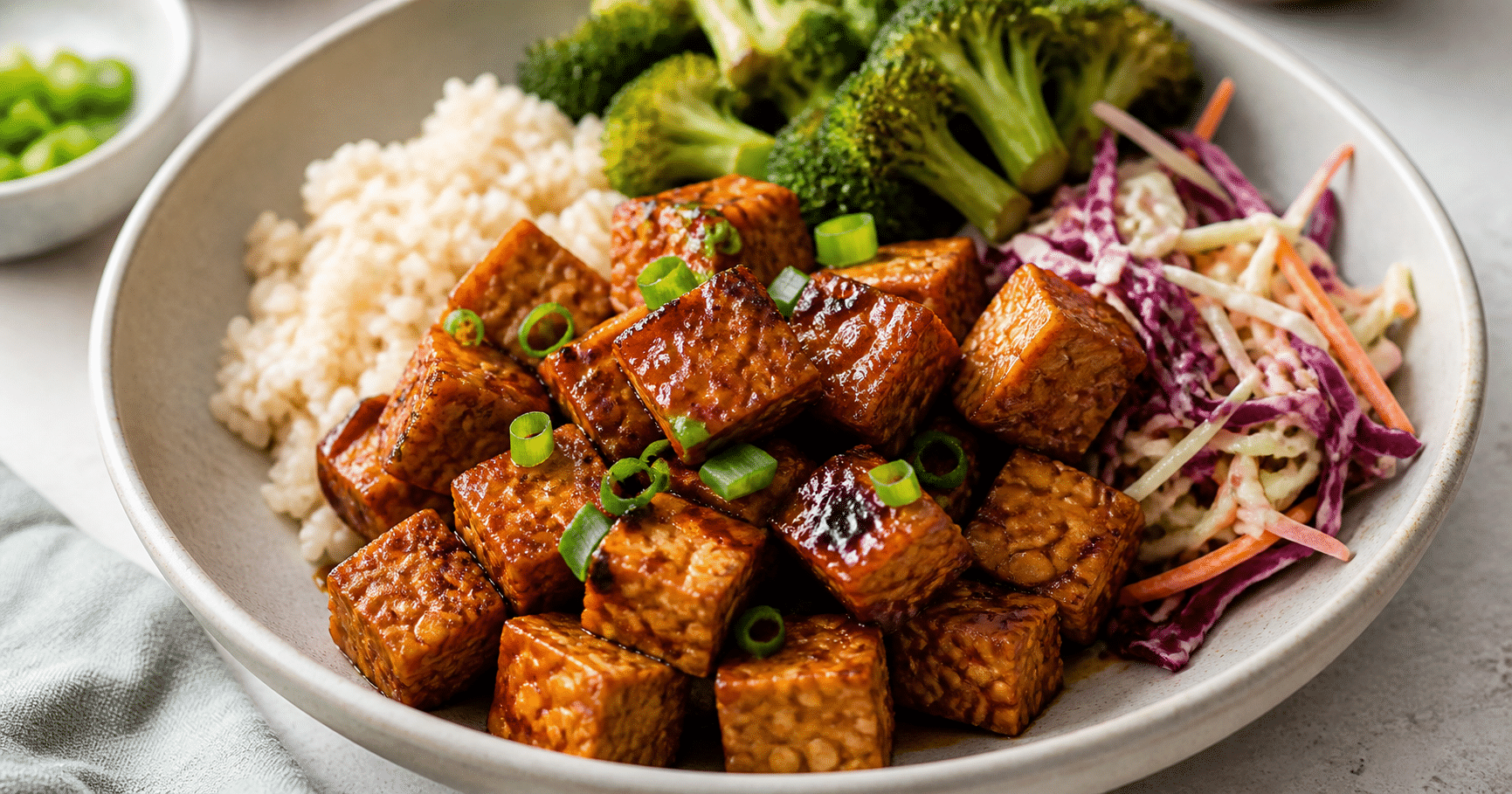
This beginner-friendly method makes browned, tender pieces with a glossy sweet-salty coating. It takes about 25 minutes, including optional steaming, and serves two to three people as part of a meal.
Ingredients
- 8 ounces tempeh
- 1 tablespoon neutral cooking oil, such as avocado or canola oil
- 1 tablespoon soy sauce or tamari
- 1 tablespoon water
- 1 teaspoon maple syrup
- 1 teaspoon rice vinegar or apple cider vinegar
- 1 small garlic clove, finely grated or minced
- ¼ teaspoon smoked paprika, optional
Step-by-Step Instructions
- Prepare the tempeh. If you’d like a milder flavor, steam the whole block for 8 to 10 minutes, then let it cool just enough to handle. Otherwise, move straight to cutting. Slice it into ½-inch cubes or strips.
- Mix the glaze. In a small bowl, stir together the soy sauce, water, maple syrup, vinegar, garlic, and smoked paprika, if using.
- Brown the tempeh. Heat the oil in a large skillet over medium heat. Add the tempeh in one layer and cook for about 3 to 4 minutes per side, turning until several edges are golden. Work in batches if necessary.
- Coat it with sauce. Reduce the heat to medium-low and pour in the glaze. Stir or turn the pieces for 1 to 2 minutes, until the sauce clings to them. Take the pan off the heat before the glaze becomes too dark or sticky.
- Serve while warm. Spoon the tempeh over brown rice, noodles, or roasted vegetables. Add crunchy slaw or steamed greens for a simple, balanced meal.
Refrigerate leftovers promptly in a covered container and follow the package’s storage guidance; use opened tempeh within the time recommended on its label. Reheat it in a skillet or microwave. For longer storage, tempeh can generally be frozen, though its texture may change slightly after thawing.
How to Buy Tempeh and Avoid a Disappointing First Bite
Check the ingredient list and choose plain tempeh if you want to control the seasoning. Some packages include added grains, seeds, or flavorings; if you avoid gluten, read the label carefully because some tempeh contains wheat or may be made in a facility that handles it. Tempeh made from soy is not suitable for someone with a soy allergy.
A fresh package may have a mild, earthy or mushroom-like aroma. Dark flecks or gray areas can occur as part of fermentation, but color alone isn’t a reliable freshness test. Don’t use tempeh that is slimy, has a strongly unpleasant or ammonia-like smell, or is past the package’s use-by guidance.
If the first batch tastes flat, adjust the seasoning rather than assuming tempeh itself is the problem. A little acid—vinegar or lime juice—brightens its nutty flavor, while garlic, ginger, chili, or a savory sauce adds depth. Keep sweet glazes modest and add them near the end of cooking.
A Better Way to Meet Tempeh
Start with small pieces, a hot pan, and a seasoning you already like. Steaming can mellow tempeh, but browning is the step that gives it a deeper, more appealing flavor.
Once you have a method you enjoy, tempeh becomes less of a mystery ingredient and more of a useful weeknight staple: crisp at the edges, hearty in the middle, and ready to take on the flavors of the meal.