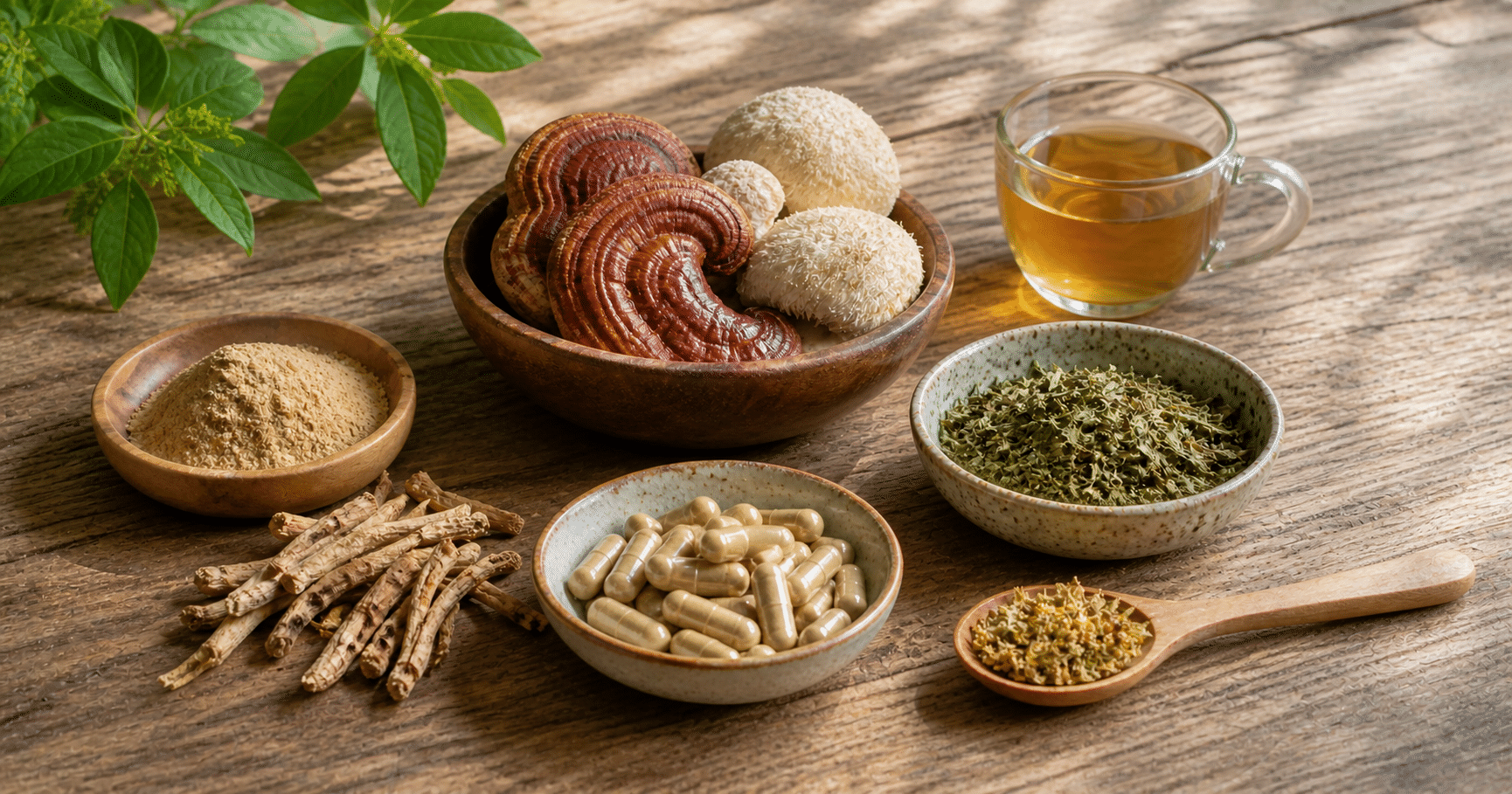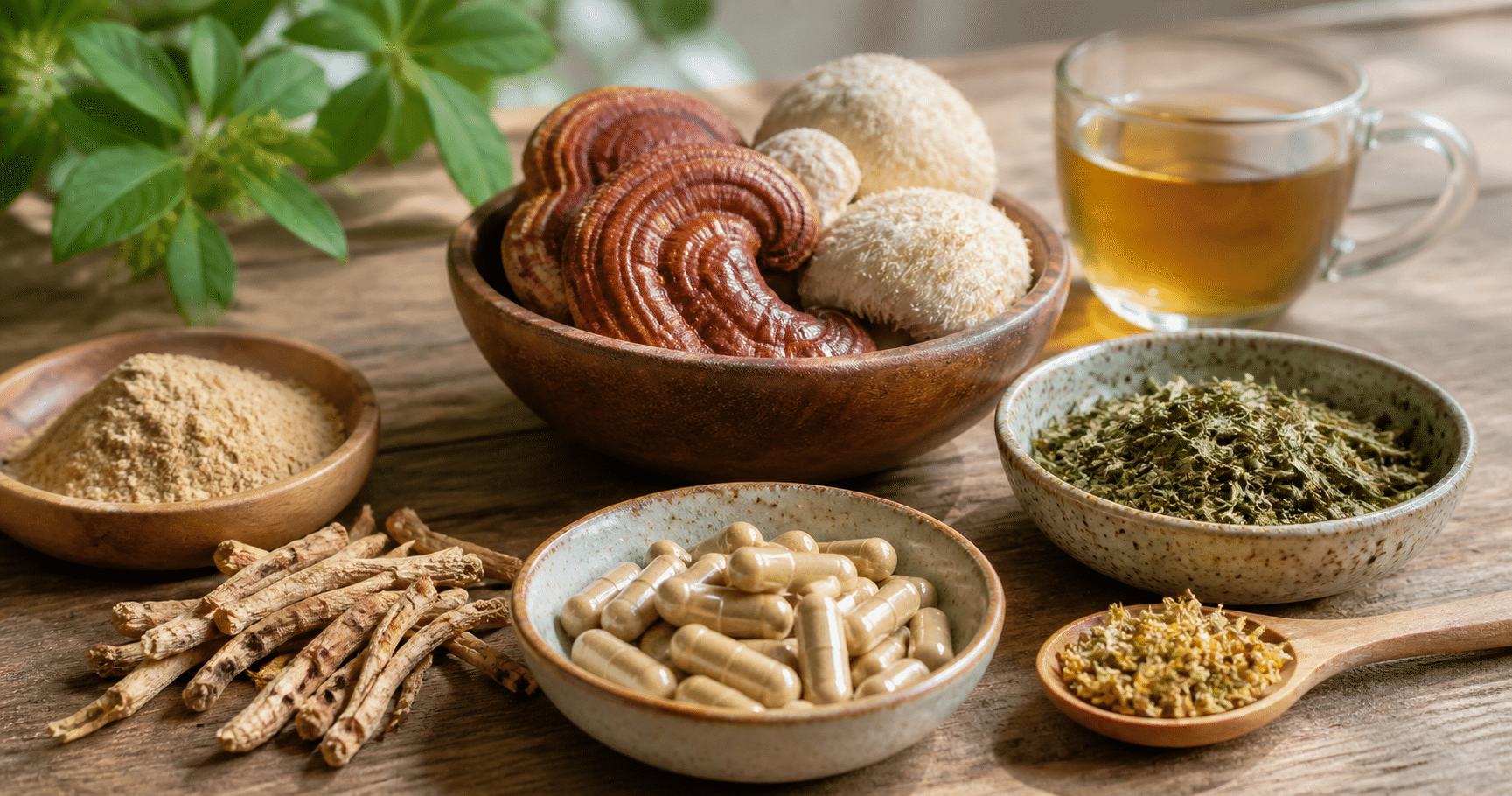
“Adaptogens” has become a familiar word on teas, protein powders, snack bars and supplement bottles. It sounds scientific—and may suggest that a product can help the body handle stress—but the term does not tell you exactly what is inside or what the product can do.
Adaptogens usually refers to herbs, roots or mushrooms traditionally used in wellness practices. Ashwagandha, rhodiola, holy basil and reishi are common examples, but they are not interchangeable ingredients, and research on one does not prove benefits for the others.
That distinction matters when you are reading a label. “Adaptogen” is not a standardized FDA-defined category or a guarantee of effectiveness. Here’s what the word generally means, how to evaluate products that use it, and what to keep in mind before adding one to your routine.
What “Adaptogen” Means—and What It Doesn’t
In everyday use, an adaptogen is an ingredient said to support the body’s response to stress and help maintain balance. The word is often applied to botanicals such as ashwagandha and rhodiola, as well as mushrooms such as reishi. Traditional use is part of their history, but it does not establish that a product has a particular effect.
There is no single, universally accepted scientific definition that makes an ingredient an adaptogen. Nor does the label tell you whether the ingredient has been studied in people, which preparation was used, or whether the amount in a product resembles the amount studied. Research findings for one herb or extract cannot automatically be applied to an entire group.
Stress involves many body systems, including the nervous and hormonal systems. Researchers study whether particular ingredients affect aspects of the stress response, but evidence varies by ingredient and intended use. A product’s “adaptogen” wording alone is not proof that it reduces stress, improves sleep or changes hormone levels.
How to Read an Adaptogen Label More Closely
1. Look for the actual ingredient, not just the category
Check the ingredient list for the specific herb or mushroom. A label that says “adaptogen blend” is less informative than one that names each ingredient, such as ashwagandha root or rhodiola root. If a botanical is listed, useful details may include its Latin name, the plant part used and whether it is a powder or extract.
Those details matter because products made from different species, plant parts or extraction methods may not be equivalent. “Mushroom” or “herbal blend” by itself may leave important questions unanswered.
2. Check the amount per serving
See whether the label gives a quantity for each ingredient. A proprietary blend may list several ingredients but provide only the total blend weight, making it difficult to tell how much of each one is included. A longer ingredient list does not necessarily mean a more useful product.
Also distinguish an ingredient amount from a promised result. A clear dose helps you understand what the product contains; it does not establish that the dose is effective or appropriate for you.
3. Treat benefit language as a claim, not a conclusion
Words such as “calm,” “balance” or “stress support” can describe a product’s intended positioning, but they do not mean it has been shown to treat anxiety, insomnia or another medical condition. In the United States, dietary supplements are not approved by the FDA for effectiveness before they are marketed.
Be particularly cautious with promises to cure, prevent or treat a disease. Such wording deserves more scrutiny than a broad wellness phrase—and should not replace advice or treatment from a qualified health professional.
4. Consider quality checks separately from effectiveness
Some products carry seals from independent testing organizations. These may provide information about quality checks, such as identity, strength or contaminants, depending on the program. A seal does not show that a supplement works or that it is right for you.
Look for a clearly identified manufacturer, a complete ingredient list and a way to contact the company. If the label leaves you guessing about what is in the product, consider choosing one that is more transparent.
A Practical Label-Reading Routine
When you encounter an adaptogen product in a store or online, take a minute to work through these steps. They can help you compare products without relying on the front-label promise.
What to check
-
- The specific herb or mushroom, rather than “adaptogen” alone
-
- The species and plant part, when provided
-
- The amount of each ingredient per serving
-
- Other active ingredients, including caffeine or added herbs
-
- Any independent quality-testing information
-
- Warnings, suggested use and the manufacturer’s contact details
Step-by-step
-
- Turn the package over. Start with the ingredient panel, not the marketing on the front.
-
- Identify every active ingredient. If the product uses a blend, check whether individual amounts are listed.
-
- Read the directions and warnings. Notice serving size and any cautions that apply to your health or medications.
-
- Check the claims against the evidence. Ask whether the product names a specific ingredient and makes a modest claim, or relies on broad promises.
-
- Discuss it with a pharmacist or clinician if you take medication. Bring the label or a photo of it so they can review the exact ingredients.
Why Medication and Health Context Matter
“Natural” does not mean risk-free. Herbs can cause side effects or interact with medicines, and the relevant concerns depend on the specific ingredient. For example, ashwagandha may be unsuitable for some people with thyroid or autoimmune conditions and can interact with certain medicines. Other botanicals may affect blood sugar, blood clotting or sedation.
If you take prescription medicines—especially blood thinners, diabetes medicines, thyroid medicines or immune-suppressing drugs—or have a chronic condition, ask a healthcare professional before trying a supplement. This is particularly useful when a product combines several ingredients, since interactions can be harder to assess.
The Label Is a Starting Point, Not a Promise
On food and supplement labels, “adaptogen” is a broad wellness term, not a guarantee that a product will help your body cope with stress. The most useful details are the named ingredients, amounts, product quality information and any relevant warnings.
When a label offers a sweeping promise but little detail, take that as a reason to pause. A clear ingredient list—and a conversation with your pharmacist or clinician when needed—can tell you more than the word “adaptogen” ever will.