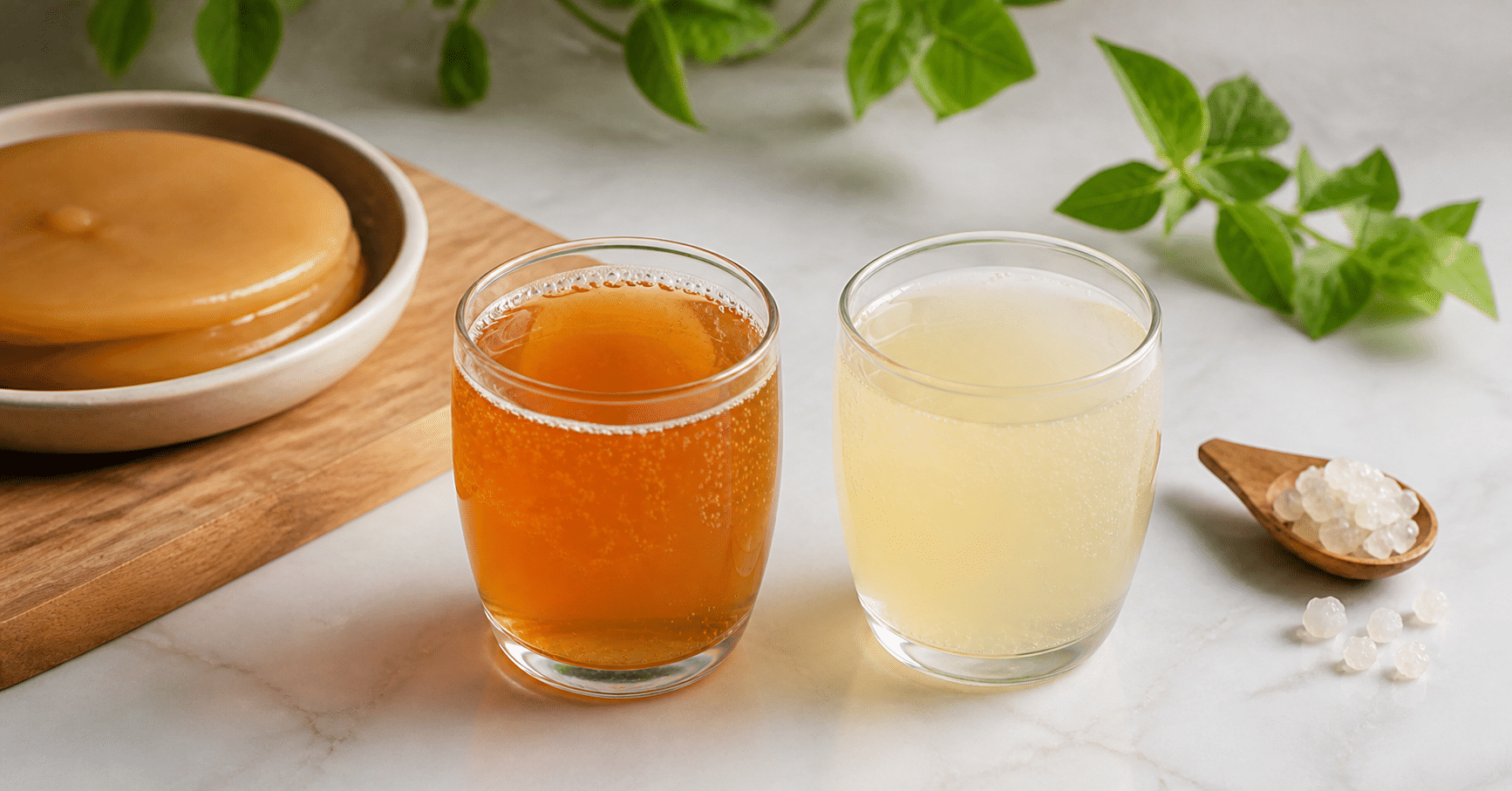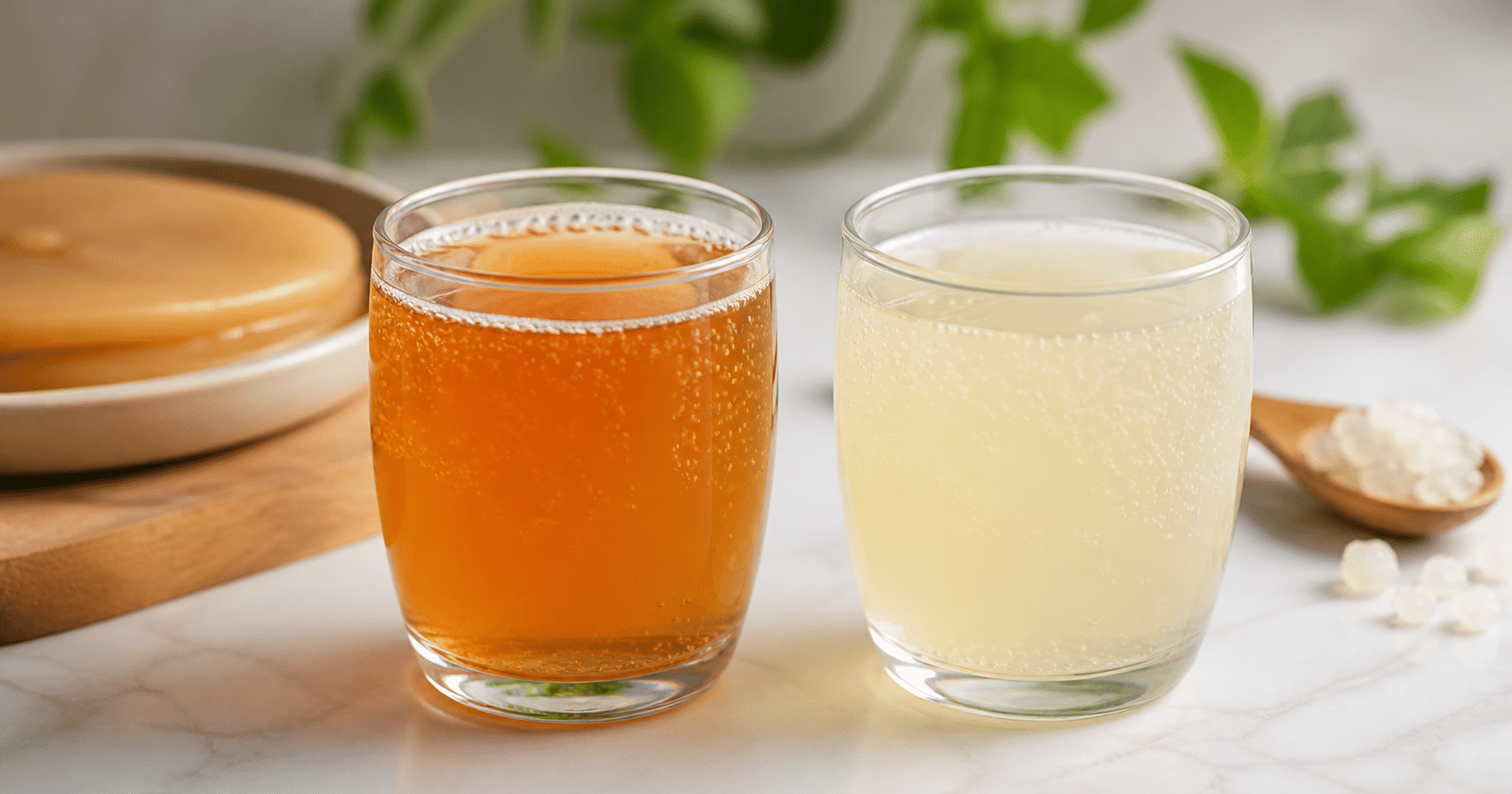
Kombucha and water kefir can both be tangy, fizzy and made with live cultures—but they are not interchangeable drinks. One starts with tea; the other usually starts with sugar water. That difference shapes their flavor, caffeine content and the way their sugar levels vary from batch to batch.
A common assumption is that fermentation makes either drink nearly sugar-free. It does not. Microbes use some of the sugar as they ferment, but the amount left in the finished drink depends on the recipe, fermentation time and, for store-bought bottles, any sweetener added afterward.
So which one tastes sweeter, and which is the better pick if you are watching sugar? The useful answer is not simply “kombucha” or “water kefir.” Here is how to compare their flavors, read their labels and choose a drink that suits your taste.
Kombucha and Water Kefir Start With Different Ingredients
Kombucha is made by fermenting sweetened tea with a community of yeast and bacteria often called a SCOBY. The process produces acids that give the drink its familiar tart, sometimes vinegary edge. Because it is tea-based, kombucha generally contains some caffeine, although the amount varies with the tea and brewing method.
Water kefir is typically made by fermenting sugar water with water kefir grains, which are clusters of bacteria and yeast. The grains are not cereal grains; they are a living culture. Water kefir often tastes lighter and less tannic than kombucha, with a clean, mildly tangy flavor that can take on fruit, herbs or citrus added during or after fermentation.
Both drinks may be carbonated, and both may contain live microorganisms if they have not been pasteurized after fermentation. But a “live culture” label does not, by itself, establish a particular health benefit. Products and fermentation methods differ, and research on fermented drinks should not be treated as proof that either one prevents or treats disease.
Three Differences That Matter in the Glass
1. Kombucha is usually sharper; water kefir is often gentler
Kombucha’s tea flavor and acidity can make it taste dry, tart or almost like a soft drink with a vinegar note. Some brands soften that edge with fruit juice or extra sweetener. Water kefir is commonly milder and more straightforwardly fruity, though a long-fermented batch can also become quite sour.
These are tendencies, not rules. A sweet bottled kombucha may taste less tart than a homemade water kefir, and flavorings can make either drink taste very different from its plain version.
2. Neither drink has a guaranteed sugar advantage
Fermentation uses sugar, but it does not reliably remove all of it. A longer ferment may taste less sweet, yet taste alone cannot tell you exactly how many grams remain. Fruit, juice or sugar added for flavor can raise the total again.
For packaged drinks, compare the Total Sugars and serving size on the Nutrition Facts label. A bottle may contain more than one serving, so check the whole-container amount if you plan to drink it all. As a quick visual guide, 4 grams of sugar is about 1 teaspoon.
3. Kombucha has tea; water kefir usually does not
If you are sensitive to caffeine or avoid it later in the day, water kefir may be the simpler choice—but check the label for added tea or other ingredients. Kombucha’s caffeine content varies, and it should not be assumed to be caffeine-free just because it tastes fruity or has fermented.
Both drinks can contain small amounts of alcohol produced during fermentation. Levels can vary, especially in homemade batches, so neither should automatically be treated as alcohol-free.
A Simple Way to Compare Bottles Before You Buy
A side-by-side tasting makes the differences easier to notice than choosing by the word “probiotic” on a label. Try plain or lightly flavored versions first, since strong fruit flavors can disguise the underlying taste.
What You’ll Need
-
- One bottle of kombucha and one bottle of water kefir
-
- Two small glasses
-
- The Nutrition Facts labels
-
- A notepad, if you want to record your impressions
Step-by-Step Instructions
-
- Check serving sizes and sugar first. Compare the same amount of each drink, such as 8 fluid ounces, rather than comparing labels with different serving sizes. Note whether either product contains added juice or sweetener.
-
- Pour a small sample. Let the drinks settle briefly if they are very fizzy. A small pour is enough to assess the flavor without committing to a full glass.
-
- Taste for sweetness, tartness and finish. Notice whether the drink tastes tea-like, fruity, sour or vinegary. Pay attention to how long the sweetness or acidity lingers.
-
- Choose by both taste and label. If limiting sugar is your priority, the label—not the drink’s tartness—is the dependable comparison. Also check for caffeine if that matters to you.
Refrigerate opened bottles and follow the product’s storage instructions. If a bottle is unusually swollen, leaking or spurts forcefully when opened, do not drink it.
Why Homemade Batches Can Be Harder to Compare
At home, fermentation time, temperature, starter strength and the amount of sugar in the recipe all affect the result. Adding fruit or sugar for a second fermentation can change sweetness and carbonation, too. A fizzy, sour-tasting batch is not proof that all the original sugar has been consumed.
Home fermentation also requires clean equipment and care with pressure. Carbon dioxide can build up in a tightly sealed bottle, particularly during a warm second fermentation. Use instructions from a reliable food-safety source, avoid improvised pressure-tight containers, and refrigerate finished batches to slow fermentation.
Practical tip: If you want a less-sweet drink, start with an unsweetened or lower-sugar commercial option and dilute it with plain sparkling water. You can keep the tang and bubbles while lowering the sugar in each glass.
Choose the Flavor You’ll Actually Enjoy
Kombucha tends to bring a sharper, tea-based taste; water kefir is often lighter and more fruit-friendly. Neither is automatically lower in sugar, and fermentation does not make the sugar content predictable. For packaged drinks, compare serving sizes and Total Sugars—and check caffeine if you choose kombucha.
The best choice is the one that fits your taste and the label fits your needs. A quick pour and a look at the sugar line can tell you more than the drink’s wellness claims.