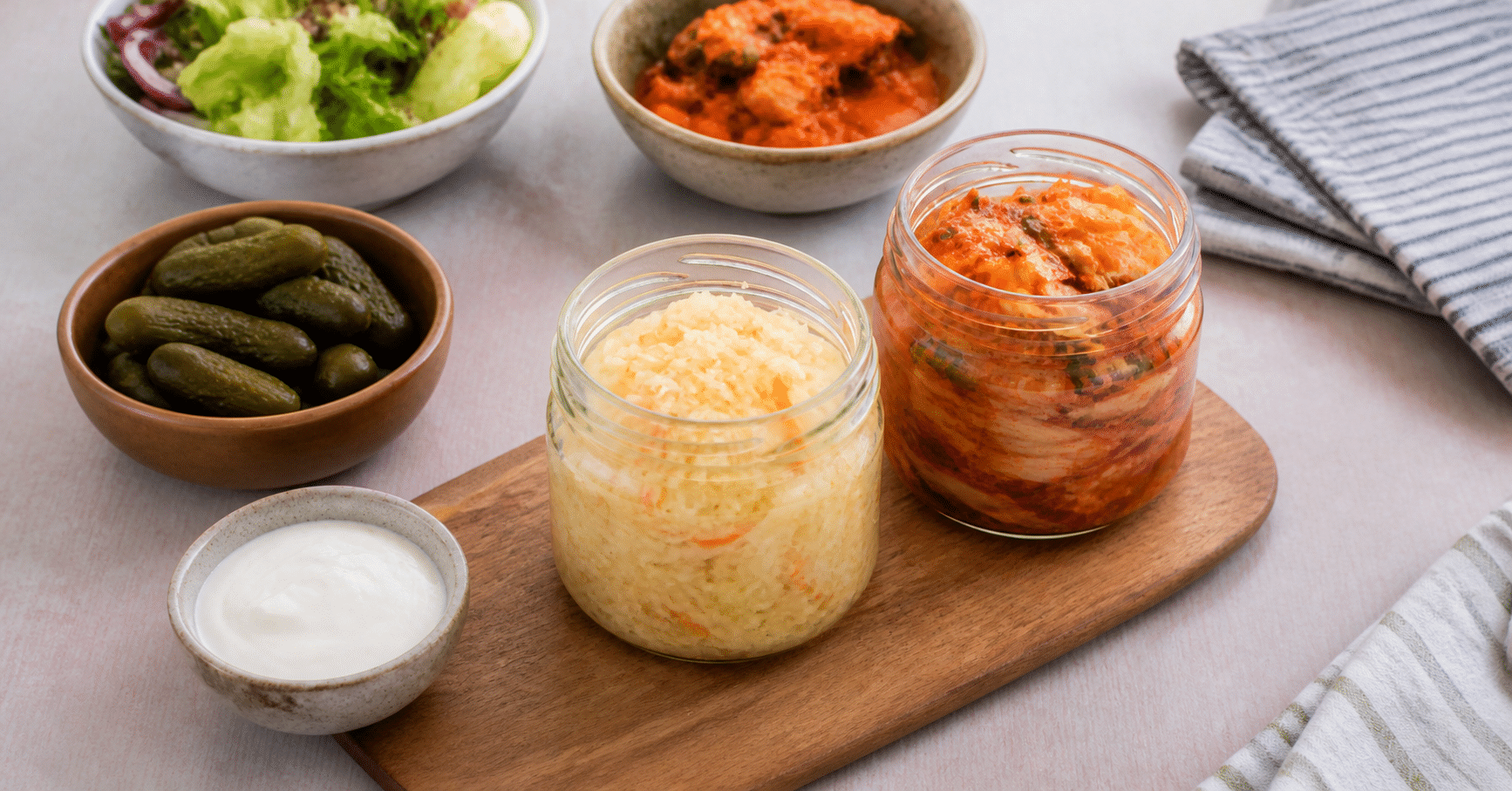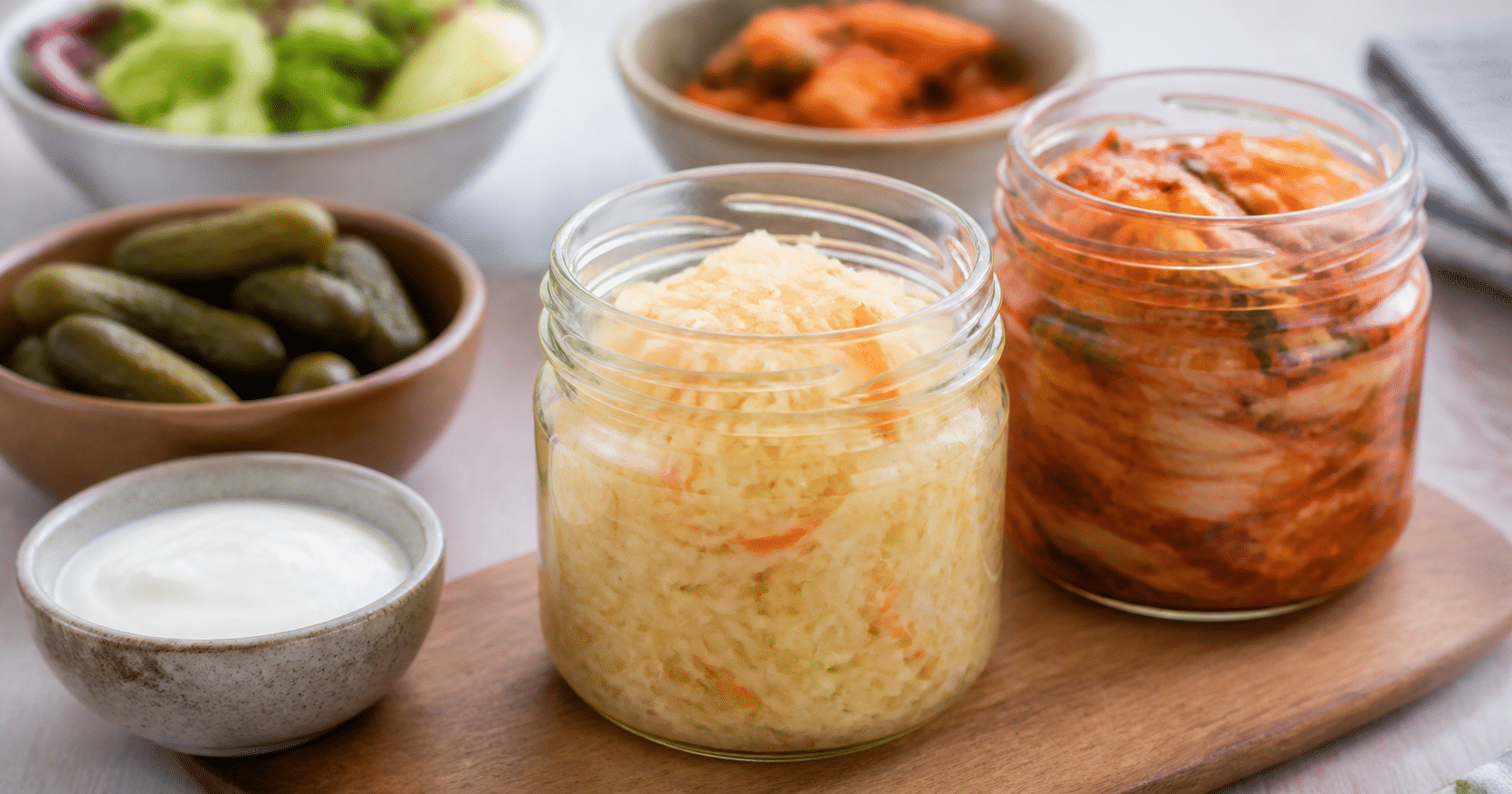
A jar of sauerkraut can be fermented without delivering live probiotic cultures to your plate. The same is true of some yogurts, pickles and other foods people buy specifically for their gut health.
That distinction matters because “fermented” and “probiotic” do not mean the same thing. Fermentation describes how a food is made; probiotic refers to live microorganisms shown to provide a health benefit when consumed in adequate amounts. A product’s label can offer clues about what is inside—but a few popular phrases are less informative than they sound.
Here’s how to read labels more carefully, what the science can and cannot tell us, and how to choose fermented foods that fit your meals, budget and dietary needs.
Fermented Doesn’t Automatically Mean Probiotic
During fermentation, microorganisms such as bacteria or yeast transform ingredients. They may change a food’s flavor, texture and acidity, and can help preserve it. Yogurt, kefir, kimchi, miso and some pickles are familiar examples, though their production methods and microbes differ.
Some fermented foods contain live microorganisms when eaten; others are heated or pasteurized after fermentation, a step that can kill many of those microbes. Baking sourdough bread, for instance, exposes its starter organisms to high heat. Miso may be fermented, but adding it to boiling soup can reduce the number of live microbes in the finished dish.
Even when a food contains live microbes, that alone does not establish that it is a probiotic in the scientific sense. Health effects depend on the microorganism and the benefit being studied. Results for one strain or product cannot automatically be applied to every fermented food—or to every person.
What the Label Can—and Can’t—Tell You
1. Look for cultures, not just the word “fermented”
Check the ingredient list and package wording for named live cultures. Yogurt labels often list cultures used to make the product; some also state that it contains live and active cultures. Conversely, a product labeled “heat-treated after culturing” has been heated after fermentation, which may mean fewer live microbes remain.
For refrigerated sauerkraut or kimchi, phrases such as “unpasteurized” may suggest that the food was not heat-treated after fermentation, but they do not tell you exactly which microbes are present or how many. “Raw” and “natural” are not substitutes for specific information about cultures.
2. Treat a CFU number as one clue, not a score
Some products list colony-forming units, or CFUs, a way of estimating viable microorganisms. If a label gives a number, check whether it applies through the end of the stated shelf life or only at the time of manufacture. Numbers can decline during storage, and a larger number does not by itself prove a greater health benefit.
There is no single CFU target that makes every food or supplement effective for everyone. The useful amount depends on the specific microorganism and the outcome being considered. A number without clear context may sound impressive while telling you little about what the product can do.
3. Specific names offer more detail
Microbes are identified by genus, species and sometimes strain. A label that gives only a broad term such as “probiotic cultures” provides less detail than one naming the organisms. Strain information can matter because research findings are tied to particular microbes, not just to a general category.
Still, a long list of culture names is not proof that a food will produce a particular result. It is a transparency clue—not a medical promise.
4. Check the rest of the nutrition panel
Fermented foods can be nutritious choices, but fermentation does not erase the need to check sodium, added sugar, saturated fat or portion size. Kimchi and sauerkraut can be high in sodium; flavored yogurt may contain added sugar; kombucha may contain sugar and small amounts of alcohol. Compare products and choose what works for your own dietary needs.
A Practical Way to Shop for Fermented Foods
Use this quick label check in the grocery aisle. It helps distinguish a product that is simply fermented from one that gives you more information about its live cultures.
-
- Start with the food you want. Choose plain yogurt, kefir, refrigerated sauerkraut or another option you enjoy and are likely to eat regularly.
-
- Look for live-culture wording or named cultures. If live microbes are your priority, check whether the label indicates that cultures remain in the finished product.
-
- Notice any post-fermentation heating. A statement that the product was heat-treated after culturing is a useful clue that live cultures may not remain.
-
- Compare the nutrition facts. Check sodium and added sugars, especially across flavored yogurts, pickled vegetables and bottled drinks.
-
- Follow storage directions. Keep refrigerated products cold and observe the package’s use-by guidance. Refrigeration can help preserve quality, but it does not prove a product contains a particular number or type of live microbes.
If a label makes a broad promise but provides no culture details, treat the promise cautiously. You can still enjoy the food for its taste and place in a balanced diet; you just cannot infer a specific probiotic effect from the word “fermented.”
Make Fermented Foods Work in Everyday Meals
Small additions are often easiest to sustain. Spoon plain yogurt or kefir over breakfast, add sauerkraut or kimchi to a sandwich, or serve a modest portion alongside a meal. If you want to preserve live cultures in miso, stir it into food after taking the pot off the heat rather than boiling it for a long time.
Fermented foods are not essential, and no single food can guarantee better gut health. People with severely weakened immune systems or certain serious illnesses should ask their clinician whether foods containing live microbes are appropriate for them. For most shoppers, the practical priorities are enjoying a variety of nourishing foods and choosing products whose labels match their preferences.
The Label Is a Starting Point, Not a Guarantee
Fermentation tells you how a food was made; it does not automatically tell you whether live microbes survive, which ones are present or whether they have a proven benefit. Look for culture details, notice any heat treatment, and read the nutrition panel alongside the marketing claims.
The best choice is not necessarily the jar with the biggest probiotic promise. It is a food you enjoy, understand and can comfortably make part of your routine.