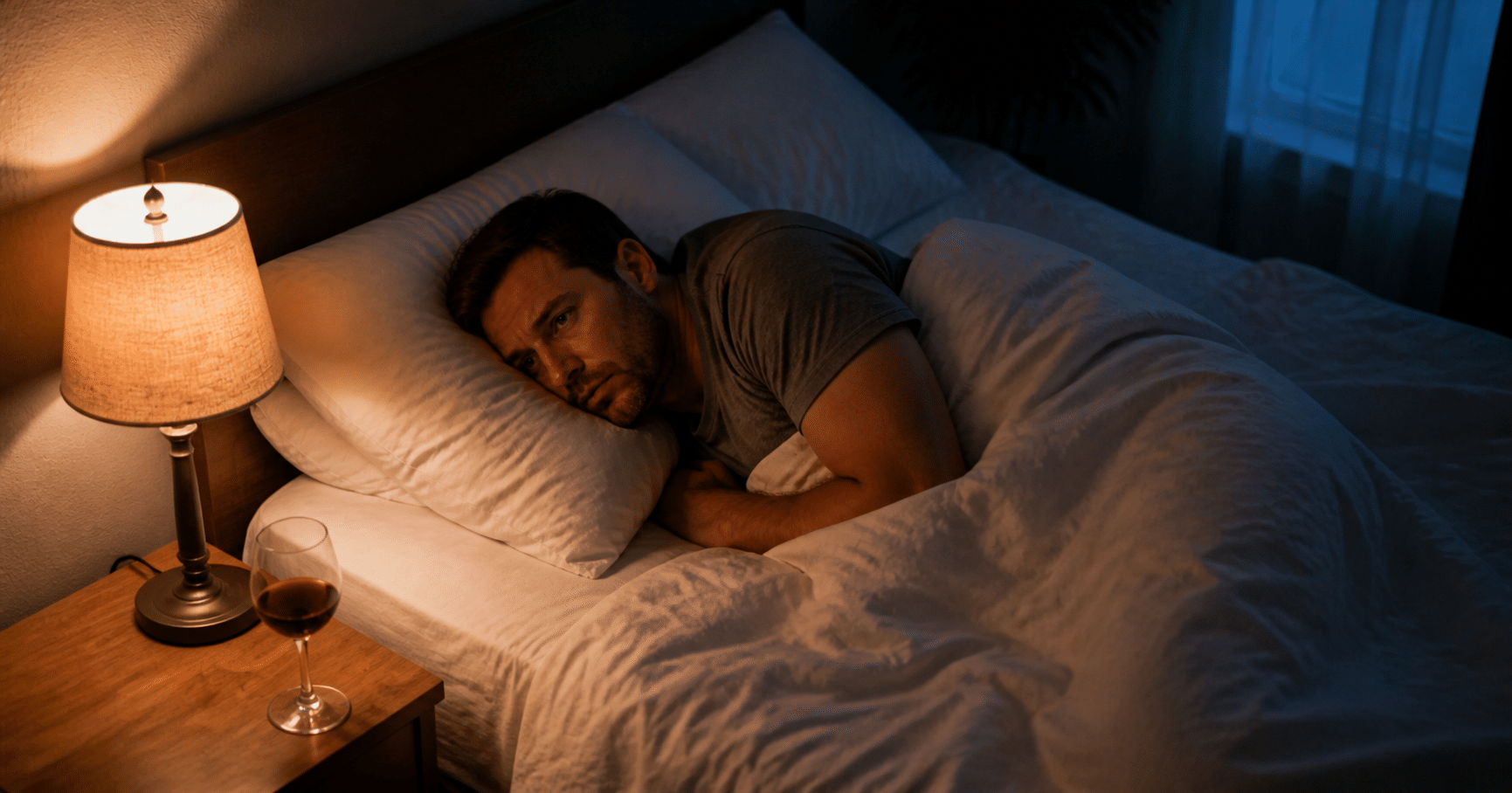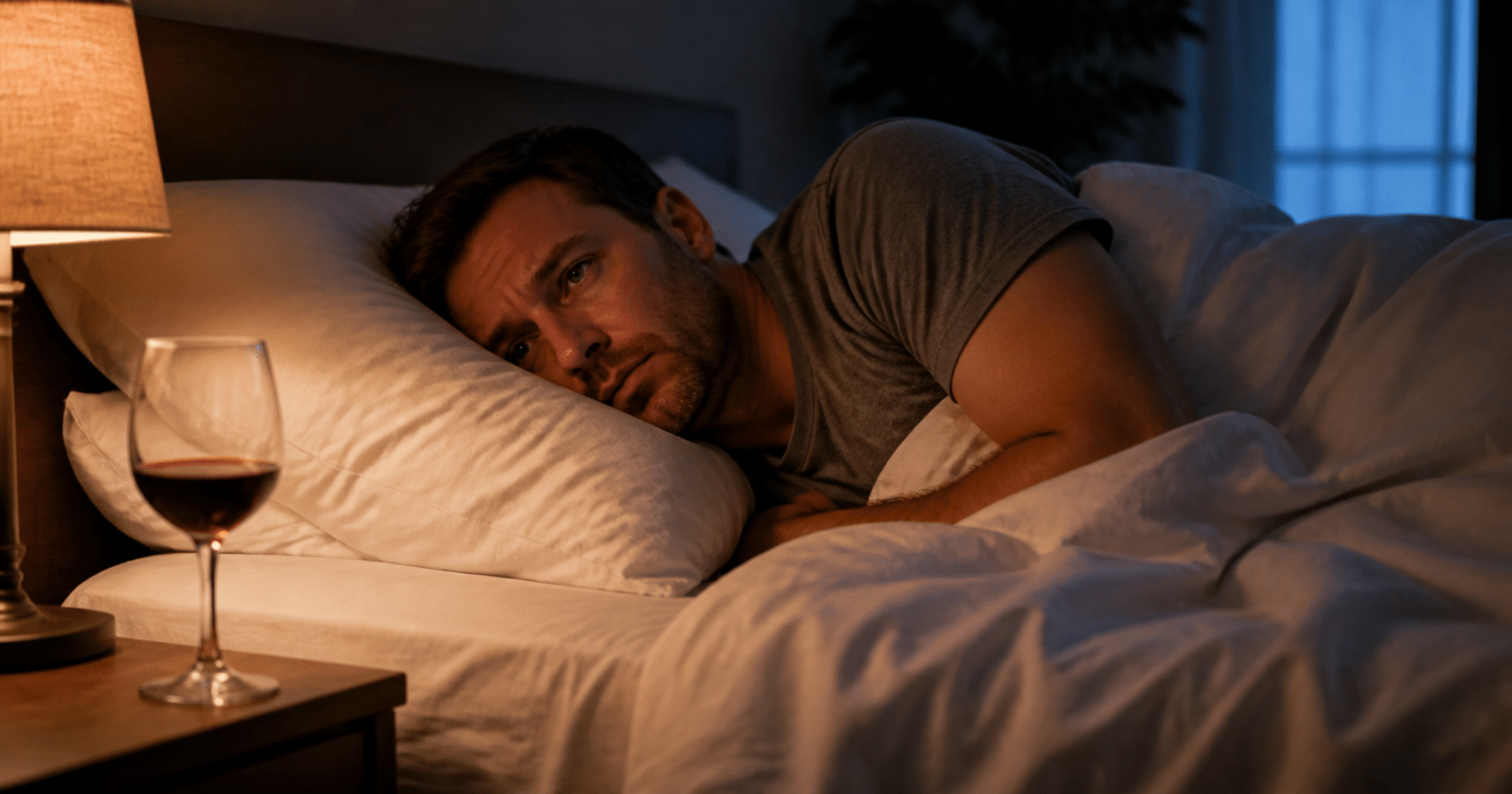
A drink after dinner can make your eyelids feel heavy and help you fall asleep faster. That familiar effect is one reason a nightcap seems like a simple fix for a restless evening.
But feeling drowsy is not the same as getting restorative sleep. As alcohol wears off, sleep can become lighter and more broken—often in the second half of the night, when you may wake early or struggle to settle again.
The timing, amount, your age, and any medications you take can all affect what happens. Here’s why alcohol can disrupt sleep despite making you sleepy, plus practical ways to tell whether it may be contributing to your own rough nights.
Why a Nightcap Can Make You Sleepy but Leave You Tired
Alcohol slows activity in the central nervous system. That can ease tension and create a sedated feeling, so you may nod off sooner than you would without a drink. Yet sedation is not the same as the natural progression through sleep stages that helps you feel rested.
As your body processes alcohol, its effects change. Sleep may become more fragmented, with more awakenings or time spent awake during the night. Alcohol can also disrupt REM sleep—the stage associated with vivid dreaming and other important brain functions—especially earlier in the night. The precise effect varies with the amount consumed, timing, and individual differences.
Other effects can add to the disruption. Alcohol may increase urination, worsen snoring, or relax the muscles that help keep the upper airway open. For someone with sleep apnea, it can make breathing-related sleep problems worse. It may also raise the chance of waking with a dry mouth, headache, or a racing heartbeat.
These effects can be more noticeable after 50. Sleep often becomes lighter with age, and many adults take prescriptions or over-the-counter medicines that can interact with alcohol. A drink that once seemed harmless may therefore have a different impact now.
Four Ways Alcohol Can Undermine a Night’s Rest
1. It can shorten the time it takes to fall asleep—but not improve the whole night
The drowsy feeling is real, but it can disguise what happens later. Someone might fall asleep quickly, then wake at 3 a.m. and conclude that the problem is simply “getting older” or needing to use the bathroom. Alcohol may be one contributor, particularly if the pattern follows evenings when you drink.
2. It can disturb the second half of sleep
Alcohol’s sedating effect fades as the body breaks it down. That shift can bring lighter, less continuous sleep. You may remember several awakenings, or simply wake earlier than usual without knowing why.
3. It can aggravate snoring and breathing problems
Relaxed throat muscles can make the airway more likely to narrow during sleep. If you snore loudly, wake choking or gasping, or feel unusually sleepy during the day, alcohol may be worsening an underlying problem such as sleep apnea. A nightcap is not a treatment for insomnia or breathing-related sleep disorders.
4. It can interact with medicines commonly used later in life
Alcohol can intensify drowsiness and impaired coordination from medicines such as sleep aids, anti-anxiety drugs, opioids, and some allergy medicines. The combination may raise the risk of falls and other serious problems. Check the label and ask a pharmacist or prescriber about your specific medication; spacing the drink and medicine by a short interval does not necessarily make the combination safe.
How to Find Out Whether Alcohol Is Affecting Your Sleep
You do not need a complicated sleep tracker to look for a pattern. For a week or two, note when you drink, roughly how much, when you go to bed, and whether you wake during the night or feel rested in the morning. Include caffeine, late meals, and medication changes if they may be relevant.
-
- Compare drinking and alcohol-free evenings. Keep your bedtime and evening routine as similar as practical. This can help reveal whether alcohol is part of the pattern.
-
- Try moving drinks earlier. Avoid drinking close to bedtime and see whether your sleep changes. There is no single cutoff that guarantees alcohol will not affect sleep; the amount, drink strength, and individual metabolism all matter.
-
- Consider reducing the amount or skipping it. Less alcohol—or none—is more likely to avoid alcohol-related sleep disruption than switching to a different type of drink. Water may help with thirst, but it does not speed alcohol breakdown or cancel its effects on sleep.
-
- Look for symptoms that need attention. Persistent insomnia, loud snoring, gasping during sleep, or significant daytime sleepiness is worth discussing with a healthcare professional.
If you drink heavily or have been drinking regularly and feel unwell when you stop, do not assume it is safe to quit suddenly on your own. Alcohol withdrawal can be dangerous; contact a healthcare professional for guidance.
Make the Evening Wind-Down Work Without a Nightcap
If alcohol has become part of your bedtime routine, replace the cue as well as the drink. Try a caffeine-free warm beverage, a quiet audiobook, gentle stretching, or a few minutes of slow breathing. These steps may support relaxation, though they are not guaranteed treatments for chronic insomnia.
Keep the bedroom cool, dark, and quiet, and aim for a consistent wake-up time. If you are awake for a long stretch, a calm, low-light activity outside bed may be more helpful than watching the clock. For ongoing sleep trouble, cognitive behavioral therapy for insomnia (CBT-I) is a well-established treatment; a clinician can help you find an appropriate option.
The Bottom Line on Alcohol and Sleep
Alcohol may help you feel sleepy, but it can make sleep less continuous and aggravate snoring or medication-related risks. If you regularly wake during the night, try alcohol-free evenings and track what changes rather than relying on the initial drowsy feeling.
A nightcap can quiet the path to sleep while making the rest of the night harder.