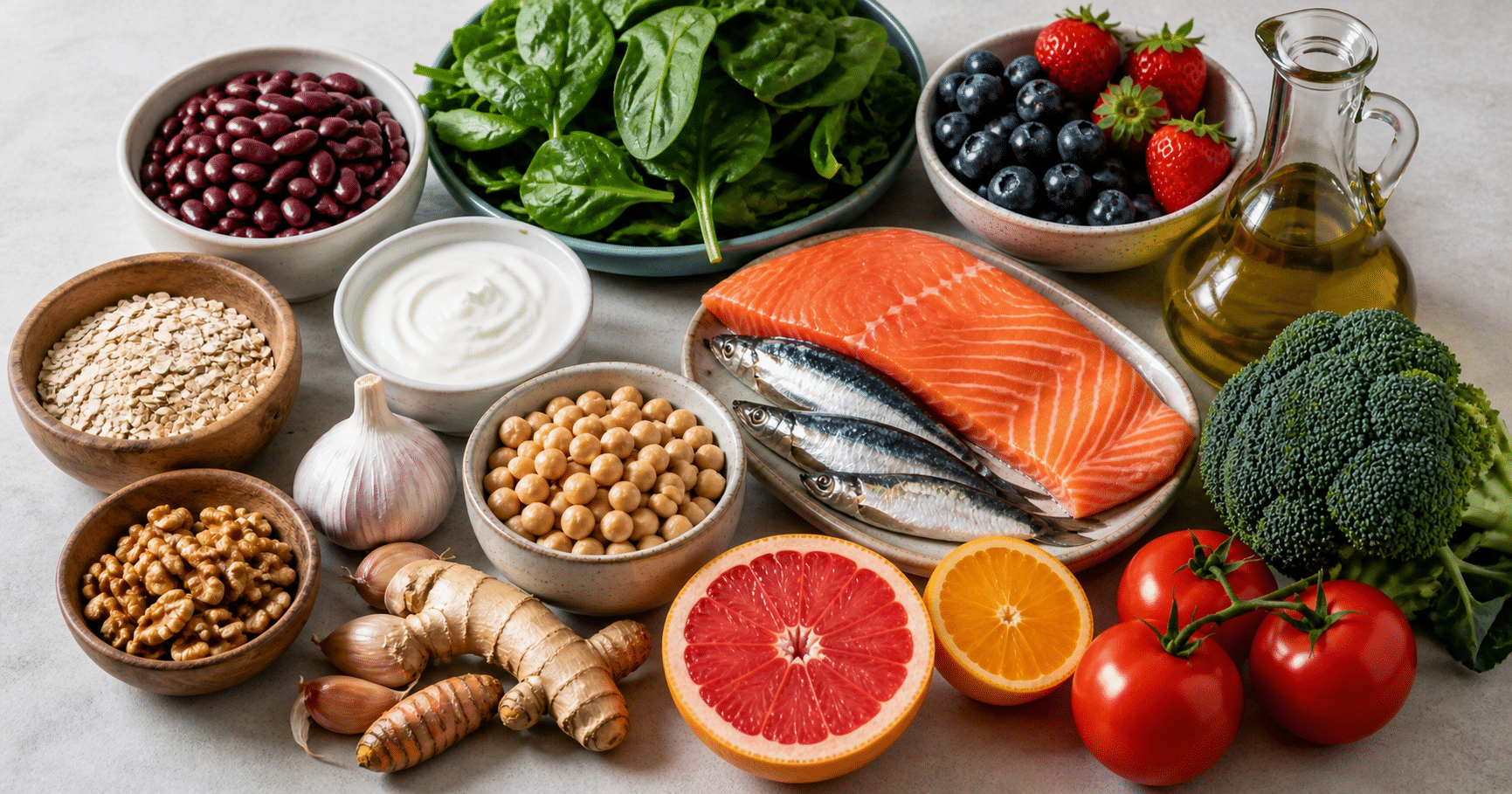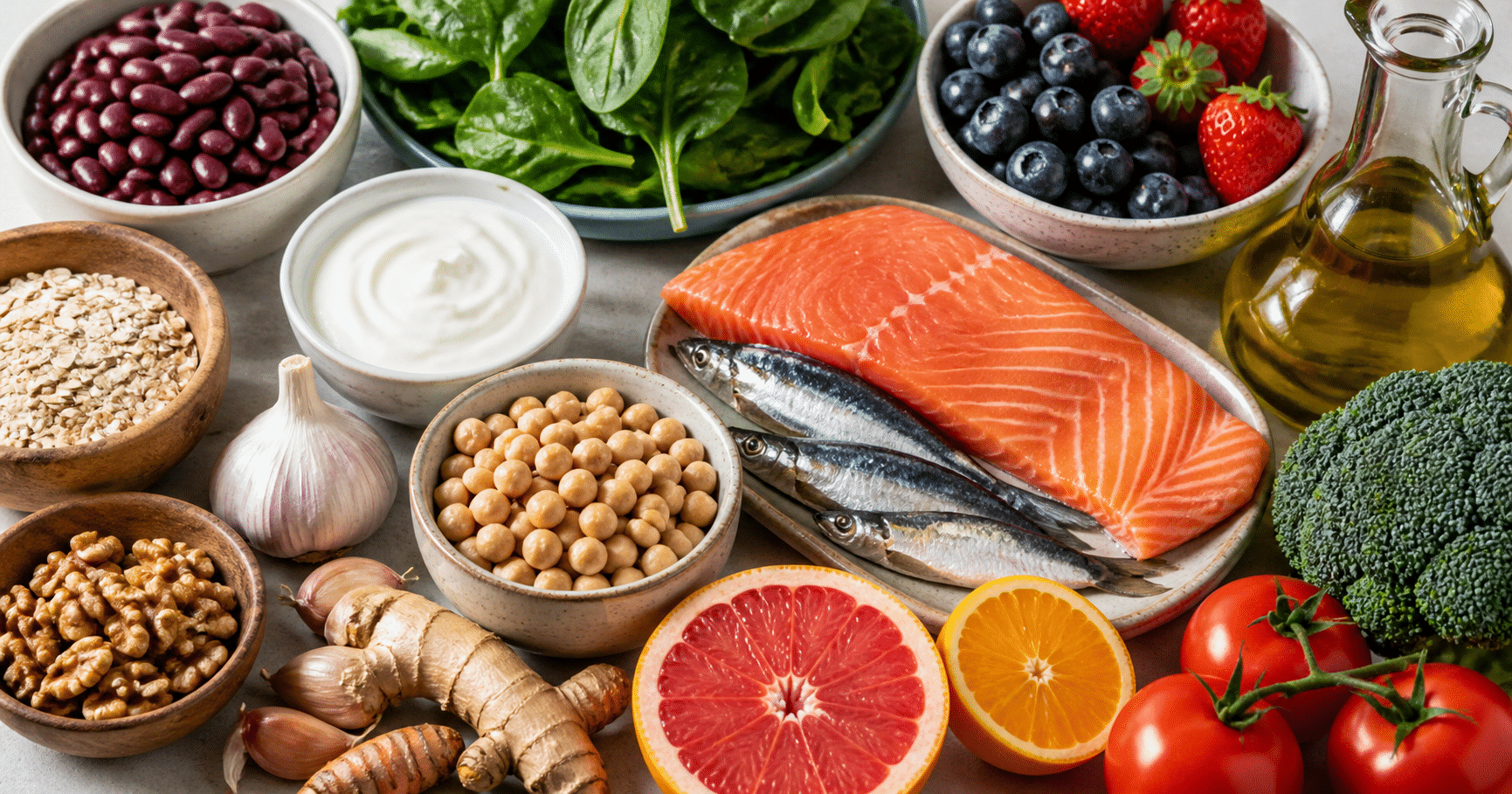
“Anti-inflammatory” can sound like a promise on a package, but no single food can switch inflammation off. What matters more is the overall pattern: meals built around vegetables, fruit, beans, whole grains, healthy fats and minimally processed foods.
The good news is that many foods associated with this eating pattern are ordinary supermarket staples. You don’t need a specialty-store pantry or an elaborate supplement routine to add more color, fiber and beneficial fats to your plate.
Here are 15 easy-to-find choices, what makes each one worth eating and a simple salmon-and-bean bowl that brings several together. One useful distinction: evidence about a food’s nutrients is not the same as proof that eating it will prevent or treat a disease.
How Food Fits Into the Inflammation Picture
Inflammation is part of the body’s normal response to injury and infection. It becomes a health concern when it is persistent or poorly regulated. Researchers study how dietary patterns relate to inflammation, but results can’t always show that a particular food caused a change.
Many foods below supply fiber, unsaturated fats or plant compounds such as polyphenols. These contribute to a nutrient-rich eating pattern, which is more meaningful than relying on one “superfood.” Whenever possible, add these foods in place of less nutritious options rather than treating them as a cure.
15 Everyday Foods to Add to Your Anti-Inflammatory Diet
1. Berries
Blueberries, strawberries, raspberries and blackberries provide fiber and colorful plant compounds called anthocyanins. Fresh or frozen berries work well in oatmeal, yogurt or a smoothie; frozen berries are often an economical option.
2. Leafy greens
Spinach, kale, collards and romaine offer folate, fiber and other nutrients. Add a handful to soup or eggs, or use them as the base for a salad. If you take warfarin, ask your clinician about keeping vitamin K intake consistent rather than suddenly changing how many greens you eat.
3. Tomatoes
Tomatoes contain lycopene, a plant pigment also found in watermelon and pink grapefruit. Canned tomatoes are convenient for soups and sauces; cooking them with a little oil can help the body absorb lycopene.
4. Extra-virgin olive oil
This oil supplies mostly monounsaturated fat and plant compounds. Use it in salad dressing or for everyday cooking, especially as a replacement for butter or other sources of saturated fat—not simply as an extra pour on top of an already rich meal.
5. Salmon and sardines
Fatty fish provide EPA and DHA, the long-chain omega-3 fats studied for their role in health. Salmon, sardines, trout and mackerel are common options. Choose canned sardines for a shelf-stable, budget-friendly addition to toast or salads.
6. Walnuts
Walnuts provide fiber and alpha-linolenic acid (ALA), a plant-based omega-3 fat. A small handful can top oatmeal or fruit. The body converts only a limited amount of ALA into EPA and DHA, so walnuts aren’t a direct substitute for fatty fish.
7. Beans
Black beans, chickpeas, kidney beans and other varieties bring fiber and plant protein to meals. Rinse canned beans to reduce some of the added sodium, then add them to chili, salads or grain bowls.
8. Oats
Rolled or steel-cut oats contain beta-glucan, a soluble fiber, as well as other nutrients. Choose plain oats more often than heavily sweetened packets; add fruit, nuts or cinnamon for flavor.
9. Broccoli
Broccoli is a source of fiber and vitamin C, along with plant compounds found in cruciferous vegetables. Roast florets, steam them or stir-fry them briefly. Frozen broccoli is just as practical for weeknight meals.
10. Garlic
Garlic adds flavor along with sulfur-containing compounds. Use it in beans, soups, roasted vegetables or homemade dressing. It’s a useful way to make simple foods more appealing without relying on a lot of salt.
11. Ginger
Fresh or ground ginger brings a warm, peppery flavor and naturally occurring compounds called gingerols. Grate it into stir-fries, steep a few slices in hot water or add it to a soup. Treat it as a flavorful ingredient, not a medicine.
12. Turmeric
Turmeric contains curcumin, a compound studied for biological effects, but the amount in food is not equivalent to a concentrated supplement. Stir ground turmeric into lentils, rice or soup for color and earthy flavor.
13. Plain yogurt or kefir
These cultured dairy foods provide protein and calcium, and some products contain live cultures. Check the label: added sugar can vary widely. Choose plain yogurt and add berries or chopped walnuts yourself.
14. Green tea
Green tea contains catechins, a type of polyphenol. Enjoy it unsweetened or lightly sweetened. If caffeine affects your sleep or makes you feel jittery, try a smaller cup or choose decaffeinated tea.
15. Citrus fruit
Oranges, mandarins and grapefruit provide vitamin C and fiber when eaten whole. Keep whole fruit handy for a snack; juice is less filling and usually provides less fiber per serving.
Make a Simple Salmon-and-Bean Bowl
This flexible meal combines fatty fish, beans, greens and olive oil. It serves two and takes about 20 minutes if you use canned beans and quick-cooking fish.
Ingredients
-
- Two 4- to 5-ounce salmon fillets
-
- 1 can (15 ounces) white beans, rinsed and drained
-
- 2 cups baby spinach or chopped leafy greens
-
- 1 cup cherry tomatoes, halved
-
- 1 tablespoon extra-virgin olive oil, plus a little for cooking
-
- 1 tablespoon lemon juice
-
- 1 small garlic clove, finely chopped
-
- Black pepper to taste
Step-by-Step Instructions
-
- Season the salmon with black pepper. Cook it in a lightly oiled skillet over medium heat, about 4 to 5 minutes per side, depending on thickness, until it flakes easily and reaches 145°F in the thickest part.
-
- While the fish cooks, combine the beans, spinach, tomatoes, olive oil, lemon juice and garlic in a bowl. Toss gently.
-
- Divide the bean mixture between two bowls. Top each with a salmon fillet and serve warm.
For a different version, use canned sardines or add leftover cooked grains. Refrigerate leftovers promptly and eat within three to four days; reheat cooked salmon until steaming hot.
Build the Pattern, Not a “Perfect” Plate
A practical starting point is to add one plant food to a meal you already enjoy: berries to breakfast, beans to soup or broccoli beside dinner. Frozen vegetables and fruit, canned beans and canned fish can make the habit easier and less expensive.
If you take medication or have a condition that requires a specific diet, check with your clinician before making major changes or using concentrated supplements. In particular, food amounts of turmeric are different from high-dose curcumin products, which may interact with some medicines.
The Takeaway: Small Choices Add Up
These 15 foods offer accessible ways to eat more plants, fiber and unsaturated fats. The strongest everyday approach is variety and consistency—not expecting one ingredient to do all the work.
Start with one change you’ll actually keep. A can of beans or a bag of frozen berries can be just as useful as a more fashionable ingredient.