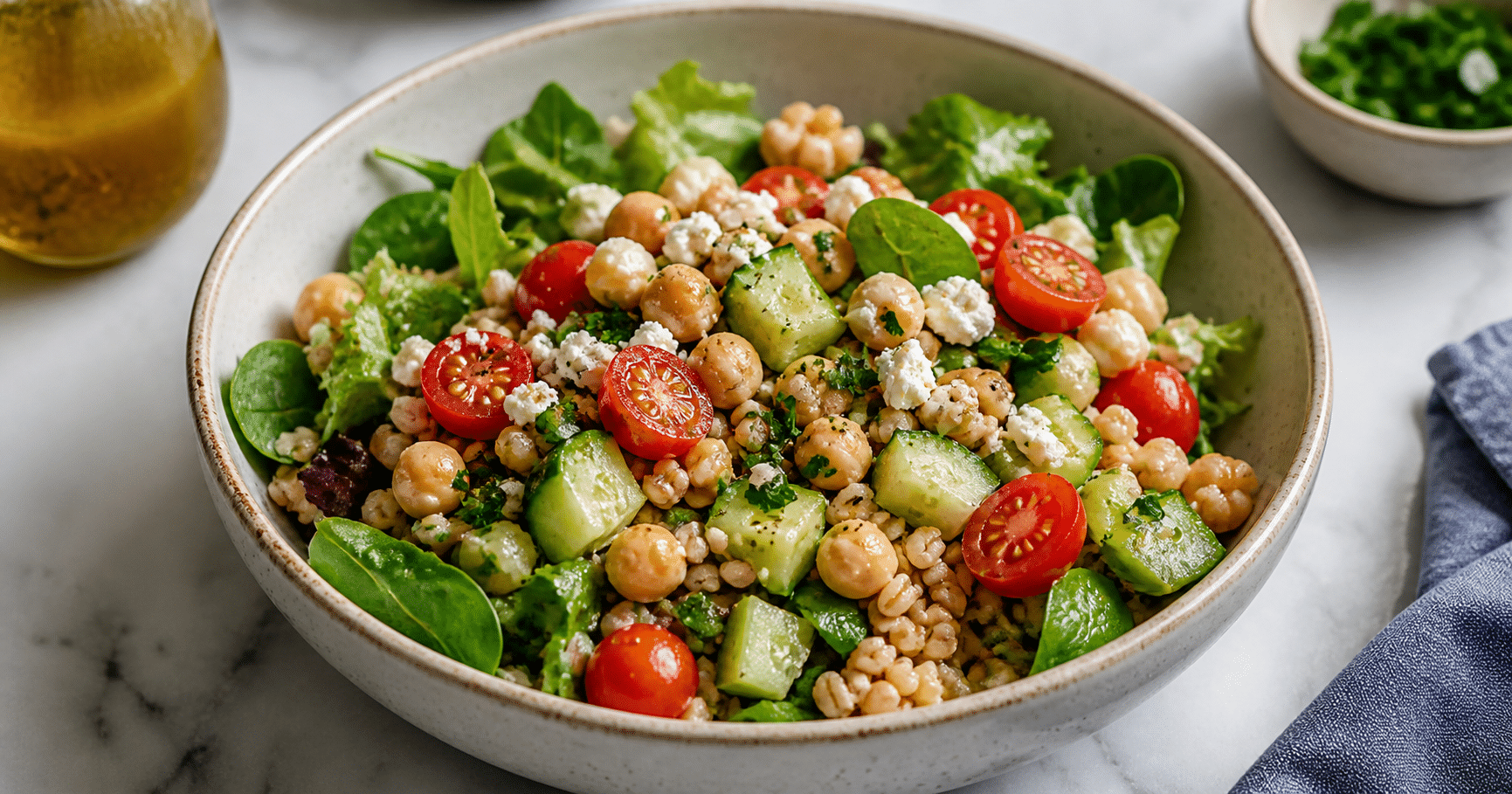
A salad can look generous and still leave you hungry an hour later. A bowl of greens, tomatoes, and cucumber offers plenty of freshness, but it may not provide enough protein, energy, or staying power to carry you through the afternoon.
The fix isn’t piling on cheese or pouring over more dressing. It’s building the salad around a few satisfying elements: protein, a fiber-rich carbohydrate, vegetables, and a flavorful source of fat.
That balance matters especially when a salad is meant to replace lunch or dinner. Here’s how to put one together, what to add when you want more staying power, and a simple recipe you can adapt to what’s already in your kitchen.
What Makes a Salad Feel Like a Meal?
A filling salad is less about the size of the bowl than what’s in it. Vegetables bring color, crunch, and fiber, while protein-rich foods such as beans, eggs, fish, chicken, tofu, or cheese make the salad more substantial. A grain, potato, corn, or hearty bread adds carbohydrates that can make the meal more satisfying.
Don’t overlook fat, either. Avocado, nuts, seeds, cheese, or an olive-oil-based dressing contribute flavor and make a bowl feel more complete. Fat also helps the body absorb certain fat-soluble nutrients in vegetables, though adding it does not guarantee a particular health outcome.
A useful starting point is vegetables + protein + a filling carbohydrate + a little fat. The portions can vary with appetite and the rest of your day. You don’t need every ingredient in equal amounts—or a complicated formula—to make a good meal.
Four Additions That Make Salad More Satisfying
1. Start with a protein you enjoy
Protein can turn a side salad into a practical lunch. Try leftover roasted chicken, canned salmon, hard-boiled eggs, baked tofu, lentils, chickpeas, or white beans. Combining plant and animal sources is fine, and a meatless salad can be hearty when it includes a generous portion of beans, lentils, or tofu.
Convenience counts: canned beans and fish are easy pantry options. If sodium is a concern, compare labels and rinse canned beans under cool water before using them.
2. Add a carbohydrate with texture
Salad greens alone may not provide the energy some people want from a full meal. Add cooked farro, brown rice, quinoa, barley, roasted potatoes, corn, or a slice of whole-grain bread on the side. Leftover grains and potatoes work especially well, so the salad doesn’t require cooking from scratch.
For crunch, try toasted whole-grain pita pieces or a small handful of croutons. They’re not a substitute for the main components, but they can make the bowl more enjoyable.
3. Include something with satisfying fat
Avocado, walnuts, pumpkin seeds, olives, and cheese all bring richness and contrast to crisp vegetables. Choose one or two, rather than adding several large handfuls, if you’re trying to keep portions in balance.
A simple dressing made with olive oil, vinegar or lemon juice, mustard, and seasoning can pull the ingredients together. Bottled dressing is also an option; checking the serving size and sodium on the label can help you choose one that suits your preferences.
4. Make the vegetables varied, not just leafy
Different textures keep a salad interesting: tender greens, crunchy cabbage, sweet peppers, juicy tomatoes, grated carrots, or roasted vegetables. If raw vegetables don’t appeal, use a mix of fresh and cooked ingredients. Warm roasted squash or mushrooms over cool greens can make a salad feel more like dinner.
A Hearty Chickpea and Grain Salad for Two
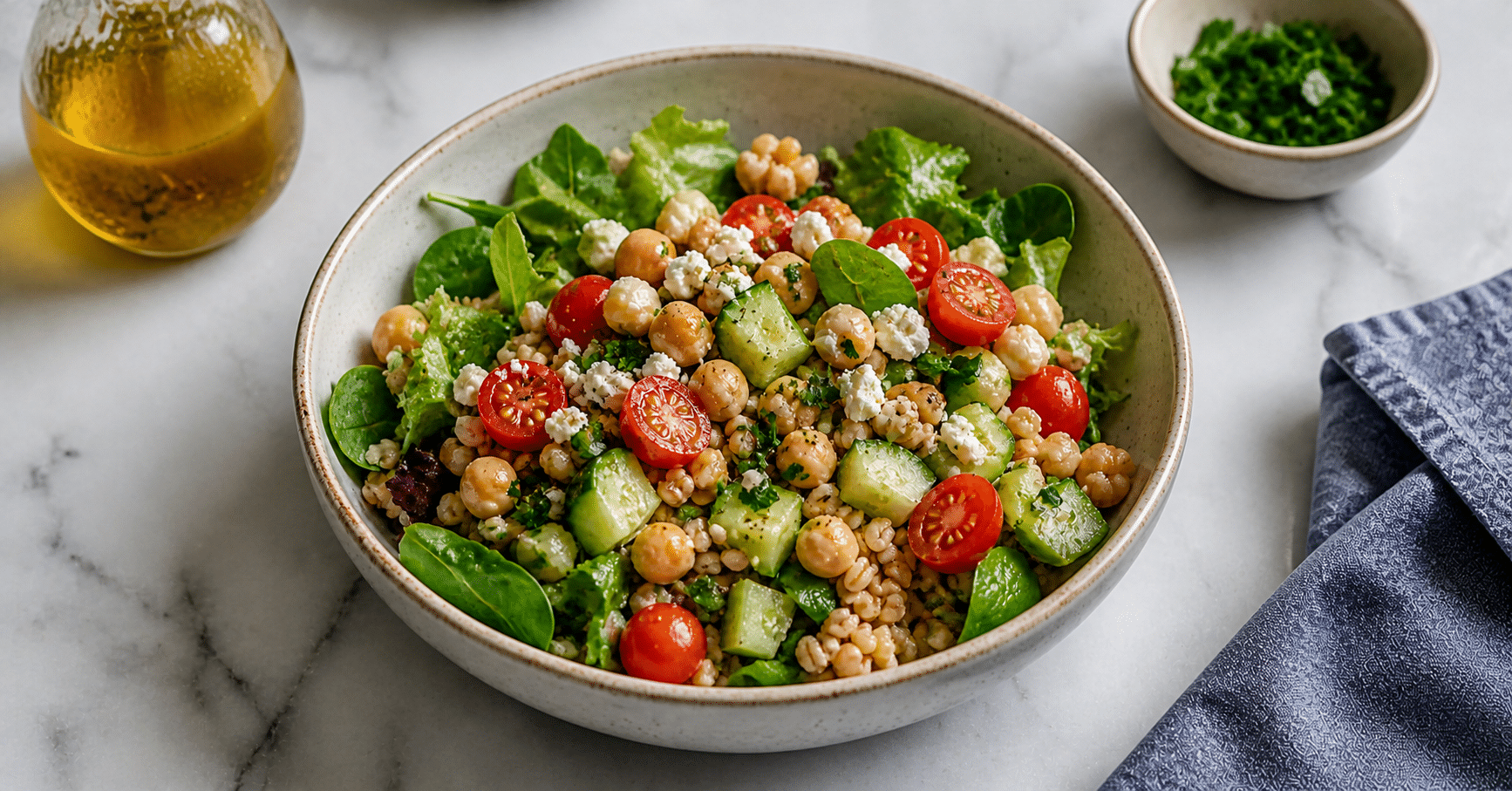
This flexible lunch combines crisp vegetables with chickpeas, cooked grains, and a lemony dressing. It takes about 15 minutes if the grains are already cooked; allow extra time if you’re preparing them from dry.
Ingredients
-
- 4 cups chopped romaine, baby spinach, or mixed greens
-
- 1 cup cooked farro, quinoa, or brown rice, cooled
-
- 1 can (15 ounces) chickpeas, drained and rinsed
-
- 1 cup halved cherry tomatoes
-
- 1 small cucumber, chopped
-
- 1/4 cup crumbled feta, optional
-
- 2 tablespoons chopped parsley or mint, optional
-
- 2 tablespoons olive oil
-
- 1 tablespoon lemon juice, plus more to taste
-
- 1 teaspoon Dijon mustard
-
- Black pepper to taste
Step-by-Step Instructions
-
- In a small bowl or jar, whisk or shake together the olive oil, lemon juice, mustard, and black pepper.
-
- Divide the greens between two bowls. Add the cooked grains, chickpeas, tomatoes, and cucumber.
-
- Spoon the dressing over the salads and toss gently. Top with feta and herbs, if using. Taste and add more lemon or pepper as desired.
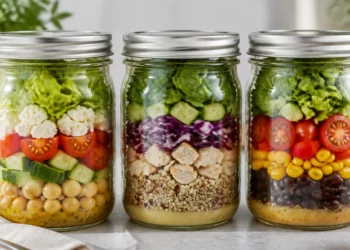
If you’re making lunch ahead, keep the dressing separate and add it just before eating. Store the assembled ingredients in a covered container in the refrigerator and use within a few days, checking that any leftovers still look and smell fresh.
Small Choices That Improve the Bowl
Use leftovers strategically. A scoop of last night’s roasted vegetables or rice can save time and reduce food waste. If you’re adding a warm ingredient, let it cool slightly before placing it on delicate greens.
Season each layer. A pinch of pepper, herbs, or a squeeze of citrus can bring out flavor without relying on a heavy pour of dressing. Taste before adding salt, particularly if the salad includes feta, olives, smoked fish, or packaged ingredients.
Keep texture in mind. If a bowl seems bland, it may need contrast rather than more ingredients: creamy beans with crisp cabbage, juicy tomatoes with toasted seeds, or tangy dressing against mild grains.
Build the Salad Around What Satisfies You
For a complete-feeling salad, include a substantial protein, a filling carbohydrate, plenty of vegetables, and a modest source of fat. Adjust the mix to your appetite, food preferences, and what you have on hand.
The best meal salad isn’t the one with the longest ingredient list. It’s the one that tastes good enough to make again—and keeps you satisfied after the bowl is empty.