A good dinner does not require a full pantry, a strict recipe, or a last-minute trip to the store. With a few simple building blocks, you can turn leftover rice, half a bag of spinach, a can of beans, or yesterday’s chicken into a balanced meal.
The trick is to stop asking, “What recipe can I make with these ingredients?” and start asking, “What role can each ingredient play?” Most satisfying dinners have a source of protein, vegetables, a filling carbohydrate, and something that brings the flavors together.
That framework is especially handy when cooking for one or two, when produce comes in odd quantities, or when you’re trying to use food before it goes to waste. It is also flexible: a bowl, a skillet, a salad, and a soup can all follow the same basic formula.
Here’s how to build the meal, make sensible swaps, and use the method for a quick, adaptable dinner without turning it into a rigid nutrition rule.
The Four-Part Formula for a Flexible Dinner
Think of dinner as four parts: protein, vegetables, a filling carbohydrate, and flavor. Protein might be eggs, fish, chicken, tofu, lentils, or beans. Vegetables can be fresh, frozen, or leftover, while the carbohydrate might be potatoes, rice, pasta, bread, or corn.
For a visual starting point, picture a plate with about half vegetables and the remaining space divided between protein and a grain or other starchy food. It is a guide, not a requirement. Appetite, activity, culture, medical needs, and what is in the fridge all affect what a satisfying meal looks like.
The final part—flavor—is what makes the components feel like dinner rather than a collection of odds and ends. A spoonful of salsa, a squeeze of lemon, a little grated cheese, chopped herbs, or a quick dressing can bring everything together. A small amount of oil, nuts, seeds, avocado, or tahini can add richness, too.
How to Make the Formula Work With What You Have
1. Choose protein that is easy to use
Start with whatever is most practical: leftover cooked chicken, canned beans, eggs, tofu, canned fish, or cooked lentils. Protein helps make a meal satisfying and provides building blocks the body uses to maintain and repair tissues. Pairing it with vegetables and a filling carbohydrate makes a more complete dinner than relying on a small garnish of protein.
Beans can count as both a protein source and a carbohydrate-rich food, and they also provide fiber. If you are using them as the main protein, add a separate grain or starch only if you want one and it suits your appetite.
2. Use vegetables in any form
Fresh produce is useful, but it is not the only option. Frozen peas, spinach, broccoli, and mixed vegetables can go straight into many cooked dishes. Canned vegetables work too; draining and rinsing them can reduce some of the added sodium.
Combine what needs cooking with what is already ready to eat. For example, sauté sliced mushrooms and frozen spinach, then add leftover roasted vegetables at the end to warm them through without overcooking.
3. Pick a filling base—and don’t overlook leftovers
Rice, oats, pasta, potatoes, tortillas, and whole-grain bread can all anchor a meal. A leftover baked potato can be reheated and topped with beans and vegetables; cooked pasta can become a warm skillet dinner with peas and tuna.
Use what is available rather than buying a special grain for one recipe. If a meal already includes beans or potatoes, you may not need another starch unless you want one.
4. Choose one flavor direction
A simple flavor cue keeps flexible cooking from tasting random. Try salsa and lime with beans and corn, lemon and herbs with fish and greens, or soy sauce and ginger with tofu and vegetables. You do not need a complicated sauce: a little acid, seasoning, and richness often does the job.
A 20-Minute Fridge-Clearing Skillet
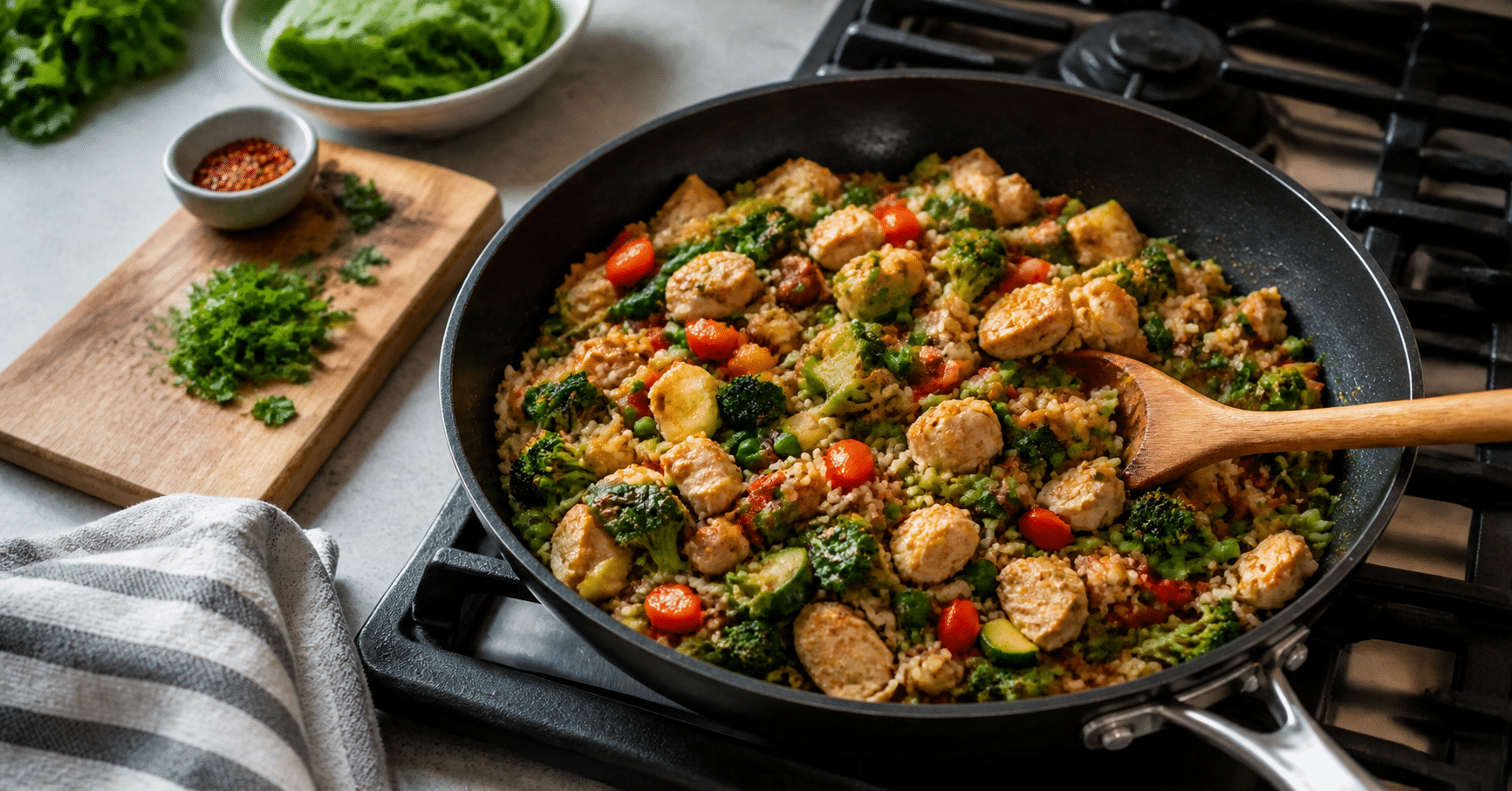
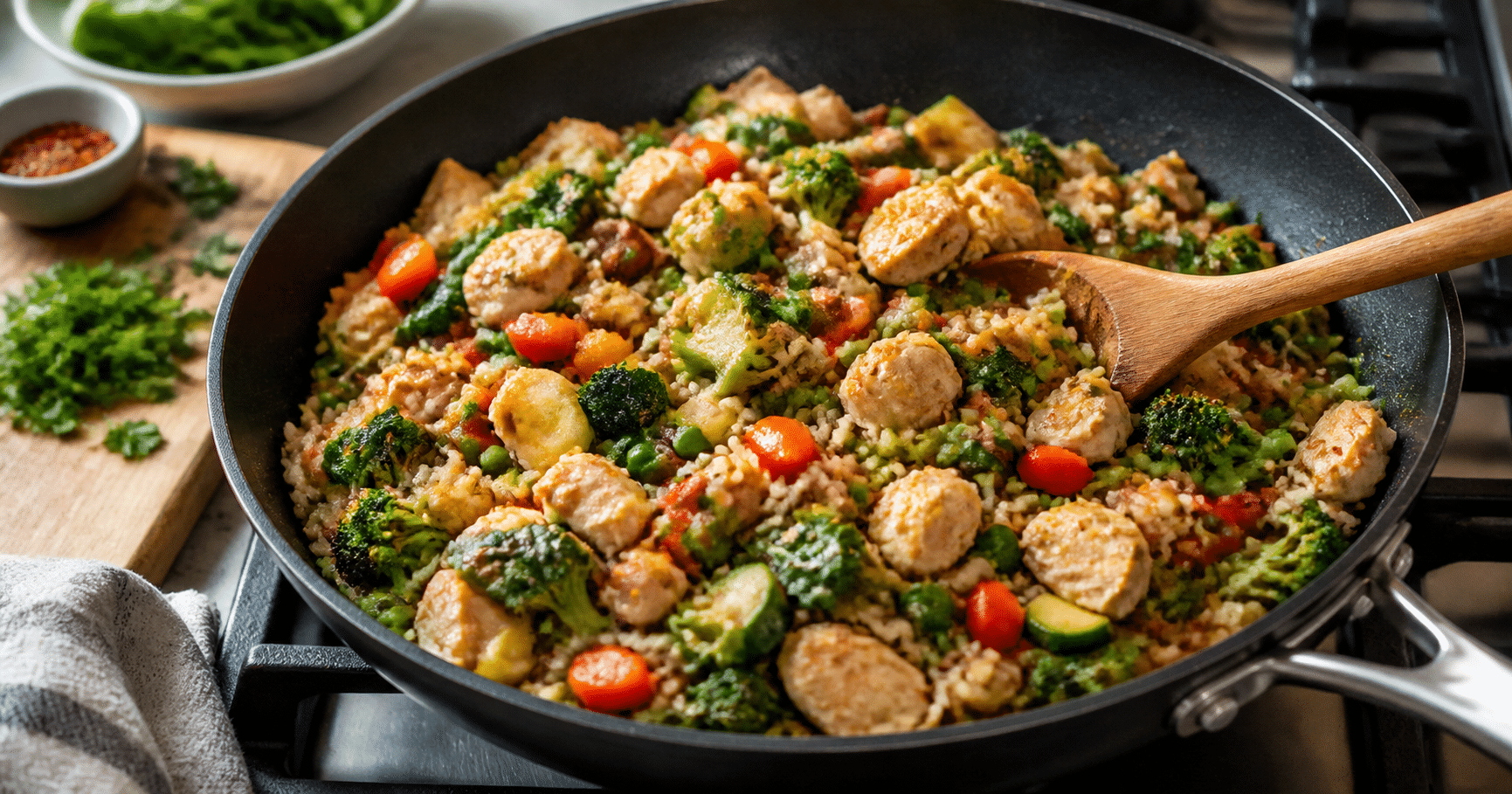
This adaptable skillet serves two and works with cooked leftovers, frozen vegetables, or canned beans. It is a template rather than a fixed recipe: keep the basic proportions, then change the ingredients to suit your fridge.
Ingredients
-
- 1 tablespoon olive oil or another cooking oil
-
- 2 cups chopped vegetables, such as bell pepper, zucchini, broccoli, mushrooms, or a frozen mix
-
- 1 cup cooked protein, such as chopped chicken, tofu, or drained beans
-
- 1½ cups cooked rice, potatoes, or another leftover grain or starch
-
- 2 tablespoons salsa, or 1 tablespoon soy sauce plus a squeeze of lemon or lime
-
- Salt and black pepper, as needed
-
- Optional: chopped herbs, grated cheese, plain yogurt, or toasted seeds
Step-by-Step Instructions
-
- Prepare the ingredients. Chop fresh vegetables into bite-size pieces. If using canned beans, drain and rinse them. Break up clumps of cold rice with a fork.
-
- Cook the vegetables. Warm the oil in a large skillet over medium heat. Add firm vegetables first and cook for 4 to 6 minutes, stirring now and then. Add softer vegetables, such as spinach, during the last minute or two.
-
- Add protein and the filling base. Stir in cooked protein and rice, potatoes, or another starch. Cook for 3 to 5 minutes, stirring until hot throughout. If using raw poultry or another raw meat, cook it thoroughly before adding the vegetables; a food thermometer is the most reliable way to check doneness.
-
- Season and finish. Stir in salsa or your chosen sauce. Taste before adding salt, especially if the ingredients or sauce are already salty. Top with herbs, cheese, yogurt, or seeds if you like.
For a different feel, spoon the skillet into tortillas, serve it over greens, or add broth to turn it into a quick soup. Refrigerate leftovers promptly in a covered container and use them within three to four days.
Small Adjustments That Make a Big Difference
Give ingredients a little space in the pan. Crowding can make vegetables release moisture and steam instead of browning, so cook in batches if the skillet is packed. Add delicate greens and fresh herbs near the end; they need much less heat than potatoes or carrots.
Season gradually, especially when combining leftovers, canned ingredients, cheese, and bottled sauces. A squeeze of citrus or a splash of vinegar can brighten a dish without adding more salt. If you are watching sodium, choose lower-sodium canned goods and sauces when available, and build flavor with garlic, pepper, herbs, or spices.
Keep dietary needs in view. People with conditions that require a specific eating plan may need to adjust ingredients or portions; a flexible formula is a starting point, not a substitute for individualized guidance.
A Dinner Formula Worth Keeping
When the fridge looks like a collection of unrelated leftovers, choose one protein, one or two vegetables, a filling base, and a flavor that ties them together. The parts can change; the simple structure stays useful.
A good weeknight dinner is less about following the perfect recipe and more about knowing what each ingredient can do.