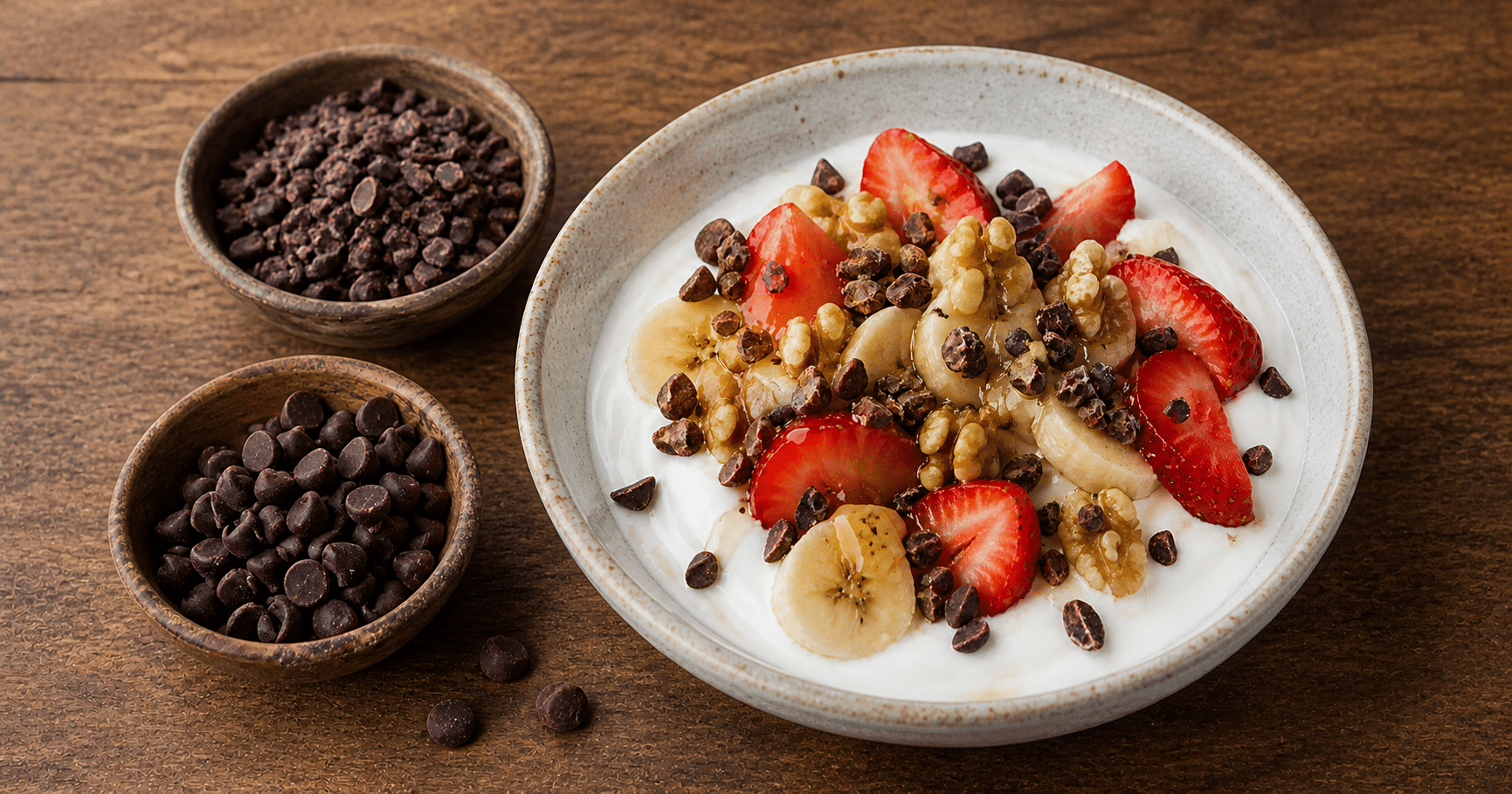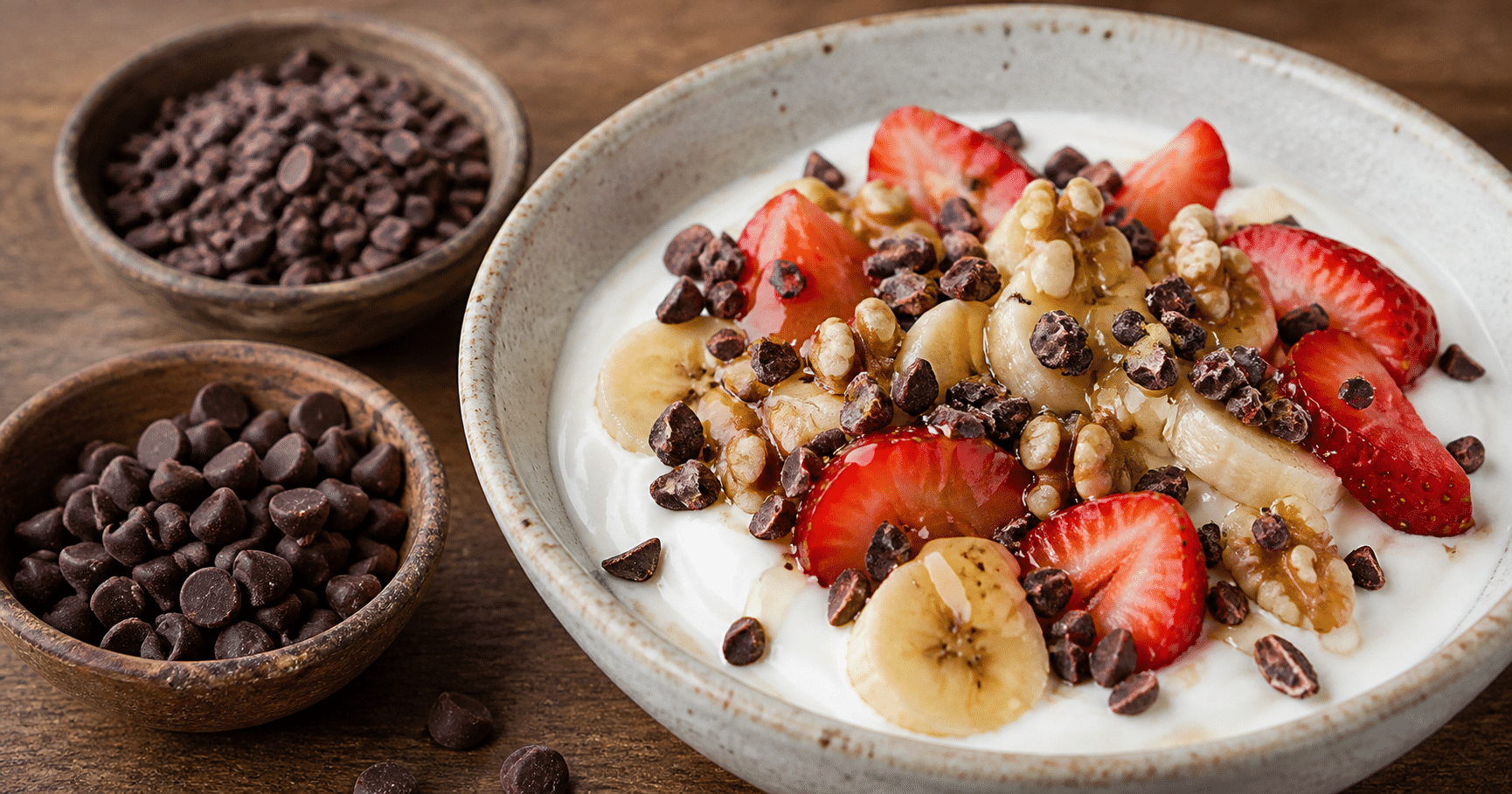
Cacao nibs look a little like chocolate chips, but the resemblance can be misleading. They are small pieces of cacao bean, usually crunchy, unsweetened and distinctly bitter—not miniature bits of finished chocolate.
That difference matters when you’re choosing something to stir into oatmeal, scatter over yogurt or use in a cookie recipe. Nibs bring a roasted, earthy flavor and a firm crunch; chocolate chips bring sweetness and usually soften or melt when heated.
Neither is automatically the healthier choice in every situation. The ingredients, serving size and way you plan to use them all count. Here’s how cacao nibs are made, how they compare with chocolate chips, and how to put them to work in everyday meals.
What Cacao Nibs Are—and Why They Taste Different
Cacao nibs are pieces of the cacao bean after it has been fermented, dried and usually roasted. The bean’s outer shell is removed, and the inner part is broken into small fragments. Those fragments are the nibs: cacao in a relatively simple, solid form, without the sugar and extra ingredients commonly used to make chocolate.
Because nibs are not sweetened, their flavor can surprise people expecting a chocolate-chip taste. They have roasted, sometimes fruity or nutty notes, along with pronounced bitterness. Their texture is crisp and crunchy, more like chopped nuts or roasted coffee beans than a soft candy.
Chocolate chips are made from chocolate ingredients, often including cacao solids, cocoa butter and sugar. Many also contain vanilla, lecithin or other ingredients that help with flavor and texture. Recipes vary, so the ingredient list is the best way to see what’s in a particular bag.
Four Differences That Matter in the Kitchen
1. Sweetness: Nibs are unsweetened; chips usually aren’t
Cacao nibs typically have no added sugar, which makes them useful when you want a chocolate-like flavor without adding sweetness. But “unsweetened” does not mean calorie-free: nibs contain fat from the cacao bean and are energy-dense, so a small sprinkle can go a long way.
Chocolate chips can range from semisweet to very dark, and their sugar content varies. Check the Nutrition Facts label rather than assuming that all chips have the same amount.
2. Texture: Nibs stay crunchy
Nibs hold their shape in most baked goods and add a firm bite. Chocolate chips are designed to retain some shape in the oven, but their chocolate softens and may melt, especially in warm recipes.
For a topping you want to stay crisp, nibs are a natural fit. For gooey cookies or melted chocolate flavor, chips are usually the better choice.
3. Nutrition: The label tells the fuller story
Cacao nibs provide fiber and minerals, including magnesium and iron, along with fat and calories. Chocolate chips may provide some of the same nutrients, but added sugar and serving size affect the overall comparison. Products vary, so it is more useful to compare labels than to treat either food as a nutrition shortcut.
Cacao also contains naturally occurring stimulant compounds, including theobromine and small amounts of caffeine. The amount can vary, but people who are sensitive to stimulants may prefer not to eat a large serving late in the day.
4. Processing and labels: “Cacao” does not promise a special benefit
Nibs may be labeled “raw,” but that term does not necessarily mean they were never exposed to heat or that they have a particular health effect. Processing can affect flavor and the amount of certain compounds in cacao, and products are not all made the same way.
Both nibs and chocolate chips can fit into a balanced diet. The practical distinction is simple: nibs are crunchy cacao pieces; chips are formulated chocolate morsels, often sweetened to make them enjoyable on their own or in desserts.
A Simple Way to Try Cacao Nibs
If nibs taste too bitter by the handful, pair them with naturally sweet foods. This yogurt bowl combines their crunch with fruit and a little honey; adjust the toppings to suit your taste.
Ingredients
-
- 1 cup plain Greek or regular yogurt
-
- 1/2 cup sliced strawberries, banana or other fresh fruit
-
- 1 tablespoon cacao nibs
-
- 1 tablespoon chopped walnuts or almonds (optional)
-
- 1 teaspoon honey or maple syrup, or more to taste
Step-by-Step Instructions
-
- Spoon the yogurt into a bowl.
-
- Add the fruit and, if using, the chopped nuts.
-
- Scatter the cacao nibs over the top so they stay crunchy.
-
- Drizzle with honey or maple syrup if you want more sweetness. Serve right away.
For a less bitter first taste, start with a teaspoon of nibs rather than a full tablespoon. You can also mix them into oatmeal, granola, a smoothie bowl or pancake batter. Add them as a topping when you want crunch; blend them in when you want the flavor distributed throughout.
When to Use Nibs Instead of Chocolate Chips
Choose cacao nibs when you want crunch, an unsweetened cacao flavor or a topping that will not turn soft. They work especially well on yogurt, oatmeal, cereal, fruit and salads where a small amount can add contrast. Their bitterness pairs nicely with banana, berries, dried fruit, nut butter and lightly sweetened foods.
Reach for chocolate chips when sweetness and melting are part of the plan. In cookies, muffins or pancakes, nibs can be substituted for chips in a similar amount, but the result will be less sweet and more crunchy. You may want to add a little extra sweetness to the recipe—but taste the batter or adjust the finished serving rather than changing a whole recipe by guesswork.
For a middle ground, combine the two. A handful of chocolate chips mixed with a smaller amount of nibs gives you sweetness and pockets of melted chocolate alongside a sharper, crisp cacao bite.
The Bottom Line on Cacao Nibs
Cacao nibs are not simply another kind of chocolate chip. They are broken pieces of cacao bean: generally unsweetened, crunchy and more bitter. Chocolate chips are made to deliver a sweeter, softer chocolate experience, and their ingredients differ by brand.
Use nibs when you want texture and control over sweetness, and chips when a recipe needs familiar chocolate flavor. If nibs seem intense at first, start with a modest sprinkle—the right pairing can make their bold flavor feel like an asset rather than a surprise.