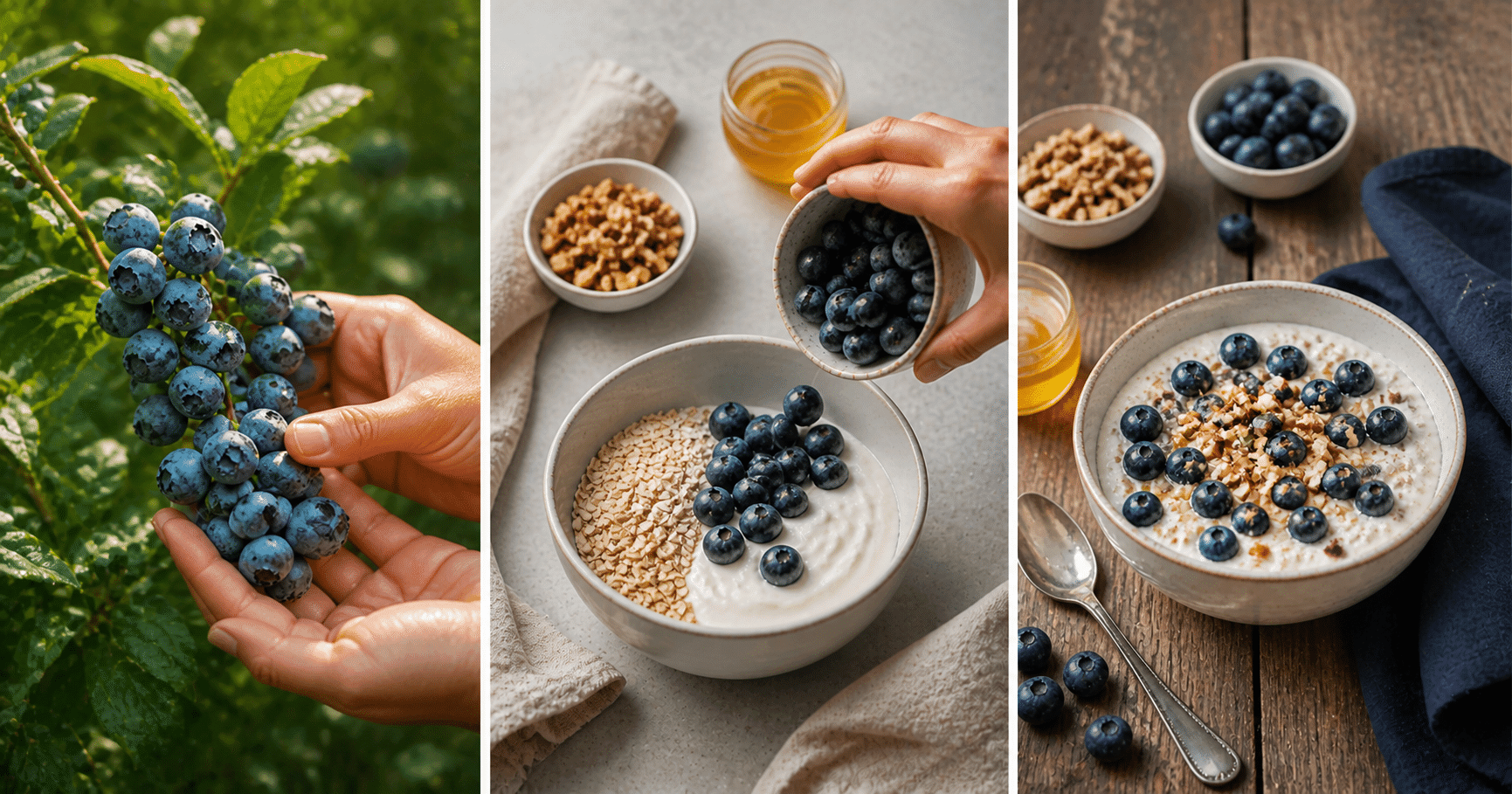

Blueberries have earned their “superfood” reputation for good reason: they’re rich in colorful plant compounds, provide fiber, and are easy to add to everyday meals. But the word superfood is a marketing term, not a scientific category—and blueberries are not a shortcut to better health.
Their most talked-about compounds, anthocyanins, give the berries their deep blue-purple color. Researchers have studied how these compounds may affect blood vessels and other aspects of health, but findings don’t mean that eating blueberries can prevent or treat disease.
There’s also a practical point worth knowing: fresh berries aren’t the only good choice. Frozen blueberries can be nutritious and convenient, while sweetened dried blueberries are a different proposition. Here’s what blueberries actually offer, what research can—and can’t—say, and a simple way to enjoy them.
What makes blueberries nutritionally interesting?
A cup of raw blueberries contains about 84 calories, roughly 3.6 grams of fiber and 21 grams of carbohydrates. It also provides vitamin C, vitamin K and manganese. Exact amounts vary with berry size and variety, but blueberries are a nutrient-rich way to add fruit to a meal.
Their signature pigments are anthocyanins, a type of flavonoid found in many red, purple and blue plants. These compounds can act as antioxidants in laboratory settings, but that doesn’t mean they work like a cleaning crew inside the body. Human health depends on many interacting processes, and a food’s effects can’t be predicted from a lab test alone.
Research on blueberries has explored possible effects on vascular function, blood pressure and cognitive performance. Some studies suggest potential benefits, but results vary, and research does not establish that blueberries prevent heart disease, dementia or other conditions. The sensible takeaway is that they can be one nutritious part of an overall eating pattern—not a treatment or a substitute for medical care.
Three useful things to know before you eat them
1. The whole berry offers more than its pigments
Blueberries provide fiber along with their anthocyanins. Fiber supports regular digestion and can help make meals more satisfying. Eating the fruit whole also means you get its natural sugars packaged with water and fiber, rather than consuming the sugars on their own as you might in a sweetened drink.
Blueberries still contain carbohydrates, so portions may matter for someone managing blood glucose. A cup has about 21 grams of total carbohydrate. Pairing berries with plain yogurt, nuts or oats adds protein, fat or additional fiber to make a more substantial snack.
2. Fresh and frozen are both practical choices
Frozen blueberries are typically picked and frozen soon after harvest. They can be a useful option when fresh berries are expensive or out of season, and they work especially well in oatmeal, smoothies and baking. Their texture becomes softer after thawing, so they may not be the best choice when you want firm berries on top of a dessert.
Check the ingredient list on packaged berries: plain frozen blueberries generally need no added sugar. Dried blueberries, on the other hand, are often sweetened and are easy to eat in larger amounts. Compare labels and serving sizes if you’re watching added sugar or carbohydrates.
3. “More” isn’t automatically better
Blueberries can contribute to a healthy diet, but eating a large quantity won’t compensate for an unbalanced overall pattern. Enjoy them in a portion that fits your meals and preferences. Variety matters, too: other fruits and vegetables provide different fibers and plant compounds.
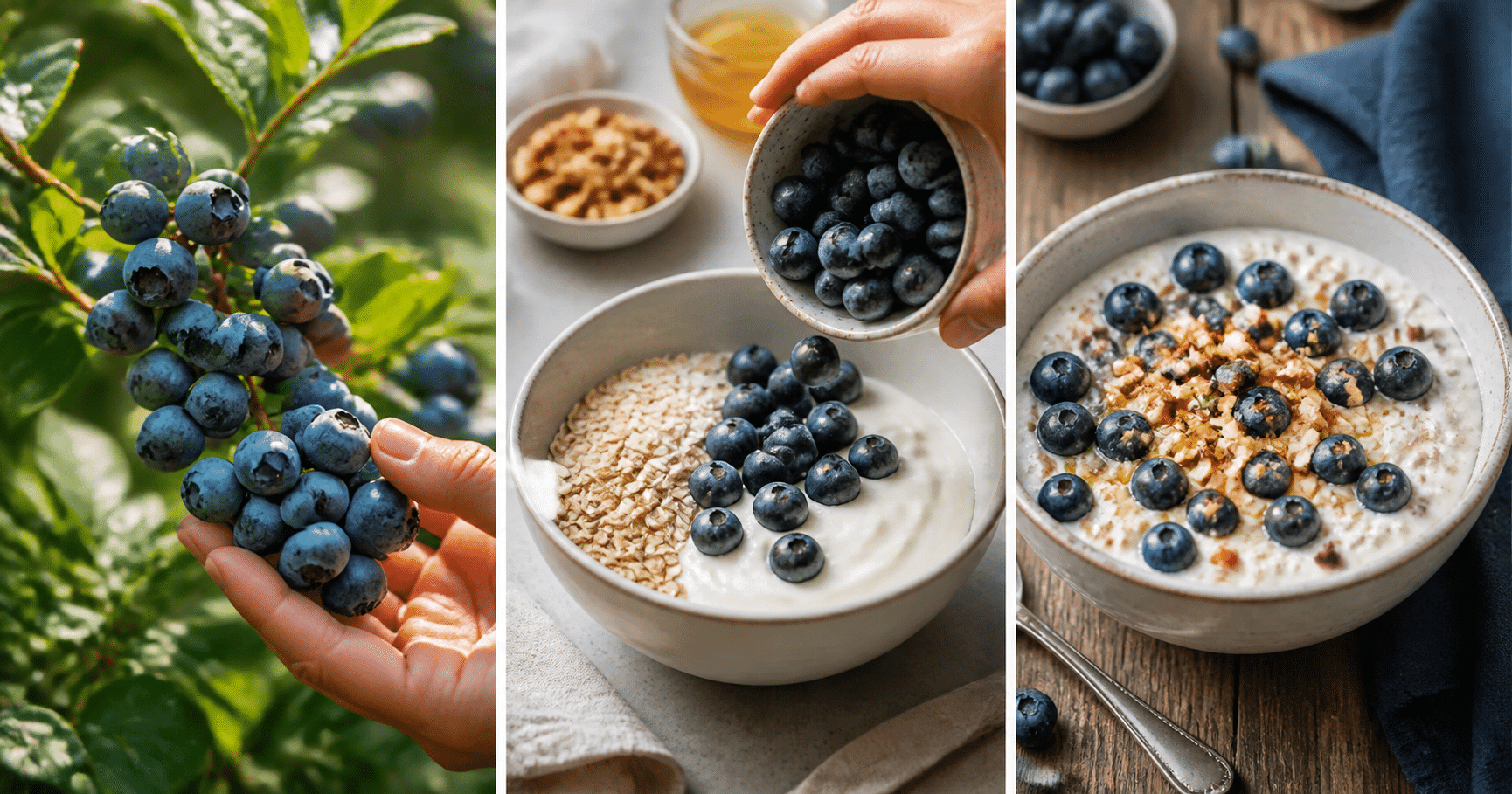
Make a simple blueberry-yogurt oat bowl
This easy breakfast or snack pairs blueberries with protein-rich yogurt and oats. It takes about 5 minutes to assemble and makes one serving.
Ingredients
- ¾ cup plain Greek yogurt
- ½ cup blueberries, fresh or frozen
- ¼ cup old-fashioned rolled oats
- 1 tablespoon chopped walnuts or sliced almonds
- ½ teaspoon honey or maple syrup, optional
- A pinch of cinnamon, optional
Step-by-Step Instructions
- Spoon the yogurt into a bowl and stir in the oats.
- Add the blueberries. If using frozen berries, let them thaw for a few minutes or add them straight from the freezer for a colder, firmer bowl.
- Top with nuts and cinnamon. Add a small drizzle of honey or maple syrup if you like it sweeter.
- Eat right away, or cover and refrigerate overnight for a softer, make-ahead version.
For a thicker bowl, use less yogurt or add a spoonful of chia seeds. If making it ahead, keep it covered in the refrigerator and add the nuts just before eating for more crunch.
Small choices that make blueberries easier to enjoy
Rinse fresh berries under cool running water just before eating, then dry them gently. Washing them as soon as you bring them home can leave extra moisture that encourages spoilage. Store unwashed berries in the refrigerator and remove any that are moldy or damaged.
Frozen berries can go straight into oatmeal or a smoothie; there’s no need to thaw them first. If you do thaw them, expect some juice and a softer texture. That liquid is part of the fruit, so stir it into yogurt or oats rather than pouring it away.
A useful shopping rule: Choose plain fresh or frozen berries for everyday use, then add sweetness yourself if needed.
So, are blueberries really a superfood?
They’re a nutritious fruit with fiber, vitamins and anthocyanins, and research continues to examine how those compounds may relate to health. But “superfood” can overpromise: blueberries don’t prevent disease on their own, and no single food replaces a varied diet or appropriate medical care.
Think of them as a delicious, convenient way to add fruit to breakfast, snacks or dessert. The best blueberry is the one you’ll enjoy regularly—fresh or frozen, and ideally without a pile of added sugar.