A bag of almonds or pumpkin seeds can taste fresh when you bring it home and turn stale weeks later—even if it has never been opened. The reason is often hiding in plain sight: nuts and seeds contain oils that can react with oxygen, heat, and light.
That makes the pantry convenient, but not always the best place for a large bag. Refrigeration and freezing can preserve flavor much longer, provided the food is packed well and protected from moisture and kitchen odors.
Storage advice can seem confusing because almonds, walnuts, sesame seeds, and ground flax don’t all keep equally well. Here’s how to choose the right spot, recognize when a batch has gone off, and avoid the small handling mistakes that can shorten its useful life.
Why Nuts and Seeds Lose Their Freshness
Many nuts and seeds are rich in unsaturated fats. These fats are part of what makes them satisfying ingredients, but they are also vulnerable to oxidation: a gradual reaction with oxygen that can create stale, bitter, or rancid flavors. Warmth and light can speed that process, while a loose or frequently opened package exposes the contents to more air.
Moisture is a separate concern. It can soften a crunchy food and, if conditions allow mold to grow, make it unsafe. A cool, dry place helps, but for longer storage a refrigerator or freezer is usually a better choice. Nuts and seeds are not interchangeable, though: chopped, roasted, and ground products generally have more exposed surface area than whole ones and can lose quality sooner.
Choose Storage Based on How Soon You’ll Use Them
1. Keep a small working supply in the pantry
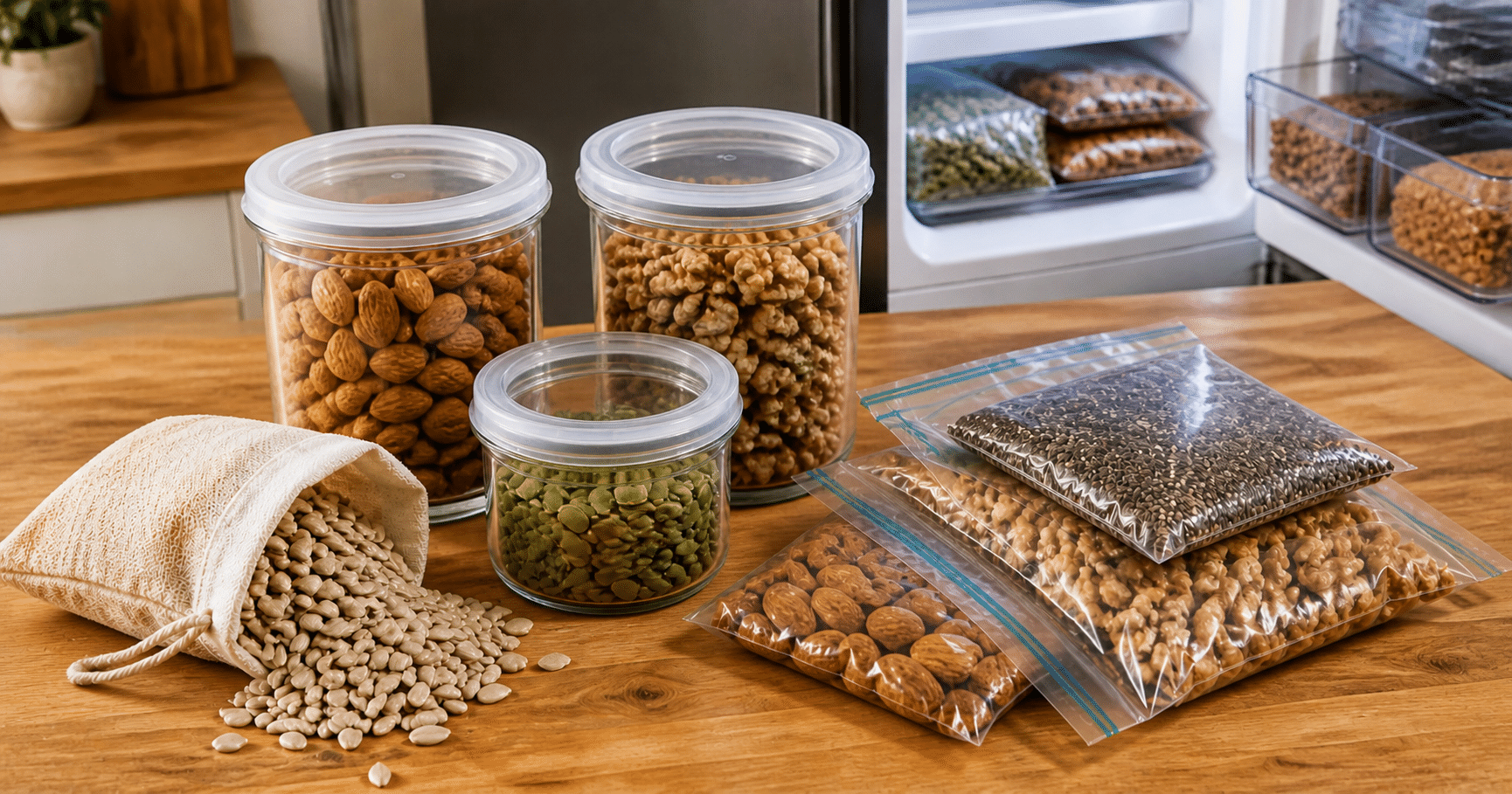
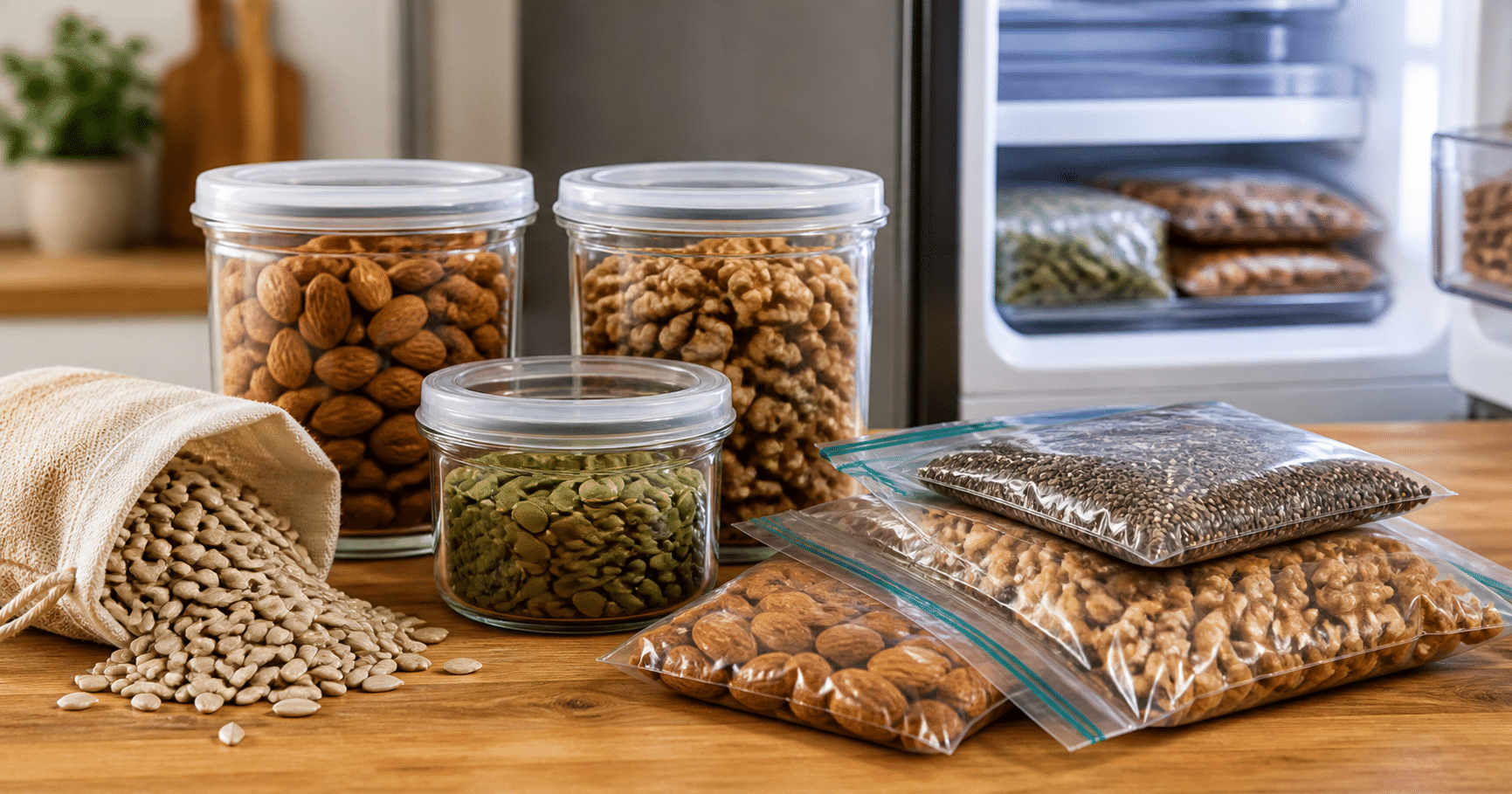
If you’ll finish a package within a few weeks, a cool, dark pantry or cupboard is usually practical. Transfer opened nuts or seeds to a clean, dry, airtight container, or press excess air from a well-sealed bag. Keep it away from the stove, oven, dishwasher, sunny windows, and other warm or steamy spots.
Buying a large bag? Divide it into smaller portions before storing. That way, you won’t repeatedly expose the entire supply to air and humidity every time you make oatmeal or a salad.
2. Refrigerate what you’ll use over the coming months
The refrigerator slows the reactions that affect flavor and is a good home for opened packages, especially in a warm kitchen. As a general guide, whole nuts and seeds may retain good quality for several months in the fridge; the exact time depends on the type, whether they are raw or roasted, and how well they were packaged before purchase.
Use an airtight container to limit moisture and prevent nuts from picking up odors from foods such as onions or strongly flavored leftovers. If you take a cold container out, let it come closer to room temperature while still sealed before opening. This helps keep warm, humid air from condensing on the contents.
3. Freeze extras for the longest-lasting quality
Freezing is useful for bulk purchases or ingredients you use only occasionally. Pack nuts and seeds in airtight freezer containers or sturdy freezer bags, remove as much air as practical, and label each portion with its name and date. Whole products generally keep their flavor better than ground versions, though quality still varies.
Thaw only what you need. Keep the package sealed as it warms, then open it once it has reached room temperature to reduce condensation. If you cook or bake with the nuts, there’s often no need to thaw them first.
A Simple Routine for Storing a New Bag
What you’ll need
- Airtight containers or resealable freezer bags
- A marker or label for the food name and date opened
- A cool cupboard, refrigerator, or freezer, depending on when you plan to use the food
Step-by-step instructions
- Check the package. Note the best-by date and look for a damaged seal, dampness, or unusual odors. A date is a quality guide, not a guarantee that the food will stay fresh until then once opened.
- Portion the supply. Set aside only what you expect to use soon. Keep the rest in a separate, tightly sealed container or bag.
- Choose a storage spot. Use the pantry for a small amount you’ll finish promptly, the refrigerator for longer-term everyday use, and the freezer for surplus.
- Label and rotate. Write the opening date on the container and use older portions first. Store different varieties separately so one strong aroma doesn’t affect the others.
- Close the package promptly. Return it to storage after use, using a dry spoon or clean hands. Don’t leave an open bowl near a steaming pot or sink.
Whole, Ground, Roasted: Small Differences Matter
Once a seed or nut is chopped or ground, more of its oily interior is exposed to air. Ground flaxseed, for example, is best kept tightly sealed in the refrigerator or freezer, while whole flaxseed is more protected by its intact outer layer. The same general principle applies to chopped walnuts, nut meals, and seed butters: check package directions, refrigerate after opening when advised, and buy amounts you can use at a sensible pace.
Roasting improves flavor, but it doesn’t make nuts immune to staling. Homemade roasted nuts should cool completely before being sealed; packing them while warm can trap moisture. Store them airtight and use them sooner rather than treating them like an unopened, long-life pantry staple.
Quick freshness check: Fresh nuts and seeds should smell mild and pleasant. A sharp, paint-like, soapy, or bitter odor—or a distinctly unpleasant taste—can signal rancidity. Don’t try to disguise that flavor in a recipe. If you see mold or signs of moisture damage, discard the food rather than sorting out the affected pieces.
Keep the Good Flavor, Not Just the Package
For a bag you’ll finish soon, an airtight container in a cool, dark cupboard may be enough. For anything you want to keep longer, refrigeration or freezing offers a better way to protect its flavor, especially after opening or grinding.
Think of nuts and seeds as ingredients with a shelf life that improves when they’re kept cool, dry, dark, and sealed. A date on the container and a quick sniff before using are simple habits that can save a recipe from an unexpectedly stale handful.