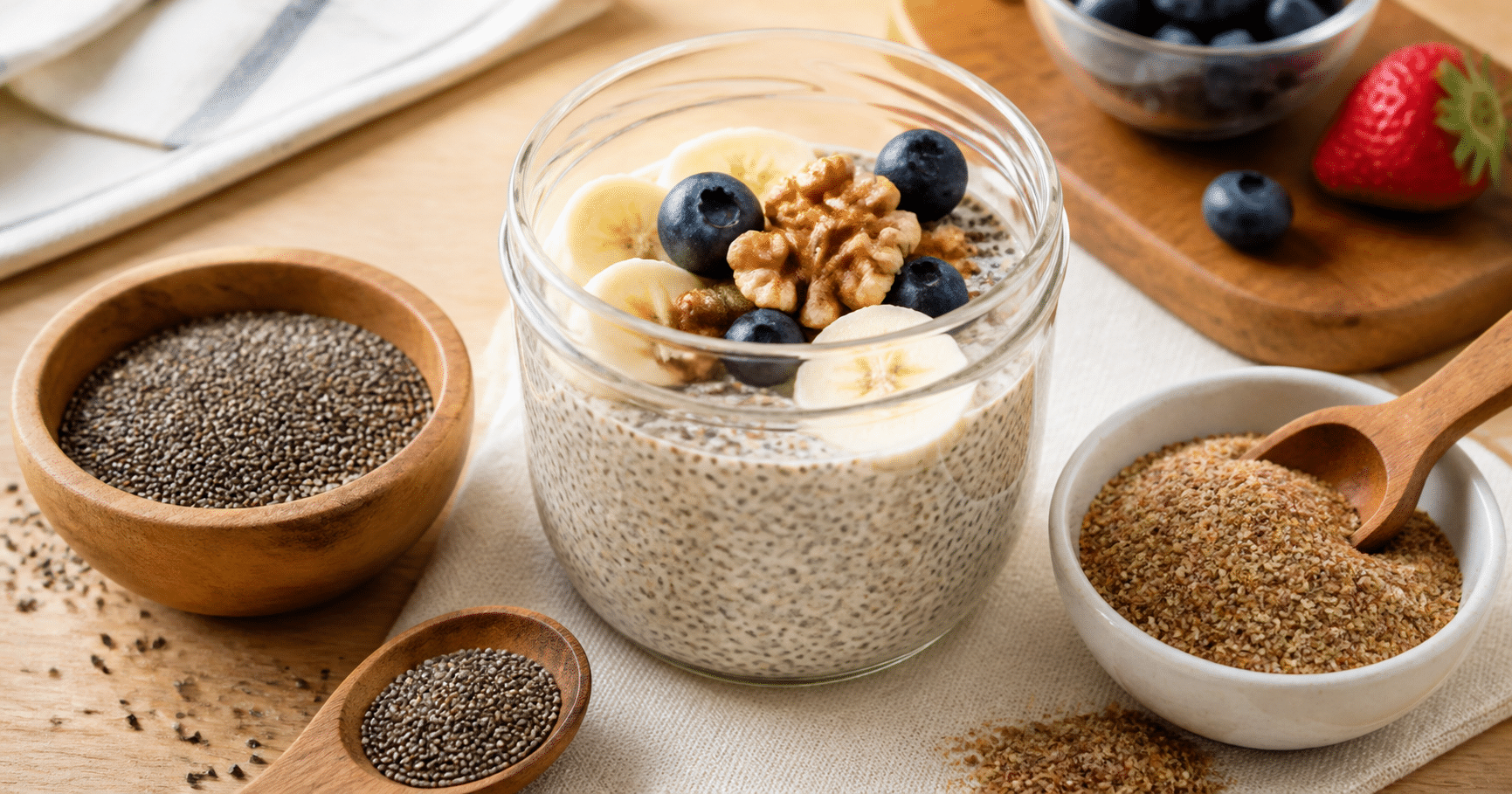
Chia and flaxseed have a lot in common: both are small, mild-tasting seeds rich in fiber and plant-based omega-3 fat. They’re easy to stir into breakfast or blend into a smoothie, which makes either one a practical pantry staple.
But they don’t behave quite the same way. Chia can thicken a drink or pudding with little effort, while flaxseed is often more useful after it’s ground. Their nutrition profiles also differ in ways that may help you decide which to keep on hand.
Neither seed is a cure-all, and you don’t have to choose just one. Here’s how their nutrients, preparation and everyday uses compare—and a simple recipe that puts both to work.
Chia and Flaxseed: Similar Nutrients, Different Strengths
Both seeds provide alpha-linolenic acid (ALA), an essential omega-3 fat found in plant foods. ALA is not the same as the EPA and DHA omega-3s in many types of seafood; the body can convert some ALA into EPA and DHA, but the conversion is limited. Both seeds also supply fiber, which adds bulk to meals and supports regularity as part of an overall balanced diet.
For a rough comparison, one ounce (28 grams) of chia seeds provides about 138 calories, 10 grams of fiber and 5 grams of ALA. The same weight of flaxseed has about 150 calories, 8 grams of fiber and 6 grams of ALA. Values vary by product and database, but the broad pattern is useful: chia tends to offer more fiber, while flax generally provides more ALA per ounce.
Chia is also a source of minerals such as calcium, while flax is notable for lignans—plant compounds that are present in especially high amounts in flaxseed. These differences make each seed distinctive, but they don’t establish that one is universally healthier. The better choice is often the one you’ll enjoy and use consistently.
Three Practical Differences That Matter
1. Ground flax is easier to make use of
Whole flaxseeds have a tough outer coating. Some may pass through the digestive tract without being fully broken down, so your body may not access all their nutrients. Ground flax, sometimes labeled flax meal, is the more practical choice for adding flax to food.
You can buy it ground or grind whole seeds at home. Store ground flax in a tightly sealed container in the refrigerator or freezer to help preserve its delicate fats, and follow the package’s storage guidance.
2. Chia thickens when it meets liquid
Chia seeds absorb liquid and develop a soft, gel-like coating. That quality makes them handy for overnight oats, puddings and thickening smoothies. They can be eaten whole; grinding isn’t necessary for ordinary use.
For comfort, mix chia into a moist food or give it time to hydrate. Avoid swallowing a spoonful of dry chia seeds on its own, particularly if you have trouble swallowing: the seeds can swell after absorbing liquid.
3. Their fiber and fats are useful, but not interchangeable with treatment
The fiber in both seeds can help make a meal more filling, and adding fiber gradually may be easier on your digestion than making a sudden, large increase. Drink enough fluids as you raise your fiber intake. If you take medication, ask a pharmacist or clinician whether timing matters, since high-fiber foods can affect how some medicines are absorbed.
Flax’s higher ALA content doesn’t make it a replacement for seafood or prescribed treatment, and chia’s extra fiber doesn’t guarantee a particular health outcome. Think of both as nutrient-dense ingredients, not medicines.
Make a Creamy Chia-Flax Breakfast Pudding
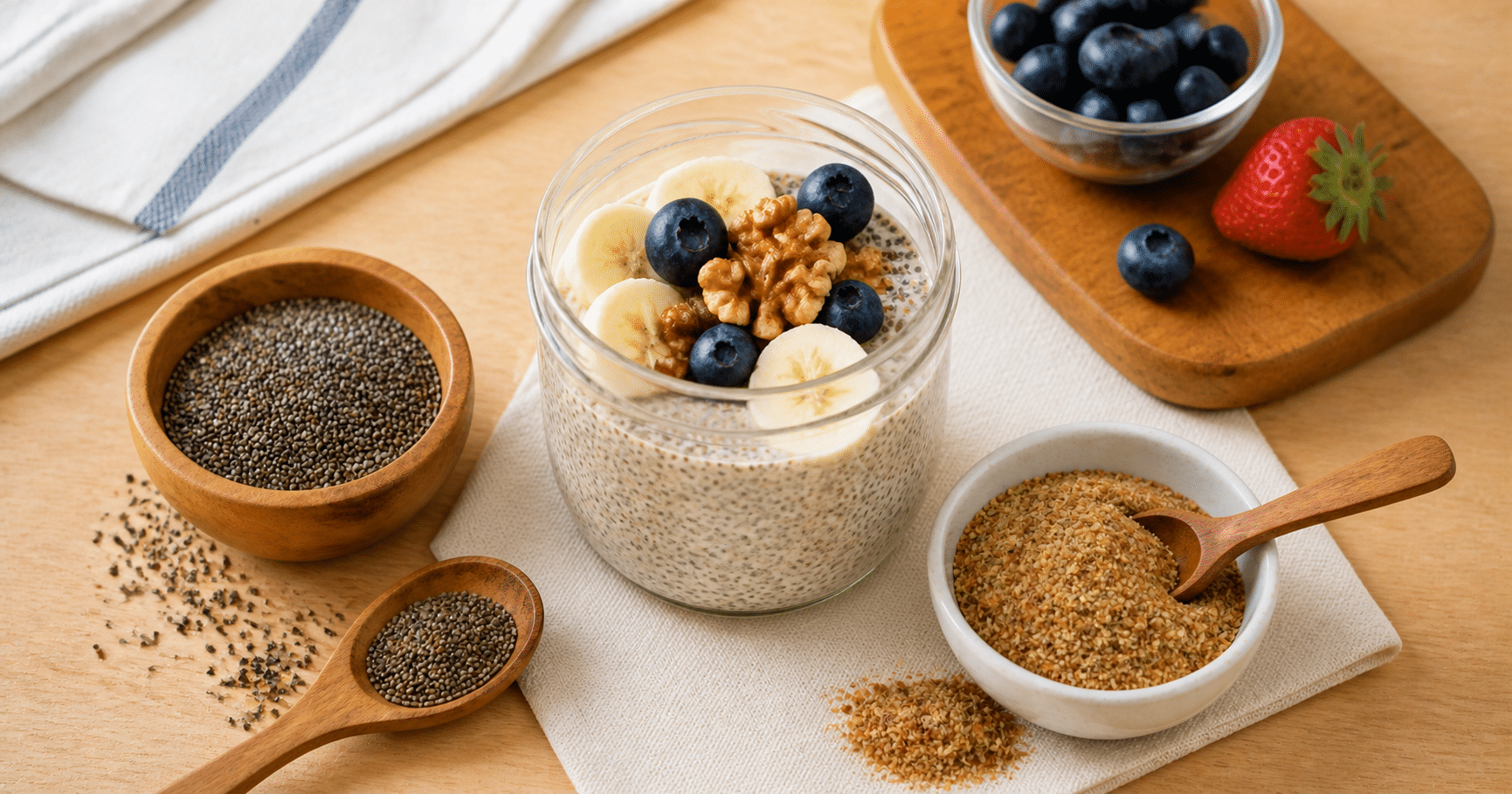
This simple pudding combines chia’s thickening power with ground flax’s easy-to-use form. It makes one generous serving or two smaller portions.
Ingredients
-
- 1 cup milk or unsweetened, calcium-fortified plant milk
-
- 2 tablespoons chia seeds
-
- 1 tablespoon ground flaxseed
-
- 1 teaspoon maple syrup or honey, optional
-
- ¼ teaspoon vanilla extract, optional
-
- Fresh berries, sliced banana or chopped nuts, for serving
Step-by-Step Instructions
-
- In a jar or bowl, stir together the milk, chia, ground flax and any sweetener or vanilla.
-
- Wait 5 minutes, then stir again to break up clumps and distribute the seeds.
-
- Cover and refrigerate for at least 2 hours, or overnight, until thick. Stir before serving; add a splash of milk if you prefer a looser texture.
-
- Top with fruit or nuts. Refrigerate leftovers in a covered container and use within a few days, following the storage guidance for your milk.
Try a small serving first if you’re not used to high-fiber foods. You can also stir a teaspoon of ground flax into oatmeal or yogurt, or add chia to a smoothie. These small additions make it easier to see which texture and amount work for you.
How to Choose—and Store—the Seeds
Choose chia if you want a seed that can thicken a recipe or add extra fiber by weight. Reach for ground flax when you want a straightforward way to add ALA and lignans to oatmeal, yogurt or baked goods. For most everyday meals, taste and convenience matter more than fine differences in nutrient totals.
Whole chia and whole flax generally keep longer than ground flax, but heat, light and air can affect the quality of their fats. Keep seeds sealed in a cool, dry place, and refrigerate or freeze ground flax after opening if the package recommends it. If it smells stale or rancid, replace it.
The Bottom Line on Chia Versus Flaxseed
Chia brings more fiber per ounce and a useful ability to thicken liquids; flax offers somewhat more ALA and is best used ground. Both can fit into a varied diet, and there’s no need to crown a single winner.
Keep chia for puddings and moisture-rich meals, keep ground flax ready for quick additions—and let the recipe decide which seed goes in the bowl.