A healthy-aging dinner does not need a special powder, a complicated menu, or a strict set of rules. A Mediterranean-style plate can be as straightforward as vegetables, a satisfying protein, a whole grain or beans, and a little olive oil.
The appeal is practical as well as nutritional: these foods are familiar, flexible, and easy to combine in different ways. The pattern emphasizes plants, beans, whole grains, fish, nuts, and unsaturated fats while making highly processed foods and excess sodium less central.
One detail is easy to miss: “Mediterranean” describes an overall way of eating, not a magic ingredient or a rigid plate formula. A single dinner cannot guarantee healthy aging, but the choices you repeat can help support a balanced diet over time.
Here’s how to build a nourishing dinner plate, what the pattern can—and cannot—do, and a simple salmon-and-chickpea meal to put it into practice.
What Makes a Mediterranean Dinner Plate?
Think of the plate as a useful guide rather than a prescription: fill about half with vegetables, reserve roughly a quarter for protein, and use the remaining quarter for a whole grain or another fiber-rich food. Add a modest amount of olive oil, herbs, or another flavorful ingredient. The proportions can shift with appetite, activity, health needs, and what else you eat that day.
This approach brings together several kinds of nourishment. Vegetables, fruit, beans, and whole grains provide fiber and a range of vitamins and minerals. Fish, eggs, beans, lentils, poultry, and dairy foods can contribute protein, which helps maintain and repair body tissues. Olive oil, nuts, and seeds supply mostly unsaturated fats.
Research on Mediterranean-style eating has associated the pattern with better cardiovascular health, and some dietary trials have found benefits for certain heart-related outcomes. That does not mean one particular dinner prevents disease or slows aging on its own. It does suggest that the overall pattern—followed consistently and adapted to individual needs—is more meaningful than chasing a “superfood.”
Three Useful Ways to Build the Plate
1. Give vegetables plenty of room
Roasted, sautéed, steamed, or raw vegetables all count. Using more than one color can make dinner appealing while adding variety in the nutrients and plant compounds you eat. Frozen vegetables are a practical option, too; choose plain varieties when you want to control added salt and sauces.
If chewing is difficult or appetite is low, try tender cooked vegetables, soups, or finely chopped produce rather than forcing a large raw salad. A healthy pattern should be workable at the table, not just look good in a photograph.
2. Include protein—and choose a satisfying portion
Fish is a familiar feature of many Mediterranean-style meals, but it is not the only option. Beans, lentils, eggs, plain yogurt, tofu, and poultry can all fit. Pairing a protein food with regular meals may be especially useful for older adults trying to maintain strength, alongside appropriate physical activity.
Protein needs vary with body size, health, activity, and medical circumstances, so there is no single portion that suits everyone. People with kidney disease or another condition requiring a specific diet should ask their clinician or dietitian how to tailor protein and other foods.
3. Make the grain or bean choice count
Farro, barley, brown rice, and whole-wheat pasta are examples of whole grains. Beans and lentils offer fiber and also contribute protein, so they can play more than one role on the plate. If you use canned beans, draining and rinsing them can reduce some of the sodium from the packing liquid.
Olive oil can add flavor and help make vegetables and grains more satisfying, but it is energy-dense. A drizzle is usually enough; the Mediterranean pattern is not a reason to pour freely.
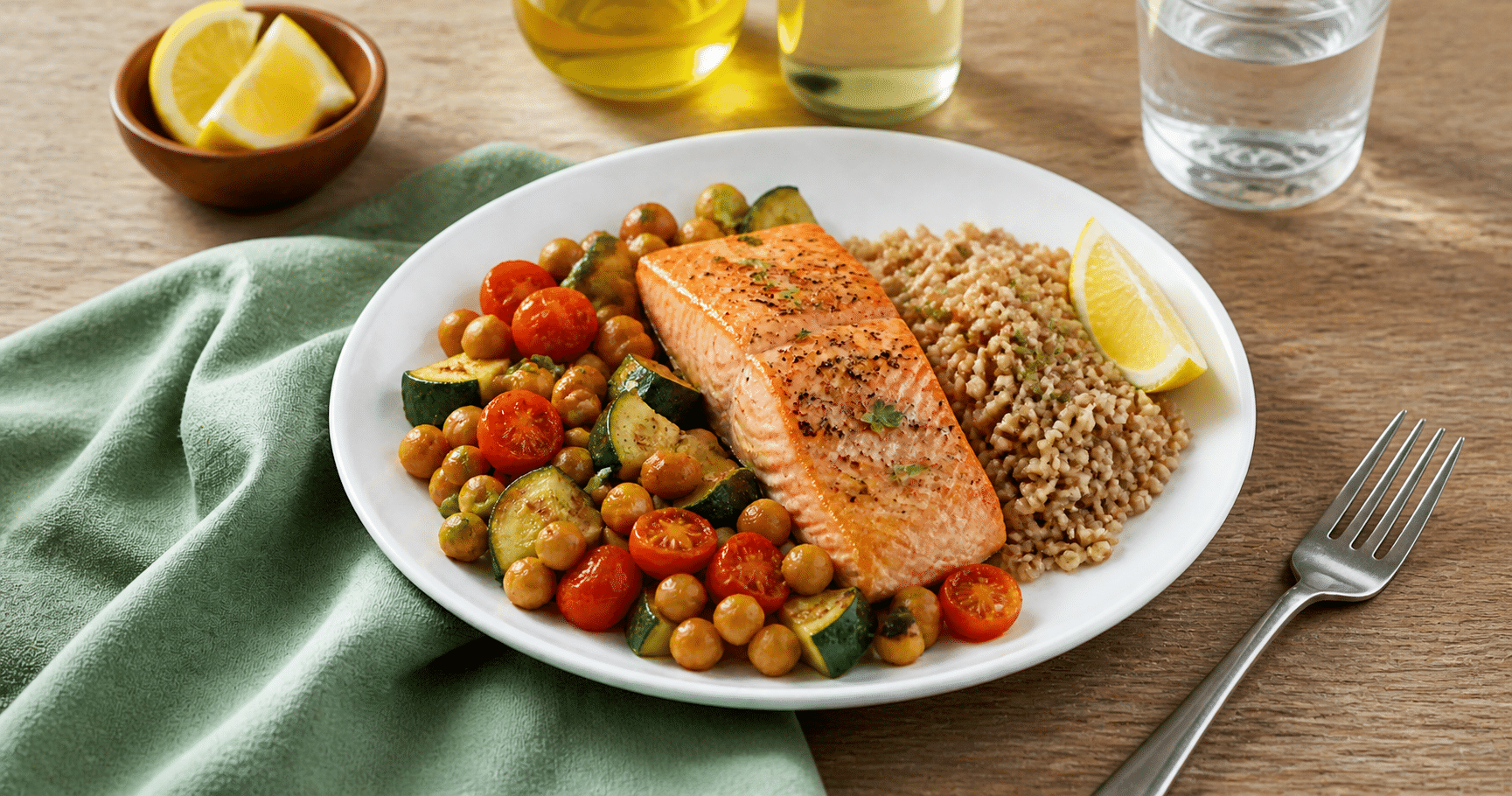
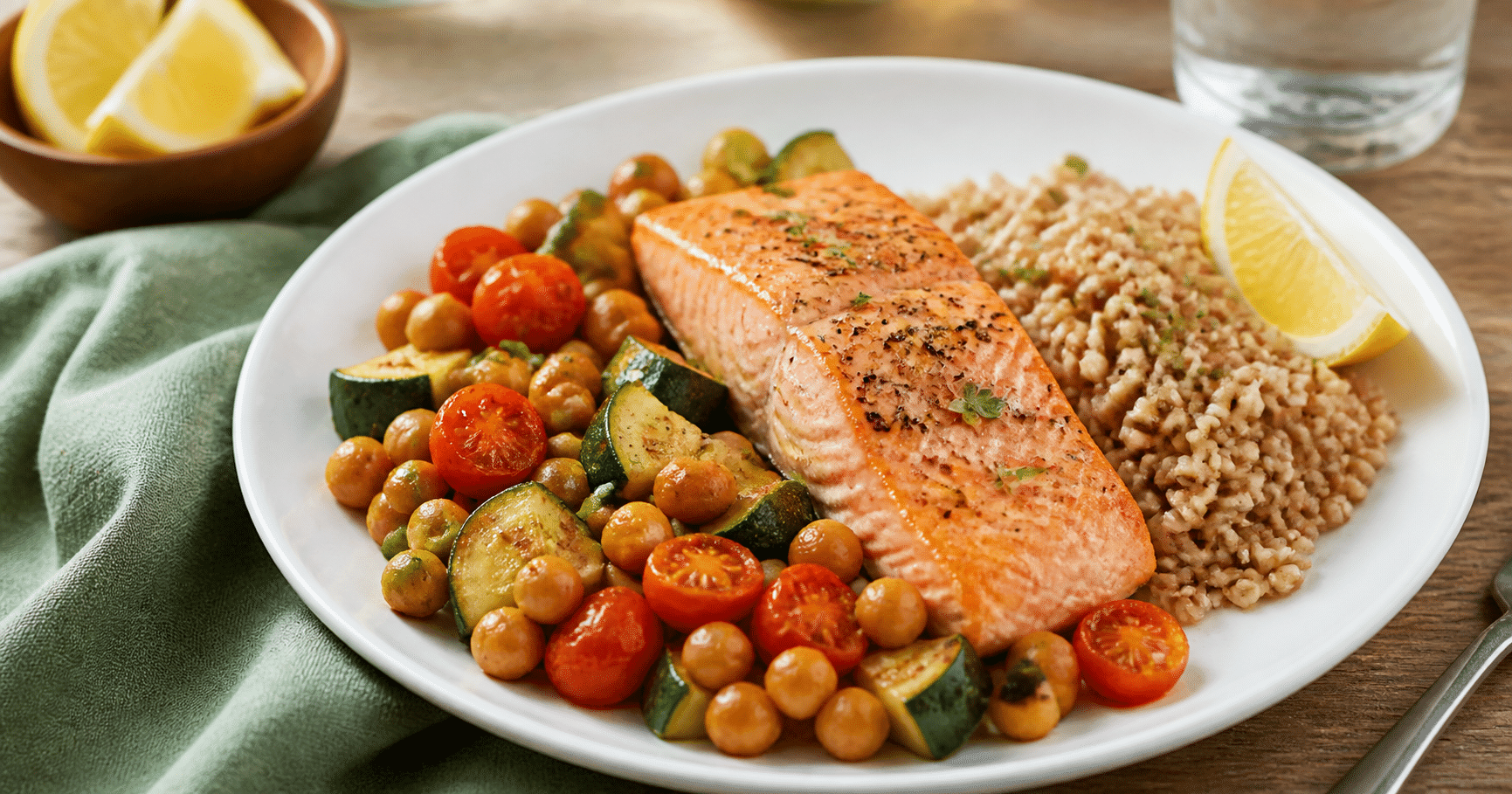
A Mediterranean Salmon, Chickpea, and Farro Dinner
This flexible dinner combines fish, beans, vegetables, and a whole grain. It makes two servings and takes about 35 minutes, depending on the farro’s cooking time. If your farro is already cooked, dinner comes together faster.
Ingredients
-
- Two salmon fillets, about 4 to 5 ounces each
-
- 1 cup cooked farro, prepared according to package directions
-
- 1 can (15 ounces) chickpeas, drained and rinsed
-
- 1 pint cherry tomatoes, halved
-
- 1 small zucchini, cut into bite-size pieces
-
- 1 tablespoon olive oil, plus a little more if needed
-
- 1 lemon, half juiced and half cut into wedges
-
- 1 teaspoon dried oregano
-
- Black pepper to taste
Step-by-Step Instructions
-
- Heat the oven to 425°F. If the farro is uncooked, begin preparing it according to the package directions.
-
- On a rimmed baking sheet, toss the chickpeas, tomatoes, and zucchini with the olive oil, oregano, black pepper, and lemon juice. Spread them into an even layer.
-
- Roast the vegetables and chickpeas for about 10 minutes. Move them to the sides of the pan and place the salmon in the center. Roast for another 10 to 15 minutes, depending on the thickness of the fillets.
-
- Check that the salmon reaches 145°F at its thickest point, or flakes easily with a fork. Serve with the cooked farro and lemon wedges.
To keep the plate balanced, make vegetables the largest part of the meal, then serve the salmon and chickpeas alongside a modest scoop of farro. Refrigerate leftovers promptly and use them within three to four days; reheat thoroughly. Leftover farro and chickpeas also make an easy lunch with extra vegetables.
Small Adjustments That Make the Pattern Easier to Keep
There is no need to buy specialty ingredients. Swap farro for brown rice, barley, or whole-wheat couscous; use white beans instead of chickpeas; or replace salmon with another fish, eggs, or tofu. Fresh herbs, garlic, lemon, and spices add flavor without relying on a heavy hand with salt.
Frozen fish and vegetables can make planning easier, and canned beans can save time. Compare labels when choosing packaged foods: sodium levels vary, and “Mediterranean-style” on a label does not automatically mean a product is low in salt or highly nutritious.
Finally, remember that a dinner plate is only one part of the picture. Healthy aging also depends on the broader eating pattern and on factors such as movement, sleep, social connection, and medical care. If your appetite, chewing ability, medications, or health conditions make eating difficult, a clinician or registered dietitian can help adapt meals to your needs.
A Plate to Return To
A Mediterranean dinner plate is less a strict formula than a reliable starting point: plenty of vegetables, a useful protein, a whole grain or beans, and flavorful unsaturated fat. The salmon, chickpea, and farro meal shows how those pieces can come together with everyday ingredients.
Keep the pattern flexible. The best healthy-aging dinner is one that is nourishing, enjoyable, and practical enough to make again.