Brain health is shaped by more than puzzles and memory games. What you eat matters, too: the brain relies on a steady supply of energy and nutrients to build and maintain cells, send signals, and support normal function.
That does not mean one “brain food” can sharpen memory overnight. Research generally points to overall eating patterns rather than a single ingredient, and a nutritious menu cannot guarantee protection from cognitive decline. Still, familiar foods such as salmon, berries, beans, and leafy greens supply nutrients the brain uses.
Here are seven foods worth making room for, what they contribute, and a simple way to bring several together in one meal. The practical detail to keep in mind: variety and regular meals are more useful than chasing a perfect superfood.
How Food Supports the Brain
The brain uses glucose for energy, while its cells depend on fats, proteins, vitamins, and minerals for their structure and everyday work. Nutrients such as omega-3 fats, folate, choline, and iron have roles in cell membranes, chemical signaling, or oxygen delivery. Getting enough is part of good nutrition, but eating more than you need is not automatically better.
No individual food has been shown to prevent or treat dementia. The strongest practical approach is to build meals around a range of minimally processed foods, including vegetables, fruit, legumes, whole grains, and sources of healthy fats. These seven choices can help supply important nutrients as part of that broader pattern.
Seven Foods That Supply Brain-Relevant Nutrients
1. Salmon and other oily fish
Salmon, sardines, trout, and herring provide the omega-3 fats EPA and DHA. DHA is an important structural component of brain cell membranes, while EPA and DHA also have roles elsewhere in the body. Fish is a direct source; the body converts only a limited amount of the plant omega-3 ALA into these fats.
Try fish baked, grilled, or canned in a simple meal. Eating fish supplies nutrients, but it should not be presented as a guaranteed way to improve memory or prevent cognitive disease.
2. Blueberries and other berries
Blueberries, strawberries, and blackberries offer fiber and plant compounds called polyphenols, including anthocyanins in many dark-colored berries. Researchers are interested in how these compounds interact with cells and blood vessels, but findings do not make berries a treatment for memory problems.
Fresh and frozen berries are both convenient choices. Add them to oatmeal or plain yogurt, or serve a small bowl for dessert.
3. Leafy greens
Spinach, kale, collards, and romaine contribute folate, vitamin K, and other nutrients, along with fiber. Folate is needed for normal cell processes, and vitamin K has several roles in the body. Greens are a useful part of a varied diet—not a stand-alone cognitive remedy.
If you take warfarin, do not suddenly make a large change in how much vitamin K-rich food you eat. Keeping intake consistent and discussing dietary changes with your clinician helps with medication management.
4. Eggs
Egg yolks are a source of choline, a nutrient used to make acetylcholine, a chemical messenger involved in normal brain and muscle function. Eggs also provide protein. Choline has an important biological role, but that does not prove that eating extra eggs enhances memory in people who already get enough.
Serve an egg with whole-grain toast, or add a hard-boiled egg to a salad for a filling lunch.
5. Walnuts
Walnuts provide ALA, a plant-based omega-3 fat, as well as fiber and unsaturated fats. ALA is nutritious in its own right, though conversion to EPA and DHA is limited. A small handful can add crunch to oatmeal, salads, or cooked vegetables.
Choose unsalted walnuts when possible. They are calorie-dense, so a modest portion is an easy way to enjoy them without turning a topping into the main event.
6. Beans and lentils
Black beans, chickpeas, lentils, and other legumes supply folate, iron, protein, and fiber. Iron helps carry oxygen in the blood, and folate supports normal cell function. Plant-based iron is absorbed less readily than iron from meat; eating beans with a vitamin C source, such as tomatoes or bell peppers, can help absorption.
Use canned beans for convenience—draining and rinsing them can reduce some of the added sodium. Stir them into soup, grain bowls, or salads.
7. Oats and other whole grains
Oats, brown rice, barley, and whole-wheat bread provide carbohydrates for energy, along with fiber and several B vitamins. Whole grains digest more gradually than many refined grains, which can make meals more satisfying. They do not feed the brain in a uniquely enhanced way, but they are a practical source of energy and nutrients.
Look for “whole” as the first ingredient on bread labels, or cook a batch of oats or barley to use in several meals.
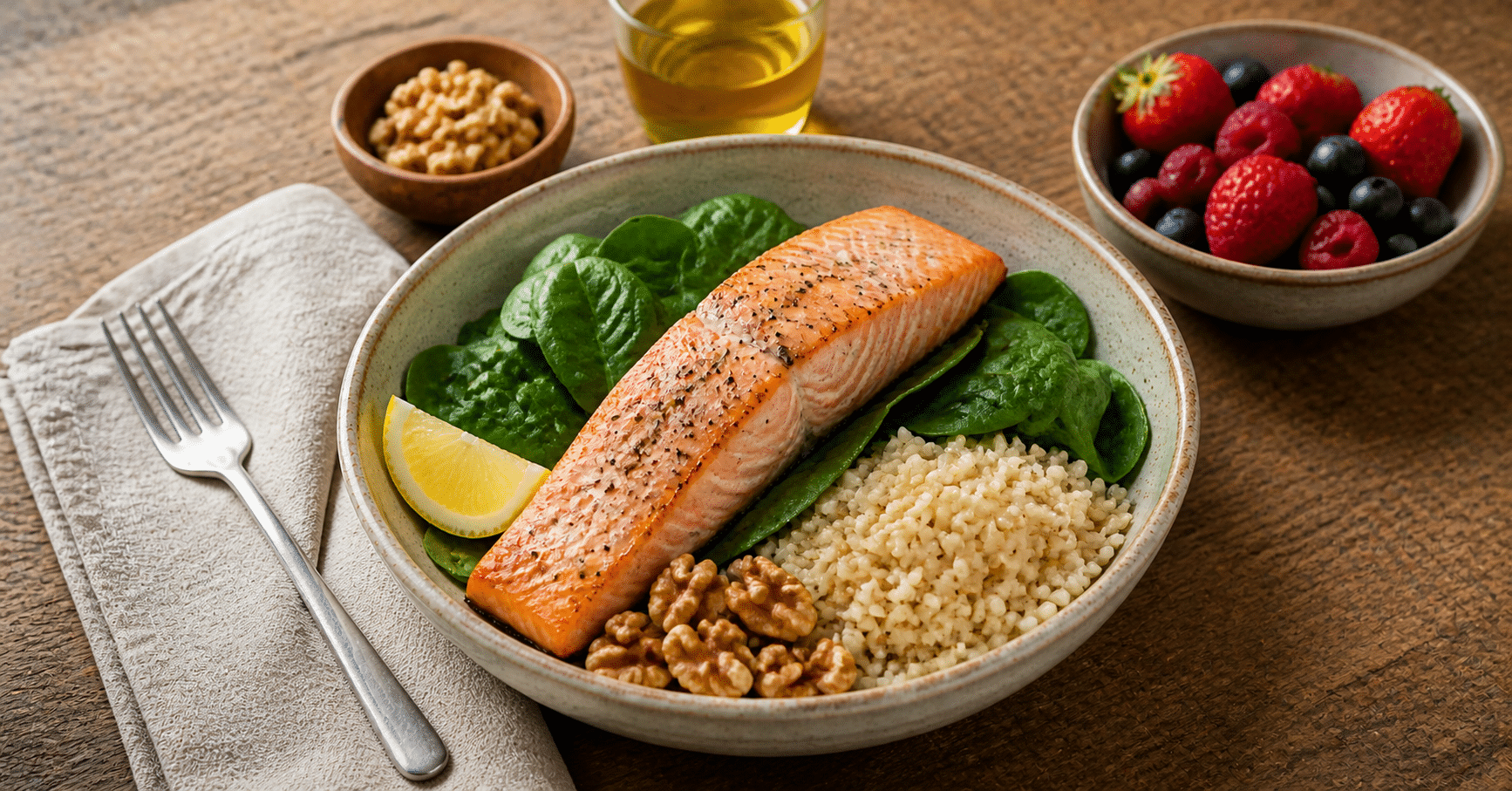
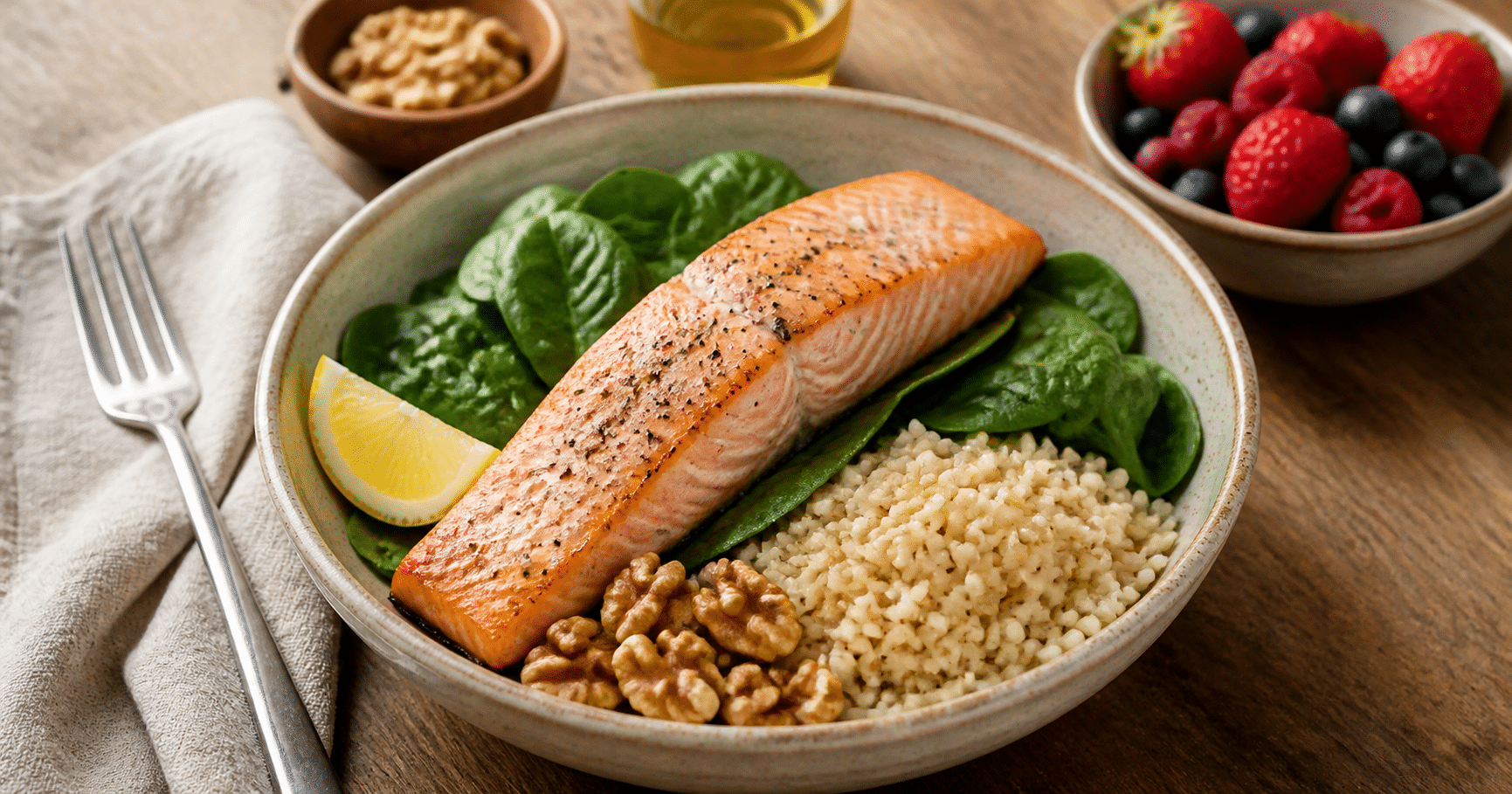
A Simple Salmon, Greens, and Grain Bowl
This balanced lunch combines fish, leafy greens, and whole grains, with berries on the side. Use cooked grains left over from another meal to make preparation quicker.
Ingredients
- 1 salmon fillet, about 4 ounces
- 1 teaspoon olive oil
- 1 cup cooked brown rice or barley
- 1 to 2 cups leafy greens, such as spinach or chopped kale
- 1 tablespoon chopped walnuts
- Lemon wedge, black pepper, and a small pinch of salt
- 1/2 cup berries, for serving
Step-by-Step Instructions
- Heat the oven to 400°F. Place the salmon on a baking sheet, rub with olive oil, and season with pepper and a little salt.
- Bake for about 12 to 15 minutes, until the fish flakes easily and reaches 145°F at its thickest point.
- Warm the cooked rice or barley. Place it in a bowl with the greens; the warmth will soften tender greens slightly. Add the salmon and walnuts.
- Finish with lemon juice and serve with berries. Refrigerate leftovers promptly and use within three to four days.
Make the Pattern Easier to Keep
It is fine to use frozen berries, canned beans, or plain canned fish when fresh ingredients are not convenient. A useful weekly rhythm might include fish, several kinds of vegetables, beans, fruit, and whole grains, without requiring every meal to contain all seven foods.
Think of these ingredients as parts of a nourishing eating pattern, not a prescription. If you have a diagnosed nutrient deficiency, food allergies, kidney disease, or medication-related dietary needs, get personalized advice from a qualified clinician or dietitian.
The Takeaway: Build a Varied Plate
Oily fish, berries, leafy greens, eggs, walnuts, beans, and whole grains offer different nutrients involved in normal brain and body function. None is a shortcut to better memory, but together they make it easier to build meals with variety, fiber, healthy fats, and satisfying energy.
A good place to start is one small change you will repeat: add berries to breakfast, beans to lunch, or fish to dinner.