A small evening snack can take the edge off hunger without turning bedtime into another meal. The best choices are usually familiar foods in modest portions—not special “sleep” products or complicated recipes.
There is no single snack that reliably makes everyone fall asleep. But if hunger keeps you thinking about the kitchen, a little food may feel more comfortable than going to bed hungry. The trick is choosing something satisfying without making your stomach work through a large, rich meal.
One detail that often gets overlooked: a food can be nutritious and still feel uncomfortable at night. A large bowl of raw vegetables, a heavy handful of nuts, or a rich dessert may sit poorly for some people, even though each can fit into a healthy diet.
Here are simple light evening snack ideas, plus a few guidelines for choosing portions and ingredients that suit your appetite and routine.
What Makes an Evening Snack Feel Light?
“Light” is less about a specific calorie number and more about portion size and how a food feels to you. A small snack with some protein or carbohydrate may satisfy mild hunger, while a large, fatty, spicy, or very sugary option can feel less comfortable close to bedtime.
Fat and fiber are valuable parts of a balanced diet, but meals rich in either can take longer to digest or cause bloating for some people. That does not mean you need to avoid nuts, beans, or whole grains at night; it means your own tolerance and serving size matter. Soft, familiar foods are often an easy place to start.
Food also is not a guaranteed sleep aid. Some people find that eating shortly before lying down aggravates heartburn or reflux. If that happens, try having your snack earlier and avoid lying flat right after eating. If you are not hungry, there is no need to add a bedtime snack just because it is considered healthy.
Five Simple Snacks for Mild Evening Hunger
1. Greek yogurt with berries
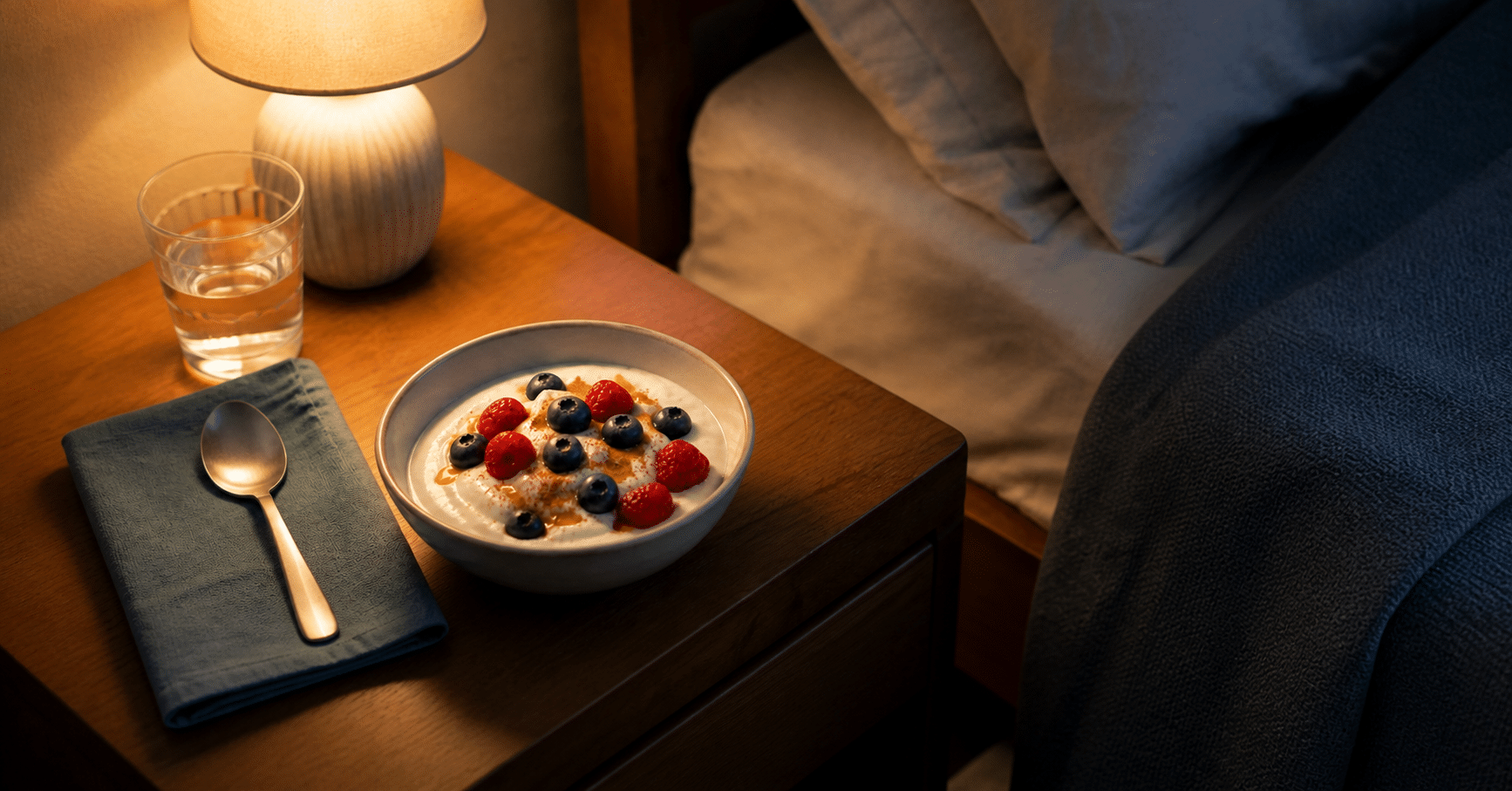
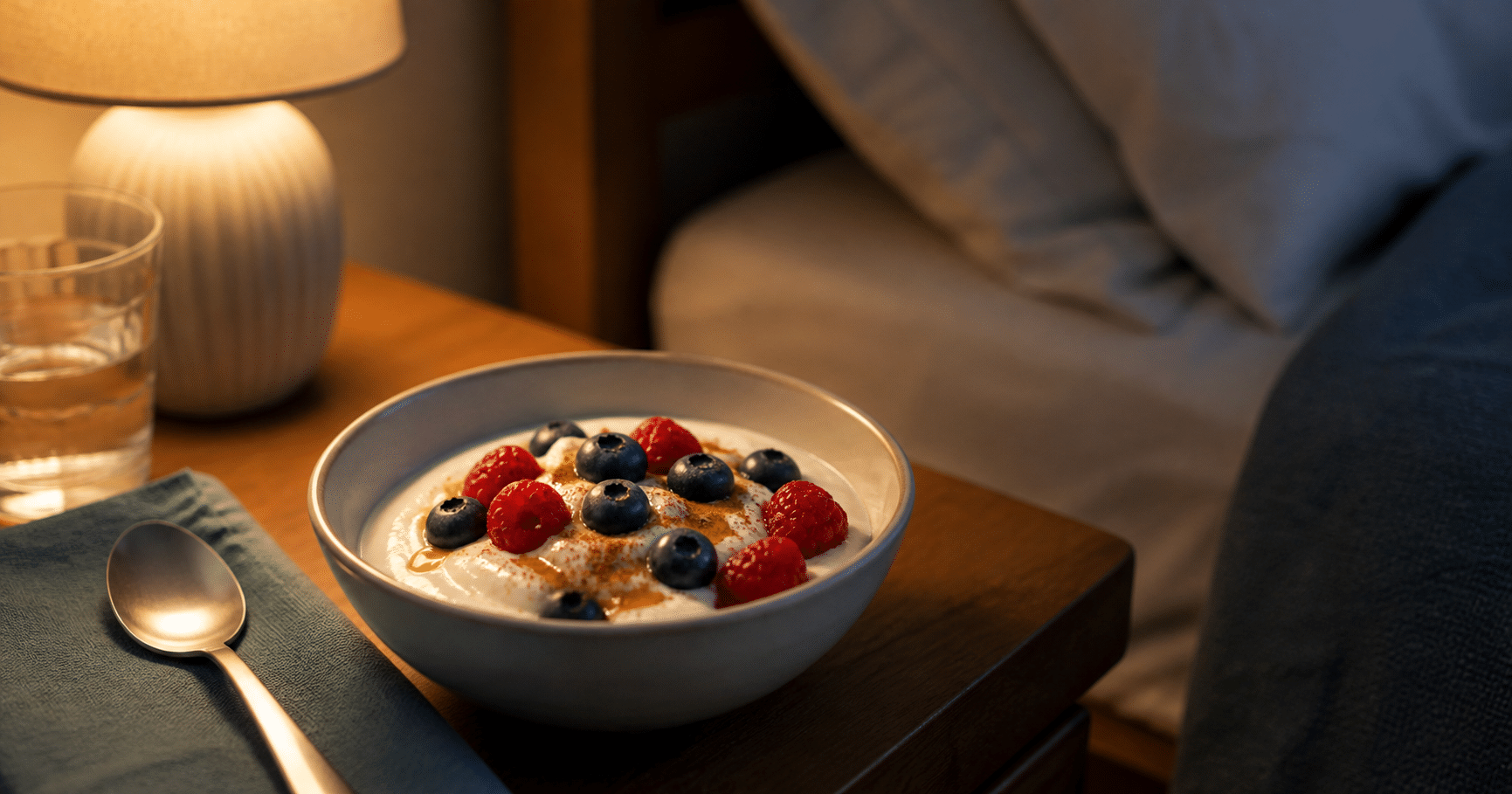
Stir about ½ cup plain Greek yogurt with a small handful of fresh or thawed berries. Yogurt provides protein, and the berries add flavor and carbohydrate without requiring much preparation. Choose unsweetened yogurt if you prefer to control the sweetness yourself; a drizzle of honey is optional.
2. Banana with a little peanut butter
Pair half a banana with about 1 teaspoon of peanut butter. The combination offers a soft, mildly sweet bite with a little protein and fat. Nut butter is filling, so a thin spread is often enough; a thick layer can make this snack feel heavier.
3. Cottage cheese with soft fruit
Serve ½ cup cottage cheese with a few peach slices, pear pieces, or berries. If cottage cheese tastes too salty or feels dense, try a smaller portion or choose a lower-sodium variety. Lactose-free cottage cheese may be an option for people who have trouble digesting lactose.
4. A small bowl of oatmeal
Make ⅓ cup rolled oats with water or milk, following the package directions, and keep the toppings simple. A few banana slices or a sprinkle of cinnamon adds flavor. A very large bowl or lots of nuts and dried fruit can shift this from a snack into a filling meal.
5. Whole-grain toast with ricotta
Top one small slice of toast with 1 to 2 tablespoons of ricotta. Add a few sliced strawberries for a lightly sweet version, or a thin layer of mashed avocado if savory snacks appeal more. If whole grains tend to cause nighttime bloating, choose a bread you already know sits well.
How to Put Together a Quick Bedtime Snack
These ideas are meant to be flexible, not prescribed portions for everyone. Appetite, health needs, and the timing of dinner all vary. Start with a small serving and see whether it comfortably takes care of your hunger.
Ingredients
- ½ cup plain Greek yogurt
- ¼ cup fresh or thawed berries
- ½ teaspoon honey, optional
- A pinch of cinnamon, optional
Step-by-Step Instructions
- Spoon the yogurt into a small bowl.
- Top with the berries and cinnamon.
- Taste before adding honey; the fruit may provide enough sweetness.
- Eat slowly and pause before reaching for more. If you are still genuinely hungry, add a little more rather than turning the snack into a full meal.
This takes about two minutes and makes one modest serving. Keep yogurt refrigerated and prepare only what you plan to eat. For a different texture, mash the berries slightly; for a dairy-free option, use an unsweetened soy yogurt with a similar texture, keeping in mind that protein content varies among alternatives.
Small Choices That Can Make a Difference
Notice how timing affects you. If you regularly get hungry late at night, a slightly more satisfying dinner or a planned snack earlier in the evening may work better than eating right before you lie down. If reflux is an issue, the National Institute of Diabetes and Digestive and Kidney Diseases advises people with nighttime symptoms to consider leaving at least three hours between eating and lying down.
Pay attention to common personal triggers, too. Chocolate, peppermint, spicy foods, and acidic foods bother some people with reflux, but not everyone. A small amount of water is fine if you are thirsty; drinking a large amount right before bed may mean more nighttime trips to the bathroom.
If you have diabetes or take medication that can affect blood sugar, follow the eating guidance from your clinician rather than assuming a general snack rule applies. And if nighttime hunger is new, persistent, or accompanied by other symptoms, it is worth discussing with a health professional.
A Comfortable Finish to the Day
A light evening snack can be as simple as yogurt and berries, a little oatmeal, or toast with ricotta. Keep the serving modest, choose foods that agree with you, and remember that a bedtime snack is optional—not a shortcut to better sleep.
The most useful guide is how you feel afterward: comfortably satisfied, not stuffed, and ready to settle in.